Are puffer jackets actually warm?
- Share
- Issue Time
- Jun 18,2025
Summary
Are puffer jackets actually warm? Warmth depends on loft, fill power and fill weight, baffle construction, shell wind resistance and fit. This guide explains what each factor contributes, compares down, synthetic and recycled fill when wet, maps fill weight to climate, and covers MOQ 50 pcs per style, sampling in 7 to 14 working days and bulk in 25 to 40 working days.
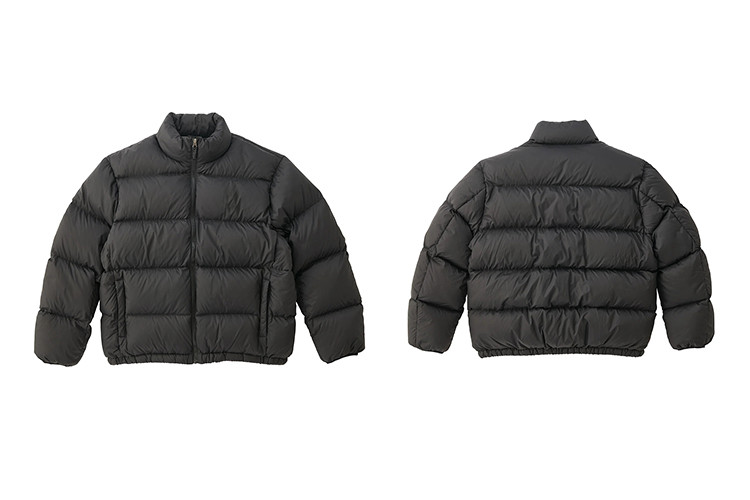
Are Puffer Jackets Actually Warm? The Insulation Science Behind a Winter Jacket
Are puffer jackets actually warm? Yes, they are. A correctly built puffer jacket is one of the most efficient cold-weather garments available, because it does not generate heat at all. It traps the heat your body already produces inside thousands of small air pockets and stops the wind from carrying that air away. That is the entire mechanism, and it also explains why two jackets with the same fill power can feel completely different in the same weather. Warmth is not a single number printed on a hang tag. It is the result of fill power, fill weight, baffle construction, shell wind resistance and fit working together. This guide explains each factor, how much warmth each one contributes, and how to specify a puffer jacket so the warmth you designed is the warmth your customer actually receives.
Table of Contents
- The Short Answer
- How a Puffer Traps Heat
- Fill Power Explained
- Fill Weight and Loft
- Baffle Construction
- Shell and Wind Resistance
- Down vs Synthetic vs Recycled
- Matching Warmth to Climate
- Why Puffers Lose Warmth
- How We Test Warmth
- MOQ, Sampling and Lead Times
- Certifications and Traceability
- Frequently Asked Questions
The Short Answer: Yes, If Four Conditions Are Met
A puffer jacket is warm when four conditions hold at the same time. Remove any one of them and the jacket will underperform its specification, no matter how premium the fill is, because insulation only works as a system.
Enough Loft
Loft, or the thickness of the filled jacket, is the visible measure of trapped air. A jacket that does not stand up on its own has little room for the air that insulates you.
Wind Resistance
A calm, still air pocket loses its value the moment wind can move through the shell. A windproof outer layer protects the insulation from being flushed out.
Dry Insulation
Down loses most of its loft when it becomes saturated, while synthetic fill retains structure when damp. Either way, dry insulation performs best.
Correct Fit
An oversized puffer leaves cold air circulating inside the jacket. A fitted puffer with room for a base layer and a mid layer keeps warm air close to the body.
When a customer asks whether a puffer jacket is warm enough for a given use, the honest answer always begins with these four conditions rather than with the fill power. A 650 fill jacket with a windproof shell and a proper fit will outperform an 800 fill jacket with a thin, air-permeable shell in any real outdoor condition.
How a Puffer Jacket Traps Heat
The human body continuously produces heat, roughly the output of a small light bulb at rest and far more during activity. A puffer jacket does not add heat. It slows the rate at which your heat escapes into the environment. Three mechanisms are involved and each one can be engineered.
Conduction
- Heat passes through solid material contact
- Down clusters and fibres interrupt direct contact
- More air gaps mean less conduction
Convection
- Moving air carries warm air away
- Baffles segment the fill into closed pockets
- Windproof shells stop flush-through
Radiation
- Body heat radiates outward in straight lines
- Reflective linings can return some of it
- Base layer choice affects the baseline
Evaporation
- Sweat absorbs body heat as it dries
- Breathable shells let vapour escape
- Overheating reduces warmth by wetting fill
The practical consequence is that warmth is created by controlled dead air, and dead air is created by structure rather than by material alone. This is why garment engineering, not just fill selection, decides whether a puffer jacket is warm.
Fill Power Explained: What the Number Does and Does Not Tell You
Fill power measures how many cubic inches one ounce of down occupies under a standard test. A higher number means the down clusters are larger and springier, so the same weight of down traps more air. Fill power is a quality measure of the insulation material, and it is frequently mistaken for a measure of the jacket's warmth.
| Fill Power | Cluster Quality | Typical Use | Trade-Off |
|---|---|---|---|
| 550 to 600 | Standard duck down | Everyday winter jackets, city wear | Heavier for the same warmth |
| 650 to 700 | Better duck or goose down | General outdoor and travel jackets | Good balance of cost and loft |
| 750 to 800 | High-quality goose down | Lightweight and packable programs | Higher material cost |
| 800 plus | Premium goose down | Expedition and ultralight ranges | Cost and supply sensitivity |
When you specify fill for a program, fix both numbers. Naming only the fill power leaves the quantity of insulation open, and the quantity is what determines the temperature range the garment can genuinely handle.
Fill Weight and Loft: Why Two 700-Fill Jackets Feel Different
Fill weight is the mass of insulation placed into the garment, usually expressed in grams for the whole jacket or grams per square metre for a panel-based specification. Together, fill power and fill weight determine loft, and loft determines warmth. Two jackets can both claim 700 fill power and still feel entirely different, because one contains 90 g of down and the other contains 220 g.
Serious puffer programs divide the garment into zones. The body front and back carry the highest fill weight because they protect the core. The sleeves carry slightly less so the arm can bend without restricting circulation. The hood sits between the two. If you specify a single fill weight for the whole jacket, a heavy fill that keeps the chest warm will also make the sleeves stiff, and a light fill that keeps the arms mobile will leave the core under-insulated.
Baffle Construction: Sewn-Through vs Box Baffle vs Hybrid
The baffle is the internal structure that holds the fill in place. It decides how much cold can move through the jacket along the stitching lines, and it is the most commonly under-specified part of a puffer design.
| Construction | How It Works | Warmth Impact | Best For |
|---|---|---|---|
| Sewn-through | Outer and lining stitched directly together | Cold paths along every stitch line | Lightweight and fashion puffers |
| Box baffle | Internal walls create fully separated chambers | No cold paths, maximum loft | Deep winter and expedition wear |
| Hybrid | Box baffle at core, sewn-through at sleeves and sides | Targeted warmth where it matters | Balanced performance and cost |
| Stitchless bonded | Panels bonded rather than stitched | Reduced cold paths, clean surface | Design-led technical ranges |
For a winter jacket intended for genuine cold, box baffling at the core is the specification that changes the customer experience most. It costs more to make because it consumes more fabric and more assembly time, and it also adds bulk. For a city puffer where weight and silhouette matter more than extreme temperature, sewn-through is a rational choice that keeps the jacket light and the price competitive.
Shell and Wind Resistance: The Part Buyers Forget
Insulation stores warmth only while the air inside it stays still. A shell with low wind resistance allows air to pass through the garment and flush the warm pocket away, which is why a light puffer can feel cold in strong wind even at mild temperatures. Shell selection is therefore a warmth decision, not just a style decision.
Down-Proof Fabrics
- High thread count prevents fibre migration
- Calendered or coated finishes reduce permeability
- Must be tested with the actual fill used
Water Repellency
- DWR treatment delays saturation
- Keeps fill dry during light rain or snow
- Wash durability must be specified
Wind Resistance
- Measured as air permeability
- Laminated or tightly woven shells block wind
- Directly protects trapped warm air
Breathability
- Lets body vapour escape during activity
- Prevents internal condensation
- Balances against wind resistance
The engineering trade-off is real. Increasing wind resistance usually reduces breathability, and increasing breathability usually reduces wind resistance. The right balance depends on whether the wearer is standing still in a city street or moving uphill in cold weather. A production partner should be able to quote both membrane and non-membrane shell options and explain which trade-off each one makes. You can see how this plays out in finished construction on our custom down jacket page.
Down vs Synthetic vs Recycled Fill: Warmth When Wet
All three fill families are warm when dry. They diverge sharply when moisture, cost, ethics or packability enter the decision. Compare them on the criteria that will actually matter to your customer.
| Criterion | Down | Synthetic | Recycled Synthetic |
|---|---|---|---|
| Warmth to weight | Best | Moderate | Moderate |
| Warmth when wet | Drops sharply | Stays useful | Stays useful |
| Packability | Excellent | Limited | Limited |
| Longevity of loft | High with care | Compresses over time | Compresses over time |
| Traceability documents | RDS available | Material declarations | GRS or equivalent |
| Relative cost | Higher | Lower | Lower to moderate |
For damp coastal winters, a synthetic fill is often the more honest recommendation because it keeps working when the weather turns wet. For dry cold and travel programs, down delivers more warmth for less weight and packs into a smaller volume. Recycled synthetic fills satisfy brands with a stated environmental position, provided the recycled content claim is backed by a verifiable certificate rather than a marketing line.
Matching Warmth to Climate: A Practical Temperature Guide
Temperature ratings on consumer products are marketing estimates rather than laboratory guarantees, because they depend on the wearer's activity level, base layers and wind exposure. The bands below are a planning framework for specification, not a promise of comfort. Use them to choose fill weight before you argue about price.
| Conditions | Recommended Fill Weight | Baffle | Shell Priority |
|---|---|---|---|
| Mild winter, urban wear | 60 to 100 g body | Sewn-through | Water repellency |
| Standard winter, daily commute | 100 to 150 g body | Sewn-through or hybrid | Wind and water balance |
| Cold winter, long outdoor time | 150 to 220 g body | Hybrid with core box baffle | Wind resistance first |
| Severe cold, static use | 220 g plus body | Box baffle core and hood | Windproof and water repellent |
Publishing a fill weight and a construction method on your product page answers the warmth question more convincingly than any temperature claim, because a knowledgeable buyer can verify it. Retail partners increasingly ask for exactly this information during onboarding.
Five Ways a Puffer Jacket Loses Its Warmth
Warmth complaints rarely come from a bad design. They come from a specification that was not enforced during production, or from expectations that the garment was never built to meet.
- Under-filled panels. If the fill weight is not verified after filling, a run can drift below specification while still passing a visual check. Post-fill weight control prevents this.
- Fill migration. A shell that is not sufficiently down-proof lets fibres work through the fabric and seams, leaving thin spots after a few weeks of wear.
- Moisture saturation. Without a durable water repellent finish, light rain soaks the shell and collapses the loft inside it.
- Wind flush-through. A highly air-permeable shell lets moving air carry off the warm pocket, which is why the same jacket feels warm on a calm day and cold on a windy one.
- Poor fit and open cuffs. Gaps at the collar, waist and cuffs allow warm air to escape continuously, regardless of how much fill the jacket contains.
Each of these failure modes maps to a control point: post-fill weighing, down-proof fabric testing, DWR wash durability testing, air permeability measurement and graded fit approval. A supplier that can describe all five is a supplier that understands warmth as an engineering output.
How We Test Warmth Before Bulk Production
Warmth cannot be proven by a photo of a jacket lying on a table. It is confirmed by specification control at defined stages, and those stages should be documented for every program.
Specification Lock
Fill power, per-panel fill weight, baffle type, shell permeability and DWR target are written into the tech pack before development starts.
Material Verification
Incoming fill and shell lots are checked against the specification, including down cluster content and fabric air permeability.
Sample Loft Review
The sample is measured for loft height at marked points and compared against the approved specification, not judged by eye.
Post-Fill Weight Audit
Finished garments are weighed at defined intervals during bulk production to confirm fill weight is being maintained across the run.
Pre-Shipment Inspection
Measurement tolerance, seam integrity, DWR performance and packing are checked against the approved sample before the balance is paid.
Sample development: 7 to 14 working days. Bulk production: 25 to 40 working days after approval.
If your range also includes a shell layer that sits over the puffer, the OEM and ODM service overview explains how a multi-style program is coordinated so that the layers are graded and tested together rather than separately.
MOQ, Sampling and Payment Terms for a Custom Puffer Program
Custom puffer production becomes viable once the development effort can be spread across a sensible first order. The terms below reflect how we structure puffer programs, and they are worth comparing directly against any other supplier you are quoting.
| Term | Standard for Custom Puffer Jackets |
|---|---|
| Minimum order quantity | 50 pcs per style, counted by style and colourway, sizes mixed inside the quantity |
| Sample development | 7 to 14 working days from confirmed specification |
| Sample fee | USD 50 to 200 per style depending on construction and materials, credited against the bulk order |
| Bulk production | 25 to 40 working days after sample approval and deposit |
| Payment terms | 30% deposit to begin, 70% balance before shipment |
The 30% deposit releases material booking and the 70% balance is settled before shipment, which keeps a final inspection point between approval and payment. If you would like a costed structure for a specific design, the styles on the product catalogue cover lightweight, mid-weight and deep winter constructions you can use as a starting reference, including the detachable hood puffy jacket, the hooded high-shine puffer, the colorblock winter puffer and the lightweight windproof puffer.
Certifications and Traceability for Down and Synthetic Fill
Warmth claims are consumer-facing, but certification claims are compliance-facing. Retailers and marketplaces increasingly audit both, and a traceability claim that cannot be supported with a document is a commercial risk rather than a marketing asset.
RDS
The Responsible Down Standard documents the chain of custody for down and feathers. Ask for the scope certificate that covers the specific processing and manufacturing site used for your order.
ISO 9001
Quality management certification supporting documented inspection, measurement and corrective action procedures, which is what makes a fill-weight claim enforceable.
BSCI or SEDEX
Social compliance audit confirming labour conditions at the production site. Typically requested during retailer onboarding.
OEKO-TEX Standard 100
Fabric and trim testing for harmful substances. Relevant to the shell, lining and trims, and commonly listed as a minimum requirement for European market access.
Frequently Asked Questions About Puffer Jacket Warmth
Are puffer jackets warmer than wool coats?
For the same weight, a puffer jacket is usually warmer because trapped air insulates more efficiently than dense wool. A heavy wool coat can compete in still, dry conditions, but it cannot match a puffer's warmth-to-weight ratio and it does not pack down.
Is a higher fill power always warmer?
No. Fill power describes the quality and lofting ability of the down, not the quantity used. A jacket's warmth depends on fill power, fill weight and construction together. A high fill power with a low fill weight produces a light jacket, not necessarily a warm one.
How much fill do I need for a real winter jacket?
For a standard winter city jacket, 100 to 150 g of fill in the body panels is a practical starting point, with slightly less in the sleeves. For long periods outdoors in severe cold, plan for 220 g or more in the body with a box-baffled core.
Do puffer jackets stop working when they get wet?
Down loses loft quickly when saturated and must be dried and redistributed. Synthetic fills keep a useful amount of their structure when damp, which makes them the safer choice for wet coastal climates or high-exertion use.
What is the difference between sewn-through and box baffle construction?
Sewn-through stitching creates a direct path for cold to travel along each seam. Box baffling separates the fill into closed chambers so no stitch line connects the outer shell to the lining, which improves warmth at the cost of weight and material usage.
Why does the same jacket feel warm in one condition and cold in another?
Wind and moisture change how quickly the trapped air is replaced. A jacket with modest wind resistance feels warm on a calm day and cold in a strong wind, because moving air flushes the insulation layer.
What is the minimum order quantity for a custom puffer jacket?
Custom puffer programs typically start at 50 pcs per style, counted by style and colourway with sizes mixed inside that quantity. Sampling runs 7 to 14 working days and bulk production runs 25 to 40 working days after approval.
How do I verify that a puffer jacket is filled as specified?
Ask for the fill weight per panel, request the sample's measured weight, and require a post-fill weight audit during bulk production. Those three controls turn a fill claim into a verifiable specification.
[IMAGE_PLACEHOLDER] English prompt: finished custom puffer jackets packed in branded polybags with hang tags, ready for shipment in a factory packing area
Puffer jackets are genuinely warm, and the reason is physics rather than branding. Loft traps air, structure keeps that air still, and a wind-resistant shell stops it being carried away. When those three elements are specified together and verified during production, the warmth your customer feels matches the warmth you designed.
Planning a puffer program for the coming season? Send your specification and target market and we will return a fill and construction recommendation with MOQ, sampling time and lead time. You can also contact the production team, browse the full product range, or read more technical guides in the manufacturing blog.