Best Fabrics for Puffer Jackets
- Share
- Issue Time
- Aug 24,2026
Summary
The best puffer jacket fabrics explained: nylon ripstop vs taffeta, 20D to 70D denier, DWR finishes and membranes, linings, fabric selection by use case, cost and MOQ impact, plus what to send your manufacturer. Written by a Dongguan B2B jacket factory.
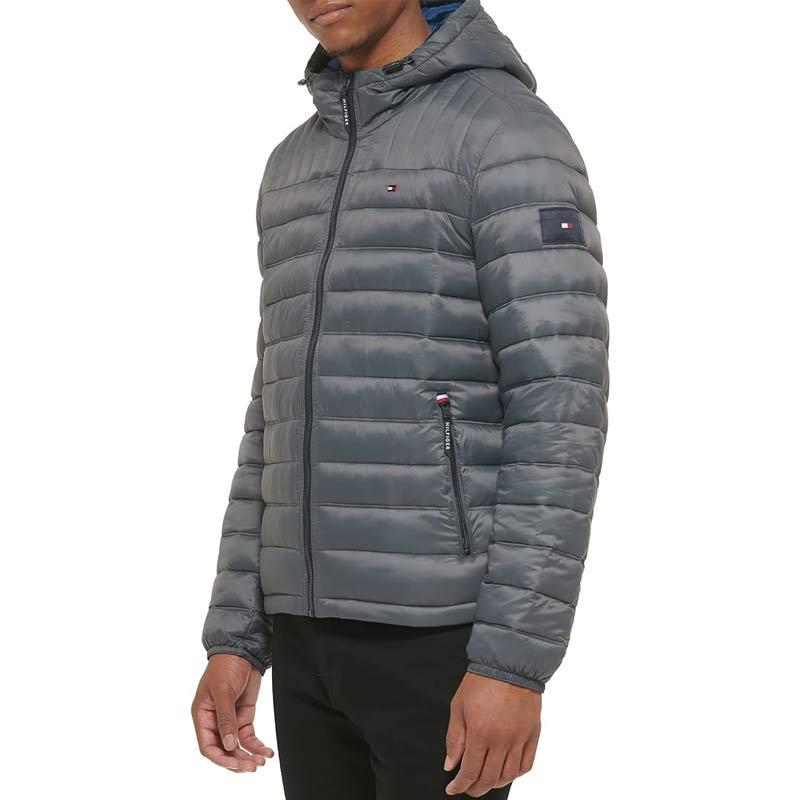
The best fabrics for puffer jackets are lightweight woven nylons and polyesters in the 20D to 40D range with a tight ripstop or taffeta weave, because they combine low weight, high tear strength, down-proofness, and a smooth surface that resists abrasion. For most brand programs, a 30D nylon ripstop with a durable water repellent (DWR) finish is the most balanced starting point, while 20D fabrics suit packable styles and 40D to 70D fabrics suit urban and workwear silhouettes that need more durability. This guide explains shell fabric categories, denier and weave terminology, water-repellent finishes, lining choices, cost impact, and exactly what to send your manufacturer so the fabric selection matches your product positioning from the first sample. A puffer jacket shell has four jobs: hold the filling in place, block wind and light moisture, survive daily wear, and keep the garment light enough to feel comfortable. A fabric fails at this job when it is too loose to stop down or fiber migration, too heavy for the intended category, or too weak at the seams and baffle stitch lines. Five properties decide whether a fabric works for a puffer jacket. Down-proofness. The weave must be tight enough to prevent down or synthetic fiber from escaping through the shell, especially along baffle lines and quilting stitch holes. Nylon taffeta and ripstop weaves with a high thread count pass the standard down-proof test, while loose weaves require an inner lining layer to stop migration. If your brand uses 700 fill power down or higher, down-proofness becomes more critical because finer down clusters escape through smaller gaps. Tear strength and abrasion. A puffer jacket is compressed, folded, and packed repeatedly. Ripstop fabrics weave a reinforcing grid into the construction so tears stop at the grid lines instead of running across the panel. For urban styles that see daily commuting and backpack wear, a 40D or 50D face fabric survives contact with zippers, bag straps, and seat belts far better than a 20D micro fabric. Weight and packability. Every gram of shell fabric adds to the finished garment weight. A 20D nylon shell can save 150 to 250 grams compared with a 70D shell on a full-length jacket, which matters for packable and travel products. If weight is not a selling point, a heavier face fabric usually improves hand feel, drape, and perceived quality. Water and wind resistance. Most puffer shells carry a DWR finish that makes light rain bead off the surface. For wet-weather products, the shell is laminated to a waterproof membrane or coated with a polyurethane layer, and the seam construction changes to taped seams. A shell fabric that passes 1,000 mm hydrostatic head is adequate for light drizzle; a taped, membrane-backed shell rated at 10,000 mm or higher is a different product category altogether. Hand feel and drape. The same denier can feel completely different depending on whether the yarn is flat, textured, or micro-denier. Flat nylon taffeta feels crisp and technical; micro-ripstop feels soft and quiet; polyester twill feels denser and more structured. For fashion-led puffer programs, hand feel often drives the final fabric decision more than technical specifications. Puffer jacket shells fall into a small number of families, and most factory fabric libraries cover them all. Each family has a clear strength profile, and the right choice depends on the garment category you are launching. The workhorse of technical puffers. A reinforcing grid makes it tear-resistant at low weight, and it takes DWR and membrane lamination well. Available from 20D to 70D. Best for outdoor, travel, and packable styles. A smooth, tightly woven plain-weave fabric with a crisp technical hand feel. Excellent down-proofness and low cost. Used for linings and lightweight shells. Less abrasion-resistant than ripstop at the same denier. Lower cost than nylon, slightly heavier at the same denier, and very stable in color. Packs well and resists UV fading. A common choice for value-driven puffers and youth collections. Denser, more structured fabrics with a softer matte surface. Used for urban and fashion puffers where durability and drape matter more than minimum weight. Often paired with a brushed or fleece backer. Made from post-consumer or post-industrial waste, with GRS certification available on request. Performance is close to virgin equivalents. Increasingly required by European and North American retail programs. A 2-layer or 3-layer construction where the face fabric is bonded to a waterproof membrane. Requires taped seams and waterproof zippers. This is the shell family used for waterproof puffer jackets. Within these families, suppliers offer dozens of variations: matte versus glossy finishes, crinkle textures, soft-touch coatings, and different grid sizes in ripstop. When you brief a manufacturer, start with the family and the denier, then refine with hand-feel samples. Most ginwenwear programs shortlist two to three fabrics, order half-meter lab dips and hand-feel swatches, and decide after touching the physical fabric rather than from specification sheets alone. Denier is the weight in grams of 9,000 meters of yarn, so a higher denier number means a thicker, heavier, and usually stronger yarn. A 20D fabric is not automatically better or worse than a 40D fabric; the correct choice depends on the category, the fill weight, and the durability you need. The table below shows how the common shell weights behave in practice. Weave structure. Three weaves dominate puffer production. Plain weave (taffeta) gives the smoothest surface and the best down-proofness per gram, ripstop adds a thicker reinforcing yarn on a grid, and twill gives a denser diagonal structure with a softer, more draping hand feel. A fourth option, micro-ripstop, uses a very fine grid that is barely visible and produces the quiet, soft fabric favored by premium casual brands. Thread count and down-proofness. Down-proofness is not guaranteed by denier alone. A 20D fabric with a loose construction can leak down, while a well-woven 40D taffeta can pass the down-proof test easily. Standards vary by market, but most buyers in the EU and North America request a down-proof test performed by an independent laboratory, with the report covering the finished quilted garment or at minimum the shell and lining combination. Almost every puffer shell receives a finish that changes how it behaves in wet weather. The finish level is one of the biggest cost and positioning levers in the whole garment, and it is worth understanding the three standard levels before you brief a factory. DWR chemistry matters. C6 DWR is the current standard for most export programs and performs well on water repellency. C0 DWR is a fluorocarbon-free alternative that many EU retail chains now require for environmental compliance, though its initial repellency is usually slightly lower and it can need more frequent re-treatment. If your brand sells into the EU, check the retailer's chemical compliance list before locking the finish, because changing a finish after sampling changes the whole test and approval cycle. Membrane and coated options. For a genuinely waterproof puffer, the shell is bonded to a breathable membrane such as a polyurethane or ePTFE-type film in a 2-layer or 3-layer construction. Two-layer constructions need a separate lining and are softer and cheaper; three-layer constructions bond the membrane directly to the lining, which reduces weight and improves breathability but changes the hand feel. Both constructions require seam taping and waterproof zippers, which we cover in more detail in our waterproof manufacturing guide. The shell gets most of the attention, but the lining and inner layer determine comfort, down-proofness on the inside, and the overall perceived quality. A puffer jacket typically uses one of three inner constructions, and each changes the fabric list. Lining fabric also plays a role in down migration. When the shell is down-proof but the lining is a loose mesh, down can migrate toward the inner face and create cold spots. For fill weights above 150 grams per square meter, most factories recommend a lining with a tight weave or a dedicated down-proof inner layer, and this is one of the first questions a good manufacturer will ask when you brief a new style. Most brands do not start with a fabric; they start with a customer, a price point, and a season. The table below maps common puffer categories to sensible fabric starting points. Treat these as defaults to discuss with your manufacturer, not as rules that replace physical sampling. Seasonality also changes the fabric. A spring puffer can use a 20D shell with a light fill weight because warmth comes mostly from the filling, while a deep-winter style may pair a 40D shell with a higher fill weight for warmth and durability. The fabric and the fill should be designed together: a heavy 650 fill power down in a 20D shell risks down migration, and a light synthetic fill in a 70D shell feels unnecessarily heavy. Fabric is usually the single largest material cost in a puffer jacket, so fabric decisions move the landed cost more than almost any other design choice. Understanding the cost levers helps you hit a target price without degrading quality. MOQ interaction. At ginwenwear we quote production at a minimum order quantity of 50 pieces per style, and fabric is one of the factors that can push an effective minimum higher. If a brand requests a customer-nominated exotic fabric, the mill's own color minimum may be larger than the garment MOQ, in which case we discuss splitting the mill minimum across colors or across two styles that share the same fabric. Stock fabrics, by contrast, support small-batch production comfortably and keep the entry barrier at the 50-piece level. Fabric selection is not a one-time decision; it moves through the same stages as the garment itself. Here is the sequence we follow on most OEM and ODM programs, and the same sequence works whether you use our library or your own fabric. 1-2 days. Share category, target price, and hand-feel references. We shortlist 2-3 fabrics from the library or your nominations. 3-5 days. Half-meter hand-feel swatches and color lab dips are sent for your approval before any garment sample is cut. 5-7 days. Down-proof, tear strength, color fastness, and shrinkage tests on the approved fabric. 7-14 days. Pattern, quilting, and first garment sample for fit and construction review. 25-40 days. Approved sample becomes the bulk reference; production runs with inline and final QC. Total: roughly 6 to 9 weeks from fabric shortlist to bulk delivery on a standard program with stock fabrics, plus extra lead time for mill-order or customer-nominated materials. The quality of the fabric brief determines the quality of the first sample. A complete brief lets the factory move directly to swatches instead of asking clarifying questions across several rounds. Nylon ripstop in 20D to 40D is the most common shell family, because it balances low weight, tear resistance, down-proofness, and a technical look. Polyester ripstop is the most common lower-cost alternative, and recycled versions of both are becoming standard for EU and North American retail programs. For performance and packability, nylon is generally better because it is stronger and lighter at the same denier. Polyester is usually cheaper, holds color well, and resists UV fading, which makes it a strong choice for value-driven and fashion lines. Both work well when the weave is tight enough to be down-proof. Denier measures yarn thickness: the grams of weight per 9,000 meters of yarn. Higher numbers mean thicker, heavier, stronger yarn. 20D is light and packable, 40D is more durable, and 50D to 70D is used for heavier urban and fashion styles. Ask the manufacturer or mill for a down-proof test report on the finished construction, or run an independent laboratory test. Tight weaves such as taffeta and ripstop with high thread counts usually pass; loose or stretch fabrics typically need a separate down-proof inner layer. Yes. Many brands supply customer-nominated or customer-owned fabric. In that case we review the fabric for down-proofness and suitability, run the same physical tests, and adjust the production schedule to the fabric delivery date. The garment MOQ remains 50 pieces per style. At minimum request down-proofness, tear strength, color fastness to washing and light, shrinkage, and DWR performance if the garment claims water repellency. For waterproof styles add the hydrostatic head test on the laminated shell and a seam tape adhesion check. The best fabric for your puffer jacket is the one that matches your customer's use case, your price point, and your compliance requirements, and it should always be confirmed by physical swatches and down-proof testing rather than chosen from a specification sheet. Start with a 30D nylon ripstop for a balanced everyday program, drop to 20D for packable styles, step up to 40D and above for urban durability, and move to membrane lamination only when waterproof performance is a genuine selling point. Ready to build your puffer jacket line? Contact our team or submit your requirements and we will send fabric swatches from our library for your review. You can also browse our product catalog or read more manufacturing guides on our blog.Best Fabrics for Puffer Jackets
Table of Contents
What Makes a Fabric Suitable for Puffer Jackets
Main Shell Fabric Categories
Nylon Ripstop
Nylon Taffeta
Polyester Ripstop
Polyester Twill and Oxford
Recycled Nylon and Polyester
Laminated Waterproof Shells
Denier, Weight and Weave Explained
Shell Weight Typical Use Weight Impact Durability Best For 20D nylon Packable, ultralight Lowest Low-moderate Travel puffers, running vests 30D nylon Balanced all-rounder Low Moderate Most brand launches, everyday puffers 40D nylon Urban and commuter Medium High City jackets, workwear styles 50D-70D polyester Fashion and heavy use Medium-high Very high Fashion puffers, bomber silhouettes 20D-30D recycled Eco programs Low Moderate Sustainable collections, EU retail Water-Repellent Finishes and Membranes
Level Construction Rain Performance Typical Use No finish Plain shell Absorbs rain quickly Indoor or fashion-only styles C6 / C0 DWR Shell treated with repellent Beads light rain, wet-out under sustained rain Most everyday puffers PU coating Shell with coated backer Blocks light rain, limited breathability Budget wet-weather styles Membrane lamination 2-layer or 3-layer bonded shell Waterproof with taped seams, 5,000-20,000 mm Waterproof puffers, outdoor programs Lining and Inner Fabrics
Lined Shell
Unlined with Taped Baffles
Brushed or Fleece Backer
Mesh and Pocket Linings
Fabric Selection by Use Case
Product Category Recommended Shell Recommended Lining Finish Level Packable travel puffer 20D nylon ripstop Unlined, taped baffles C6 DWR Everyday urban puffer 30D nylon ripstop 20D taffeta C6 or C0 DWR Commuter / workwear 40D nylon or 50D polyester twill 20D taffeta C6 DWR or PU coating Fashion puffer 40D-70D polyester, matte finish Brushed backer or taffeta Optional DWR Waterproof outdoor puffer 30D-40D 2L or 3L laminated 3L bonded or taffeta Membrane + taped seams Sustainable line 20D-30D recycled nylon/polyester Recycled taffeta C0 DWR preferred How Fabric Choice Affects Cost and MOQ
From Fabric Selection to Sample
Brief and shortlist
Swatch and lab dip
Down-proof and physical tests
Sample development
Sample approval and bulk
What to Send Your Manufacturer
Frequently Asked Questions
What is the most common fabric for puffer jackets?
Is nylon or polyester better for a puffer jacket?
What does 20D or 40D mean on a fabric?
How do I know if a fabric is down-proof?
Can I supply my own fabric to the factory?
What fabric tests should I request before bulk production?