Custom Puffer Jacket Materials Explained | Down vs Synthetic vs Recycled
- Share
- Issue Time
- Dec 25,2025
Summary
How to choose puffer jacket materials for OEM production: how shell, insulation and lining interact, down fill power compared with synthetic and recycled fill on warmth, wet performance and wash durability, lining and hardware selection, specifications to fix before sampling, cost drivers, and MOQ 50 pcs per style with sampling in 7 to 14 working days and bulk in 25 to 40 working days.
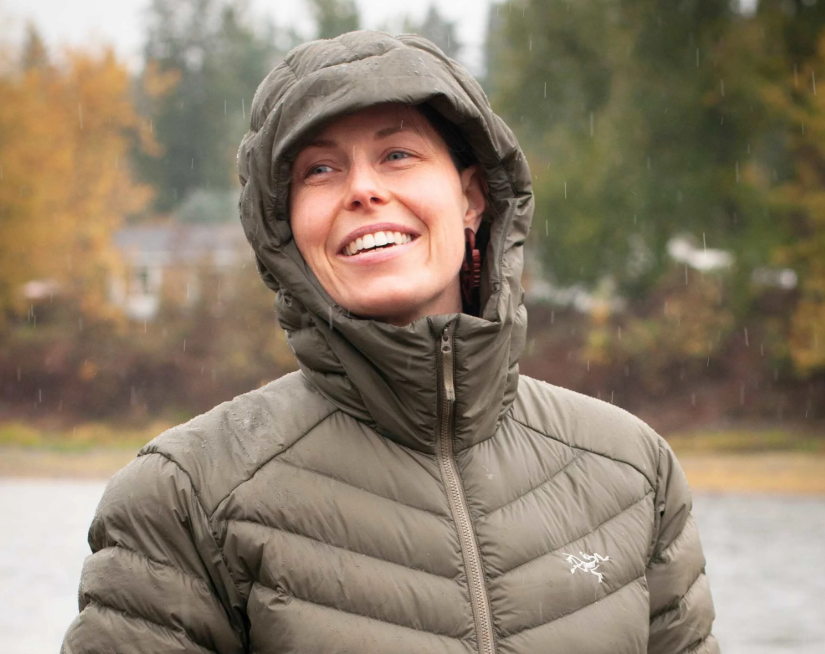
Custom Puffer Jacket Materials Explained: Down, Synthetic and Recycled Insulation
A puffer jacket is only as good as the material decisions made before the first stitch. Shell fabric controls water resistance and hand feel, insulation controls warmth and packability, and lining controls comfort and how the jacket drapes on the body. Get the order of those decisions wrong and you can spend a full season explaining to customers why a jacket looks premium and performs like a budget piece. This guide explains how the three layers interact, compares down, synthetic and recycled insulation on measurable criteria, and sets out the specifications, cost drivers and certification evidence a brand should fix before sampling. If you want to see finished constructions first, browse our custom down jacket range and then return to the specification checklist.
Table of Contents
- How the Three Layers Work Together
- Shell Fabric Options
- Insulation: Down, Synthetic, Recycled
- Direct Comparison
- Lining and Comfort
- Hardware and Branding
- Specifications to Fix Before Sampling
- What Drives Production Cost
- Sustainability Claims and Evidence
- Recommendations by Brand Type
- Sampling, MOQ and Lead Times
- Frequently Asked Questions
How the Three Layers Work Together
Puffer performance comes from a system, not from a single material. The shell protects the fill from wind and moisture, the fill traps air and slows heat loss, and the lining manages moisture and friction against the body. Change one layer and the other two must be re-checked, which is why a material plan is built in a fixed order rather than assembled from a catalogue.
Start with the climate and the end use. A city commuter jacket prioritises hand feel, weight and a clean silhouette. A resort or ski-adjacent piece prioritises water resistance, wind blocking and a shell that survives abrasion against equipment. A packable travel jacket prioritises compression and recovery. Each of those briefs points to a different shell and a different fill, and each one changes the baffle construction, because the way fill is held in place determines whether warmth stays even across the body.
The second decision is construction. Sewn-through baffles are simple, lighter and cheaper, but each stitch line creates a cold path where the outer fabric meets the inner fabric directly. Box baffles and welded channels add internal walls or bonded seams that remove those cold paths and hold loft more evenly, at the cost of weight, fabric consumption and machine time. Stitchless welded construction looks the most technical and carries the highest tooling and rework risk, so it belongs in a program with volume and a locked design rather than a first sample run.
Once shell and construction are fixed, the fill follows. A jacket with sewn-through baffles rarely needs premium high-loft down, because the construction leaks warmth before the fill quality becomes the limiting factor. A jacket with box baffles and a windproof shell will visibly reward better fill, because nothing else in the system is holding the performance back.
Shell Fabric Options for Custom Puffer Jackets
Shell fabric decides how the jacket feels in the hand, how it resists weather, and how it ages. For puffer construction, four families cover most programs.
Nylon is the default for lightweight puffers. It has a soft hand, a low weight per square metre, and it takes a durable water repellent finish well. Its weakness is abrasion resistance, which matters on a jacket used against backpack straps or ski edges. Recycled nylon behaves almost identically to virgin nylon when the yarn quality is controlled, and it supports a recycled content claim that many European retailers now expect.
Polyester is more abrasion resistant and holds colour better under repeated washing, at the cost of a slightly stiffer hand in low deniers. It is the usual choice for value programs and for jackets aimed at school, team or workwear use, where the garment has to survive rough handling more than it has to feel delicate.
Stretch woven shells combine nylon or polyester with elastane to give a jacket that moves with the body instead of resisting it. The trade-off is dimensional stability: stretch shells need closer control of lining tension and baffle spacing, or the quilt lines will wave after wear. They suit athletic and lifestyle positioning rather than technical expedition positioning.
Ripstop constructions use a grid of thicker yarns inside a fine weave to stop a tear from travelling. They are the standard choice where the jacket may catch on branches, skis or equipment, and the visible grid has become a recognisable technical signal that buyers associate with durability. For a waterproof and windproof shell over a puffer, our custom waterproof jacket construction notes explain how membranes and coatings are selected and laminated.
| Shell Family | Hand Feel | Weather Resistance | Abrasion | Typical Use |
|---|---|---|---|---|
| Nylon | Soft, light | Good with DWR | Moderate | Lightweight city and travel puffers |
| Polyester | Firmer | Good with DWR | High | Team, school and value programs |
| Stretch woven | Elastic, close | Depends on finish | Moderate | Athletic and lifestyle fits |
| Ripstop | Crisp, technical | Good with DWR | High | Outdoor, equipment-adjacent use |
| Recycled nylon | Soft, light | Good with DWR | Moderate | Programs with recycled content targets |
Insulation Options: Down, Synthetic and Recycled Compared
Insulation is where most puffer decisions are actually made. The three families behave differently in ways that matter to customers after the first month of wear, not on the showroom floor.
Down Fill: Warmth Per Gram
Down is the clusters found under the feathers of ducks and geese. Those clusters trap air efficiently, which gives down the best warmth-to-weight ratio of any common fill. Fill power measures how much volume one ounce of down occupies, so a higher fill power means fewer grams are needed for the same loft. Typical production ranges run from about 550 fill power at the value end to 800 and above at the premium end, and the difference shows up as weight, packability and price per garment rather than as a visible feature.
The down-to-feather ratio matters as much as the fill power number. A higher percentage of down clusters loft better and are less likely to poke through the shell, while a higher feather content adds weight without adding warmth. Down loses most of its insulating value when it gets wet, which is why down programs pair well with a water-resistant shell and careful seam treatment. Traceability is the other non-negotiable: buyers in Europe and North America increasingly ask for documentation that the down comes from a certified supply chain that prohibits live plucking and force feeding.
Synthetic Fill: Predictable and Washable
Synthetic fill uses polyester fibres formed into clusters, sheets or short-staple battings. Its advantage over down is behaviour when wet: it retains a useful proportion of its insulation value, dries quickly and tolerates repeated machine washing, which suits childrenswear-adjacent sizing, rental or workwear programs. Its disadvantage is weight and packability, plus gradual loss of loft over many wash cycles because the fibre structure compresses permanently.
The construction of the synthetic matters more than the fibre name. Continuous filament and high-loft cluster fills recover better than flat needle-punch battings and are the right choice where the jacket has to look full after packing. Blow-in synthetic fill can be distributed in channels in the same way as down, which allows a house style to be offered in both a down and a synthetic version without redrawing the pattern.
Recycled Fill: The Same Physics, Better Paperwork
Recycled synthetic fill is produced from post-consumer or post-industrial polyester, most commonly from recycled bottles. Mechanically, a well-specified recycled fill sits alongside its virgin equivalent; the difference is in traceability and messaging. Recycled down is a separate route: down recovered from used bedding and garments, cleaned and re-certified before it goes back into a jacket.
Recycled content claims are only as strong as the chain of custody behind them, so a buyer should request transaction certificates or supplier declarations that connect the claim to the specific batch used in production. A recycled claim with no chain of custody is a marketing statement, not a material fact.
Down vs Synthetic vs Recycled: Direct Comparison
The table below compares the three families on the criteria buyers actually argue about in development meetings.
| Criterion | Down | Synthetic | Recycled |
|---|---|---|---|
| Warmth per gram | Highest | Moderate | Moderate to high |
| Wet performance | Weak | Good | Good |
| Packability | Excellent | Limited | Limited to good |
| Wash durability | Needs care | Excellent | Excellent |
| Allergy comfort | Depends on processing | High | High |
| Cost per unit warm | Highest | Lowest | Mid to high |
| Documentation focus | Supply chain traceability | Material test reports | Chain of custody |
| Best fit | Premium and packable | Value and washable | Brands with content targets |
Lining Materials and the Comfort Layer
The lining is the part of a puffer jacket that the customer feels most directly, because it touches the body and the arms. It also does quiet technical work: it protects the fill from abrasion, manages moisture, and provides the sliding surface that lets a jacket go on over a sweater.
Taffeta linings are the lightest and slickest option and are the standard pairing for down puffers, because they let the jacket slide on easily and add minimal weight. Brushed or tricot linings feel warmer and softer against the skin and are common in synthetic-filled jackets aimed at cold-climate markets, at a small weight penalty. Mesh and ventilated linings help with moisture management in a jacket worn during activity, though in a full puffer they are usually limited to the upper back or underarm panels.
Lining colour is a branding decision with a practical edge. A contrast lining gives a jacket a deliberate designed look and photographs well, but it also shows every filling and baffle irregularity, so shade and construction tolerances must be tighter. A lining that matches the shell hides irregularities and reduces reject rates during inspection. Pick the contrast lining only when the construction quality can support it.
Hardware, Zippers and Branding Components
Hardware is a small share of material cost and a large share of perceived quality. A jacket with a snapping main zipper, mismatched puller finish or a plastic slider that sticks within a season will feel cheap regardless of the down inside.
For the main closure, a coil or vislon zipper with a metal puller and a storm flap is the default on a mid-weight puffer. Pocket zippers are usually smaller gauge and are the first component to fail, so they should be specified explicitly rather than chosen by the factory from whatever is in stock. Snap fasteners need a stated holding force; a snap that releases when the wearer bends is a common and entirely preventable complaint.
Branding components carry the same logic. Woven labels, heat transfer prints, embossed zipper pulls, rubberised badges, custom drawcord ends and printed linings all express the brand, and each one has a minimum order quantity from its own supplier. Those component minimums can exceed the garment minimum, which is why a 50 pcs per style jacket program should confirm label and packaging availability before the style is finalised.
Branding Options
- Woven chest and neck labels
- Heat transfer and silicone prints
- Embossed zipper pullers
- Rubberised sleeve badges
- Printed inner linings and yoke panels
Hardware Options
- Coil, vislon or metal main zippers
- Storm flaps and chin guards
- Snap fasteners with stated holding force
- Drawcord toggles and cord locks
- Elasticated cuffs and hem adjusters
Packaging
- Polybags with size stickers
- Printed header cards and hang tags
- Recycled or FSC cartons
- Compression bags for packable styles
Documentation
- Material test reports per shell lot
- Fill content and traceability records
- Care label wording and fibre content
- Inspection report before balance release
Specifications to Fix Before Sampling
Every specification that is left open at sampling becomes a change order later. Fix these before the sample is cut.
Shell Specification
Fibre, denier, weave or ripstop grid, weight per square metre, finish type and colour reference with a tolerance range.
Insulation Specification
Fill family, fill power or loft, grams per body zone, distribution per baffle, and the traceability documentation required.
Construction Specification
Sewn-through, box baffle or welded channels, stitch density, baffle width, seam sealing and lining attachment method.
Trim and Hardware
Zipper brands and gauges, puller finish, snap holding force, drawcord and toggle type, and label construction.
Size and Fit
Measurement chart with tolerances by point of measure, plus the size range and grading increments for your market.
A specification sheet that covers these five blocks turns a quotation into a comparable number. It also gives the factory a single source of truth at the first article check, which is where most material disputes are either prevented or discovered too late. Our OEM and ODM service process documents each block as part of the project brief.
What Drives Final Production Cost
Material cost is the headline, but the final unit price is shaped by five factors that buyers often discover only at quotation stage.
The first driver is fill mass. Down programs are quoted by grams per garment at a given fill power, so adding warmth means adding cost roughly linearly. Synthetic programs are less sensitive to weight and more sensitive to the type of batting used, which is why a heavier synthetic jacket can sometimes cost less than a lighter down one.
The second driver is construction complexity. Sewn-through baffles require straightforward sewing passes. Box baffles add internal walls, more fabric and more handling. Welded and bonded channels need tooling, tighter process control and higher rework rates. Each step up the construction ladder adds labour and fabric consumption before any premium material enters the picture.
The third driver is decoration and components, including patches, prints, embossed zipper pulls, custom drawcords and printed linings, each with its own supplier minimum. The fourth is order shape: a single colourway in a full size curve is more efficient than four colourways at 50 pcs each, because cutting and spreading time is amortised differently. The fifth is testing and documentation, which is small per unit but non-zero, and should be budgeted from the first quotation rather than added after a buyer asks for compliance evidence.
Sustainability Claims and Certification Evidence
Recycled and responsible sourcing claims convert well but collapse quickly under scrutiny if the paperwork does not exist. Build the evidence set at the same time as the material plan.
RDS for Down
Responsible Down Standard covers the down supply chain and addresses forced moulting and live plucking. Buyers should request documentation covering the specific down batch used, not only a company-level statement.
OEKO-TEX for Materials
Tests shell, lining, fill and trims against harmful substance limits. It is the most commonly requested material safety document for European retail and marketplace listings.
Recycled Content Chain of Custody
Transaction certificates or supplier declarations that connect a recycled content claim to the batch. Without a chain of custody, a recycled claim cannot be defended in an audit.
ISO 9001 and BSCI
ISO 9001 covers the quality management system and BSCI or SEDEX covers social compliance, each scoped to the actual production site where your jackets are made.
Two rules keep claims safe. First, describe what is documented rather than what is aspirational: a jacket with a recycled shell and a virgin fill should not be marketed as fully recycled. Second, keep the evidence naming the correct production site, because a certificate that does not cover the workshop is an audit finding rather than a trust signal. Ginwen maintains ISO 9001, BSCI (SEDEX), RDS and OEKO-TEX documentation, and more detail about how programs are structured is available on our about page.
Material Recommendations by Brand Type
The right material plan follows the brand position, not a universal best answer.
| Brand Type | Shell | Insulation | Priority |
|---|---|---|---|
| Premium outdoor | Ripstop nylon with DWR | High fill power down | Warmth per gram and traceability |
| Fashion lifestyle | Soft nylon or stretch woven | Down or blow-in synthetic | Silhouette, hand feel and lining contrast |
| Value and teamwear | Polyester | Synthetic batting | Durability, wash performance and unit cost |
| Eco-positioned | Recycled nylon | Recycled synthetic or recycled down | Chain of custody and credible claims |
| Travel and packable | Light nylon, low denier | High fill power down | Compression and recovery |
| Kids and family | Polyester or recycled nylon | Synthetic fill | Washability and allergy comfort |
Most brands settle in the middle of two columns rather than at one extreme, and that is normal. The failure mode is choosing a premium fill for a consumer who will wash the jacket weekly, or choosing a value shell for a product positioned at the top of the market. Match the material plan to the customer behaviour you expect, and the rest of the specification follows.
Sampling, MOQ and Lead Times
Once the material plan is fixed, the commercial terms determine how quickly the program can move.
| Item | Standard Terms | Notes |
|---|---|---|
| MOQ | 50 pcs per style | Counted per style and per colour, sizes may be mixed |
| Sampling time | 7 to 14 working days | Depends on fill sourcing and component availability |
| Sample fee | USD 50 to 200 | Deductible from the bulk order |
| Bulk production | 25 to 40 working days | After approved sample and confirmed deposit |
| Payment | 30% deposit, 70% balance | Balance normally against pre-shipment inspection |
A 50 pcs per style minimum lets a brand validate a material plan in the market before committing to a full season, which matters most when the shell or fill choice is still being tested. Sampling of 7 to 14 working days covers pattern work, fill sourcing and assembly, and the wide range reflects how much of that time depends on how quickly artwork, colour references and component approvals come back from the buyer side. Bulk production of 25 to 40 working days assumes the sample is approved and the deposit is in place; fabric and down booking can run in parallel with sampling so that bulk sewing starts immediately after approval.
[IMAGE_PLACEHOLDER] English prompt: A finished lightweight puffer jacket being compressed into a small travel bag next to a bulk production stack of the same style in a factory packing area, hands visible, natural light, no text, no logos.Frequently Asked Questions
Which is warmer, down or synthetic?
Down delivers more warmth per gram, so a down jacket can be lighter for the same loft. Synthetic holds more of its insulation value when wet and tolerates frequent machine washing. Choose by climate and washing behaviour rather than by a single specification number.
Is recycled fill less warm than virgin fill?
Not by definition. A well-specified recycled synthetic fill behaves close to its virgin equivalent, and recycled down is re-cleaned and re-certified before reuse. Warmth depends on fill specification and construction, not on the recycled label alone.
What fill power should I choose?
Fill power in the region of 550 suits value and heavier wear, around 650 to 700 suits mainstream premium jackets, and 800 and above suits lightweight and packable programs. The right choice depends on target weight, packability and price point.
How do I verify a recycled content claim?
Request a transaction certificate or supplier declaration that connects the claim to the batch used in your production, together with the material test reports for the shell and lining.
What is the minimum order quantity?
MOQ is 50 pcs per style, counted per style and per colour with mixed sizes, which allows a realistic first market test before a full season commitment.
How long does sampling and bulk production take?
Sampling runs 7 to 14 working days and bulk production runs 25 to 40 working days after sample approval and deposit, with sample fees of USD 50 to 200 deductible from the order and 30% deposit with 70% balance terms.
Can the same pattern be produced in down and synthetic versions?
Yes, and it is a common approach. Blow-in synthetic fill can be distributed in the same channels as down, so a single pattern and measurement chart can support both versions with only the fill specification changing.
How do I start a puffer jacket material plan?
Send your target climate, brand position, size range, colourways and quantity through the inquiry form. You will receive a material recommendation with shell, fill, construction and trim options rather than a single uncomparable quote.
Puffer jacket materials are a system, not a shopping list. Fix the shell and construction first, then choose fill to suit the climate and the way customers will wash the garment, then specify lining, hardware and documentation to match. A material plan that survives contact with the market is one where every claim on the hang tag is backed by a report, and every specification on the tech pack is one the factory can measure at the first article check.
Ginwen produces custom puffer and down jackets at MOQ 50 pcs per style, with sampling in 7 to 14 working days, bulk production in 25 to 40 working days, sample fees of USD 50 to 200 deductible from the bulk order, 30% deposit and 70% balance terms, and ISO 9001, BSCI (SEDEX), RDS and OEKO-TEX documentation. To plan your next program, contact our team, submit your requirements, review our product catalogue, or read more material guides on our blog.