Difference Between Puffer Jacket and Down Jacket
- Share
- Issue Time
- Aug 18,2026
Summary
Puffer vs down jacket: what the terms really mean, how construction and filling differ, warmth, weight, cost and care, and which one to choose for your brand and market.
Difference Between Puffer Jacket and Down Jacket
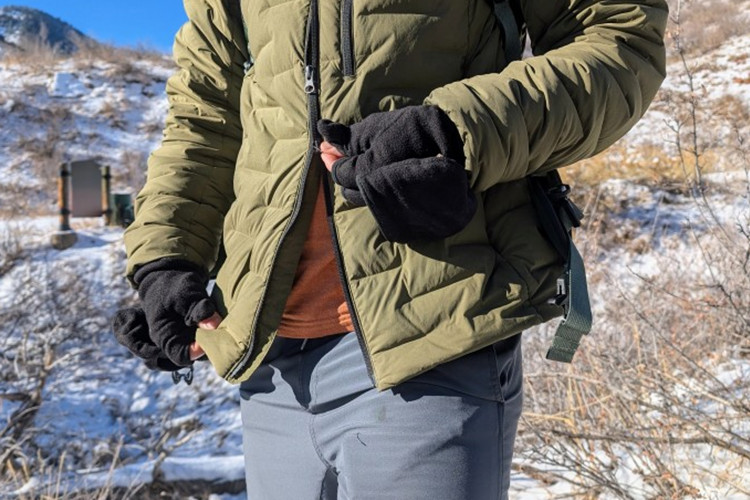
A puffer jacket is a jacket built with quilted chambers: rows of stitched compartments that hold an insulating fill in place and create the rounded, segmented silhouette that gives the garment its name. The word puffer describes the look and the construction method, not the material inside. The same quilted shell can be filled with goose down, duck down, a down-and-feather blend, polyester fiberfill, or a recycled synthetic insulation, and the jacket is still called a puffer in every case.
The quilt pattern is the most visible design element of a puffer. Horizontal channel quilting is the most common choice and gives a clean, classic look. Vertical baffles run from shoulder to hem and are often used on longer coats. Chevron and diamond quilting add a more fashion-forward angle and are frequently chosen for women's styles. Box baffles, in which the fabric is offset into separate three-dimensional pockets, are used on high-end technical jackets because they let the fill loft fully without the stitch lines compressing it.
Puffers are sold across every price tier, and the fill usually decides the tier:
Mid-range puffers use duck down or denser synthetic fills and cover most urban winter needs. Premium puffers use high-fill-power goose down with down-proof shell fabrics and are positioned as hero products by many brands. You can see the construction range we produce on our products list page.
Table of Contents
- What Is a Down Jacket?
- Puffer Jacket vs Down Jacket: How the Terms Actually Relate
- Fill Material Comparison: Down vs Synthetic
- Warmth, Weight, Compressibility, Price, and Wet Weather Performance
- Shell Fabric and Lining: What Separates a Good Puffer from a Bad One
- How Brands Choose: A Practical Decision Guide
- A Factory Perspective: How We Select Fills at Ginwenwear
- FAQ: Puffer Jacket vs Down Jacket
- Who Should Source a Puffer or Down Jacket from a Factory
- The Bottom Line
What Is a Down Jacket?
A down jacket is defined by its fill: down, the soft under-plumage that grows beneath the outer feathers of ducks and geese. Down clusters have no stiff quill shaft, so they are extremely soft, and their three-dimensional structure traps a large volume of still air, which is what provides insulation. The more air a given weight of down can trap, the warmer and lighter the jacket can be. That property is measured as fill power, expressed in cubic inches per ounce.
Fill power is the single most important specification in a down garment. Entry-level down jackets commonly use 550 to 650 fill power, which is sufficient for mild and temperate winters. Mid-range garments use 650 to 750. Premium and expedition pieces use 750 to 800 and above. A jacket with 800 fill power can reach the same warmth as a 550 fill jacket with roughly 20 to 30 percent less down by weight, which is why high fill power matters for weight-conscious products such as mountaineering layers and packable travel jackets.
Commercial down is almost always sold as a mixture of down clusters and feathers, stated as a ratio such as 90/10 or 80/20. A 90/10 fill contains 90 percent down clusters and 10 percent feathers by weight. Higher down content gives more loft per gram, while feathers add stiffness and reduce cost. Most mid-range and premium jackets use 90/10; budget lines commonly use 80/20 or 70/30.
Down also comes from two sources. Duck down is the workhorse fill of the industry: it is affordable, widely available, and perfectly adequate for most consumer markets. Goose down produces larger clusters and slightly higher fill power at the same weight, which is why premium brands often choose goose down for flagship styles. At the same fill power, the difference in real-world warmth is modest; the larger differences are in price and in how the garment compresses.
Because down migrates inside a garment, a down jacket needs the same baffle construction as a puffer. In practice, most down jackets are puffer jackets. That is the source of the confusion this article exists to remove: puffer and down are not competing categories, they are different ways of describing the same garment.
Puffer Jacket vs Down Jacket: How the Terms Actually Relate
When buyers compare a puffer jacket and a down jacket, they are usually comparing a quilted garment against a fill type. The cleanest way to think about the relationship is a two-by-two grid: a jacket can be puffer-styled or not, and it can be filled with down or with synthetic insulation. The table below shows the four practical results.
| Combination | What it means | Who chooses it |
|---|---|---|
| Down puffer | Quilted jacket filled with duck or goose down | Most winter and outdoor brands; the default cold-weather jacket |
| Synthetic puffer | Quilted jacket filled with polyester or a branded synthetic fill such as PrimaLoft-type insulation | Brands targeting wet climates, budget lines, or vegan positioning |
| Slim-quilted down jacket | Down fill with narrow, close stitching for a less puffy profile | Urban and fashion brands that want insulation without volume |
| Unquilted insulated jacket | Smooth shell with an internal insulation layer | Workwear, rainwear liners, and sleek fashion pieces |
For most B2B sourcing decisions, the question is not puffer versus down. The practical question is which fill, which shell, and which quilt construction to combine. A brand that sells to a dry, cold market will usually choose a down puffer. A brand that sells to a rainy coastal market may choose a synthetic puffer with a water-resistant shell. Both are puffers; only the fill changes.
Fill Material Comparison: Down vs Synthetic
The fill is the heart of the jacket, and it determines most of the measurable differences between products. The table below compares the three most common fills used in puffer production: duck down, goose down, and synthetic insulation of the PrimaLoft type. We at Ginwenwear use exactly these trade-offs when we help clients shortlist fills for sampling.
| Property | 90/10 duck down, 650 fill power | 90/10 goose down, 750+ fill power | Synthetic (PrimaLoft-type) |
|---|---|---|---|
| Warmth per gram | High | Highest | Moderate; needs more grams |
| Garment weight | Light | Lightest | Heavier at equal warmth |
| Compressibility | Packs small | Best compression | Moderate compression |
| Wet weather | Loses loft when soaked | Loses loft when soaked | Keeps most warmth when damp |
| Price level | Mid | Premium | Low to mid |
| Certifications | RDS and OEKO-TEX possible | RDS and OEKO-TEX possible | Recycled content and OEKO-TEX |
The trade-off is simple. Down offers the best warmth-to-weight ratio of any insulation available, which is why serious winter brands use it somewhere in the range. Synthetic offers reliable performance in wet conditions and a lower price, which is why it dominates entry-level jackets, rain-adjacent products, and markets with humid winters. A growing share of our clients run both fills in the same collection: a synthetic puffer at the entry price point and a down puffer at the mid and premium price points.
RDS certification matters more every year. RDS, the Responsible Down Standard, verifies that the down in a garment comes from birds that were not live-plucked or force-fed, and it requires traceability from farm to finished product. Many European and North American retailers will not list a down product without RDS documentation. As a factory, we can produce RDS-certified down puffers, and we recommend clients confirm the chain-of-custody requirement with their retailer before sampling.
Warmth, Weight, Compressibility, Price, and Wet Weather Performance
Beyond the fill itself, buyers compare five performance dimensions. Each one maps directly to a specification you can write into a sourcing brief.
Warmth
Warmth is a function of loft: the volume of still air trapped between the body and the outside. Down produces more loft per gram than any synthetic fill, which is why a 700 fill power down puffer can be visibly thinner than a synthetic jacket of equal warmth. For the same outer shell, a down jacket typically needs less fill weight than a synthetic jacket to reach the same insulation value. That weight saving is the main reason outdoor brands pay a premium for down.
Weight
A typical lightweight women's down puffer with a 20D nylon shell and 90/10 duck down weighs between 250 and 400 grams, while an equally warm synthetic puffer with the same shell lands closer to 350 to 500 grams. For packable travel styles the difference is easy to feel in a backpack. Fill power and fill weight are the two numbers to negotiate with a factory; together they decide the final garment weight.
Compressibility
Down compresses to roughly a third of the volume of synthetic insulation at the same warmth. This is why packable jackets, travel pieces, and expedition layering systems are almost always down. If your product needs to fit into a small stuff sack, down is the rational choice. If the jacket is sold for everyday urban wear and will hang in a wardrobe, compressibility matters less.
Price
Price is where the categories separate most visibly. Synthetic insulation costs a fraction of down per garment, so at the same retail price a synthetic puffer can carry a better shell fabric, more hardware, and a more complex quilt pattern than a down puffer. Down also carries certification costs: RDS-certified fill, chain-of-custody paperwork, and testing all add to the bill of materials. In our cost breakdowns, the fill is usually the single largest material cost difference between a down style and a synthetic style of the same warmth.
Wet weather performance
Down's weakness is water. When wet, down clusters collapse, the trapped air is displaced, and the garment loses most of its insulation until it dries. A soaked down puffer is cold and heavy. Synthetic fills absorb far less water and keep lofting even when damp, which is why synthetic is the standard choice for rainy and humid markets. Two partial remedies exist for down: a durable water repellent (DWR) finish on the shell and a hydrophobic down treatment. Both slow water ingress, but neither makes down fully waterproof. For genuinely wet climates, we advise clients to choose synthetic or to design a waterproof outer shell over a down liner.
Shell Fabric and Lining: What Separates a Good Puffer from a Bad One
The fill gets the attention, but the shell decides how the jacket feels and how long it lasts. Down requires a down-proof fabric: a tightly woven nylon or polyester that stops fine down tips from leaking through the stitch lines. Standard down-proof shells are 20D to 30D nylon. A 20D fabric is lighter and softer and suits fashion and packable styles. A 30D fabric is denser, more abrasion-resistant, and suits outdoor and workwear styles. Ten-denier fabrics exist for ultralight products but are fragile and rarely used in mainstream collections.
A DWR finish on the face fabric sheds light rain and snow and keeps the shell from wetting out, which protects the down inside. It is not a waterproof membrane: in sustained rain, water still reaches the fill through seams and zippers. For the lining, down garments typically use a thin nylon or polyester taffeta. Some brands add an inner zip pocket and a stuff pocket, both of which need the same down-proof construction.
Construction also decides warmth distribution. Sewn-through quilting, where the face fabric and lining are stitched directly together, is cheap, light, and flexible, but the stitch lines create cold spots where insulation is absent. Box baffle construction, where separate fabric walls connect the two layers, lets the down loft fully and eliminates cold spots, but it costs more and takes longer to sew. Most urban puffers use sewn-through quilting; most premium and technical jackets use box baffles. When a client asks us why two jackets with the same fill feel different, the answer is usually the baffle construction.
How Brands Choose: A Practical Decision Guide
Sourcing decisions are easier when the choice is reduced to a few questions. The guide below is the same sequence our sales team walks through with new clients.
Step 1. Define the climate of your target market
Cold and dry, such as the northern United States, Canada, and northern Europe: choose down at 650 to 750 fill power with a DWR shell. Cold and wet, such as the United Kingdom, the Pacific Northwest, and coastal cities: choose synthetic, or a down jacket worn under a waterproof outer layer. Mild winters near freezing: a lightweight synthetic puffer or a 550 to 650 fill power down puffer is usually enough and keeps the price point accessible.
Step 2. Set the target retail price
Below a 40 USD retail price, synthetic is the realistic choice. Between 40 and 100 USD retail, duck down becomes viable when quantities justify the material cost. Above 100 USD retail, goose down, higher fill power, and box baffle construction become the differentiation tools. We recommend clients fix the retail target before sampling, because fill and shell choices shift the cost of goods by several dollars per unit.
Step 3. Decide your sustainability position
If your retailer or your brand promise requires certified sourcing, plan for RDS down, which our factory can supply with the relevant documentation. For a vegan or animal-free claim, choose synthetic insulation, ideally with recycled content. OEKO-TEX certification on the finished garment covers both paths and is increasingly requested by European buyers. Write sustainability claims into the sourcing brief so the factory can quote the correct materials from the first sample round.
Step 4. Match the silhouette to the end use
- Urban fashion: slim horizontal quilting, 20D shells, 90/10 duck down at 550 to 700 fill power.
- Outdoor and hiking: box baffles, 30D shells, 700 to 800 fill power goose down, packable design.
- Workwear and uniforms: durable 30D or 40D shells, synthetic or down fill, dark colors, reinforced shoulders.
- Kids outerwear: lightweight synthetic or low-fill down, soft 20D shells, easy-care fabrics.
None of these choices are permanent. Most brands run two fills across one silhouette and let sell-through data decide the next season's ratio. Sampling both options in the same style costs little and answers the question with real garments instead of theory.
A Factory Perspective: How We Select Fills at Ginwenwear
We at Ginwenwear are a jacket factory in Dongguan, Guangdong, China, producing puffer jackets, down jackets, and quilted outerwear for brands in North America and Europe under OEM, ODM, and private label arrangements. Puffer and down jackets are a core part of our production. In every project, fill selection starts with a short list of questions: target market climate, target retail price, desired garment weight, certification requirements, and whether the product must pack small. The answers usually narrow the choice to one or two fills, and we then make samples with both so the client can compare warmth and hand feel side by side.
Fill quality is verified before production, not assumed. We specify the down ratio and fill power in writing on the tech pack, and the fill is tested at the start of bulk production. For RDS orders, the certified fill arrives with the corresponding documentation. When a client cannot decide between duck and goose, we compare the same style in both fills: at equal fill power the warmth difference is small, and the decision usually comes down to price and the story the brand wants to tell. You can read more about our factory and capabilities on our about us page.
Sampling is the cheapest insurance in outerwear sourcing. Our sampling lead time is 7 to 14 days, and the sample fee ranges from 50 to 200 USD depending on the style and fill, fully credited against the order once production is confirmed. The minimum order quantity is 50 pieces per style, which lets young brands test a market without committing to large volumes. Bulk production takes 25 to 40 days depending on quantity and complexity. Payment terms are 30 percent deposit to start production and 70 percent balance before shipment.
Certifications are part of the standard offer. Our factory operates with ISO 9001 quality management and BSCI social compliance, and we produce down garments under the RDS program with OEKO-TEX tested materials. Clients should still confirm their own retailer's requirements, because some retailers demand their own audits or specific documentation formats. We are used to hosting audits and completing customer questionnaires; that is routine work for us, not an exception.
Is a puffer jacket the same as a down jacket?
Not exactly. Puffer describes the quilted, segmented silhouette, and down describes the natural fill. Many puffer jackets are filled with down, but many others are filled with synthetic insulation. The terms overlap but are not synonyms.
Can a puffer jacket be a down jacket?
Yes. A down puffer is a puffer-shaped jacket filled with duck or goose down. It is the most common cold-weather jacket in the market and combines the puffy silhouette with the warmth of down.
Is down warmer than synthetic?
At the same weight, yes: down traps more air per gram, so it delivers more warmth. To match the warmth of a down jacket, a synthetic jacket must use more fill and therefore weighs more. In wet conditions the ranking reverses, because synthetic keeps lofting while wet down collapses.
What does 90/10 down mean?
It means the fill contains 90 percent down clusters and 10 percent feathers by weight. Higher down content such as 95/5 costs more and lofts slightly better. Lower content such as 80/20 is cheaper and stiffer and is common in budget garments.
What is fill power?
Fill power measures how many cubic inches one ounce of down occupies after lofting, for example 650 or 750. Higher numbers mean the down traps more air per gram, allowing a lighter and more compressible jacket at the same warmth.
Is goose down better than duck down?
Goose down clusters are larger and can reach higher fill power, and premium brands often prefer it for that reason. At the same fill power, the warmth difference is small; goose down mainly costs more. Duck down at 650 to 750 fill power is a strong value choice for most collections.
Do down jackets lose warmth when wet?
Yes. Wet down collapses and loses most of its loft until it dries, so a soaked down jacket is cold and heavy. A DWR shell and hydrophobic down reduce the risk in light rain but do not make the jacket waterproof. For wet climates, synthetic fill or a waterproof shell over down is the safer design.
What is RDS down?
RDS, the Responsible Down Standard, certifies that down comes from birds that were not live-plucked or force-fed and requires traceability through the supply chain. Many North American and European retailers require RDS documentation for down products. Ginwenwear can produce RDS-certified down garments.
How long does a down puffer jacket last?
With reasonable care, a well-made down jacket lasts many seasons. Washing with down-specific detergent, drying thoroughly with low heat, and storing it uncompressed preserve the loft. In our experience, the shell fabric and zippers usually wear out before the down itself.
Who Should Source a Puffer or Down Jacket from a Factory
This article is written for brand owners, product developers, and sourcing managers who buy outerwear in bulk. If you are planning a winter collection, adding a puffer line, or moving a synthetic style to down, we can support the full process: fill selection, sample development, bulk production, and private label packaging.
To receive a useful quotation and a realistic sample plan, prepare the following information before contacting a factory:
- Target market and climate: country, region, and winter temperature range.
- Target retail price and the resulting cost target per unit.
- Style reference: photos, sketches, or an existing jacket to develop from.
- Quantities per style and total per season.
- Fill preference and certifications required: RDS, OEKO-TEX, recycled content.
- Sizing, labeling, and packaging requirements.
With these details, we can confirm a sample schedule within the 7 to 14 day sampling window, quote the sample fee of 50 to 200 USD, and outline a production plan of 25 to 40 days for bulk orders starting at 50 pieces per style.
The Bottom Line
Puffer and down are not competing products; they are two different descriptions of the same garment. Puffer names the quilted silhouette, down names the natural fill, and a down puffer combines both. The buying decision that matters is the fill and construction spec: warmth, weight, compressibility, price, wet weather behavior, and certification requirements.
If you are comparing puffer jackets and down jackets for your next collection, send us your requirements through our Send Inquiry page, or contact our team directly. We will recommend the fill, shell, and construction that fit your market and budget, and we will back the recommendation with samples you can test before you commit. More sourcing guides for outerwear buyers are available on our blog.
Puffer and down are not competing products; they are two different descriptions of the same garment. Puffer names the quilted silhouette, down names the natural fill, and a down puffer combines both. The buying decision that matters is the fill and construction spec: warmth, weight, compressibility, price, wet weather behavior, and certification requirements.
If you are comparing puffer jackets and down jackets for your next collection, send us your requirements through our Send Inquiry page, or contact our team directly. We will recommend the fill, shell, and construction that fit your market and budget, and we will back the recommendation with samples you can test before you commit. More sourcing guides for outerwear buyers are available on our blog.