Down Filling Explained: Clusters, Feathers and Fill Weight
- Share
- publisher
- GINWENWEAR
- Issue Time
- Nov 12,2026
Summary
Down filling has three measurable parts: the cluster that traps air, the feather fraction that adds weight without adding loft, and the fill weight in grams. This guide explains what 90/10 and 80/20 ratios mean, how fill weight differs from fill power, how to write fill weight on a tech pack, how baffles distribute it, how to read a down test report, and the fill weights used for vests, urban puffers and expedition parkas.
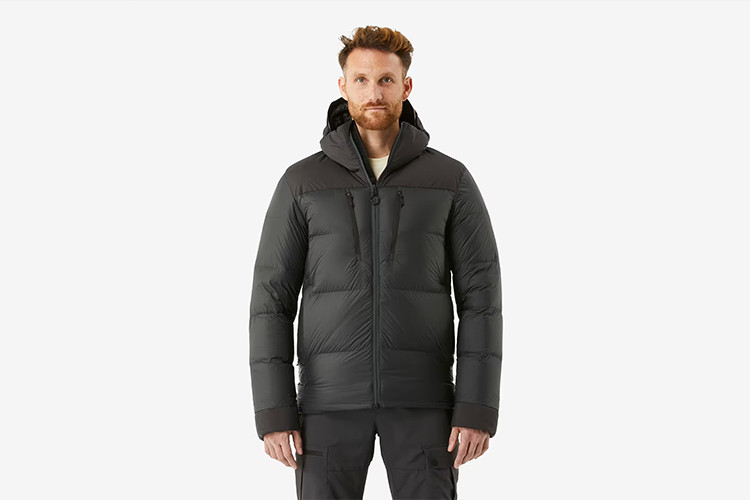
Down Filling Explained: Clusters, Feathers and Fill Weight
Down filling has three measurable parts, and buyers who confuse them end up with jackets that are too cold, too heavy, or too expensive for what they actually contain. The cluster is the three-dimensional plumule that traps air. Feathers are the flat, quilled by-product that adds bulk but almost no loft. Fill weight is the mass of down inside the garment, expressed in grams. A jacket can carry a premium 800 fill power down at a thin fill weight and still be a summer piece, while a cheaper 550 fill power down at a heavy fill weight can be warmer at twice the weight and half the price. This guide separates the three variables, shows how each one is written on a tech pack and verified in a test report, and explains how a factory in Dongguan sets fill targets for brands ordering from 50 pieces per style. It is written for brand owners, product developers and sourcing managers who need to specify down filling precisely enough that the bulk order matches the approved sample.
Table of Contents
- What Down Filling Covers in a Spec
- Inside a Down Cluster
- Feather Content and Ratio Labels
- Fill Weight vs Fill Power
- Writing Fill Weight on a Tech Pack
- Baffles and Fill Distribution
- Reading a Down Test Report
- Fill Weight by Product Type
- What Drives Filling Cost
- Filling Defects to Test For
- Locking the Spec Before Bulk
- Frequently Asked Questions
What Down Filling Covers in a Jacket Specification
In trade usage, "down filling" is a single line item that hides four separate decisions: the animal source, the cluster-to-feather ratio, the fill power band, and the mass placed in the garment. Each decision is quoted and tested differently, and each one moves cost in a different direction. A brand that specifies only "90/10 goose down" has described the raw material but not the product, because the same material can be built into a 120 gram fashion puffer or a 380 gram expedition parka with completely different thermal behaviour.
The material itself comes from the undercoating of waterfowl. Duck and goose down share the same physical architecture, but goose clusters are generally larger and more resilient, which is why goose down commands a higher price per kilogram at the same fill power band. Feathers are the outer contour feathers, and they enter the filling only as a permitted fraction of the mixture, regulated by ratio labels such as 90/10 or 80/20. Synthetic alternatives replace the cluster with continuous filament or short-staple fibre, which is a different product with different care and compression behaviour, covered separately in our comparison of down versus synthetic fill.
For a buyer, the practical consequence is that down filling must be specified as a recipe, not a material name. The recipe states species, ratio, fill power band, fill weight per size, and the test method used to confirm each value. When those five items appear on the purchase order, a factory cannot substitute a cheaper batch without breaking a written requirement. When they are missing, substitution is not even a breach, because nothing was agreed. Most filling disputes we see at the sampling stage trace back to a spec sheet that named the material but never named the quantities.
Inside a Down Cluster and Why It Traps Heat
A down cluster is a small, round structure with a tiny centre point and thousands of fine filaments radiating outward in every direction. There is no quill. That absence is the whole point: a quill would add weight and stiffness without adding insulation. Because the filaments branch and interlock, a single cluster occupies far more volume than its mass suggests, and millions of clusters in a baffle create a continuous three-dimensional mesh that holds still air. Still air is the actual insulator. The down is only the scaffolding that prevents the air from moving.
This is why compression matters more than thickness in the field. When a jacket is stuffed into a pack, the clusters collapse and the air is expelled; when the jacket is shaken out, the clusters recover their shape and re-trap air. Recovery depends on cluster size, maturity of the bird, and how the down was washed and dried. Over-washed or mechanically damaged down loses resilience and stops recovering, which is why a jacket can feel flat after two seasons even though nothing has torn. Fill power is the laboratory measure of that recovery, and it is worth reading our breakdown of fill power from 550 to 900+ before choosing a band for a specific climate.
Cluster size also interacts with the shell. A large cluster in a loosely woven shell migrates through the fabric and emerges as a feather-like quill poking through the seam, a defect buyers report as "leaking down" even when the filling is entirely cluster. The fix is not more down; it is a tighter calendered shell, a down-proof lining, and correct seam sealing. Fabric and construction decisions are covered in our guide to down-proof construction and baffle technology.
Feather Content: What 90/10 and 80/20 Actually Mean
The ratio on a down label describes the composition of the filling by weight, not by volume. A 90/10 label means 90 percent down clusters and 10 percent feathers. An 80/20 label means 80 percent clusters and 20 percent feathers. The second number is not a quality grade and it is not an impurity allowance in the sense of dirt; feathers are a legitimate part of the mixture, and small amounts of feather can add loft support and reduce cost in lower-priced programs. What the number does control is how much of the filling contributes loft and how much contributes weight.
Feathers have a quill and a flat vane. They do not branch in three dimensions, so they do not trap air the way clusters do. A filling with a high feather fraction needs more mass to reach the same thermal performance, and it recovers more slowly after compression. In a thin fashion puffer the difference is barely noticeable. In a jacket built for sustained cold, the difference shows up as cold spots along the baffle edges where the filling has settled and the feathers have packed.
| Label | Cluster Share | Feather Share | Typical Use | Behaviour to Expect |
|---|---|---|---|---|
| 95/5 | 95% | 5% | Premium and luxury down | Maximum loft per gram, highest cost per kilo, best recovery |
| 90/10 | 90% | 10% | Mainstream premium outerwear | Strong loft, stable recovery, widely available in RDS supply |
| 80/20 | 80% | 20% | Mid-market puffers and vests | Good warmth at lower cost, slightly heavier for the same rating |
| 70/30 | 70% | 30% | Entry price points and promotional lines | Noticeable weight penalty, slower recovery, more settling over time |
Two practical checks matter here. First, the ratio must be stated on the test report as measured composition, not only as a supplier claim, because mixing at the batching stage is where substitution happens. Second, the ratio interacts with fill power: an 80/20 filling can still reach a respectable fill power number if the clusters are large, so a high fill power figure does not prove a high cluster share. Buyers who need both loft and a defensible sustainability story should ask for the ratio, the fill power band and the traceability certificate as three separate documents.
Species is the other half of the composition question. Duck down and goose down differ in cluster size, resilience and price, and the difference is not always visible in a finished garment. Our comparison of duck down versus goose down sets out where the price gap is justified and where it is mostly marketing.
Fill Weight vs Fill Power: Two Numbers Doing Two Jobs
Fill power and fill weight are frequently treated as substitutes, and they are not. Fill power measures the quality of the filling: how many cubic inches one ounce of down occupies under a standard load. Fill weight measures the quantity of filling in the garment. A jacket's warmth comes from the product of the two, adjusted for fit, baffle depth and how the piece is worn. Increasing fill power lets you reach a target warmth with less mass, which is why the same thermal rating can be delivered at a lower total weight by moving from a 550 band to a 700 band. Increasing fill weight reaches the same target by adding material, which raises weight and cost but does not change the quality of the down.
The two numbers move independently in quoting. A brand can ask for 700 fill power at 120 grams and receive a light, packable piece. It can ask for 550 fill power at 250 grams and receive a warmer but heavier piece at a lower material cost. Both requests are legitimate; they simply answer different product briefs. The mistake is to specify one and assume the other. "700 fill power" alone does not tell a factory how warm the garment should be, and "200 grams of down" alone does not tell it what quality to buy.
Fill Power
Quality of the cluster. Measured as volume per unit mass in a laboratory cylinder. Higher values mean better loft per gram, faster recovery, and a higher purchase price per kilo. It says nothing about how much down sits in the jacket.
Fill Weight
Quantity in the garment. Written in grams per garment, or grams per square metre of baffle area. It sets how much insulation exists and therefore how warm the piece is at a given fill power. It says nothing about quality.
Warmth
The outcome. Set by fill power multiplied by fill weight, then modified by baffle depth, fit, shell air permeability and the layering system. Two jackets with identical fill weight can differ in warmth if one has sewn-through baffles and the other has box-wall construction.
Construction
The multiplier nobody quotes. Sewn-through baffles create cold lines at every stitch row; box-wall and welded baffles remove those lines and add loft depth. Construction can change perceived warmth more than a one-step change in fill power.
Because warmth is a product rather than a single attribute, the honest way to brief a factory is to state the intended use, the target temperature range, the acceptable garment weight, and the price ceiling, then let the filling be engineered inside those constraints. A jacket for a European city winter at minus five degrees, worn over a sweater, does not need the same filling as a jacket for a Nordic winter at minus twenty with a base layer only. Sending the use case produces a better spec than sending a competitor's fill weight, because the competitor's jacket may be cut differently, baffled differently, and worn over different layers.
Writing Fill Weight on a Tech Pack So Bulk Matches the Sample
Fill weight is written badly more often than any other number in outerwear development. "200 g down" on a tech pack is ambiguous: it could mean 200 grams per garment, 200 grams per square metre of baffle area, or 200 grams per size. Each interpretation produces a different jacket, and a factory that guesses will produce a jacket that fails the comparison against the approved sample even though it followed the sheet.
The specification should be explicit on four points. State the unit: grams per garment. State the size basis: which size the figure applies to, and how it scales. State the tolerance: for example plus or minus three percent per garment. State the grade actually used for the approved sample, so the bulk order can be compared against a known reference rather than against an assumption. When those four elements are present, a filling discrepancy becomes a measurable non-conformity instead of a debate.
| Spec Line | Weak Version | Production-Ready Version |
|---|---|---|
| Species and ratio | Goose down | White goose down, 90/10, minimum 90 percent cluster by weight |
| Fill power | High loft | 700 fill power minimum, US method, verified per batch |
| Fill weight | 200 g | 200 g per garment in size M, graded by size, tolerance plus or minus 3 percent |
| Baffle type | Quilted | Sewn-through baffles, 6 cm finished depth, 12 cm vertical spacing |
| Traceability | Responsible down | RDS certified, transaction certificate available per shipment |
| Verification | Factory tested | Independent composition and fill power report per production batch |
Grading needs its own line. A men's medium at 200 grams does not imply a men's extra large at 200 grams; the surface area of the garment grows with size, and a flat fill weight across the run produces a size large that is relatively colder than the medium. Factories normally grade fill weight in steps of roughly five to eight percent per size, and the exact step should be agreed in writing, because it affects both warmth consistency and cost. The same logic applies to women's and youth blocks, where the body-to-limb ratio differs and the fill distribution between body and sleeves needs separate figures.
For brands moving a program from another supplier, the fastest route to an accurate spec is to cut open a retired sample and weigh the filling by baffle section. This is a routine step in our development process and it usually corrects at least one assumption in the original spec. If you are still choosing materials rather than specifying them, our overview of puffer jacket filling materials explains how down, synthetic and blended fills are positioned for different price points.
Baffles and How Fill Weight Is Distributed
Once the total fill weight is set, the next decision is where it goes. A jacket is not a uniform box: the chest, back and shoulders lose heat differently from the sleeves, and the sleeves lose heat differently from the hood. Experienced pattern makers allocate fill weight by zone, usually putting the highest gram density in the core, a slightly lower density in the sleeves to preserve mobility, and a moderate density in the collar and hood where the fabric is closer to the face and bulk becomes uncomfortable.
Baffle construction then determines whether that allocation survives wear. Sewn-through baffles are two shell layers stitched directly together, which is light and inexpensive but creates a line of zero loft at every stitch. Box-wall baffles insert a fabric wall between the layers, so the filling keeps its full depth across the whole panel and no cold line forms. Welded and bonded baffles achieve a similar result without stitching holes, which also reduces down leakage, at a higher tooling cost and with tighter process control requirements. The trade-off is cost, weight and packability against thermal efficiency.
Sewn-Through Baffles
- Lowest cost and lightest construction
- Cold lines at every stitch row
- Best for fashion puffers and mild climates
- Simple to grade and to reorder
Box-Wall Baffles
- Full loft depth across the panel
- No stitch cold lines
- Higher material and labour cost
- Suited to technical and cold-climate lines
Welded or Bonded Baffles
- No needle holes, minimal leakage
- Cleaner surface for premium positioning
- Requires tooling and tight process control
- Limited re-baffling options after production
Hybrid Zoning
- Box-wall in the core, sewn-through in sleeves
- Balances warmth against mobility and cost
- Needs a zone map on the tech pack
- Common in mid-market technical ranges
Reading a Down Test Report Before You Approve Bulk
A down test report is a short document with four numbers that matter to a buyer: composition by species and ratio, fill power, cleanliness, and moisture or oxygen content. Composition confirms that the mixture matches the label. Fill power confirms the loft band. Cleanliness, usually expressed through turbidity and oxygen number, indicates how thoroughly the down was washed, which affects odour and long-term performance. A report that shows only fill power is incomplete for purchasing purposes, because it leaves the ratio and the wash quality unverified.
Two labelling standards come up repeatedly in European sourcing. EN 12934 governs the designation of down and feather composition on labels, and EN 12130 describes the fill power test. North American buyers more often see fill power quoted in cubic inches per ounce. Both systems measure the same physical behaviour with different units and slightly different apparatus, so a figure cannot be compared across methods without conversion. When a supplier quotes a number, ask which method produced it, and require the bulk batch to be tested with the same method as the approval sample.
| Report Item | What It Proves | What It Does Not Prove |
|---|---|---|
| Composition and ratio | Species and cluster-to-feather share by weight | That the filling in your specific garment came from that batch |
| Fill power | Loft performance of the tested sample | How much filling was placed in the garment |
| Turbidity and oxygen number | Wash quality and cleanliness | Odour performance after long storage in a warehouse |
| Moisture content | Drying control before baling | Resistance to moisture during wear |
| RDS transaction certificate | Chain of custody for the certified down volume | That the shell, lining and trims meet any chemical standard |
| OEKO-TEX certificate | Chemical safety of tested components | Thermal performance of any kind |
The gap between what a report proves and what a buyer assumes it proves is where most disputes live. A composition report on a down batch is not a guarantee about the garment; it is a guarantee about the material lot. Closing that gap requires either batch-linked traceability into the cutting and filling records, or post-production testing on finished garments, which is more expensive and slower. For most programs above entry volume, batch-linked records are the practical answer, and they are the reason we keep filling lot numbers attached to production orders rather than to purchase orders alone.
Fill Weight Benchmarks by Product Type
Rather than copying a competitor's number, start from the product type and the climate it is built for. The ranges below are the commercial bands we work with when a brand has no fixed figure and needs a starting point for sampling. They assume a 700 fill power down at 90/10; a 550 fill power filling needs roughly fifteen to twenty percent more mass to reach the same warmth, and an 800 fill power filling needs slightly less.
| Product Type | Fill Weight Range | Typical Use Case | Construction Note |
|---|---|---|---|
| Down vest | 60-100 g | Layering under a shell, transitional seasons | Sewn-through, light shell, minimal baffle depth |
| Lightweight packable jacket | 80-130 g | Travel, urban autumn, three-season hiking | 20D to 30D shell, narrow baffles, stuff sack |
| Urban puffer jacket | 130-200 g | European winter city wear over a sweater | 30D to 40D shell, sewn-through or hybrid zoning |
| Technical winter jacket | 200-280 g | Ski, snowboard, sustained sub-zero use | Box-wall core, welded hood, storm flaps |
| Long down coat | 250-350 g | Deep winter commuting, fashion-led volume | Extended length, zoned fill, heavier shell |
| Expedition parka | 350-450 g | High-altitude and polar conditions | Box-wall throughout, expedition hood, inner skirt |
These bands shift with cut and fit. A boxy oversized puffer has more internal volume than a slim technical jacket of the same size label, so the same fill weight reads as less warm because it is spread across a larger area. This is the single most common reason a brand's sample feels colder than expected: the silhouette grew during design review, the fill weight did not. When a fit is changed after the first sample, the fill weight has to be recalculated against the new pattern area, not carried over.
Climate also has to be stated in operational terms rather than as a season name. "Winter jacket" means something different in Lisbon and in Helsinki, and a factory cannot resolve that ambiguity. Give the lowest expected temperature, the layering assumption, the expected activity level and the maximum acceptable garment weight. Those four inputs let a pattern maker land on a fill weight and baffle depth that will survive a customer's first cold week rather than a showroom try-on.
What Actually Drives the Cost of Down Filling
Filling cost is the product of mass and price per kilogram, and price per kilogram is set by four factors: species, fill power band, cluster ratio, and traceability status. Each moves the number in a predictable direction. Goose costs more than duck at the same band. A higher fill power band costs more per kilogram because the sorting process yields less of it. A higher cluster ratio costs more because feathers are the cheaper fraction. Certified traceable down costs more than uncertified down because the chain-of-custody administration is real work with real audit costs.
The counter-intuitive part is that a more expensive filling can produce a cheaper garment. If a 700 fill power down reaches the target warmth at 180 grams and a 550 fill power down needs 220 grams, the price per kilogram advantage of the lower band is partly or fully cancelled by the extra mass. Add the difference in garment weight, freight, and the marketing value of a higher fill power claim, and the premium filling is often the better commercial choice for anything positioned above entry level. This is why quoting only the price per kilogram misleads buyers; the only meaningful comparison is cost per finished garment at equal warmth.
Labour and construction sit on top of the filling cost. Sewn-through baffles are the cheapest to build. Box-wall adds cutting and sewing time for the internal walls. Welded baffles add tooling and a slower cycle. A hood with a welded brim, a two-way zip with a storm flap, and internal pocketing all add minutes per unit, and minutes are the dominant cost driver at low volume. For a 50-piece run, the fixed cost of pattern making, sampling and line setup is spread over very few units, which is why the first order is always the most expensive per piece and why reorders on the same block are materially cheaper.
Filling Defects Buyers Should Test For
Down filling fails in a small number of predictable ways, and each one has a test that can be run during inline inspection rather than discovered by a customer. Knowing the failure modes lets a buyer write acceptance criteria that a QC team can actually apply, instead of a vague instruction to check quality.
- Leakage through seams and shell. Look for quills at stitch lines after a shake test. Cause is usually an under-specified shell or a needle that is too large for the fabric density.
- Cold spots and empty baffles. Backlight the garment and check for panels with visible thin areas. Cause is uneven filling or a baffle that was not fully opened during blowing.
- Migration between baffles. Weigh the garment, then hang it vertically for 24 hours and weigh again by section. Cause is oversized baffle openings relative to cluster size, or a missing internal wall.
- Clumping after wash. Wash a sample to the care label and tumble dry with dryer balls. Cause is poor wash quality in the raw down or insufficient drying before baling.
- Odour. Seal a sample in a bag for 24 hours, then open and assess. Cause is inadequate washing or moisture trapped at packing.
- Weight shortfall. Weigh ten garments per size against the spec. Cause is deliberate under-filling, which is the most common substitution in low-cost programs.
Weight verification is the single highest-value check because it catches the failure that visual inspection cannot. A jacket filled ten percent light looks correct on a hanger and passes a hand-feel assessment, but it will fail in cold weather and it will generate returns. We weigh filled garments per size as part of inline inspection, and we keep the fill lot number on the production record so a discrepancy can be traced to a batch rather than to an individual operator.
Locking the Filling Spec Before Bulk Production
The sequence for a down program at our Dongguan facility is fixed, and the filling decisions land in the first two steps. Sampling takes seven to fourteen days depending on whether a new pattern is required. Bulk production runs twenty-five to forty days after sample approval and deposit. The minimum order is fifty pieces per style, which is low enough for a first run and high enough to justify a proper filling specification.
Brief and filling selection
Two to three days. Species, ratio, fill power band and target fill weight are agreed against the intended climate and price ceiling. A filling option sheet with cost impact is issued for comparison.
Sample development
Seven to fourteen days. Pattern, shell and baffle construction are built and filled to the agreed weight. The sample is weighed and photographed with the filling record attached.
Fit and warmth review
Three to seven days. The brand wears the sample in the target climate if possible. Fill weight is adjusted against the real pattern area rather than the original estimate.
Bulk production
Twenty-five to forty days. Filling lots are recorded per production order, garments are weighed inline by size, and finished pieces are inspected to the agreed AQL level.
Final inspection and shipping
Two to four days. Weight sampling, leakage check, labelling review and packing verification before handover to the forwarder.
Typical total: 6 to 9 weeks from confirmed brief to ex-factory, with the filling spec frozen at step three.
Freezing the spec at step three is what prevents the most expensive category of error. Once a brand has approved a sample, changing the filling afterwards forces a new sample, a new test report and often a new filling purchase, because down is bought in batches and a small change in band or ratio may not be available in the quantity already committed. Deciding these four numbers early costs a few days; deciding them late costs weeks. If you are also comparing manufacturing partners, our note on how MOQ affects down jacket programs explains why the first production run carries a different cost structure from a reorder.
Frequently Asked Questions
What does down filling contain besides feathers?
Down filling contains down clusters, a permitted fraction of feathers, and a small amount of dust and fibre residue that remains after washing and sorting. The clusters provide the loft; the feathers add bulk at lower cost. A 90/10 label means ninety percent clusters and ten percent feathers by weight. Nothing else should be present in a compliant filling, and the composition test in the batch report is what confirms the actual percentages rather than the claimed ones.
Is a higher fill weight always warmer?
Not on its own. Warmth is fill power multiplied by fill weight, then modified by construction and fit. Two hundred grams of 550 fill power down is less warm than two hundred grams of 750 fill power down, and both can be less warm than a lighter garment with box-wall baffles that eliminate stitch cold lines. A higher fill weight in a larger silhouette can even reduce perceived warmth, because the same mass is spread across more surface area.
How is fill weight measured in production?
Filled garments are weighed individually on a calibrated scale and compared against the per-size specification, with a tolerance usually set at plus or minus three percent. Inline weighing is done per size rather than per batch, because a batch average can hide a systematic shortfall in one size. The weight record is kept with the production order, and the fill lot number is attached so any discrepancy can be traced to a specific down batch.
Can you match a filling from an existing jacket?
Yes. The reliable method is destructive: open a retired sample, weigh the filling by baffle zone, and send a small quantity for composition and fill power testing. That produces a specification grounded in the actual product instead of a visual estimate. It is a routine part of development for brands moving a program from another supplier, and it usually corrects at least one wrong assumption in the original tech pack.
What certifications apply to down filling?
The Responsible Down Standard covers animal welfare and chain of custody for the down itself. OEKO-TEX Standard 100 covers chemical safety of the tested components. ISO 9001 covers the factory's quality management system, and BSCI covers social compliance. These are separate documents answering separate questions, and a buyer should request each one rather than treating a single certificate as proof of the whole supply chain.
What is the minimum order for a custom down jacket?
Fifty pieces per style at Ginwen, with sampling in seven to fourteen days and bulk production in twenty-five to forty days after approval. Sample fees range from 50 to 200 US dollars depending on complexity and are credited against the bulk order. Payment terms are 30 percent deposit with the balance of 70 percent due before shipment.
Down filling rewards precision. Species, ratio, fill power band and fill weight are four separate numbers, and a jacket is only as predictable as the least specific one of them. Brands that write all four into the tech pack, verify them at sampling, and confirm composition and weight at bulk get a product that behaves the same in the second season as it did in the first. Brands that specify a material name and leave the quantities open get whatever the batch happened to contain.
If you are developing a down or puffer program for autumn and winter 2027, send your intended use, target climate, price ceiling and size range, and we will return a filling option sheet with the cost impact of each band. Start with our guide to shell, lining and fill, or send your requirements for a quotation within one working day.