Down vs Synthetic vs Cotton: A Guide to Jacket Insulation for Fashion Brands
- Share
- publisher
- Ginwen Wear
- Issue Time
- Jul 27,2026
Summary
A comprehensive data-backed comparison of down, synthetic, and cotton jacket insulation for fashion brands sourcing from China. Includes clo values, cost analysis, MOQ requirements, certifications, and regulatory compliance for US and EU markets.
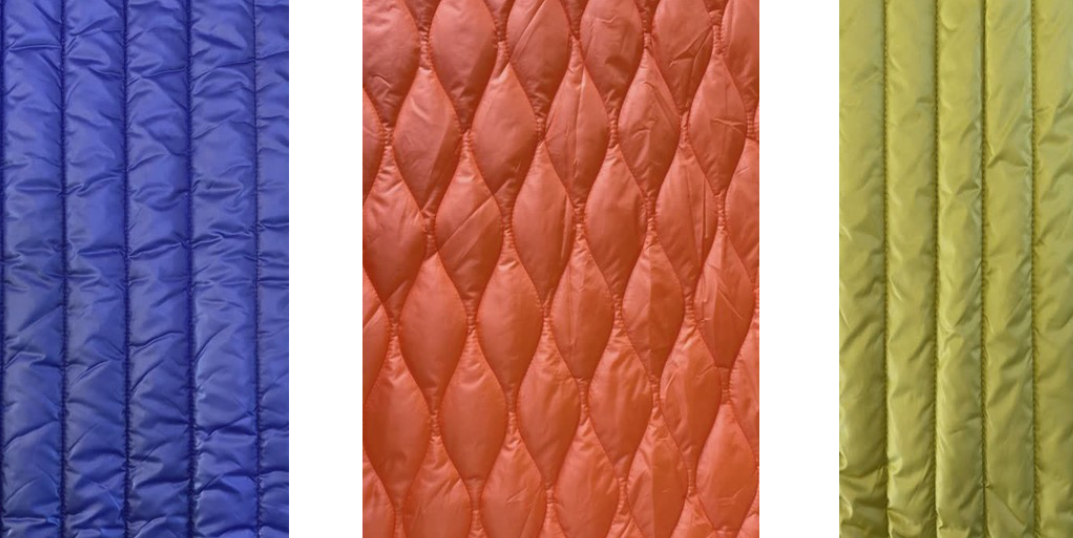
Down vs Synthetic vs Cotton: A Guide to Jacket Insulation for Fashion Brands
When developing a custom jacket line for the US or EU market, choosing the right insulation material is one of the most consequential decisions a brand can make. The choice between down, synthetic, and cotton insulation directly affects the garment's warmth, weight, cost, sustainability profile, and care requirements. This guide provides a data-backed comparison of the three primary insulation types, including fill power ratings, clo values, moisture retention rates, and production cost ranges, so that fashion brands, private label retailers, and startup clothing lines can make informed sourcing decisions with their manufacturing partner.
What Is Jacket Insulation and Why It Matters for Your Brand
Jacket insulation refers to the material layer that traps body heat and prevents heat loss through convection and conduction. In the apparel industry, insulation performance is measured using several standardised metrics. The most commonly referenced is the clo value, where 1 clo represents the insulation needed to keep a resting person comfortable at 21°C (70°F). A typical lightweight jacket provides approximately 0.5 to 1.0 clo, while a heavy winter parka ranges from 2.5 to 4.0 clo. For B2B buyers sourcing from manufacturers like Ginwen Wear, understanding these metrics is essential because insulation type influences not only the final product performance but also MOQ requirements, production lead times, and unit cost. According to industry data from the Textile Exchange 2025 Preferred Fiber report, global demand for responsibly sourced insulation materials grew by 34% between 2022 and 2025, driven primarily by European and North American brand requirements for traceable supply chains and verified environmental claims.
The three primary categories of jacket insulation each occupy a distinct position in the market. Down insulation dominates the premium segment above USD 400 retail. Synthetic insulation leads the mid-market and performance activewear categories. Cotton insulation occupies a heritage and fashion-led niche. Understanding where each type fits in the current market landscape is the first step toward selecting the right insulation for your brand's product strategy.
Down Insulation: Performance, Supply Chain, and Cost Structure
Down is the soft undercoating beneath the outer feathers of ducks and geese. It is widely considered the gold standard for warmth-to-weight ratio in premium outerwear. Down insulation is graded by fill power, which measures the lofting capacity in cubic inches per ounce. Standard industry grades range from 400 FP (low quality) to 900+ FP (ultra-premium). The majority of jackets produced for Western markets use 600 to 800 fill power down, with 700 FP representing the most common specification for mid-premium brands. Each step of 100 FP typically adds 8 to 15 percent to the material cost.
Key Performance Characteristics of Down
Down offers the highest warmth-to-weight ratio of any commercially available insulation material. A 700-fill-power down jacket provides approximately 2.5 clo at a weight of roughly 180 grams per square metre. By comparison, achieving the same clo value with synthetic insulation typically requires 30 to 50 percent more material weight. This makes down the preferred choice for brands targeting the premium outdoor market segment where packability and lightweight performance are primary selling points. In practical terms, a 700 FP down jacket weighing 350 grams can provide equivalent warmth to a synthetic jacket weighing 520 grams, a difference that consumers can feel when holding and wearing the garment.
However, down has a critical limitation: it loses virtually all insulating ability when wet. According to a 2023 study published in the Journal of Textile Science, wet down retains less than 10 percent of its dry insulation value. This means down jackets require water-resistant shell fabrics or DWR (durable water repellent) treatments, adding 8 to 15 percent to the total garment production cost. Additionally, down requires longer drying times, typically 8 to 12 hours for a fully saturated jacket, compared to 1 to 3 hours for synthetic insulation. Brands targeting outdoor or wet-climate markets must account for this limitation in both product design and consumer care instructions.
Down Certification and Sourcing Requirements
For brands selling in the EU and US markets, down sourcing is subject to several certification standards. The Responsible Down Standard (RDS) is the most widely adopted, requiring certified supply chain traceability from farm to finished product. As of 2025, RDS-certified down carries a price premium of approximately 15 to 25 percent over uncertified down. Additional certifications include the Global Traceable Down Standard (TDS), which adds farm-level traceability requirements beyond RDS, and OEKO-TEX Standard 100 for chemical safety testing of the finished down fill. The EU Textile Regulation also requires country-of-origin labelling for down and feather content, which must be reflected on the garment's care label and technical specification sheet.
At Ginwen Wear, we source down exclusively from RDS-certified suppliers and maintain batch-level traceability documentation for every production run. Our standard down options include 600 FP, 700 FP, and 800 FP fill powers, with RDS certification included in the base price. For brands requiring 700-fill or higher down, our typical MOQ is 300 pieces per style for down-filled jackets, compared to 150 pieces for synthetic-filled styles. This higher MOQ reflects the specialised filling equipment requirements, segregated production lines needed to prevent cross-contamination between down and non-down products, and longer drying cycles inherent in down processing. Sample development for down styles can be completed within 10 to 15 working days from design approval.
Ethical and Environmental Considerations for Down
Down sourcing has come under increasing scrutiny from consumers and regulatory bodies. The RDS standard addresses live-plucking and force-feeding prohibitions, but brand buyers should verify that their down supplier's certification covers the entire supply chain, not just the final processing stage. Down is a byproduct of the food industry, which means it does not generate additional agricultural land use beyond what is already required for poultry production. This gives down a lower land-use footprint compared to plant-based alternatives. However, the carbon footprint of down processing, which involves multiple washing, drying, and sorting stages, is higher per kilogram than synthetic insulation production. Lifecycle assessment data from the European Outdoor Group indicates that down has approximately 20 percent higher global warming potential per jacket than recycled synthetic insulation, primarily due to the energy-intensive cleaning and grading process.
Synthetic Insulation: Versatility and Technical Innovation
Synthetic insulation refers to polyester-based fibrous materials engineered to mimic the loft and warmth of down while addressing its main weakness: performance when wet. Major synthetic insulation brands include 3M Thinsulate, Primaloft, Polartec Alpha, and The North Face Thermoball. Each uses different fibre engineering approaches to achieve specific performance targets. Primaloft, for example, uses ultra-fine microfibres to create a structure that traps air similarly to down clusters, while 3M Thinsulate uses olefin and polyester bicomponent fibres for a different warmth-to-weight profile. The choice between these brands affects not only garment performance but also minimum order quantities, since some insulation brands have minimum purchase requirements for manufacturers.
Comparative Performance Data
Modern synthetic insulations have narrowed the performance gap with down considerably. Primaloft Gold, for example, achieves approximately 2.0 clo at 200 gsm, compared to 2.5 clo for 700-fill down at 180 gsm. More importantly, synthetic insulation retains 60 to 80 percent of its insulating value when wet, compared to down's 10 percent. This makes synthetic the preferred choice for rain jackets, mid-layers, and activewear intended for wet-weather use. The newer generation of synthetic insulations, such as Primaloft Gold Active and Polartec Alpha Direct, are specifically engineered for high-moisture and high-activity scenarios where breathability is as important as warmth retention.
Synthetic insulation also offers several manufacturing advantages for B2B buyers. It can be pre-cut and laminated to shell fabrics, reducing labour time by approximately 15 to 20 percent compared to down-fill construction. It is also machine-washable without special care requirements, which reduces customer service returns related to improper care. Industry data from the Outdoor Industry Association 2025 report indicates that synthetic-insulated jackets accounted for 58 percent of the US outdoor apparel market by volume, though down still led in the premium price segment above USD 400 retail. For brands targeting the USD 100 to USD 300 retail price range, synthetic insulation offers the best balance of performance, cost, and consumer care convenience.
Different synthetic insulation types suit different applications. Primaloft Black is the entry-level option suitable for fashion jackets and urban wear, providing moderate warmth at the lowest cost. Primaloft Gold offers premium warmth-to-weight performance suitable for outdoor performance brands. 3M Thinsulate Type Z is optimised for gloves and accessories but is also used in quilted jacket panels where thin insulation layers are desired. Polartex Alpha excels in activewear where breathability during physical activity is critical. Each type has different MOQ implications and price points, which Ginwen Wear's product development team can help brands navigate based on their target market and price architecture.
Environmental Considerations for Synthetic Insulation
The primary environmental concern with synthetic insulation is its petroleum-based origin and microplastic shedding during washing. According to a 2024 study by the University of California, Santa Barbara, synthetic jackets release an average of 1.2 grams of microfibres per wash cycle, with older garments shedding more fibres than new ones. However, several manufacturers have introduced recycled polyester insulation options. Primaloft's ECO line, for instance, uses 100 percent post-consumer recycled fibres and has been adopted by brands including Patagonia and The North Face. Patagonia's Nano Puff jacket, one of the best-selling synthetic-insulated jackets globally, has used 100 percent recycled polyester insulation since 2015. At Ginwen, we offer recycled synthetic insulation options with a MOQ of 200 pieces per style and a 5 to 8 percent cost premium over virgin synthetic fill. Brands can also specify that the shell and lining fabrics use recycled polyester, creating a garment with over 90 percent recycled content by weight.
The EU's Strategy for Sustainable and Circular Textiles, adopted in 2022 and implemented through the Ecodesign for Sustainable Products Regulation (ESPR) which took effect in 2025, requires that apparel sold in the EU must provide durability and recyclability information. For synthetic-insulated jackets, brands must disclose the recycled content percentage and provide care instructions that minimise microplastic shedding, such as recommending the use of a Guppyfriend washing bag or similar filtration solution. US brands selling to California are also subject to the Safer Clothes and Textiles Act, which requires disclosure of chemical treatments used in the garment, including any durable water repellent (DWR) finishes applied to the shell fabric.
Cotton Insulation: Traditional Option with Modern Limitations
Cotton insulation, typically in the form of cotton batting or cotton wadding, is the oldest insulation material used in garments. It was the standard for workwear and military outerwear before synthetic fibres became widely available in the mid-20th century. Today, cotton insulation occupies a small but persistent niche in the jacket market, primarily in heritage-style workwear, vintage reproduction garments, and eco-conscious collections where a fully natural fibre composition is a brand differentiator.
The global market for cotton-insulated outerwear is estimated at approximately USD 1.2 billion annually, representing roughly 3 percent of the total insulated jacket market. This niche is concentrated in specific segments: heritage workwear brands like Carhartt and Dickies, vintage-inspired lines from Japanese and European repro brands, and sustainable fashion labels seeking biodegradable material compositions. For brands targeting these specific segments, cotton insulation can be a powerful storytelling tool, but the performance limitations must be honestly communicated to end consumers.
Performance Metrics and Limitations
Cotton batting provides approximately 0.5 to 0.8 clo at typical thicknesses used in lined jackets, making it the least efficient insulator of the three types by a significant margin. To achieve warmth comparable to a 200 gsm synthetic fill, cotton requires roughly 2.5 times the material thickness, which results in visibly bulkier garments. A cotton-insulated jacket that provides equivalent warmth to a mid-weight synthetic jacket will have approximately 12 to 15 mm of loft compared to 5 to 7 mm for synthetic. This bulk limits the garment's versatility and packability, making cotton-insulated jackets unsuitable for travel or outdoor activities where layering and packability are important.
Cotton also absorbs up to 27 times its own weight in water, and wet cotton provides virtually no insulation while taking several hours to dry. In a practical sense, a cotton-insulated jacket worn in rain or heavy snow becomes heavy, cold, and uncomfortable within minutes, and may not dry completely for 12 to 24 hours even under indoor conditions. For these reasons, cotton-insulated jackets are rarely recommended for wet or cold climates and are best positioned for mild, dry conditions or indoor wear.
The main advantages of cotton insulation are its natural fibre origin, low cost, and ease of processing. Unbleached organic cotton batting costs approximately 30 to 50 percent less than equivalent mid-range synthetic insulation and 60 to 70 percent less than RDS-certified down. Cotton is also biodegradable under industrial composting conditions within 60 to 90 days, which appeals to brands targeting fully circular product lifecycles. However, brands should note that the biodegradability benefit is partially offset by the significantly higher material volume required per garment, which increases transportation emissions and resource consumption per unit of warmth delivered.
Suitable Applications and Target Markets for Cotton Insulation
Cotton-insulated jackets are most appropriate for fashion-first garments intended for mild climates, indoor wear, or seasonal transitional outerwear. Brands positioning their products as "natural," "organic," or "heritage" may find cotton insulation aligned with their brand narrative. Specific applications include quilted overshirts, barn jackets, chore coats, and lightweight spring jackets where the insulation layer provides shape and structure rather than significant thermal protection. However, for any jacket intended for below-freezing temperatures, wet conditions, or outdoor activities, down or synthetic insulation remains the technically superior choice. If a brand insists on a fully natural composition for cold-weather applications, wool or hemp blend interlinings offer better performance than cotton while still maintaining a natural fibre claim.
Head-to-Head Comparison: Down vs Synthetic vs Cotton
The following table provides a side-by-side comparison of the three insulation types across the metrics most relevant to B2B sourcing decisions. These figures are based on Ginwen Wear's production data from the 2025-2026 manufacturing season and industry benchmarks from the Outdoor Industry Association and Textile Exchange.
| Metric | Down (700 FP) | Synthetic (Primaloft Gold) | Cotton Batting |
|---|---|---|---|
| Clo value (at 200 gsm equivalent) | 2.5 | 2.0 | 0.6 |
| Weight per m² (grams) | 180 | 200 | 480 |
| Warmth when wet (% dry retained) | <10% | 60-80% | <5% |
| Drying time (hours, saturated) | 8-12 | 1-3 | 12-24+ |
| Estimated material cost per jacket (USD) | $12-22 | $6-12 | $4-7 |
| Manufacturing labour factor | 1.3x baseline | 1.0x baseline | 0.9x baseline |
| MOQ per style (Ginwen Wear) | 300 pcs | 150 pcs | 150 pcs |
| Washability | Specialised | Standard machine | Standard machine |
| Certifications available | RDS, TDS, OEKO-TEX | OEKO-TEX, GRS | GOTS, OCS |
| Biodegradable | Yes (natural) | No | Yes |
| Best suited for | Premium cold-weather gear | Activewear, wet-weather, mid-layer | Fashion / mild-climate / heritage |
| Typical retail price segment | USD 300-800+ | USD 100-350 | USD 80-250 |
| Consumer care complexity | High | Low | Medium |
Regulatory Compliance by Market
Brands sourcing jackets for EU and US markets must consider regulatory compliance for each insulation type. For down, the EU requires country-of-origin labelling under the EU Textile Regulation (1007/2011), and the US requires disclosure under the Textile Fiber Products Identification Act. Both markets require that any water-repellent treatment applied to the shell fabric complies with PFAS restrictions. The EU's REACH regulation restricts perfluorooctanoic acid (PFOA) and related substances, and as of 2025, the EU has proposed further restrictions on all PFAS chemicals, which would affect DWR treatments commonly used on down jacket shells. Brands developing jackets for the 2027 season onwards should plan for PFAS-free DWR alternatives such as paraffin-based or silicone-based water repellents, which are already available from major chemical suppliers.
For synthetic insulation, the EU's ESPR requires that the garment label includes the percentage of recycled content, and any microplastic-shedding warning must be included in the care instructions. For cotton insulation, compliance with the EU's ban on cotton from Uzbekistan and Turkmenistan under the EU Cotton Regulation must be verified through supply chain documentation. The US Uyghur Forced Labor Prevention Act also requires brands to demonstrate that cotton is not sourced from Xinjiang, which necessitates third-party audit documentation from the cotton supplier. Ginwen Wear maintains comprehensive supply chain documentation for all three insulation types, including batch-level traceability available for customer audit.
How to Choose the Right Insulation for Your Brand
Selecting the optimal insulation type depends on your target market segment, retail price point, and brand positioning. Based on our experience manufacturing over 500 jacket styles for brands across North America and Europe, we recommend the following decision framework.
- For premium outdoor brands retailing above USD 350: Down insulation with 700-800 FP, RDS certification, and a PFAS-free DWR-treated shell. This combination supports a premium price point, aligns with sustainability messaging, and performs well in cold, dry conditions. Expect MOQ of 300 pieces per style and lead times of 45 to 60 days from sample approval.
- For contemporary fashion brands retailing at USD 150-350: Synthetic insulation from Primaloft Gold ECO or equivalent recycled content. This offers a strong balance of performance, cost, and washability, and supports sustainable marketing claims with lower MOQ of 150 pieces per style.
- For entry-level or private label brands retailing below USD 150: Standard synthetic insulation (Primaloft Black or equivalent) remains the most practical choice. It offers the lowest total landed cost, fastest manufacturing lead times, and easiest care instructions for end consumers. Cotton insulation may be considered for specific fashion-led designs where warmth performance is not the primary selling point.
- For heritage or sustainable-focused collections: Organic cotton batting can serve as a differentiating material story, provided the garment is positioned for mild-climate or indoor use and the brand clearly communicates the performance trade-offs in their product copy. A care label that reads "100% natural materials, best worn in dry, cool conditions" sets appropriate consumer expectations.
Manufacturing Considerations When Sourcing from China
When working with a Chinese jacket manufacturer, the insulation choice affects several practical aspects of production. Down-filled jackets require specialised blowing machines that loft and distribute the down evenly across each baffle. These machines require dedicated space and operator training, and the production line must be segregated from synthetic and cotton lines to prevent cross-contamination. A single down fibre lodged in a synthetic garment can create a detectable hard spot after washing, which is a common quality complaint. At Ginwen Wear's 3,000-square-metre facility, down production lines are physically separated from synthetic and cotton lines, which adds approximately 7 to 10 working days to lead times for down styles compared to synthetic equivalents. Our AQL 2.5 inspection protocol for down styles includes an additional needle-detection pass because down blowing equipment can conceal broken needle fragments in the fill material.
Synthetic insulation can be processed using standard quilting and laminating equipment, making it the most flexible option for brands with smaller MOQ requirements. Quilting patterns can be customised without affecting fill distribution, allowing brands to create distinctive baffle designs for fashion applications. Cotton insulation is similarly straightforward to process but requires careful specification of the batt density and thickness, as variations in cotton sourcing can affect loft consistency between production batches. We recommend specifying cotton batt density in grams per square metre (gsm) rather than thickness alone, because cotton compression characteristics vary by growing region and processing method. Chinese-grown cotton from the Yangtze River region produces a denser batt with approximately 15 percent higher gsm at the same thickness compared to cotton from the Yellow River region, which affects both warmth and hand feel.
All three insulation types are available with OEKO-TEX Standard 100 certification from Ginwen Wear, ensuring that finished garments meet EU chemical safety regulations regardless of the filling material selected. Sample development for all insulation types follows the same process: design brief, pattern development, sample cutting and sewing, filling and quilting, quality inspection, and shipping. The sample fee ranges from USD 80 to 150 depending on style complexity and is fully deductible from the bulk order invoice.
Insulation Selection Checklist for Brand Buyers
Before finalising your insulation specification, review the following checklist to ensure alignment with your product strategy:
- What is your target retail price point, and what is your target COGS percentage?
- What climate conditions will the end consumer face? Cold and dry, cold and wet, or mild transitional?
- What is your brand's sustainability positioning, and which certifications are non-negotiable?
- What is your minimum viable MOQ, and does your chosen insulation type support it?
- What care instructions will you provide, and are your consumers prepared for specialised down care?
- Does your retail channel require wash-and-wear convenience for customer satisfaction?
- Are you positioning the jacket as a technical performance product or a fashion statement?
- What is your timeline from design to delivery, and does the insulation type affect lead time?
- Have you verified the regulatory compliance requirements for your target market's current and upcoming regulations?
- Have you requested physical insulation swatches to evaluate hand feel, loft, and drape in person?
Frequently Asked Questions
Which insulation type is most sustainable?
The answer depends on which environmental metric you prioritise. RDS-certified down uses a renewable byproduct of the food industry and is biodegradable, but has higher processing energy requirements. Recycled synthetic insulation diverts plastic waste from landfills and uses less energy to produce than virgin synthetic, but sheds microplastics during washing. Organic cotton is biodegradable and renewable but requires significantly more material to achieve the same warmth, increasing overall resource use per garment. A 2024 lifecycle assessment by the Swiss textile research institute Empa found that recycled synthetic insulation has the lowest overall environmental impact per jacket when measured across global warming potential, water use, and fossil resource depletion. However, down scored best in end-of-life biodegradability and microplastic pollution. There is no universally "best" option; the choice depends on your brand's specific sustainability framework and the values of your target consumer.
What is the MOQ for jackets with different insulation types at Ginwen Wear?
Our standard MOQ for synthetic and cotton-insulated jackets is 150 pieces per style per colour. For down-insulated styles, the MOQ is 300 pieces per style per colour due to the specialised equipment and segregated production line requirements. Sample development typically takes 7 to 15 working days and requires a USD 80 to 150 sample fee, which is deducted from the bulk order invoice. For brands below these MOQ thresholds, we recommend considering a stock service programme where we produce to our forecast and sell by the piece, though this option is currently limited to our core jacket styles.
Can a jacket use multiple insulation types in different panels?
Yes, hybrid construction is increasingly common in the outdoor industry. A typical approach uses down in the core body panels for maximum warmth and synthetic insulation in the hood, sleeves, and side panels where moisture exposure is more likely. This construction technique requires careful pattern engineering and adds approximately 10 to 15 percent to labour cost, but produces a superior performance garment that balances warmth with wet-weather resilience. Brands such as Arc'teryx and Canada Goose have successfully used hybrid construction in their premium outerwear lines, and the technique is well within the manufacturing capability of experienced Chinese OEM factories like Ginwen Wear.
How long does sample development take for custom-insulated jackets?
Sample development typically takes 7 to 15 working days from design approval. The timeline depends on the complexity of the design, availability of the selected insulation material, and whether the factory has the required filling equipment already configured. Down samples take slightly longer because the filling line must be cleaned and reconfigured between runs. We advise brands to plan for at least two sample rounds: an initial fit sample to evaluate sizing and proportions, and a pre-production sample to verify production quality, fabric shrinkage, and insulation distribution.
What quality control measures apply to insulation fill?
At Ginwen Wear, insulation fill quality is verified through multiple inspection points. Down undergoes fill power testing using the IDFB (International Down and Feather Bureau) standard method, cleanliness testing via oxygen number analysis, and species composition verification. Synthetic insulation is checked for weight per square metre and loft recovery after compression. Cotton batting is verified for batt density and fibre length. All finished jackets undergo AQL 2.5 sampling inspection, which means that for a typical 1,000-piece order, 80 jackets are inspected, with the order passing if fewer than 10 defects are found. Insulation-specific defects such as uneven fill distribution, cold spots, and fibre migration through the shell fabric are tracked separately as critical defects.
Summary and Recommendations
Down, synthetic, and cotton each occupy distinct positions in the jacket insulation market. Down delivers the best warmth-to-weight ratio for premium cold-weather outerwear at USD 300-800+ retail, with RDS certification available but MOQ of 300 pieces per style. Synthetic provides reliable wet-weather performance with lower MOQ requirements of 150 pieces, recycled content options, and standard machine washability at USD 100-350 retail. Cotton offers a natural, low-cost option for fashion-led designs in mild climates at USD 80-250 retail, with GOTS certification available but significantly lower thermal efficiency.
At Ginwen Wear, a custom jacket OEM and ODM manufacturer with 20 years of production experience serving brands across the United States, Canada, the United Kingdom, Germany, France, Australia, and Scandinavia, we help brands select the optimal insulation for their collection. We offer RDS-certified down (600 FP, 700 FP, 800 FP), recycled synthetic insulation (Primaloft Gold ECO and equivalent), and organic cotton options, all backed by ISO 9001 quality management systems and AQL 2.5 inspection standards. For brands ready to begin development, we recommend requesting physical sample swatches of each insulation type, evaluating them against your specific performance requirements, and discussing your target retail price with our product development team so we can recommend the most cost-effective specification.
To start your custom jacket project, send us your design brief and target specifications, and our team will provide a detailed quotation within 48 hours, including insulation options, fabric recommendations, sample timeline, and bulk pricing.
Last updated: July 27, 2026. This guide reflects current industry standards, pricing, and regulatory requirements as of the 2026 production season. For the most current MOQ, lead time, and certification information, please contact our sales team.