Future of Puffer Jacket Manufacturing
- Share
- Issue Time
- Aug 31,2026
Summary
The future of puffer jacket manufacturing: digital product passports, traceability, circular production, mono-material design, new materials, factory automation and 3D sampling, on-demand production, ESG reporting, and how brands can prepare now. Factory data from Ginwen, a Dongguan B2B jacket factory: MOQ 50 pcs per style, sampling 7-14 days, bulk 25-40 days, sample fee USD 50-200 deductible, 30% deposit and 70% balance.
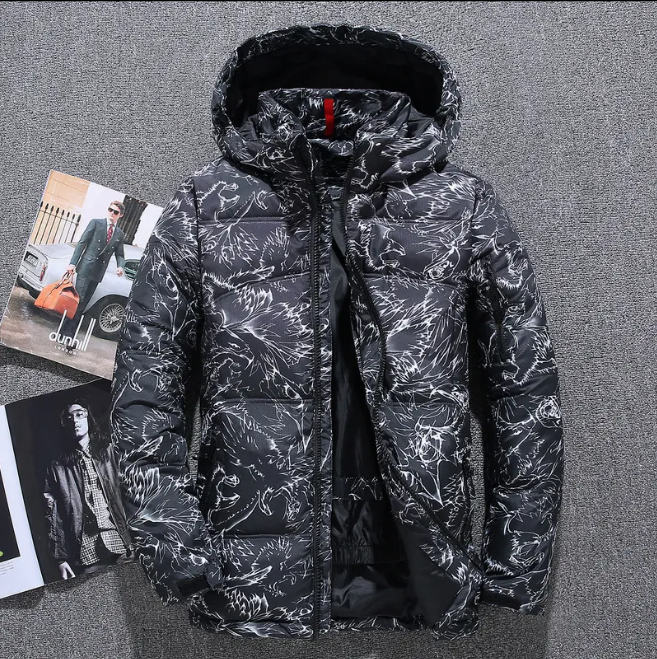
The future of puffer jacket manufacturing is moving toward fully traceable supply chains, circular production models, smarter factory automation, and closer brand-factory collaboration enabled by digital tools. For brands, the near-term practical changes are concrete: recycled and bio-based materials will become standard options rather than premium extras, digital sampling and 3D development will shorten product cycles, and factories will need to document every material claim with verifiable data. This guide outlines the trends most likely to shape production over the next three to five years, what is already happening in factories today, and how brands can position themselves now. All factory figures come from Ginwen, a Dongguan-based B2B jacket manufacturer. Forecasting manufacturing is risky, but the direction of travel is clear from what is already visible in factory floors, retailer requirements, and regulation. Four changes are close to certain: material traceability will become a documented requirement rather than a marketing option, circularity will affect how jackets are designed and what materials can be used, digital tools will compress the sampling cycle, and production will continue shifting toward smaller, faster, more flexible orders. None of these are speculative; each is an extension of trends that are already affecting real purchase orders today. The deeper shift is in what brands will buy from a factory. A decade ago, a factory sold garments. In the next five years, a factory will increasingly sell garments plus verifiable data: material origins, carbon and water footprints, certification chains, and production conditions. Brands that start collecting this data now, from their current suppliers, will have a significant advantage when retailers and regulators demand it. Brands that wait will find their options limited at exactly the moment the market tightens. None of this means the fundamentals change. Fit, quality, price, and reliable delivery will remain the core of any sourcing decision, and the factories that win will be those that combine these fundamentals with documentation capability. The coming years are less about a technology revolution and more about a data evolution layered on top of proven manufacturing skills. The most concrete regulatory driver is the EU's direction on digital product passports, which will require products sold in the EU to carry verifiable information about their materials, origin, and recyclability. For puffer jackets, this means the down, synthetic fill, shell fabric, lining, and trims each need documented provenance. The manufacturing implication is significant: factories must maintain digital records per batch, not just per product line. There are practical limits to communicate to your team. Full digital passports depend on industry-wide data standards that are still being defined, so expect partial implementations and transitional formats. What matters for sourcing is the underlying capability: can the factory produce per-batch documentation on request? Test this with your next order, and treat a factory's documentation quality as a competitive advantage, not an administrative nuisance. Traceability also changes the relationship between brand and factory during development. Material choices made at the design stage, such as which down supplier or which recycled fiber grade, now carry documentation consequences that follow the product for years. A brand that changes materials late in development may find its documentation trail resets, delaying certifications and approvals. The practical discipline is to freeze material specifications earlier in the process and to ask the factory to flag, in writing, any substitution that would break a certificate chain. Circularity means designing jackets so they can be repaired, reused, or recycled at end of life, and manufacturing them with processes that reduce waste. For puffer jackets this is technically demanding because a jacket combines several material layers that are difficult to separate: shell, insulation, lining, zippers, and trims. Mono-material designs, where the shell, fill, and lining share a single polymer family such as polyester, make recycling far easier, and this is where the industry is heading. Shell, insulation, and lining from the same polymer family so the whole jacket can be recycled together without disassembly. Zippers, hoods, and trims designed for easy removal at end of life, improving the recyclability of the remaining garment. Spare parts programs, standardized zippers, and accessible repairs extend jacket life and support brand service offerings. Using recycled polyester and recycled down closes the loop, with GRS and RDS certification documenting the recycled content. For buyers, circularity affects design decisions today. If you plan to make circularity claims in the future, avoid designs that glue components, use mixed-fiber blends without documentation, or use trims that cannot be separated. Ask the factory to confirm which components can be removed, and keep the material composition simple enough to document. Circularity is not a single certification; it is a set of design and documentation choices made at the development stage. There is also a commercial angle. Circular programs such as take-back schemes, resale platforms, and repair services generate second-life demand for jackets, which changes how brands plan inventory and how factories plan component supply. A jacket designed for repair needs spare zippers and replacement parts available years after the original production run, which means the factory must retain patterns, component specs, and material references. Agree with your factory on how long these records are kept and whether spare-part reorders are supported. Waste reduction in the factory itself is another circular lever with immediate financial benefit. Automated nesting cuts fabric more efficiently, pattern engineers can reduce fabric waste on quilted panels, and trims can be standardized to reduce overstock. When evaluating a factory, ask what its fabric utilization rate is and how it handles cutting waste, because these operational details show whether circular thinking is practiced or merely discussed. Material innovation for puffer jackets is happening across three fronts: bio-based insulation, advanced synthetic fibers, and functional shell treatments. Bio-based polyester made from plant sources is entering commercial production and can replace petroleum-based fiber in insulation and shells, though availability and price still vary by region. High-loft synthetic fibers continue to close the gap with down, and new recycled blends are reaching higher GSM grades with better hand feel. A note on PFAS: regulations are phasing out certain fluorinated water-repellent treatments in several markets, and PFAS-free DWR has improved but may need more frequent reproofing in heavy use. If your product carries a water-repellent claim, confirm with the factory which DWR chemistry is used, request the test data, and verify it meets the regulations of every market you sell into. Automation in jacket manufacturing is advancing unevenly: cutting is already highly automated, quilting is increasingly automated, but sewing and filling remain labor-intensive because fabric handling and down distribution are hard to robotize. The realistic near-term gains are in digital development rather than fully automated sewing lines. 3D sampling, where a design is validated digitally before physical fabric is cut, is the fastest-moving change, and it directly affects how brands work with factories. The brand-facing benefit is a shorter development cycle and fewer sampling rounds, which matters when seasons compress. The caveat is that 3D approval cannot replace physical fit testing for garments with complex insulation behavior; loft, drape, and hand feel still need a real sample. Use digital tools to eliminate obvious revisions, then reserve physical samples for the final approval step. Automation also affects cost structure in ways brands should understand. High levels of automation reduce labor cost per piece but increase fixed investment, which can push minimum order quantities up unless the factory runs flexible lines. The sweet spot for many brands is a factory that automates cutting and quilting but keeps sewing and filling flexible enough for small batches. When comparing quotations, ask how the factory's automation affects its MOQ and reorder economics, because the lowest per-piece price at high volume may not be the best fit for a drop-based business. Data from automated production lines has a second benefit beyond quality: it feeds the traceability and reporting requirements described earlier. Fill weights recorded digitally, inspection results captured per batch, and cutting utilization figures all become evidence for digital product passports and ESG reports. This is why automation and traceability should be planned together rather than treated as separate investments. Production is moving from forecast-driven to demand-driven. Instead of manufacturing a full season's forecast in advance, brands increasingly place smaller orders, sell, and reorder based on actual sell-through. This model, sometimes called quick response or on-demand production, requires factories to hold flexible capacity and to keep material sourcing nimble. It also changes the commercial relationship: reorder speed becomes as important as initial price. For on-demand models to work, three conditions must hold: the factory can run small batches economically, materials can be re-sourced quickly, and the brand commits to a reorder pipeline rather than treating every order as a one-off negotiation. Brands that standardize their styles, colors, and trim options across seasons make reorders dramatically easier, because the factory can hold component stock and cut production time. This is a design discipline as much as a sourcing strategy. The demand-driven model also changes sampling strategy. When orders are small and frequent, the cost and time of sampling per style matter more, because a new style that needs three rounds of physical samples can consume a whole season's development budget. Brands are responding by building seasonal cores of proven silhouettes, then varying fabrics, colors, and details rather than redesigning from scratch. Factories support this by keeping pattern libraries and by quoting sample development transparently, including what each revision round costs and how long it takes. Environmental, social, and governance (ESG) reporting is moving from voluntary to expected for brands selling in Europe, and the requirements flow down to factories. Retailers ask for carbon footprint data, water usage, social audit results, and material certifications, and they increasingly want this data per product rather than per supplier. Factories that can provide structured data will be easier to work with; those that cannot will face increasing friction. Social compliance continues to matter through audits such as BSCI, and the trend is toward more frequent audits and stricter follow-up on corrective actions. For brands, the practical step is to verify the factory's current audit status before order placement, request the audit report, and include compliance documentation requirements in the purchase agreement so there are no surprises at delivery. ESG reporting also interacts with material sourcing in a concrete way: the data your brand reports is only as good as the data your factory provides. If you report a recycled content percentage, you need the certificate chain behind it. If you report energy or water figures, you need the factory's measured data or a clearly documented estimation method. During supplier evaluation, ask for a sample data package covering one product line: material certificates, test reports, audit results, and any environmental metrics the factory can provide. The completeness of that package is a strong predictor of how easy future compliance work will be. One caution: some claims in the market are not yet auditable, such as exact carbon footprints per garment, which are usually modeled rather than measured. Prefer verifiable claims and be transparent with your own customers about which figures are measured and which are estimated. This protects your brand from greenwashing accusations, which regulators and consumer groups are actively pursuing. The future is built with today's decisions. Brands can position themselves for the next five years without waiting for regulation by adopting a set of practical sourcing practices now. China remains the dominant production base because its supply chain is complete, from down and fiber producers to zipper and hardware makers, which keeps development fast and flexible. Diversification will continue in parallel, but the depth of the Chinese supply chain means it will remain central for puffer jackets, especially for small runs and fast reorders. A digital product passport is a machine-readable record attached to a product that documents its materials, origin, certifications, and recyclability information. The EU is introducing passport requirements progressively, and for puffer jackets it means per-batch material documentation from the factory. Not completely. 3D development eliminates many early-stage revisions and speeds up style approval, but insulation behavior, loft, drape, and hand feel still require a physical sample for final approval. The practical future is fewer physical samples, not zero. Smaller orders mean higher per-piece cost than large-volume production, but flexible factories reduce the penalty with standardized components and efficient small-batch lines. Compare total cost including inventory risk and markdowns: for many brands, ordering 200 pieces and reordering beats ordering 2,000 and discounting leftovers. RDS for down, GRS or similar for recycled content, OEKO-TEX Standard 100 for material safety, and BSCI for social compliance will remain the core set. Digital passport readiness will add a data-documentation requirement on top, which is why starting batch-level documentation now is a smart investment. Send your requirements with your design, target quantities, material preferences, and timeline. A factory like Ginwen responds within 24 hours with a quotation covering materials, sampling, and production, and can advise on documentation and certification needs from the first order. The future of puffer jacket manufacturing rewards preparation: batch-level documentation, simpler material compositions, digital development, standardized components, and a factory partner that treats data as part of the product. None of these require waiting for regulation. With MOQ 50 pieces per style, sampling in 7-14 days, bulk production in 25-40 days, and ISO 9001, BSCI, RDS, and OEKO-TEX certifications, Ginwen is positioned to help brands build that future-ready supply chain today. Ready to future-proof your puffer jacket sourcing? Contact our team or submit your requirements for a free consultation. You can also browse our product catalog or read more manufacturing guides on our blog.The Future of Puffer Jacket Manufacturing: What Brands Should Prepare For
Table of Contents
The Horizon: What Changes in Three to Five Years
Traceability and Digital Product Passports
Circular Production and Recyclability
Mono-Material Design
Detachable Components
Repairability
Recycled Feedstock
New Material Frontiers
Material Direction Status Today Expected in 3-5 Years What Brands Should Do Bio-based polyester Commercial but limited availability Broader supply, competitive pricing Test small runs, confirm certifications Recycled synthetic insulation Available up to 150 GSM Higher GSM grades and better loft Specify GRS-certified recycled content Recycled down Available, fill power limited More supply, higher fill power grades Request samples and RDS re-certification PFAS-free DWR treatments Available but durability varies Performance parity with legacy treatments Test water repellency on samples Bio-based membranes Early commercial stage Wider use in waterproof lines Evaluate for premium technical products Factory Automation and Digital Sampling
Demand-Driven and On-Demand Production
Compliance and ESG Reporting
How Brands Can Prepare Now
Frequently Asked Questions
Will puffer jackets still be made in China in the future?
What is a digital product passport for clothing?
Will 3D sampling replace physical samples?
How will smaller orders affect pricing?
What certifications will matter most in the next five years?
How can I start a future-ready puffer jacket project?