How Down Jacket Factories Control Quality | ISO 9001 System
- Share
- Issue Time
- Apr 4,2026
Summary
Quality in down jacket manufacturing is not an outcome; it is a systematically managed process. It cannot be inspected into a product at the end; it must be designed, built, and verified at every stage of creation. For brands, understanding a factory's quality system is not just about avoiding defects—it's about protecting your brand equity, ensuring customer satisfaction, and building a foundation for scalable growth.
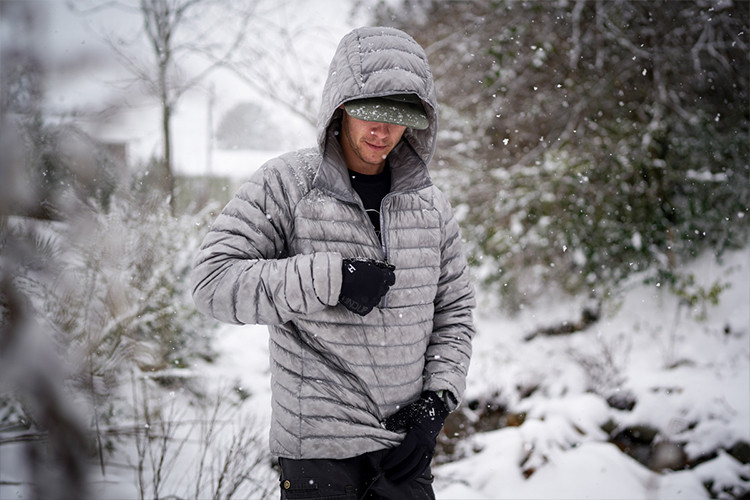
How Down Jacket Factories Control Quality: A Systematic Framework for Excellence
MOQ 50 pcs · From Prevention to Verification · Certifications · Process Controls · Brand Protection
Quality in down jacket manufacturing is not an outcome; it is a systematically managed process. It cannot be inspected into a product at the end; it must be designed, built, and verified at every stage of creation. For brands, understanding a factory's quality system is not just about avoiding defects—it's about protecting your brand equity, ensuring customer satisfaction, and building a foundation for scalable growth. This guide deconstructs the multi-layered quality assurance framework employed by professional factories, providing a strategic lens to evaluate partners and ensure your product meets the highest standards of performance, consistency, and craftsmanship.
This guide provides a comprehensive analysis of the quality control systems in down jacket manufacturing. We move beyond checklist inspections to examine the integrated processes, certifications, and cultural disciplines that separate exceptional factories from average ones. For a concrete example of a certified, system-driven approach, explore the capabilities in our Custom Down Jacket portfolio and the quality-first methodology within our OEM & ODM Services.
Part 1: The Foundation – Quality as a System, Not an Inspection
Understanding the difference between quality control (QC) and quality assurance (QA)Many brands confuse Quality Control (QC)—the act of inspecting finished products for defects—with Quality Assurance (QA)—the proactive system of processes and standards designed to prevent defects from occurring in the first place. A professional factory like Ginwen operates on a QA philosophy, where quality is embedded in every decision, from material selection to final packaging.
- Quality Assurance (QA) – Preventive & Process-Oriented: The planned and systematic activities implemented in a quality system to ensure that the product will meet requirements. Examples: ISO 9001 certified processes, supplier audits, operator training, preventive maintenance, and clear standard operating procedures (SOPs). QA asks, "Are we building the product the right way?"
- Quality Control (QC) – Detective & Product-Oriented: The operational techniques and activities used to fulfill quality requirements. Examples: In-line inspections, final AQL inspections, measurements, and functional tests. QC asks, "Is the finished product right?"
The most reliable factories invest heavily in QA, making QC a verification step rather than a primary defense. Ginwen's ISO 9001 certification is a testament to this systematic, process-driven approach.
Part 2: The Ginwen Quality Framework – A 6-Phase Assurance System
How we integrate quality gates into every step of our manufacturing workflowOur quality system is not a separate department; it is woven into the fabric of our 6-phase manufacturing workflow. Each phase has defined inputs, processes, outputs, and quality checkpoints that must be passed before proceeding to the next.
| Manufacturing Phase | Key Quality Assurance Activities | Quality Control Checkpoints & Outputs |
|---|---|---|
| 1. Design & Tech Pack Review | Clarify ambiguities, assess manufacturability, identify potential quality risks in the design. Verify completeness of tech pack (measurements, tolerances, materials). | Approved Tech Pack: A clear, unambiguous blueprint that serves as the quality baseline for the entire project. |
| 2. Material & Fill Selection | Supplier qualification (preferred vendors with their own certifications). Material testing (fabric weight, shrinkage, colorfastness, down fill power verification). Lab dip and strike-off approvals. | Approved Material Swatches & Test Reports: Physical references and data confirming materials meet spec before bulk ordering. |
| 3. CAD & Sampling (7-14 Days) | In-house pattern making for accuracy. First sample is a prototype for evaluation of design, fit, and construction. Fit sessions and detailed feedback loops. | Approved Top-of-Production (TOP) Sample: The signed-off, physical standard that becomes the legal and quality benchmark for bulk production. |
| 4. Bulk Production (20-35 Days) | In-Line Quality Control (ILQC): Dedicated QC staff on the production floor performing real-time checks. First Article Inspection (FAI): Thorough inspection of the first ~20 pieces off the line before full run proceeds. Operator training and standardized work instructions. | In-Line QC Reports, Pilot Run Approval: Documentation of checks and approval to proceed with mass production. Defects are caught and corrected at the source. |
| 5. Final Inspection & Packaging | Statistical AQL Inspection: A random sample of the batch is inspected against the TOP sample and tech pack. Critical, Major, and Minor defects are categorized and counted against pre-defined Acceptable Quality Limits. | AQL Inspection Report & Shipment Approval: Data-driven decision to ship, re-inspect, or rework. The order does not leave our facility without passing this gate. |
| 6. Post-Shipment & Reorder | Archiving of complete production package (tech pack, TOP sample, approved materials, inspection reports). Analysis of any customer feedback for continuous improvement. | Digital Style Archive: Ensures future reorders are produced to the exact same standard, guaranteeing long-term consistency for your brand. |
Part 3: The Critical Role of Certifications & Ethical Standards
How third-party verification provides objective proof of a factory's systems and ethicsCertifications are not just marketing badges; they are audited proof that a factory adheres to internationally recognized standards for management systems, ethics, and materials. They provide an independent layer of assurance beyond the factory's own claims.
Key Certifications & Their Meaning for Your Brand
- ISO 9001:2015 (Quality Management): The global benchmark for a systematic approach to quality. It proves Ginwen has documented processes, management oversight, and a commitment to continuous improvement. It ensures consistency and traceability.
- BSCI (Business Social Compliance Initiative): An audit for ethical and socially responsible working conditions. It protects your brand from the risk of association with poor labor practices and ensures worker welfare.
- RDS (Responsible Down Standard): A voluntary certification for down traceability, ensuring the down comes from animals that have not been subjected to unnecessary harm. This is crucial for brands with sustainability commitments.
- GRS (Global Recycled Standard): Verification for recycled material content. Supports brands using eco-friendly fabrics and linings, as mentioned in our product materials.
Why These Matter Beyond Compliance
- Risk Mitigation: They reduce legal, reputational, and supply chain risks for your brand.
- Market Access: Many retailers and regions require certain certifications for market entry.
- Consumer Trust: An increasingly important factor in purchasing decisions, especially for Millennial and Gen Z consumers.
- Operational Excellence: Certifications like ISO 9001 are strongly correlated with higher efficiency, lower waste, and better on-time delivery—benefits that are passed on to you.
Part 4: Specialized Controls for Down Jacket Complexities
Unique quality challenges in down production and how professional factories address themDown jackets present specific technical challenges that generic apparel QC misses. A quality system must be tailored to these unique variables.
Fill & Insulation Control
- Fill Power (FP) Verification: Confirming the loft and quality of the down fill (e.g., 600FP vs. 800FP) through supplier certificates or in-house testing.
- Fill Weight Accuracy: Precise weighing of down for each jacket to ensure consistent warmth and avoid "cold spots" or over-stuffing.
- Baffle/Quilt Construction: Checking stitch integrity to prevent down leakage and ensure even distribution of fill across all compartments.
- Down Proof Fabric & Seams: Ensuring shell fabric and seam construction (e.g., tape-sealed seams) are sufficiently tight to contain fine down plumes.
Construction & Finish Details
- Zipper & Hardware Function: Testing zippers under load, checking snap strength, and ensuring cord locks hold tension. These are high-failure points that impact usability.
- Fit Consistency Post-Fill: A jacket's fit changes once filled. Professional factories account for this in pattern making and check finished garment measurements against the filled standard.
- Visual Symmetry & Alignment: Critical for a premium look. Checking that quilting lines, pockets, and logo patches are symmetrical and properly aligned.
- Private Label Execution: Treating label placement, logo embroidery/print quality, and packaging as critical quality parameters, not just finishing touches.
Part 5: The High Cost of Poor Quality – A Brand Perspective
Why investing in a quality-assured factory is ultimately a cost-saving and brand-protecting decisionChoosing a factory based solely on the lowest FOB price often leads to a much higher Total Cost of Quality (COQ). The hidden costs of poor quality can devastate a brand's finances and reputation.
| Type of Quality Failure | Direct Financial Cost | Indirect Brand & Strategic Cost |
|---|---|---|
| In-Line Defects (Caught Early) | Low. Rework cost on a small number of units. | Minimal. Schedule delay is the primary risk. |
| Final Inspection Failure (Batch Rejected) | High. 100% sorting, rework, or in worst case, remaking the order. Missed shipment dates incur air freight costs. | Severe. Delayed launch, missed sales season, strained partner relationship. |
| Post-Sale Defects (Customer Returns) | Extreme. Refund + return shipping + lost margin + disposal cost. Can equal 3-5x the product's value. | Catastrophic. Negative reviews, eroded customer trust, damaged brand reputation, higher customer acquisition cost in future. |
| Inconsistent Reorder Quality | High. Cost of finding and qualifying a new factory. Loss of efficiency from the previous partnership. | Strategic. Inability to scale reliably. Brand messaging about quality becomes hollow. |
A factory with a strong QA system, like Ginwen, is designed to prevent failures from reaching the "Post-Sale" and "Reorder" stages, protecting your investment and your brand's future.
Part 6: The Ginwen Quality Ethos – Partnership in Excellence
How our culture, capabilities, and commitment translate to guaranteed quality for your brandAt Ginwen, quality is our license to operate. It is the non-negotiable foundation of our partnership with every brand. We don't just promise quality; we engineer it through our systems, our team, and our mindset.
- System-Driven, Not Hero-Driven: Our quality doesn't depend on one superstar inspector. It's encoded in our ISO 9001 processes, ensuring consistency regardless of personnel.
- Vertical Control & In-House Expertise: With in-house pattern making, sampling, and production, we control the entire process. There are no hidden subcontractors where quality can break down.
- Transparent Communication & Partnership: We see you as a partner in quality. We provide regular updates, share inspection reports, and involve you in key approvals (like the TOP sample). We believe in "no surprises."
- Investment in the Right Tools & People: From skilled technicians (30+ sewing specialists) to AQL-trained inspectors, we invest in human expertise. Our 5,000 sqm ISO & BSCI certified facility is equipped for precision.
- Scalable from MOQ 50 to 50,000: Our quality systems are scale-agnostic. Your 50-piece launch order receives the same rigorous process control as a 5,000-piece reorder, giving you accurate quality data for scaling decisions.
- Long-Term Archival for Consistency: Your approved specs are digitally archived forever. This institutional memory is what guarantees your Style #001 looks and performs identically in Season 1 and Season 5.
Conclusion: Quality is a Choice, Not a Chance
Choosing a factory with a systematic quality assurance approach is the most important decision for your product's successIn the end, consistent, high-quality manufacturing is the result of deliberate choice, disciplined systems, and a culture that values prevention over correction. For a brand, the manufacturing partner you choose is the single greatest determinant of the quality that reaches your customer. By partnering with a factory that views quality as a comprehensive system—encompassing certifications, process controls, specialized expertise, and ethical standards—you transform quality from a worrying variable into a reliable, competitive advantage.
At Ginwen, we are committed to being that partner. We provide the transparent, system-driven quality assurance that allows you to launch with confidence, scale with consistency, and build a brand renowned for excellence.
- Ask for Certificates: Request valid, current copies of ISO 9001, BSCI, and any material-specific certifications (RDS, GRS). Verify the factory name and address match.
- Audit the Process, Not Just the Product: Ask to see their workflow diagram and quality control plan. Where are the quality gates? How is in-line QC performed?
- Evaluate Communication & Transparency: Do they proactively share information? Are they willing to provide inspection reports? Transparency is a hallmark of a quality-conscious partner.
- Test with a Sample Project: Commission a sample. The quality of the sample, the communication during its development, and the factory's response to feedback are the best real-world tests.
- Visit the Facility (Virtually or In-Person): See the production floor, the QC station, and the fabric storage. Organization and cleanliness are strong indicators of process discipline.
- Check References: Speak to other brands they work with, especially those at a similar stage to yours. Ask about consistency, problem-solving, and reorder quality.
- Think Long-Term: Assess their system for archiving styles and specifications. Your need for consistent reorders is as important as the first launch.
Frequently Asked Questions (FAQ)
Your Questions About Down Jacket Manufacturing Quality Answered1. What is an AQL inspection, and what AQL level is considered acceptable?
AQL (Acceptable Quality Level) is an international statistical sampling standard (ISO 2859-1) used to determine if a production batch meets quality requirements. Inspectors check a random sample of units from the batch. The standard defines three types of defects: Critical (safety/regulatory, limit 0), Major (affects usability/ saleability, e.g., broken zipper), and Minor (cosmetic, doesn't affect function). For general apparel, a common AQL is Level II, 2.5/4.0, meaning for a given sample size, no more than 2.5% Major defects and 4.0% Minor defects are allowed to "pass" the batch. At Ginwen, we use AQL as our final verification gate, but our focus is on prevention throughout the process to ensure batches pass easily.
2. How can I verify your ISO 9001 and BSCI certifications?
We welcome and encourage verification. You can request the official certificates from our team, and we will provide you with the current, valid documents. The certificates will show our factory name (Ginwen) and address, confirming the audit was conducted at our production facility. For BSCI, you may also be able to verify through the BSCI platform with our unique ID. Transparency is a core part of our quality ethos.
3. Do you check the quality of every single jacket, or just a sample?
We employ a multi-layered approach. Every jacket goes through operator self-checks and is observed by in-line QC staff during production. However, the final batch approval is based on a statistical AQL sample. This is the industry standard because 100% inspection is not only incredibly time-consuming and costly, but it is also surprisingly less effective—inspector fatigue leads to missed defects. The AQL system, when combined with strong in-process controls, provides the optimal balance of reliability and efficiency. The goal of our in-line QC is to make the final AQL a formality.
4. What happens if the AQL inspection fails?
Our process is designed to make this a rare event. However, if an AQL inspection indicates the batch does not meet the agreed standard, we immediately: 1) Stop all shipment preparations, 2) Analyze the root cause of the failure, 3) Communicate transparently with you, providing the full report, 4) Execute a corrective action, which typically involves 100% sorting of the batch to separate good from bad units, followed by rework of the defective ones. In some cases, partial remaking may be required. No goods ship without your approval after the issue is resolved. Our commitment is to deliver a correct order, not just a fast one.
5. How do you ensure the down fill power and weight are accurate?
We control this through sourcing and in-process checks: 1) Certified Suppliers: We source down from reputable suppliers who provide test certificates for fill power (FP). For RDS down, the certification includes full traceability. 2) In-House Verification: We can perform spot checks on down shipments. 3) Precision Weighing: During production, the down for each jacket or batch of jackets is weighed with precision scales to ensure the exact grammage specified in the tech pack is used, guaranteeing consistent warmth across all units.
6. We are a very small brand with a 50-piece order. Will we get the same quality attention as a large brand?
Absolutely. At Ginwen, our quality systems are process-driven, not order-size-driven. Your 50-piece MOQ order follows the exact same 6-phase workflow, with the same quality gates (tech pack review, TOP sample, in-line QC, final AQL) as a 5,000-piece order. The systems—ISO 9001, trained staff, inspection protocols—are applied consistently. We believe the quality of your first order sets the DNA for your brand, and we are committed to ensuring it is flawless, regardless of quantity.
Quality is the Promise Your Brand Keeps
Every garment that carries your label is a testament to your brand's values and commitment. Entrusting that promise to a factory with a systematic, transparent, and certified approach to quality is the most strategic decision you can make.
We are ready to be your partner in keeping that promise—providing the engineered quality, operational clarity, and shared commitment to excellence that transforms your designs into trusted, beloved products.