How to Choose a Puffer Jacket Manufacturer (MOQ 60) | Quality, Lead Time & Reorders
- Share
- Issue Time
- Jan 23,2026
Summary
How to Choose a Puffer Jacket Manufacturer (MOQ 60) | Quality, Lead Time & Reorders。Wondering how to choose a puffer jacket manufacturer? Use this practical checklist to evaluate sampling, QC systems, private label execution, and bulk repeatability. Start at MOQ 60 pcs per style with Ginwen.
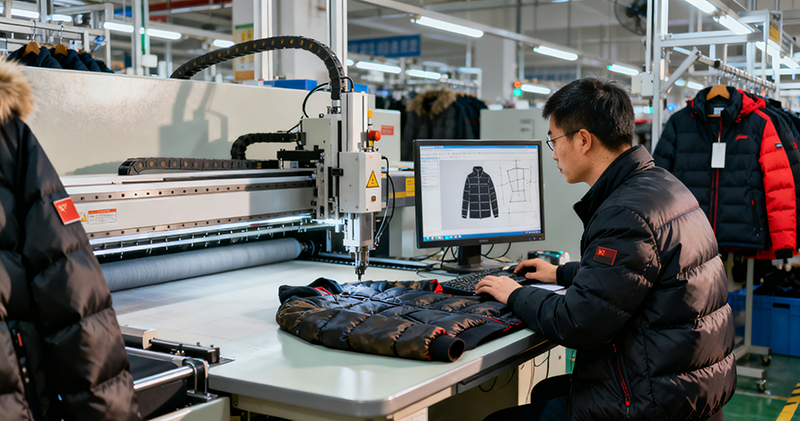
How to Choose a Puffer Jacket Manufacturer: A Practical Checklist for Brands
MOQ 60 pcs · Sampling Discipline · Bulk Repeatability · Quality Control
Choosing a puffer jacket manufacturer is a business decision that directly affects your product quality, return rate, and brand reputation. A factory can show a great sample, but what matters is whether they can repeat that result in bulk— with consistent measurements, stable materials, and clean workmanship across your entire size run.
This guide explains how to choose a puffer jacket manufacturer step by step: what to evaluate, what questions to ask, and how to start professionally at MOQ 60 pcs per style without taking unnecessary risk.
Step 1: Confirm the Factory’s Puffer Jacket Specialization
Outerwear requires different methods than basic apparelPuffers are not “simple sewing.” They require quilting alignment, insulation balance, and functional components like zippers, snaps, and finishing systems. The first screening question is whether the factory is truly experienced in puffer jacket production—not only general apparel.
- Clear understanding of quilting structures and panel construction
- Experience with insulation options (down, recycled down, synthetic eco-fill)
- Ability to control measurement tolerances across size grading
- Functional trim handling (zippers, snaps, cords, hardware finishes)
- Finishing standards that match your target market
Step 2: Evaluate Sample-to-Bulk Repeatability
A good sample is not enough—repeatability is the real testMany sourcing problems happen because the sample is produced by a senior technician, but bulk production is handled by different lines with different skill levels. You need a manufacturer that can reproduce the approved sample standard consistently in bulk.
Green Flags
- Clear tech pack confirmation and sample approval process
- Defined measurement tolerances for bulk
- Production checkpoints during sewing and finishing
- Documentation discipline for reorders
- Stable materials and trims across batches
Red Flags
- Vague answers about tolerances and bulk standards
- No in-line QC checks, only final inspection
- Frequent “material substitutions” without written approval
- Inconsistent sample results between revisions
- Overpromising lead time without a plan
Step 3: Check the Factory’s Quality Control System
QC should happen before defects become expensiveThe most reliable manufacturers control quality through multiple checkpoints, not just at the end. In puffers, critical issues like quilting alignment, insulation balance, and zipper function should be checked in-line.
| QC Stage | What Gets Checked | Why It Matters |
|---|---|---|
| Incoming materials | Fabric defects, shade match, trim function | Prevents color drift and weak components |
| Cutting | Panel accuracy and matching | Protects fit and symmetry |
| Sewing / quilting | Stitch quality, seam finish, quilting alignment | Prevents visible workmanship issues |
| Filling / insulation | Fill distribution and balance | Prevents cold spots and uneven silhouette |
| Finishing | Zipper function, measurements, labels, appearance | Ensures retail-ready delivery |
If the factory can’t explain these QC steps clearly, bulk risk increases—even if the sample looks good.
Step 4: Confirm Private Label and Packaging Execution
Brand-owned details matter when you sell at scaleIf you are building a private label brand, the manufacturer must handle labels, hangtags, and packaging rules accurately. Many “cheap” suppliers fail here, causing avoidable mistakes and delays.
- Neck label, care label, size label placement and artwork confirmation
- Hangtags and barcode-ready labeling (if required)
- Packaging requirements: polybag rules, carton marks, folding method
- Accessory control: zipper pulls, snaps, cords, and logo placements
- Final packing verification before shipment
Step 5: Use MOQ 60 to Validate Before Scaling
Start lean, learn fast, then increase volume confidentlyFor many brands, the best approach is to begin with MOQ 60. This gives you a real size run and controlled inventory risk. Once the fit is confirmed and sell-through is proven, you can scale the winners with fewer surprises.
- Validate sizing and returns before committing to larger inventory
- Test fabric performance and customer feedback in real markets
- Confirm supplier communication and process discipline
- Lock specs early so reorders become easier and faster
- Scale proven styles instead of guessing new designs
Quick Workflow: From Inquiry to Bulk Production
A simple process that keeps your project under controlUse this workflow to avoid misunderstandings and reduce production risk—especially if you are working with a new manufacturer.
- Send your tech pack or reference images and define target market requirements
- Confirm fabric, insulation, trims, and construction method
- Sampling and fit approval with documented revisions
- Lock measurements, tolerances, labels, and packaging rules
- Bulk production starts at MOQ 60 pcs per style (mixed sizes supported)
- In-line QC checks during sewing, quilting, and finishing
- Final inspection and packing verification
- Shipment coordination and reorder planning
Ginwen: A Practical Puffer Jacket Manufacturer for Brands Starting at MOQ 60
MOQ 60 pcs · Repeatable quality · Private label readiness · Reorder supportAt Ginwen, we help brands launch and scale with consistent results. We focus on what makes manufacturing reliable: clear tech specs, stable materials, in-line QC checkpoints, and private label execution that matches your brand standards.
- MOQ 60 pcs per style with mixed-size support
- Fast sampling cycles and efficient revisions
- In-line QC checkpoints to reduce defects and returns
- Material and trim control to protect consistency
- Private label readiness: labels, hangtags, packaging rules
- Documentation for stable reorders and scaling
FAQ
Common questions when choosing a puffer jacket manufacturerWhat is the most important factor when choosing a puffer jacket manufacturer?
Sample-to-bulk repeatability. The manufacturer must consistently reproduce your approved sample standard in bulk, across sizes and reorders, with controlled QC checkpoints.
Is MOQ 60 enough for a professional first run?
Yes. MOQ 60 supports a real size run and market testing. It’s a practical way to validate fit, workmanship, and supplier reliability before scaling volume.
How can I reduce risk with a new manufacturer?
Lock your tech pack early, confirm materials and trims in writing, insist on in-line QC checks, and document every approval so the bulk output stays consistent.
What should I send to get an accurate quote?
Send your tech pack or reference images, fabric and insulation preferences, size range, labeling and packaging needs, destination, target delivery date, and quantity (MOQ 60 pcs per style).
Conclusion
Learning how to choose a puffer jacket manufacturer comes down to one principle: repeatability. Choose a factory with clear processes, stable materials, and in-line QC checkpoints that protect your bulk output.
Start with MOQ 60, validate your product in the market, and scale proven winners with documented standards. That’s how brands grow with fewer returns, fewer delays, and stronger customer trust.