How to Start a Private Label Down Jacket Brand | OEM & ODM Services Launch Guide
- Share
- Issue Time
- Mar 11,2026
Summary
Learn how to start a private label down jacket brand with better product positioning, sample development, private-label setup, MOQ 60 launch planning, and OEM & ODM factory support for scalable growth.
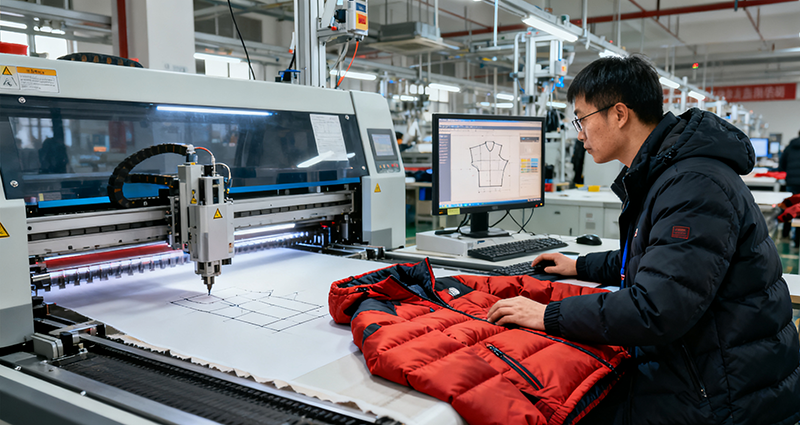
How to Start a Private Label Down Jacket Brand: The Complete Founder's Guide
MOQ 50 pcs · From Idea to Market · Brand Strategy · Product-Market Fit · Supply Chain Foundations
Launching a private label down jacket brand is an entrepreneurial venture that blends creativity, commerce, and operational execution. It's not merely about finding a factory and slapping on a logo; it's about building a brand that solves a problem, serves a specific customer, and delivers exceptional value through a superior product. The most successful launches are not accidents—they are the result of deliberate strategy, disciplined product development, and a partnership with a manufacturer that acts as a co-creator. This guide provides a step-by-step, strategic framework to navigate the journey from concept to your first customer, de-risking the process and building a foundation for scalable growth.
This guide provides a comprehensive roadmap for starting a private label down jacket brand. We move beyond generic advice to analyze the critical phases of brand building, focusing on market validation, product definition, manufacturing partnership, and launch execution. For a concrete example of a manufacturer built to support brand founders, explore the capabilities in our Custom Down Jacket portfolio and the founder-friendly services within our OEM & ODM Services.
Phase 1: The Strategic Foundation – Define Your Brand's Reason for Being
Before you sketch a single line, you must know who you're for and why they should careA brand is a promise. Your first task is to define that promise with ruthless clarity. This is not about vague "inspiration"; it's about strategic positioning that will guide every subsequent decision—from product design to pricing to marketing.
- Target Customer Archetype: Who are they? Not just demographics, but psychographics. What are their values, aspirations, and pain points with current outerwear? (e.g., "The urban commuter who values style and performance but hates bulky technical gear.")
- Core Value Proposition: What unique benefit do you offer? Is it superior fit, sustainable materials, innovative design, or unmatched value? This should be a single, compelling sentence.
- Brand Pillars & Personality: What 3-4 adjectives define your brand's character? (e.g., Minimalist, Technical, Playful, Luxe). This will guide aesthetic decisions.
- Competitive Landscape: Who are your direct and indirect competitors? What are they doing well? Where are they failing? This reveals your opportunity.
- Price Point & Business Model: What is your target retail price? Are you DTC, wholesale, or hybrid? This directly impacts your target Cost of Goods Sold (COGS) and manufacturing budget.
Phase 2: Product Definition – From Brand Strategy to Wearable Reality
Translating your brand promise into a physical product that customers will love and buyWith your strategy set, you now define the product that will deliver on your promise. This is where you move from abstract to concrete, making critical decisions that balance desirability, feasibility, and viability.
The Product Brief: Your Blueprint for Development
- Hero Product Vision: Describe your flagship jacket in detail. What is its primary use case? What feeling should it evoke?
- Technical & Aesthetic Specs: Define silhouette (oversized, tailored, cropped), fill type & weight (duck down, synthetic, FP rating), shell fabric direction (matte, technical, recycled), and key features (hood type, pocket configuration, closures).
- Fit & Sizing Philosophy: Will you offer inclusive sizing? What is your base fit model? This is critical for pattern development.
- Sustainability Goals: Will you use RDS-certified down, recycled fabrics (like GRS materials), or other eco-conscious components? This must be decided early for sourcing.
The "One Hero" Launch Strategy
- Why It Works: Launching with a single, perfectly executed hero product is far more powerful and less risky than a scattered collection. It allows you to focus all your resources on nailing one thing.
- Ginwen's Approach: We champion this focused strategy. Our 50-piece MOQ is designed to make a single-style launch financially viable, allowing you to validate the market with minimal inventory risk.
- Building the Foundation: This first product becomes your brand's quality benchmark and provides invaluable customer feedback for your second style. As the Canadian streetwear brand in our testimonials noted, starting with a strong, well-developed product set them up for success.
Phase 3: The Manufacturing Partnership – Your Most Critical Business Decision
Choosing the right co-creator will make or break your brand's quality, timeline, and sanityFor a private label brand, your manufacturer is not a vendor; it's your product development and production partner. The right partner (like Ginwen) provides guidance, de-risks the process, and ensures your vision is executed flawlessly. The wrong partner can drain your capital and morale.
| What to Look For in a Founder-Friendly Manufacturer | Why It Matters for Your Launch | How Ginwen Delivers This |
|---|---|---|
| Low, Realistic MOQ | Enables market testing with manageable capital and inventory risk. | We offer a true 50-piece MOQ, specifically structured for startup and small-batch production. |
| Full ODM/Development Support | You may have a vision but not a full tech pack. A partner should help bridge that gap. | Our comprehensive OEM & ODM Services include design, pattern making, and material sourcing guidance from concept stage. |
| Transparent, Structured Process | Predictability reduces stress. You should know what to expect and when. | We operate on a clear 7-step workflow (Request → Details → Sampling → Approval → Production → QC → Shipping) with defined timelines (7-14 day sampling, 20-35 day production). |
| Proven Quality Systems | Your first product must be high-quality to earn customer trust and positive reviews. | Our ISO 9001 & BSCI certified factory ensures systematic quality control at every stage, from in-line checks to final AQL inspection. |
| Brand-Building Mentality | They should care about your label, tags, and packaging as much as you do. | We handle full private label execution—woven labels, care labels, logo patches, hangtags, and custom packaging—integrating it seamlessly into production. |
Phase 4: Brand Identity & Private Label Execution
How your branding transforms a garment into a tangible expression of your brand promisePrivate label is what separates a generic garment from your brand. It's the tangible touchpoints—labels, tags, packaging—that communicate quality and build recognition. This must be planned in parallel with product development, not as an afterthought.
The Brand Identity Toolkit
- Logo & Typography: Provide your manufacturer with high-resolution vector files (AI, EPS, SVG).
- Main Label: Woven or printed. Defines brand name, origin, and often size.
- Care & Content Label: Legally required. Must be accurate for materials and care instructions.
- Hangtags: Your marketing real estate. Communicates brand story, features, and sustainability credentials.
- Packaging: Polybags, tissue paper, thank you cards, shipping boxes. The unboxing experience is a key brand moment.
Integration with Manufacturing
- Early Coordination: Share branding assets during the sampling phase. This allows the factory to create placement guides and source label materials.
- Approval Prototypes: Always approve physical strike-offs of labels and tags before bulk production.
- Quality Control: Branding accuracy (placement, spelling, attachment) must be part of the factory's QC checklist. At Ginwen, we treat branding as a core quality parameter.
- Archival: Once approved, all branding specs are archived with your style file, ensuring perfect consistency on reorders.
Phase 5: The De-risked Launch – Sampling, Feedback, and Pre-Launch
Using the sampling process to perfect your product and validate demand before full financial commitmentThe sampling phase is your opportunity to fail cheaply and learn quickly. It's a collaborative, iterative process with your manufacturer to refine fit, materials, and construction.
- Initial Prototype (7-14 days): Based on your brief, we create the first physical sample. This is for evaluating overall design, silhouette, and material hand-feel.
- Fit & Detail Revisions: You try on the sample, provide detailed feedback on fit, proportions, and details. Our pattern makers implement changes. This loop may repeat 1-2 times.
- TOP (Top-of-Production) Sample: The final sample, made from exact bulk materials and to final specifications. This is the legal and quality standard you approve before bulk production. Do not proceed without signing off on this.
- Pre-Launch Validation: Use the TOP sample for professional photography, seeding to micro-influencers, or even a pre-order campaign to gauge demand and secure initial capital before placing your bulk order.
Phase 6: The Financial Blueprint – Budgeting for Your First Order
A realistic financial plan is the difference between a successful launch and a costly lessonLaunching a brand requires capital. A transparent understanding of costs prevents surprises and allows for smart financial planning.
- 1. Development & Sampling Costs: A one-time investment. Covers pattern making, sample creation, and revisions. (e.g., $500 - $1,500)
- 2. Bulk Production (FOB Cost): The per-unit cost to manufacture each jacket, including materials, labor, and factory overhead. For a mid-tier down jacket, this might range from $40 - $70 per piece. For 50 pieces: $2,000 - $3,500.
- 3. Shipping, Duties & Taxes: Often 25-40% of the FOB cost. Includes international freight, insurance, and import duties (varies by country). Add $500 - $1,400.
- 4. Contingency Fund (10-15%): For unexpected expenses. $300 - $700.
- Estimated Total Cash Outlay: $3,300 - $7,100 to get 50 jackets to your door.
- Key Takeaway: A 50-piece MOQ makes this initial investment manageable, allowing you to prove your concept with a relatively small amount of capital. The goal of this first order is market validation, not maximum profit.
Phase 7: Launch, Learn, and Iterate
Your first drop is the beginning of the conversation with your market, not the end of the journeyLaunch day is exhilarating, but the real work begins immediately. This phase is about listening to customers, analyzing data, and planning your next move.
Post-Launch Actions
- Gather Feedback: Solicit reviews, conduct customer interviews. What do they love? What would they change?
- Analyze Sales Data: Which sizes/colors sell fastest? What is your sell-through rate? This data is gold for forecasting reorders.
- Manage Cash Flow: Reinvest initial revenue into marketing and inventory for reorders or a second style.
- Build Community: Engage with customers on social media. Share the story behind the product. Turn buyers into advocates.
Planning for Scale (The Reorder)
- Trigger Point: Establish a stock level (e.g., when you have 10 units left) that triggers a reorder conversation with your manufacturer.
- The Reorder Advantage: With Ginwen, reorders are significantly easier and faster. We have your approved patterns, specs, and branding files archived. Lead times are shorter, and consistency is guaranteed.
- Scaling Up: As demand grows, you can increase order quantities, improving your per-unit cost (economies of scale) and margin.
- Innovating: Use customer insights to inform the design of your second style, applying the lessons learned from your first launch.
Phase 8: The Ginwen Partnership – Built for Brand Founders
How we operationalize support for entrepreneurs at every stage of the journeyAt Ginwen, we see ourselves as an extension of your team. Our entire service model—from our accessible MOQ to our integrated ODM support—is engineered to de-risk the launch process for ambitious founders.
- Startup-Friendly MOQ & Pricing: Our 50-piece minimum and transparent costing make the first step financially accessible.
- End-to-End ODM Handholding: From your initial mood board to a production-ready sample, our in-house team (5+ pattern makers, 30+ technicians) guides you. As our Canadian client testimonial states, "Ginwen not only helped us with the design, but also adjusted the details of the pattern."
- Quality as a Non-Negotiable: Our ISO 9001 systems ensure your first product meets a high standard, protecting your brand's reputation from day one.
- Brand Integrity Execution: We treat your private label assets with care, ensuring every label is perfect and every package reflects your brand.
- Scalable Foundation: We are your long-term manufacturing home. Start with 50 pieces, and scale to 5,000 with the same partner, enjoying smoother processes and improved efficiencies along the way.
- Transparent Communication: You'll have a direct line to our team, with regular updates, so you're never left wondering about the status of your order.
Conclusion: Your Brand Starts With a Single, Confident Step
The path from idea to launched brand is challenging but immensely rewarding with the right plan and partnersLaunching a private label down jacket brand is a complex project, but it is a project that can be managed successfully by breaking it into strategic phases and making informed decisions at each step. The most important decision you will make early on is choosing a manufacturing partner that aligns with your vision, understands the challenges of a startup, and provides the structure and support to turn your concept into a commercial reality.
By following this framework—grounding your launch in strategy, focusing on a hero product, partnering with a manufacturer built for founders, and launching with a learning mindset—you dramatically increase your odds of building a brand that resonates, endures, and grows.
- Weeks 1-2: Finalize your Brand Strategy Canvas. Conduct competitive research. Start building your visual mood board.
- Weeks 3-4: Define your hero product brief. Begin conversations with 2-3 potential manufacturing partners (including Ginwen). Request quotes and assess their processes.
- Weeks 5-8: Select your manufacturer. Finalize and submit your product brief and branding assets. Begin the sampling process.
- Weeks 9-10: Review and approve the TOP sample. Finalize your e-commerce/store setup. Begin pre-launch marketing.
- Weeks 11-14: Bulk production runs. Finalize logistics and launch plans. Shoot professional photography with your TOP sample.
- Week 15+: LAUNCH. Receive inventory. Fulfill orders. Gather feedback. Analyze data. Start planning your reorder or second style.
Frequently Asked Questions (FAQ)
Your Questions About Starting a Private Label Down Jacket Brand Answered1. I have no experience in fashion or manufacturing. Can I still start a brand?
Absolutely. Many successful founders start with passion and a clear vision, not industry experience. The key is to partner with a manufacturer that can guide you through the technical and operational complexities. A full-service ODM partner like Ginwen acts as your external product team, providing the expertise you lack in-house. Your job is to be the visionary and the voice of your customer; ours is to help you execute that vision flawlessly.
2. How much money do I need to start?
As outlined in Phase 6, a conservative estimate for a 50-piece launch of a mid-tier down jacket, including sampling, production, shipping, and contingency, can range from $3,300 to $7,100. This does not include marketing, website, or other business setup costs. The 50-piece MOQ is specifically designed to make this initial capital outlay manageable for bootstrapped founders. The goal of the first order is validation, not profit maximization.
3. How long does the entire process take from idea to having jackets to sell?
With an efficient partner, a realistic timeline is approximately 15-20 weeks (3.5-5 months). This includes: 2-4 weeks for strategy and partner selection, 3-5 weeks for sampling and revisions, 4-5 weeks for bulk production, and 2-4 weeks for shipping. It's crucial to factor this into your launch planning, especially for seasonal products. Starting the conversation 6-8 months before your desired in-season date is advisable.
4. What if my first style doesn't sell well?
This is why the 50-piece MOQ and focused "hero product" strategy are so valuable. They limit your downside risk. If sales are slow, you haven't over-invested in inventory. Use it as a learning opportunity. Analyze why—was it the price, the fit, the marketing? The feedback is invaluable. You can then liquidate the remaining stock through sales or bundles and apply the lessons to your next, better-informed design. Many iconic brands had humble first products.
5. Can I make changes to my design after the sample is approved?
Changes after the TOP (Top-of-Production) sample is approved are highly disruptive and expensive. The TOP sample is the locked standard for bulk production. This is why the sampling phase is so critical—it's your chance to make all necessary refinements. Once bulk production begins, changes can delay timelines, incur cost penalties, and even require new samples. It's essential to be completely satisfied with the TOP sample before giving the green light for bulk.
6. Why should I choose Ginwen over other manufacturers?
Ginwen is specifically engineered for the needs of startup and growth brands. Unlike large factories that ignore small orders or trading companies that add layers of cost and confusion, we offer: 1) A true 50-piece MOQ with full service, 2) In-house, end-to-end ODM support to guide you, 3) ISO 9001 & BSCI certified quality and ethics, 4) Transparent, direct factory partnership (no middlemen), and 5) A proven track record with brands like the North American streetwear client who found us "very professional" and faster than their previous factory. We are partners in your success.
The Journey of a Thousand Miles Begins With a Single Sample
Every great brand started as an idea in someone's mind. The difference between an idea and a launched brand is a systematic process and the right partners. It's a challenging journey, but also one of the most creative and rewarding entrepreneurial paths you can take.
We are ready to walk that path with you—providing the manufacturing expertise, operational clarity, and partnership you need to bring your vision to life and build a brand that matters.