Is Puffer Jacket Suitable for Winter?
- Share
- Issue Time
- Jun 20,2025
Summary
A buyer guide on whether a puffer jacket is suitable for winter: how fill weight and fill power set the comfortable temperature range, down versus synthetic fill, matching a puffer to dry, wet, windy or alpine winters, when a puffer is not enough, layering, winter design details, testing and quality control, cost drivers, and terms with MOQ 50 pcs per style, sampling in 7 to 14 working days and bulk in 25 to 40 working days.
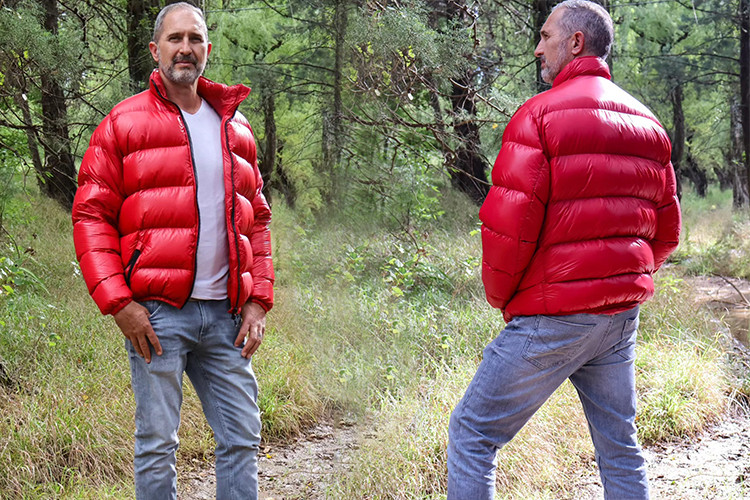
Is a Puffer Jacket Suitable for Winter? A Buyer's Guide to Temperature Ratings and Fill Weight
Is a puffer jacket suitable for winter? Yes, for most winter conditions a correctly specified puffer is one of the warmest options per unit of weight, but only when fill weight, fill power, shell fabric, and baffle construction match the climate the jacket will actually be worn in. A 60 g lightweight puffer is a spring and autumn layer; a 250 g high-loft baffled puffer with a windproof, water-repellent shell handles deep winter. This guide explains how to tell the difference, how to specify a winter-ready custom puffer jacket for your brand, and what to confirm with a factory before committing to a bulk order.
Table of Contents
Is a Puffer Jacket Suitable for Winter? The Short Answer
Yes. A puffer jacket is suitable for winter as long as three conditions are met: the insulation volume is high enough for the temperature band, the shell blocks wind and resists light moisture, and the construction keeps the fill evenly distributed so it cannot slide away from the cold spots. When any one of those three fails, the same jacket that feels warm on a shop floor will feel cold on a windy corner in January.
The confusion usually comes from the word itself. "Puffer" describes a construction method, not a warmth level. Any jacket built with quilted channels and loose insulation is a puffer, whether it holds 40 g of synthetic microfibre or 300 g of 800 fill power goose down. The word tells you how the jacket is made, not how cold it can go. That is why two jackets both called puffers can differ by 20 C in comfortable operating temperature.
What Makes a Puffer Jacket Winter-Ready?
A winter-ready puffer is not a single feature but a combination of four decisions made at the specification stage. Get all four right and the jacket performs; miss one and buyers return it.
Insulation Volume
Fill weight measured in grams per jacket, not per square metre. Winter puffers generally sit between 150 g and 300 g of fill; below 120 g the jacket is a shoulder-season piece regardless of marketing.
Fill Quality
Fill power (loft per 30 g) decides warmth per gram. 550 to 650 fill power covers most winter markets; 700 to 800 fill power suits extreme cold and premium positioning where packability matters.
Windproof Shell
Loft only works if still air stays trapped. A tightly woven or laminated shell with a durable water repellent finish prevents wind from flattening the fill and stops light snow from wetting it out.
Baffle Construction
Sewn-through channels are fine for moderate cold. Box baffles or stitchless bonded channels stop cold bridging and prevent fill migration, which is what separates a real winter puffer from a fashion one.
For brands building a winter range, these four variables are the ones to fix in the tech pack before sampling. We handle this specification work inside our OEM and ODM service, where fill weight and baffle type are agreed alongside fit and branding rather than treated as an afterthought.
How Fill Weight and Fill Power Decide Winter Performance
Fill weight and fill power are the two numbers buyers should ask for first, and most factories only volunteer one. Fill weight answers "how much insulation is inside". Fill power answers "how much loft each gram of that insulation creates". A jacket with 200 g of 550 fill power down traps noticeably less air than a jacket with 200 g of 750 fill power down, even though the gram figure looks identical on a spec sheet.
Fill power is measured by compressing a fixed mass of down and reading the recovered volume, in cubic inches per ounce. Higher numbers mean larger, more resilient clusters that recover faster after compression. For winter outerwear this shows up as better warmth-to-weight, better packability, and slower heat loss when the wearer moves between indoor and outdoor temperatures.
| Fill Weight | Fill Power | Comfortable Range | Best Use |
|---|---|---|---|
| 60-100 g | 550-650 | 10 C to 2 C | Spring and autumn layering |
| 120-160 g | 600-700 | 5 C to -5 C | Mild winter, urban commuting |
| 180-240 g | 650-750 | -5 C to -15 C | Mainstream winter markets |
| 250-300 g | 700-800 | -15 C to -30 C | Deep winter, alpine and Nordic |
These bands assume a windproof shell and an average adult activity level. They are planning ranges, not guarantees, because wind chill and humidity shift perceived temperature by several degrees. If you want the physics behind the numbers, our article on whether puffer jackets are actually warm walks through how trapped air and loft create insulation.
Puffer Jacket vs Down Jacket for Winter
In everyday language the two terms overlap, but for sourcing they are different specifications. A down jacket is filled with natural down clusters, typically a blend such as 90 percent down and 10 percent feather. A puffer jacket is a construction that can be filled with down, with synthetic microfibre, or with a blend of both.
The practical difference for a winter range is behaviour in wet conditions. Down delivers the best warmth-to-weight ratio and packs down smaller, but loses loft when it becomes saturated. Synthetic fill keeps a useful amount of insulation when damp and dries faster, which makes it the safer choice for wet coastal winters, ski touring, and any market where buyers wear the jacket in rain. Many brands now run both: a down flagship for cold dry winters and a synthetic or hybrid model for wet ones.
Matching a Puffer Jacket to Your Winter Climate
Writers often describe winter as one condition. Buyers do not. A winter in Toronto, a winter in Manchester, and a winter in Sapporo are three different products, and the specification should say which one it is targeting.
Four climate profiles cover most Northern Hemisphere demand. Dry continental winters reward high fill power down and moderate fill weight, because the priority is warmth without bulk. Wet maritime winters reward synthetic fill or a water-resistant treated down with a laminated shell. Windy urban winters reward shell tightness and hem and cuff sealing more than raw fill volume. Alpine and Nordic winters reward maximum fill weight with box baffles and a hood that fits over a helmet or a hat.
| Climate Profile | Priority Spec | Fill Recommendation |
|---|---|---|
| Dry continental | Warmth per gram | 700-800 fill power down, 180-240 g |
| Wet maritime | Damp-loft retention | Synthetic or treated down, 160-220 g |
| Windy urban | Shell tightness | 650-750 fill power, 150-200 g, sealed cuffs |
| Alpine and Nordic | Maximum loft | 700-800 fill power, 250-300 g, box baffles |
Fill type and shell choice also interact with fabric weight, breathability, and hand feel. Our guide to puffer jacket materials compares down, synthetic, and recycled fills against the shells that pair with them.
When a Puffer Jacket Is Not Enough for Winter
A puffer jacket has real limits, and a supplier who will not name them is not helping you. The honest answer to "is a puffer jacket suitable for winter" is yes, with exceptions.
A puffer alone is not sufficient when sustained temperatures drop below roughly -25 C and the wearer is stationary, because the body stops generating enough heat to maintain the microclimate inside the jacket. It is not sufficient in freezing rain, where a fully wetted shell defeats loft regardless of fill type. It is not sufficient for high-output activity such as ski touring, where the jacket is too warm while moving and too bulky to pack. And it is not sufficient when fit is wrong: a puffer worn tight compresses the fill under the arms and across the chest, removing insulation exactly where it is needed.
For buyers who need warmth without a full jacket, a custom down vest is a useful mid-layer under a shell and often sells better in transitional winter weather.
Layering a Puffer Jacket for Deep Winter
Most winter complaints trace back to layering rather than to the jacket. The puffer is the insulation layer; it is not the whole system. A three-layer build is standard for deep winter: a moisture-managing base layer, a light fleece or knit mid layer, and the puffer as the insulation and outer layer.
Sizing matters as much as the layers. A winter puffer should have enough room for a mid layer without compressing the fill when the wearer bends or reaches. If the jacket is purchased in the same size as a summer jacket, the fill flattens across the back and shoulders and the effective warmth drops. In the tech pack, that translates into a small increase in chest and armhole ease compared with a fashion fit.
Cold and Dry
- Base layer plus mid layer plus down puffer
- Fill weight 180-240 g
- Standard fit with room for one mid layer
- Hood optional but recommended
Cold and Wet
- Base layer plus dry synthetic puffer plus hard shell
- Fill weight 160-220 g
- Water-repellent, taped or laminated shell
- Sealed seams and water-resistant zippers
Extreme Cold
- Base plus fleece plus high-loft puffer plus shell
- Fill weight 250-300 g with box baffles
- Relaxed fit for maximum loft
- Helmet-compatible or fur-lined hood
Active Winter
- Base plus lightweight puffer, shell in the pack
- Fill weight 100-160 g
- Stretch panels under the arms
- High breathability over warmth per gram
Design Details That Change Winter Performance
Two puffers with the same fill weight can perform differently because of ten small construction choices. These are the ones worth locking in the tech pack.
The hood should be adjustable and, for deep winter, tall enough to cover the ears or fit over a hat. The collar should be high enough to meet the chin without gaping. Cuffs should be elasticated or adjustable so warm air cannot escape at the wrist, and the hem should have a drawcord so the jacket can be sealed at the waist. A two-way main zipper helps when the wearer sits or drives. A storm flap behind the zipper blocks wind. Pockets should be lined and, for winter, positioned so hands can rest in them without pulling the jacket tight. Baffle width affects loft: narrower baffles control fill migration but add weight, wider baffles loft more but can develop cold lines if underfilled. For wet winters, seam sealing and a water-resistant zipper are what keep the fill dry. Finally, down-proof lining fabric prevents fine down from working through the shell.
Rule of thumb: a winter puffer is specified by the weakest of these details, not the strongest.
For buyers building around an existing silhouette, our men's detachable-hood puffer shows how these details are combined in a production pattern.
Winter Performance Testing and Quality Control
Publishing a winter rating without testing is a risk no serious brand should take. These are the checks that matter before a bulk order ships, in the order they usually run.
Incoming Fill Verification
Confirm fill power, species, and down-to-feather ratio against the approved sample before the fill is cut from the bale.
Shell and Lining Checks
Test fabric weight, water repellency, down-proof construction, and colour continuity against the lab dip.
Baffle and Fill Weight Audit
Weigh a finished panel to confirm the declared fill weight and check that baffle channels are evenly filled.
Seam and Zipper Strength
Pull-test critical seams and cycle the main zipper and storm flap for wind leakage and jamming.
Fit and Function Review
Wear-test the pre-production sample for layering room, hood coverage, cuff seal, and hem drawcord range.
Final Inspection
Full inspection of measurements, fill distribution, stitching, and labelling before carton packing.
What It Costs to Build a Winter Puffer Jacket
Cost follows specification. The largest variables are fill type and fill weight, then shell fabric, then hardware, then labour and branding. Moving from 550 to 750 fill power raises material cost per gram, but it also lets you reduce fill weight while keeping the same warmth, which can offset part of the increase and produces a lighter, more packable jacket.
| Tier | Fill | Shell | Positioning |
|---|---|---|---|
| Entry | Synthetic microfibre, 120-160 g | Standard polyester, DWR | Value winter basics |
| Mid | 600-700 fill power down, 160-220 g | High-density nylon, DWR | Mainstream winter retail |
| Premium | 750-800 fill power down, 220-300 g | Laminated technical shell | Performance and alpine |
Fill selection also drives lead time, because certified down and recycled synthetics need traceability documentation. Our article on down fill explains how fill power, ratio, and sourcing affect both warmth and cost.
MOQ, Sampling and Payment Terms for a Winter Puffer Programme
Terms are where small brands get stuck with factories that only want volume. Our standard terms are designed for brands that need to validate a winter range before scaling it.
Minimum order quantity is 50 pcs per style, which allows a size run plus a colour test without committing to a full season of stock. Sampling takes 7 to 14 working days from approved tech pack, and sample fees of USD 50 to 200 per style are credited against the bulk order. Bulk production runs 25 to 40 working days depending on fill type, baffle complexity, and trims. Payment is 30% deposit with 70% balance, normally settled against the pre-shipment inspection report.
Certifications and Sustainability for Winter Puffers
Winter outerwear buyers face more compliance questions than almost any other category, because down sourcing and chemical safety are both under scrutiny. Four certifications cover the questions that come up most often.
RDS
The Responsible Down Standard covers animal welfare and chain of custody for down. It confirms where the down came from and how it was handled, not the quality grade of the fill.
OEKO-TEX
Tests fabrics, linings, and trims for harmful substances. Often the minimum requirement for European market access.
ISO 9001
Documents a functioning quality management system, which is what supports consistent output across repeat orders.
BSCI
Social compliance audit covering working conditions and labour practices at the producing site.
Ask for certificates that name the specific factory producing your order, not a parent company or a trading entity. More about our production base is on the about us page.
How to Start a Winter Puffer Jacket Order
Bring five pieces of information and the first quotation can be accurate rather than a range that changes three times.
- Target climate and temperature band the jacket must handle, including wind and wet conditions.
- Fill preference: down, synthetic, or both, with a fill weight or warmth target if you have one.
- Silhouette reference or tech pack, including fit intent, length, and hood or collar requirement.
- Quantity per style and per colourway, so MOQ and price breaks can be calculated.
- Branding and packaging requirements, including labels, hangtags, and retail presentation.
With those five items we can confirm feasibility, propose a fill and shell combination, and quote sampling and bulk timelines. Send them through our contact page and you will receive a specification-and-cost response rather than a generic catalogue.
Frequently Asked Questions About Puffer Jackets for Winter
Is a puffer jacket warm enough for winter?
For most winter markets, yes. A puffer with 180 g to 240 g of 650 to 750 fill power down and a windproof shell covers roughly -5 C to -15 C when worn with a base layer and a mid layer. Below -25 C, or in freezing rain, a puffer needs to be part of a layered system rather than the only layer.
Are puffer jackets warmer than wool coats?
Per unit of weight, usually yes, because loose fill or down traps more still air than dense wool. A heavy wool coat can feel warmer in windy conditions because it blocks wind better, but a puffer with a windproof shell closes that gap while staying lighter and more packable.
What fill weight should a winter puffer have?
As a planning guide: 120 g to 160 g for mild winters, 180 g to 240 g for mainstream winter markets, and 250 g to 300 g for deep winter and alpine use. These figures assume a windproof shell and normal activity levels.
Is down or synthetic fill better for winter?
Down gives more warmth per gram and packs smaller, so it suits cold, dry winters. Synthetic fill keeps more insulation when damp and dries faster, so it suits wet winters and high-output activity. Many brands carry one of each.
Can a puffer jacket be worn in rain or snow?
In dry snow, yes. In wet snow or rain, only if the shell is water repellent or laminated and the seams are sealed. Once down fill is saturated it loses loft and the jacket stops insulating until it dries.
Why does my puffer jacket feel cold even though it is thick?
The usual causes are underfilled baffles, fill migration away from cold spots, a shell that lets wind through, or a fit that compresses the fill across the chest and back. Thickness alone does not guarantee trapped air.
What is the minimum order quantity for a custom winter puffer?
Our standard minimum is 50 pcs per style, which supports a size run plus a colour test. Sampling runs 7 to 14 working days and bulk production 25 to 40 working days, with sample fees of USD 50 to 200 credited against the bulk order.
How do I start a winter puffer order with Ginwen?
Send your target climate, fill preference, silhouette or tech pack, quantity per style, and branding requirements through the inquiry form. You will receive a specification proposal with fill options, construction notes, pricing tiers, and a sampling and bulk timeline.
A puffer jacket is suitable for winter when the fill weight, fill power, shell, and construction are chosen for the climate it will be sold into. The word "puffer" describes how the jacket is built, not how cold it can go, so the specification has to carry that information.
Ready to build a winter puffer range? Contact our team or submit your requirements for a specification review. You can also browse the product catalogue or read more outerwear manufacturing guides on our blog.
[IMAGE_PLACEHOLDER]
Prompt: cross-section diagram of a box-baffle puffer jacket panel showing down clusters, baffle walls, and the windproof shell layers, with fill weight labels.
[IMAGE_PLACEHOLDER]
Prompt: three winter puffer jackets on a factory rack, lightweight, midweight, and expedition weight, photographed side by side to show loft difference.
[IMAGE_PLACEHOLDER]
Prompt: quality control technician weighing a filled puffer panel on a digital scale beside a fill weight specification sheet.