Lightweight Down Jacket Manufacturing Explained | 2026 Complete Guide
- Share
- Issue Time
- Apr 12,2026
Summary
Learn how lightweight down jackets are manufactured. Our 2026 guide covers high fill power down, ultralight fabrics, baffle construction, packability engineering, and specialized manufacturing techniques. OEM/ODM services available.
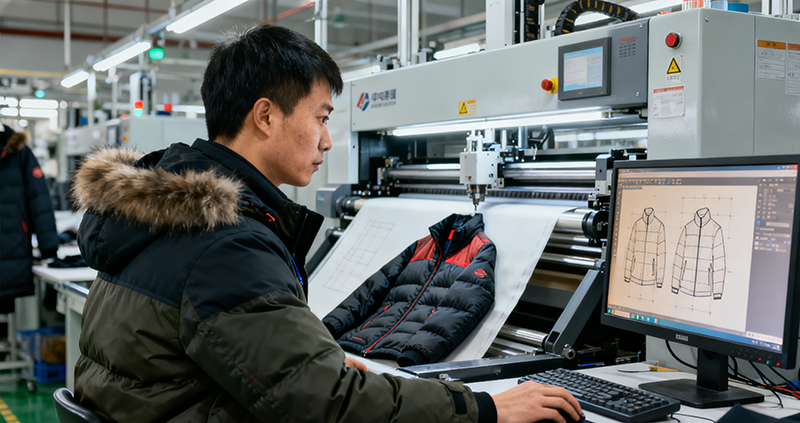
Lightweight Down Jacket Manufacturing Explained: The Complete Technical Guide
High Fill Power Down · Ultralight Fabrics · Minimalist Construction · Packability · Performance Engineering · MOQ 50+
Lightweight down jackets represent the pinnacle of performance outerwear engineering, where every gram matters and every design decision is a calculated trade-off between warmth, weight, and durability. In today's market, where consumers demand maximum versatility and packability without sacrificing protection, mastering lightweight down jacket manufacturing has become a critical differentiator for brands. This category isn't about making jackets thinner—it's about making them smarter, using advanced materials and precision construction to achieve remarkable warmth-to-weight ratios that redefine what's possible in insulated apparel.
This comprehensive technical guide demystifies the complex manufacturing processes behind lightweight down jackets. We'll examine the specialized materials, construction techniques, and quality control systems that transform high-fill-power down and ultralight fabrics into garments that can be compressed to the size of a water bottle yet provide serious warmth. Drawing on insights from Ginwen's 20+ years of technical manufacturing experience, this resource provides brands with a clear understanding of how to develop, specify, and produce lightweight down jackets that meet exacting performance standards while aligning with commercial and ethical considerations.
1. The Science of Lightweight: Understanding Warmth-to-Weight Ratio
How fill power, loft, and material science create maximum warmth with minimum weightThe core principle of lightweight down jacket manufacturing is maximizing the warmth-to-weight ratio. This is achieved through a combination of high-fill-power down that traps more air per ounce, ultralight yet durable shell fabrics, and minimalist construction that eliminates unnecessary materials. Unlike traditional jackets that add warmth by adding bulk, lightweight jackets engineer warmth through material science and precision design.
- Fill Power (FP) Efficiency: Higher fill power (700+, 800+, 900+ FP) down has larger, more resilient clusters that trap more air with less material. Each increase of 100 FP typically provides 10-15% more warmth for the same weight.
- Down-to-Feather Ratio: A higher percentage of down clusters (90/10, 95/5) versus feathers means more loft and less dead weight. Feathers add weight without proportional warmth.
- Fabric Weight Reduction: Shell and lining fabrics in the 10D-30D range (30-60 GSM) can be 50-70% lighter than standard 40D-70D fabrics while maintaining adequate durability for intended use.
- Construction Minimization: Fewer seams, lighter zippers, simplified features, and eliminated linings all contribute to weight savings without sacrificing core function.
- Strategic Fill Distribution: Placing more down in core warmth areas (torso) and less in extremities (sleeves, hood) optimizes warmth where it's needed most.
- Compression Engineering: The entire jacket must be designed to pack efficiently, which influences pattern layout, baffle design, and feature placement.
Achieving an optimal balance requires expertise in how these factors interact. A jacket with 1000FP down but a heavy 70D shell won't be truly lightweight. Conversely, a jacket with 10D fabric but poorly distributed 550FP down may be light but not warm enough. Professional manufacturers help brands navigate these trade-offs.
2. Material Selection for Lightweight Performance
Choosing the right down, fabrics, and components for ultralight applicationsMaterial selection is the foundation of lightweight manufacturing. Each component must be evaluated not just for its individual properties, but for how it contributes to the overall system. The highest performance materials are often more expensive and require more careful handling during manufacturing, but they enable the dramatic weight reductions that define this category.
| Material Category | Lightweight Specifications | Performance Characteristics | Manufacturing Considerations |
|---|---|---|---|
| Down Insulation | 800+ Fill Power, 90/10 or 95/5 ratio, RDS-certified. Water-resistant treatment optional. | Maximum loft per ounce, excellent compressibility, long-lasting warmth. Water-resistant treatments maintain loft in humidity. | Requires high-down-proof fabrics. Filling must be precise to avoid over/under-filling. More expensive material cost. |
| Shell Fabrics | 10D-30D ripstop nylon, 30-50 GSM. PFC-free DWR treatment. Pertex Quantum or similar. | Extremely lightweight, packable, good tear strength with ripstop. Down-proof weave essential. | Delicate handling required. Specialized cutting and sewing techniques. Hot-knife cutting prevents fraying. |
| Lining Fabrics | 10D-20D nylon taffeta, 25-40 GSM. Often omitted in premium ultralight designs. | Minimal weight, smooth for easy layering. Some designs use the shell fabric as self-liner to save weight. | Lightweight linings are slippery and challenging to sew. May require specialized feed systems. |
| Thread & Notions | Fine high-tenacity thread (TEX 40), microtex needles, lightweight #3 coil zippers. | Minimizes seam bulk and weight. Maintains down-proof integrity with minimal puncture size. | Requires precise tension control. Lightweight zippers may be less durable but save significant weight. |
| Baffle Materials | Ultralight mesh or none (sewn-through construction). For box baffles, 10D fabric. | Prevents down migration with minimal weight. Sewn-through is lightest but creates cold spots. | Sewn-through is simpler; box baffles require precise internal construction and filling. |
The material specification should match the intended use. A jacket for alpine climbing might prioritize maximum warmth-to-weight (900FP, 10D fabric), while a travel jacket might balance durability with weight (800FP, 20D fabric). A manufacturer with extensive material knowledge can guide these decisions.
3. Construction Techniques: Sewn-Through vs. Baffle Designs
The architectural decisions that determine warmth, weight, and compressibilityThe internal construction of a down jacket is its architectural blueprint, determining how down is distributed, how warmth is maintained, and how much the jacket weighs. The choice between sewn-through and baffle construction represents the fundamental trade-off between simplicity/weight and warmth/efficiency. Understanding these options is essential for specifying the right construction for your design.
Sewn-Through Construction
- How It Works: Shell and lining fabrics are stitched together at regular intervals, creating quilted chambers. Down is placed in these chambers.
- Weight Advantage: The lightest possible construction—no internal baffle fabric, simpler sewing.
- Warmth Limitation: Creates cold spots at stitch lines where down compression occurs. Warmth-to-weight ratio is lower than baffled designs.
- Best For: Summer-weight jackets, fashion pieces, and ultralight designs where absolute minimum weight is prioritized over maximum warmth efficiency.
- Manufacturing Simplicity: Easier and faster to produce than baffled jackets. Lower labor cost. Good for entry-level lightweight designs.
- Design Flexibility: Allows for creative quilt patterns (diamonds, rectangles, chevrons) that can be aesthetic features.
Baffle Construction (Box/Wall)
- How It Works: Internal fabric walls (baffles) separate down compartments, creating 3D boxes that allow down to loft fully without compression at seams.
- Warmth Advantage: Eliminates cold spots. Provides 20-30% more warmth for the same weight compared to sewn-through.
- Weight Trade-off: Adds the weight of baffle fabric and more complex construction. Still can be very lightweight with proper material selection.
- Best For: Performance jackets where warmth efficiency is critical. The standard for high-end lightweight down jackets.
- Manufacturing Complexity: Requires precise assembly of internal baffles before filling. More skilled labor and time intensive.
- Advanced Variants: Offset/shingle baffles (staggered seams) provide even better warmth; hybrid designs combine techniques.
For most serious lightweight down jackets, baffle construction is preferred despite the added complexity because it maximizes the efficiency of high-FP down. The additional weight of baffle fabric (often just 10D material) is more than offset by the increased warmth per ounce of down.
4. Down Filling Technology: Precision for Lightweight Performance
How advanced filling techniques ensure consistent warmth and optimal loftFilling a lightweight down jacket is a precision operation where grams matter. Even small inconsistencies in fill weight distribution can create cold spots or add unnecessary weight. Modern manufacturers use specialized equipment and techniques to ensure each compartment receives exactly the specified amount of down, maximizing the performance of expensive high-FP insulation.
- Automated Filling Machines: Computer-controlled machines measure down by weight with 0.1g accuracy and inject it into each compartment through tubes. This eliminates human error and ensures consistency across thousands of jackets.
- Compartment-Specific Fill Weights: Different areas of the jacket may receive different fill weights. For example, the torso might get 30g of 900FP down, while sleeves get 20g. This zoning optimizes warmth distribution.
- Down Conditioning: High-FP down is fluffed and separated before filling to ensure maximum loft. Proper conditioning prevents clumping and ensures even distribution within compartments.
- Baffle Sealing Methods: After filling, baffle openings must be sealed securely to prevent down migration. Methods include sewing, heat sealing, or adhesive tapes. The method must be secure yet lightweight.
- Fill Verification: Sample jackets are weighed before and after removing down to verify actual fill weights. This quality control step ensures the batch meets specifications.
- Clean Room Filling: To prevent contamination and down loss, modern filling occurs in controlled environments with proper ventilation and dust collection.
- Traceability Systems: Each batch of down is tracked, and fill weights for each style are documented, providing quality assurance and enabling precise reorders.
A manufacturer investing in automated filling technology demonstrates commitment to quality and consistency. For lightweight jackets where every gram counts, this precision is not optional—it's essential to delivering the promised performance.
5. Sewing and Assembly: Handling Delicate Materials
Specialized techniques for working with ultralight fabrics and high-FP downSewing lightweight down jackets requires different skills and equipment than standard apparel manufacturing. The delicate fabrics (10D-30D) are prone to slipping, stretching, and damage from standard needles and feed dogs. The high-FP down requires meticulous down-proof construction to prevent leakage. Manufacturers specializing in this category have developed specific protocols to handle these challenges.
Sewing Challenges with Lightweight Materials
- Fabric Slippage: Ultralight nylon is slippery and can shift during sewing, leading to misaligned seams. Specialized feed systems (differential feed, walking foot) are often needed.
- Needle Damage: Standard needles can cut fibers rather than parting them, creating larger holes for down to escape. Microtex or sharp needles with smaller diameter are essential.
- Thread Tension: Too much tension can pucker lightweight fabrics; too little creates weak seams. Precision tension control is critical throughout production.
- Down Contamination: Loose down can get into sewing mechanisms, affecting performance. Regular cleaning of machines and work areas is necessary.
- Seam Integrity: Lightweight fabrics have less structural integrity, requiring careful seam allowance management and reinforcement at stress points.
- Operator Skill: Sewing lightweight materials requires more skill and patience. Experienced operators produce better results with fewer defects.
Specialized Techniques & Equipment
- Down-Proof Stitching: Higher stitches per inch (12-14 SPI) with fine thread (TEX 40-60) to minimize needle holes. Thread should match fabric to hide stitches.
- Hot-Knife Cutting: Cuts and simultaneously heat-seals fabric edges to prevent fraying. Essential for lightweight fabrics that ravel easily.
- Bonded Seams (Optional): For maximum weight savings, some manufacturers use adhesive bonding instead of sewing in non-critical areas. Requires specialized equipment.
- Precision Pressing: Lightweight fabrics are heat-sensitive. Pressing requires precise temperature control and use of pressing cloths to prevent shine or damage.
- Quality Control Focus: More frequent in-line inspection for seam consistency, fabric flaws, and construction accuracy. Defects are more visible on lightweight fabrics.
- Clean Room Practices: Manufacturing areas are kept exceptionally clean to prevent oil, dirt, or debris from contaminating lightweight fabrics or down.
When evaluating a manufacturer for lightweight production, ask about their specific protocols for handling delicate materials. Experience matters—a factory that primarily produces heavy workwear will struggle with 10D fabrics, while a specialist will have optimized their entire process.
6. Design Optimization for Packability and Compression
Engineering jackets that disappear into their own pocketsA defining feature of lightweight down jackets is their ability to compress into a small package, often into their own pocket. This isn't an afterthought—it's engineered into the design from the beginning. Achieving optimal packability requires specific pattern engineering, feature placement, and material choices that work together to minimize packed volume.
| Design Element | Impact on Packability | Optimization Strategies |
|---|---|---|
| Pattern Engineering | Determines how the jacket folds and compresses. Bulky patterns don't pack small. | Minimize panel count. Design with compression folds in mind. Avoid stiff interfacings or reinforcements that resist compression. |
| Feature Placement | Zippers, pockets, hoods, and adjustments can create bulk points that don't compress well. | Use lightweight #3 zippers instead of #5 or #8. Minimize external features. Place features so they lie flat when packed. |
| Pocket Design | The pack pocket itself must be large enough yet not add excessive weight or bulk. | Design dedicated pack pocket with reinforced construction. Often in left chest or back yoke. Include carabiner loop or hanging loop. |
| Insulation Distribution | Down distribution affects how evenly the jacket compresses. Uneven distribution creates lumps. | Ensure even fill distribution, especially in baffle designs. Consider graduated fill (more in torso, less in sleeves) for natural folding. |
| Material Selection | Some materials compress better than others. Stiff materials resist compression. | Choose fabrics with good recovery (return to shape after compression). Avoid heavy linings or coatings that add memory. |
| Closure Systems | How the jacket stays packed affects user experience and compression consistency. | Include compression straps, snaps, or zippers to secure the packed jacket. Should be easy to use with cold hands. |
The ultimate test of packability is the "stuff test": can the jacket be easily stuffed into its pocket by a user, and does it stay compressed? During sampling, this should be tested repeatedly with different users to ensure the design works intuitively.
7. Ginwen's Lightweight Manufacturing Capabilities
How a specialized manufacturer executes complex lightweight projectsGinwen's approach to lightweight down jacket manufacturing exemplifies the technical specialization this category demands. With ISO 9001 & BSCI certification and 20+ years of experience, they've developed systems specifically optimized for handling delicate materials, precision down filling, and complex constructions. Their process begins with material consultation and extends through rigorous quality control, ensuring each jacket meets exacting lightweight performance standards.
Their capability to handle both low MOQ (50 pieces) for development and high-volume production makes them versatile partners for brands at different stages. The client testimonial praising their professional ODM solution and faster delivery highlights the efficiency of their systemized approach, which is particularly valuable when working with the precise tolerances required for lightweight manufacturing.
Ginwen's Technical Specializations for Lightweight
- Material Expertise: Deep knowledge of ultralight fabrics (10D-30D), high-FP down, and compatible components. Maintains a library of material options with technical specifications.
- Precision Cutting: Experience with hot-knife cutting for lightweight fabrics to prevent fraying. Computerized pattern optimization to minimize waste.
- Specialized Sewing Teams: Operators trained specifically for lightweight materials, with appropriate equipment (microtex needles, fine thread, tension control).
- Automated Down Filling: Computer-controlled filling equipment for precise weight distribution. Capability for zoned filling (different weights in different areas).
- Quality Control Protocols: Specific checks for lightweight garments: weight verification, fill weight testing, packability testing, and down-proofness validation.
- Sampling Rigor: Comprehensive sampling process to test and refine designs, with attention to weight targets, packability, and performance.
- Sustainable Options: Access to RDS down, recycled ultralight fabrics, and PFC-free DWR treatments for environmentally conscious brands.
Questions to Assess a Manufacturer's Lightweight Capability
- "What is the lightest down jacket you've produced, and what were its specifications?"
- "How do you handle and cut 10D-20D fabrics without damage?"
- "What type of down filling equipment do you use, and what accuracy does it provide?"
- "What specific sewing techniques do you use for down-proof construction on lightweight fabrics?"
- "How do you test and validate the finished weight and packability of jackets?"
- "What is your process for ensuring consistent fill weight across an entire production run?"
- "Can you provide examples of lightweight down jackets you've produced for other brands?"
- "What sustainable material options do you offer for lightweight production?"
8. Market Positioning and Commercial Considerations
Balancing technical performance with business realityDeveloping a lightweight down jacket involves balancing technical aspirations with commercial realities. The highest-performance materials command premium prices, and complex constructions increase manufacturing costs. Successful products align technical specifications with target price points, customer expectations, and brand positioning. Understanding these commercial considerations helps brands make informed decisions throughout development.
- Define Your Price Tier: Lightweight down jackets span from $150 entry-level to $1000+ premium. Your target retail price determines your FOB cost target, which in turn constrains material and construction choices.
- Understand Cost Drivers: The biggest cost factors are: 1) Down (FP and ratio), 2) Shell fabric (denier and technology), 3) Construction complexity (baffle vs. sewn-through), 4) Order quantity (economies of scale), 5) Features and details.
- Evaluate Minimum Order Quantities (MOQs): Lightweight materials often have higher MOQs at the mill. Factories may require larger production runs. Ginwen's 50-piece MOQ is exceptional for this category, enabling smaller brands to enter the market.
- Consider Lead Times: Sourcing specialized materials (high-FP down, ultralight fabrics) can add 4-8 weeks to timelines. Factor this into product development and launch planning.
- Assess Technical Claims: What performance claims will you make (warmth rating, weight, pack size)? Ensure your specification supports these claims with testing data. Overpromising leads to returns and brand damage.
- Evaluate Sustainability Positioning: Sustainable materials (RDS down, recycled fabrics) may add cost but support brand storytelling and meet retailer requirements. Determine what sustainability investments align with your brand values and customer expectations.
- Plan for Quality Assurance: Lightweight jackets require more rigorous QC. Budget for third-party testing if needed. Consider the cost of returns if quality issues arise.
- Develop a Coherent Product Story: Technical specifications should translate into compelling consumer benefits. A 900FP jacket isn't just "900FP"—it's "maximum warmth that packs to the size of a grapefruit."
A manufacturer experienced in lightweight production can provide realistic cost estimates and help optimize the specification to meet commercial targets without compromising core performance.
Conclusion: The Art and Science of Weightless Warmth
Mastering lightweight manufacturing to create category-defining productsLightweight down jacket manufacturing represents the convergence of material science, precision engineering, and thoughtful design. It's a discipline where every decision matters—from the selection of high-fill-power down to the stitch density of seams—and where the pursuit of weight savings must be balanced with durability, performance, and commercial viability. In a market increasingly focused on versatility and performance, mastery of lightweight manufacturing is not just a technical capability; it's a competitive advantage.
The journey to creating exceptional lightweight down jackets is necessarily collaborative, requiring brands to partner with manufacturers that possess both the technical expertise to handle advanced materials and the systematic processes to ensure consistent quality. By combining design vision with manufacturing excellence, brands can create products that don't just meet specifications, but exceed expectations—jackets that disappear into a pocket yet provide serious warmth, that feel like nothing yet perform like everything.
- ✅ Have we defined clear weight and packability targets for this jacket?
- ✅ Does our down specification (FP, ratio, treatment) align with our warmth and weight goals?
- ✅ Have we selected shell and lining fabrics that balance weight, durability, and down-proofness?
- ✅ Does our construction choice (sewn-through vs. baffle) optimize for our priorities?
- ✅ Have we designed for optimal packability, including pocket placement and compression?
- ✅ Does our manufacturer have proven experience with lightweight materials and construction?
- ✅ Have we budgeted appropriately for the higher material and manufacturing costs of lightweight production?
- ✅ Does our specification support the performance claims we intend to make?
- ✅ Have we planned for thorough testing of weight, warmth, and packability during sampling?
Frequently Asked Questions (FAQ)
Common questions about lightweight down jacket manufacturingWhat is considered "lightweight" for a down jacket?
Definitions vary, but generally: Ultralight is under 300g (10.5 oz) for a men's medium, Lightweight is 300-500g (10.5-17.5 oz), and Standard is 500-800g (17.5-28 oz). The lightest high-performance jackets can be 150-250g (5-9 oz). Weight depends on size, features, and fill. For reference, a typical men's medium lightweight down jacket with 800FP down and 20D fabric might weigh 350-450g.
How much warmer is an 800 fill power jacket compared to a 600?
Assuming the same total down weight and construction, 800 FP down provides approximately 30% more warmth than 600 FP. Alternatively, an 800 FP jacket can achieve the same warmth as a 600 FP jacket with about 25% less down weight, making it significantly lighter and more packable. This is why high FP is critical for lightweight designs—it provides more warmth per ounce.
Are lightweight down jackets durable enough for everyday use?
Modern lightweight fabrics (20D-30D ripstop) with proper construction are surprisingly durable for normal use. They're not intended for bushwhacking or heavy abrasion, but for urban use, travel, and hiking on trails, they hold up well. The key is proper fabric selection (ripstop weaves prevent tear propagation) and reinforcement at stress points. For heavy-use applications, consider 30D-40D fabrics.
How small should a lightweight down jacket pack?
A well-designed lightweight down jacket should pack to the size of a 1-liter water bottle or smaller. Many compress to the size of a grapefruit or softball. Specific packed dimensions vary by size and fill, but common targets are: 5x8 inches (13x20 cm) or smaller. The pack pocket should be sized accordingly. During development, test packing with the actual materials to ensure the design achieves the target packed size.
What is the minimum order quantity for custom lightweight down jackets?
MOQs vary widely. Many factories require 500-1000 pieces for custom technical jackets. However, specialized manufacturers like Ginwen offer MOQs as low as 50 pieces for development and small-batch production. This allows brands to test the market, refine designs, and manage inventory risk. The per-unit cost is higher at low quantities, but the barrier to entry is much lower.
How do I care for a lightweight down jacket to maintain its performance?
Proper care is essential: 1) Wash in front-loading machine (no agitator) on gentle with down-specific detergent. 2) Rinse thoroughly to remove all soap. 3) Tumble dry low with tennis balls to break up clumps and restore loft. 4) Store uncompressed in a cool, dry place. 5) Reapply DWR as needed (when water stops beading). Proper care can maintain 80-90% of loft over many years.
Final Thought
Lightweight down jacket manufacturing is the art of making the substantial feel insubstantial—of engineering warmth that carries no burden, protection that imposes no penalty, performance that demands no compromise. In mastering this discipline, brands don't just make jackets; they create tools for adventure, companions for travel, and solutions for life in motion. By partnering with manufacturers who understand that every gram tells a story and every stitch holds a promise, brands can craft not just products, but possibilities—transforming the challenge of lightweight into the ultimate expression of thoughtful design and technical excellence.
Build jackets that don't just weigh less, but mean more.