OEM vs ODM Down Jacket Manufacturing (MOQ 60) | Differences, Costs, Timeline & Private Label Guide
- Share
- Issue Time
- Feb 26,2026
Summary
OEM vs ODM Down Jacket Manufacturing (MOQ 60) | Differences, Costs, Timeline & Private Label Guide。Learn the difference between OEM vs ODM down jacket manufacturing. Compare speed, control, and development workload, and launch private label down jackets at MOQ 60 pcs per style with stable bulk quality.
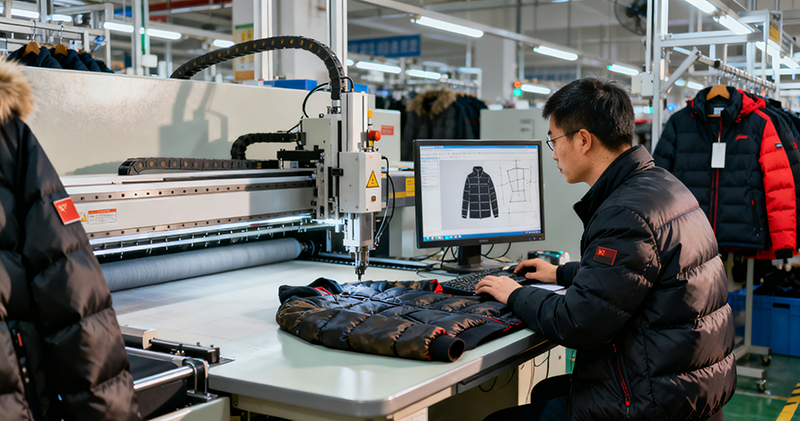
OEM vs ODM Down Jacket Manufacturing: What’s the Difference, Which Model Fits Your Brand, and How to Launch at MOQ 60
MOQ 60 pcs · Tech Pack vs Ready Designs · Private Label Control · Faster Development · Stable Bulk Quality · Scalable Reorders
Choosing between OEM and ODM is one of the most important decisions in down jacket manufacturing. It impacts your development speed, product uniqueness, cost structure, and how much control you have over fit, materials, and branding.
This guide explains the real difference between OEM and ODM for down jackets, when each model makes sense, and what you should lock before bulk production—especially if you’re launching at MOQ 60 pcs per style. For jacket categories and style direction, browse Custom Jacket manufacturer.
OEM vs ODM: Clear Definitions for Down Jacket Projects
OEM = your design, factory produces. ODM = factory design, you brand and customize.In down jacket manufacturing, OEM and ODM are often used loosely. Here’s the practical definition that matters for your project:
OEM (Original Equipment Manufacturing)
- You provide the design direction: tech pack, sketches, reference photos, measurements, and trim specs.
- The factory develops patterns, samples, and bulk production based on your specifications.
- Best for brands that want unique silhouettes, signature details, and stronger IP control.
- Reliability depends on approvals: size tolerances, construction rules, and QC checkpoints.
ODM (Original Design Manufacturing)
- The factory provides ready-to-produce designs (styles, blocks, or seasonal collections).
- You customize: fabrics, trims, colors, labels, packaging, and sometimes fit adjustments.
- Best for faster launches, limited design resources, and trend-based collections.
- Reliability depends on how well the factory can adapt the base style to your brand standards.
If you want a structured view of service scope and development flow, review OEM&ODM. For OEM-based bulk checkpoints, see custom down jacket OEM manufacturer.
OEM vs ODM Down Jackets: Side-by-Side Comparison
Use this table to choose the model that fits your timeline, budget, and brand control needs| Decision Factor | OEM Down Jacket Manufacturing | ODM Down Jacket Manufacturing |
|---|---|---|
| Design ownership | Higher control and uniqueness | Based on factory designs; customization adds differentiation |
| Speed to market | Medium (requires more development + approvals) | Faster (starting from existing blocks/styles) |
| Brand signature details | Strong: trims, quilting, fit, pockets, silhouette can be fully defined | Moderate: depends on how flexible the base style is |
| Sampling complexity | Higher: pattern & spec validation is more detailed | Lower: mostly material, trim, and branding adjustments |
| Risk of “quality drift” in bulk | Lower if specs and tolerances are locked early | Lower if the base style is proven and modifications are controlled |
| Best for | Brands with clear design vision or tech packs | Startups, fast drops, trend tests, limited development resources |
If your launch plan prioritizes controlled scaling, compare Low MOQ Custom Down Jacket Manufacturer and small batch down jacket manufacturer.
Which Model Should You Choose? (Fast Decision Guide)
Pick based on your assets: tech pack readiness, timeline, and how unique your product must beChoose OEM If You Need
- A unique silhouette, signature quilting, or special pocket architecture
- Precise fit control and repeatable grading across sizes
- Specific materials, trims, and performance targets
- Long-term hero products that you plan to reorder every season
- Stronger brand differentiation and product control
Choose ODM If You Need
- Fast time-to-market with a proven base style
- Lower development workload (limited tech pack resources)
- Trend tests and seasonal drops at controlled MOQ
- Customization focused on fabrics, colors, trims, and private label
- A quicker path to product photography and merchandising
A practical approach for many brands: start with an ODM base style for speed, then move to OEM once you validate fit and demand—using the same QC discipline and spec locking process as your brand scales.
How Ginwen Supports OEM and ODM Down Jacket Manufacturing (MOQ 60)
Systemized development, private label execution, and bulk repeatabilityAt Ginwen, we support both OEM and ODM manufacturing depending on your brand stage. The goal is the same: launch retail-ready down jackets at MOQ 60 pcs per style with stable bulk quality and scalable reorders.
Why Brands Choose Ginwen
- ISO 9001 & BSCI certified manufacturing systems
- Strong in-house CAD/pattern development and sampling support
- Monthly capacity up to 500,000 pcs with an automatic production process
- Cutting & sewing services plus private label execution
- Real-time production progress and quality monitoring
What We Help You Lock Before Bulk
- Size chart + tolerances to reduce returns
- Downproof construction standards to reduce leakage complaints
- Trim specs and function expectations (zippers/snaps/cords)
- Label & packaging placement maps for private label consistency
- QC checkpoints that prevent sample-to-bulk drift
Browse jacket categories: Custom Jacket manufacturer. If you want the detailed OEM workflow checklist, read: custom down jacket OEM manufacturer.
What to Lock in OEM vs ODM to Protect Bulk Quality
Both models can succeed—if you lock the right standards earlyOEM and ODM fail for the same reason: vague approvals. The difference is where your control starts. OEM starts from your specs. ODM starts from the factory’s base style. In both cases, you must lock measurable standards before bulk to avoid quality drift.
OEM Lock List (Your Design → Bulk)
- Final tech pack + measurement points + tolerance limits
- Quilting/baffle layout rules and alignment standards
- Fabric/lining specs and downproof expectations
- Fill distribution rules by zone (reduce cold spots)
- Trim spec sheet and reinforcement plan
ODM Lock List (Base Style → Your Brand)
- Base style confirmation + any fit changes documented
- Fabric/lining substitutions tested for hand-feel and downproof behavior
- Trim upgrades locked (zipper quality, puller feel, snaps)
- Branding execution: labels, hangtags, packaging rules
- QC focus on return-driving defects after customization
For private label execution and QC discipline, compare private label down jacket manufacturer and private label down jacket manufacturer.
OEM vs ODM Manufacturing Workflow (MOQ 60)
A simple workflow you can use to keep development fast and bulk stableUse this workflow to avoid confusion and keep responsibilities clear. The key is to document decisions and lock standards before production.
- Choose model: OEM (your design) or ODM (factory base style)
- Confirm target market, warmth tier, and channel requirements (returns expectations)
- Sampling + fit approval with written revision notes
- Lock size chart, tolerances, fabrics/linings, trims, and label/pack rules
- Bulk production at MOQ 60 pcs per style (mixed sizes supported)
- In-line QC checkpoints: measurement control, alignment, trim function, workmanship
- Final inspection + packaging verification before shipment
- Reorder planning based on locked specs to prevent drift
For deeper OEM bulk checkpoints, read custom down jacket OEM manufacturer. For service scope reference, review OEM&ODM.
Summary: OEM vs ODM for Down Jackets (What Brands Should Do)
Pick the model that fits your assets, then lock standards early for bulk repeatabilityOEM gives you stronger control and differentiation. ODM gives you faster speed and a lighter development load. Both can be successful for down jackets—if you lock measurable standards, tolerances, and private label rules before bulk production.
- If you already have a tech pack and signature fit: start with OEM.
- If you need speed and a proven base: start with ODM, then transition to OEM after validation.
- In both cases, launch at MOQ 60, lock specs early, and scale only what performs.
FAQ
OEM vs ODM down jacket manufacturing (MOQ 60)Can I do ODM but still make the jacket feel unique to my brand?
Yes. You can customize fabrics, trims, colors, branding, and packaging, and make controlled fit adjustments. The key is to lock changes clearly so bulk output stays consistent.
Which model is better for startups?
Many startups start with ODM for speed, then move into OEM once they validate demand and want stronger product differentiation. Both models can work at MOQ 60 if specs and QC checkpoints are locked early.
What should I prepare before I contact a manufacturer?
For OEM: a tech pack (or reference images), size chart, trims, and branding requirements. For ODM: your target market, warmth tier, brand look, and customization list. Start via Contact Us.
Where can I see the full OEM workflow and bulk checkpoints?
Read custom down jacket OEM manufacturer for the detailed sampling-to-bulk checklist and quality control structure.
Conclusion
OEM vs ODM down jacket manufacturing is a decision about control vs speed. OEM is best for brands that want unique design and fit ownership. ODM is best for faster launches using proven base styles. Start at MOQ 60, lock standards early, and choose a partner that can keep bulk quality stable.
Next steps: review OEM&ODM, browse categories via Custom Jacket manufacturer, and connect through Contact Us.