Packable Puffer Jacket Manufacturing Guide
- Share
- Issue Time
- Aug 25,2026
Summary
How packable puffer jackets are manufactured: shell and insulation choices, compression and recovery design, construction, production timeline, QC testing, packaging, cost, MOQ and lead time. Real factory data from Ginwen, a Dongguan B2B jacket factory: MOQ 50 pcs per style, sampling 7-14 days, bulk 25-40 days.
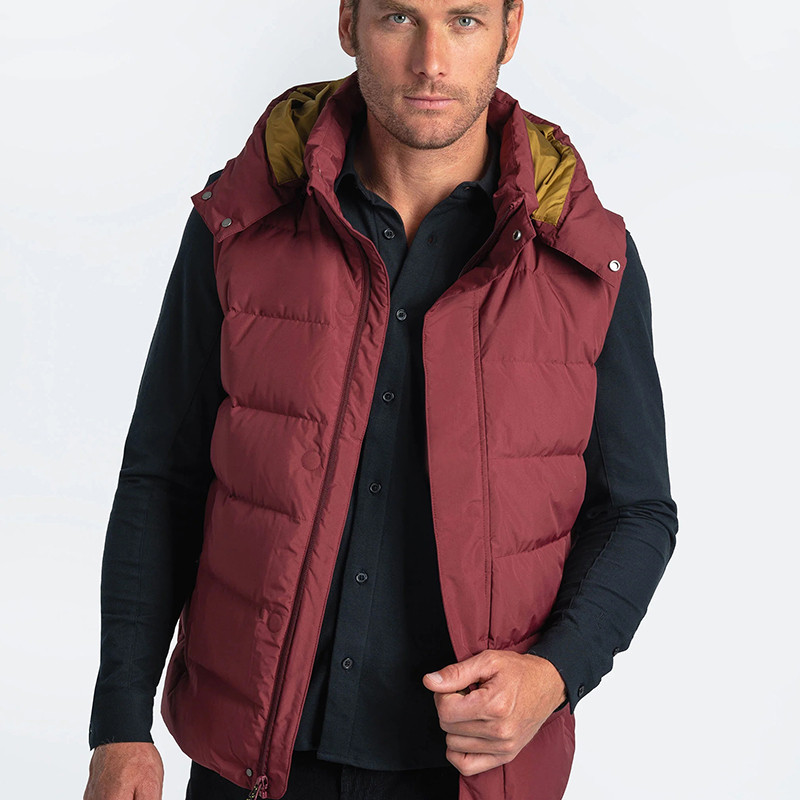
A packable puffer jacket is manufactured by combining a lightweight shell fabric in the 20D to 30D range, a highly compressible insulation system, and a construction method that lets the jacket compress into a small stuff sack or pocket while recovering its loft quickly after unpacking. The three decisions that define a packable program are shell weight, insulation type, and compression packaging, and each one changes the bill of materials, the production line, and the final retail story. This guide explains how packable puffer jackets are designed, sampled, produced, tested, and shipped at a B2B jacket factory, with the real numbers a brand needs before requesting a quotation. Packability is not a single feature; it is the result of three properties working together. First, the garment must be light enough that compression is physically practical, which usually means a shell of 20D to 30D nylon or polyester and a low total fill weight. Second, the insulation must compress to a small volume and recover its loft when released, which is why high fill power down and high-loft synthetic fibers are the two standard choices. Third, the jacket must survive repeated compression without permanent damage, because a packable product is folded, stuffed, and unpacked dozens of times per season by the end user. A useful way to evaluate a packable design is the compression ratio: the packed volume divided by the unpacked garment volume. A typical packable puffer with 700 fill power down in a 20D nylon shell compresses to roughly one quarter of its natural volume in a stuff sack, while a synthetic-filled style with heavier shell fabric might only reach one half. The ratio matters to buyers because it is the number you can actually put on the product page, and it is measured with a simple packed-size test that any factory can run during sampling. Weight budget. The total weight of a packable jacket is the sum of shell, lining, insulation, hardware, and trims. A unisex mid-length packable with 700 fill power down in a 30D shell typically lands between 350 and 550 grams depending on size and fill weight. Every gram added by a heavier zipper, a thicker lining, or a stiffer pocket fabric reduces the packability story, so factories and brands make a habit of weighing every component during development. Recovery matters more than compression. A jacket that compresses beautifully but takes hours to look normal again will generate returns. Down recovers quickly because the clusters spring back when moisture and pressure are released, but the recovery speed depends on fill power, baffle construction, and how tightly the garment was packed. Synthetic insulation recovers more slowly and can lose loft permanently if packed under extreme pressure for long periods. During development, factories test both packed volume and recovery time so the marketing claim matches the physical product. Material selection drives everything else in a packable program. The shell must be light and tear-resistant, the insulation must compress and recover, and the combination must pass down-proofness and water-resistance tests. The table below shows the material combinations we see most often in packable production and what each combination is best suited for. Shell fabric. The 20D to 30D nylon ripstop family dominates packable production because it delivers the best strength-to-weight ratio. Ripstop weaving adds a reinforcing grid that stops tears from running across the panel, which matters on a garment that is constantly compressed and pulled out of a sack. Nylon also takes DWR finishes well, and a light DWR treatment is standard on packables so light rain beads off instead of soaking the insulation. Polyester ripstop is a lower-cost alternative that packs slightly less tightly but holds color better over time. Down insulation. Fill power is the industry measure of down quality: the number of cubic inches one ounce of down occupies when lofted. Higher fill power means more warmth per gram and better compression recovery, which is why packable programs usually specify 650 to 800 fill power. RDS certification is commonly requested for packable programs sold in Europe and North America, because the compressed product is often marketed around outdoor and travel values where ethical sourcing is expected. Duck down at 650 to 700 fill power is the value choice, and goose down at 750 to 800 fill power is the premium choice for ultralight products. Synthetic insulation. Synthetic fibers such as polyester microfiber batts or hollow-fiber fills compress reasonably well and recover most of their loft, but they are heavier than down at equal warmth and lose recovery performance under extreme compression. The advantages are real: synthetic insulation keeps some warmth when wet, is easier to wash, avoids animal-derived materials, and costs less. For vegan brands and wet-weather programs, a high-loft synthetic in a 30D polyester shell is the standard packable recipe. Packable puffer jackets need design decisions that ordinary puffers do not. The pattern, the baffle construction, and the pocket system all influence how the garment compresses and how it recovers. Three design choices matter most. Baffle construction. Down jackets are built with either sewn-through baffles or box baffles. Sewn-through construction stitches the shell and lining together along quilting lines, creating narrow tubes of down; it is lighter, cheaper, and packs smaller, which makes it the default for packable styles. Box baffles create three-dimensional chambers that hold more down and reduce cold spots, but they are heavier and bulkier, so they are rarely used in packables that prioritize packed size over maximum warmth. Pocket and closure design. Every pocket adds fabric, zippers, and weight. A packable design typically keeps pockets minimal: two hand pockets and one internal chest pocket, or a single chest pocket when weight is critical. The internal pocket is often designed to double as the stuff sack, with a small loop or clip so the packed jacket can be attached to a backpack. Zipper choice matters too; a lightweight coil zipper with a small slider saves 15 to 30 grams compared with a heavy molded zipper, which is meaningful on a 400-gram garment. Pattern and seam placement. Compression stresses seams, so packable patterns minimize seam intersections in high-stress areas such as shoulders and underarms. The factory pattern team also checks that baffle tubes run consistently so the jacket compresses evenly instead of bunching in one area. A well-engineered packable jacket folds into a predictable shape, which makes the stuff sack smaller and the packing experience better for the end customer. How a packable jacket is sewn matters as much as what it is made of. The construction line for a packable program is set up to protect the insulation, keep seams clean under compression, and keep weight under control. Five construction decisions define the production method. The production consequence of these choices is a slower, more controlled line than a standard puffer. Down filling, weigh-checking, and down-proof inspection add labor minutes per piece, which is reflected in the FOB price. When you compare quotations between factories, ask how many grams of down per size are filled and how the fill weight is verified, because under-filling is the fastest way to cut cost and the fastest way to destroy a packability claim. A packable puffer program follows the same manufacturing milestones as other jacket programs, with extra attention on material testing and compression testing at the sample stage. The timeline below is the standard flow at Ginwen, and it matches the industry rhythm most brands expect. 1-3 days. Share your design, target packed size, weight, fill specification, and target price. We confirm feasibility and send a quotation with sample fee and timeline. 7-14 days. Pattern, material sourcing, down and fabric lab dips, first sample sewing, fit review, packed size and weight measurement. 3-7 days. Review fit, hand feel, packed volume, recovery time, and trims. Adjustments are made and a final pre-production sample is confirmed. 25-40 days. Fabric and down inspection, cutting, filling, sewing, QC checkpoints, final inspection, and packing. Real-time progress reports for the brand. Sea, air, or express depending on the program. Packables ship well because compressed garments reduce carton volume and freight cost. Total estimated timeline: 7-14 days sampling, then 25-40 days bulk production from order confirmation to shipment. Sample fees and payment. Sample fees for a packable puffer range from $50 to $200 depending on fabric, fill, and complexity, and the fee is deducted from your bulk order. The commercial terms are 30% deposit to start production and 70% balance before shipment, which is the standard structure across the jacket manufacturing industry. For a first-time brand, we recommend ordering a full pre-production sample in your final fabrics before committing to bulk, because packability claims are only credible when verified on the actual production materials. Packable puffer jackets need the same basic QC as any garment plus a set of compression-specific tests. The standard QC flow includes incoming fabric inspection, in-line sewing checks, down fill weight checks, and a final random inspection before packing. The packable-specific tests are listed below. One of the strongest commercial arguments for a packable program is freight efficiency. A compressed puffer jacket takes roughly half the carton space of an uncompressed one, which directly reduces sea freight and air freight cost per unit. The packaging strategy affects both cost and brand experience. Stuff sack. The standard packable package includes a stuff sack made of the same shell fabric or a lightweight nylon. The sack is the primary packaging, and its size is a selling point. For retail programs, brands often print the packed dimensions on the hang tag so the customer understands the product before opening it. Compressed packing. For bulk shipment, jackets can be vacuum-compressed or mechanically compressed into smaller bales. Vacuum compression saves significant volume but must be used carefully with down: long-term storage under heavy vacuum can reduce loft recovery, so factories recommend compressed shipping only when transit time is reasonable and the garments are aired after arrival. For premium programs, jackets ship in uncompressed poly bags inside cartons to protect the loft story at retail. Carton planning. A standard 40HQ container holds roughly 20 to 30 percent more packable jackets than non-packable styles at the same unit volume, depending on compression method. During costing, the factory calculates carton quantity and freight per unit so the brand can compare landed cost between compressed and uncompressed shipping options. Packable programs are cost-sensitive because the selling price at retail is often set by the outdoor and travel market, where customers compare packable jackets aggressively. Understanding where the cost sits helps you brief the factory accurately and negotiate on the right levers. The table below shows how the main specification choices move the FOB price. MOQ. At Ginwen, the minimum order quantity is 50 pieces per style, which makes packable programs accessible to emerging brands testing the travel and outdoor market. MOQ applies per style, per color combination, so a program with three colors at 50 pieces each is quoted as three style-color combinations. For brands that need lower quantities for a pilot launch, the sample stage is the right place to validate the product before committing to the first bulk run. Lead time. Sampling takes 7 to 14 days and bulk production takes 25 to 40 days after sample approval and deposit. The actual bulk time depends on fabric availability and production scheduling; standard fabrics in the factory library start faster than customer-nominated fabrics that must be sourced from external mills. Peak season production slots fill early, so brands planning a winter launch should place orders 3 to 4 months ahead of the desired ship date. A complete brief shortens the development cycle and reduces the number of sample rounds. The most efficient brands send a technical pack that covers the points below, even if some of them are estimates. You do not need a finished tech pack to start. A brief with target weight, target packed size, and a reference silhouette is enough for the factory to prepare a quotation and a development plan. The factory team fills the gaps with standard patterns and materials, and the sample rounds refine the details. A packable puffer is designed to compress into a small stuff sack or pocket and recover its loft after unpacking. It uses a lighter shell (20D to 30D), higher fill power insulation, and minimal hardware. A non-packable puffer prioritizes warmth, durability, or style, and does not need to meet a packed-size target. Yes. Sample development takes 7 to 14 days, and sample fees range from $50 to $200 depending on complexity. The fee is deducted from your bulk order. For packable programs we recommend a pre-production sample in final fabrics to verify packed size, weight, and recovery time. The MOQ is 50 pieces per style at Ginwen. The MOQ applies per style and color combination, which keeps pilot launches practical for new brands while still allowing efficient bulk production. Bulk production takes 25 to 40 days after sample approval and deposit. Fabric availability and production scheduling affect the exact timeline, so brands planning a winter launch should book production 3 to 4 months ahead of the ship date. Both are used. Down (usually 650 to 800 fill power) compresses best and recovers quickly, while high-loft synthetic fills are lower cost, vegan-friendly, and perform better when wet. The choice depends on your brand positioning and target price. Send us your requirements with target weight, packed size, quantity, and timeline. We typically respond within 24 hours with a detailed quotation including sample fee, MOQ, and production timeline. A packable puffer jacket is a genuine engineering product: the shell, insulation, pattern, construction, and packaging all work together to hit a packed-size and weight target while keeping the jacket warm and durable. Brands that brief the factory with specific numbers, verify the claims on pre-production samples, and plan lead times around the winter season get the strongest results from their program. Ready to develop your packable puffer? Contact our team or submit your requirements for a free consultation. You can also browse our product catalog or read more manufacturing guides on our blog.Packable Puffer Jacket Manufacturing Guide
Table of Contents
What Makes a Puffer Jacket Packable
Shell Fabrics and Insulation for Packable Styles
Shell Insulation Typical Weight Compression Best For 20D nylon ripstop 800 fp goose down 300-420 g Excellent Ultralight travel, premium outdoor 30D nylon ripstop 700 fp duck down 380-520 g Very good Most brand launches, all-round travel 30D nylon with DWR 650 fp down 400-550 g Very good City packables with light weather protection 30D polyester ripstop High-loft synthetic 450-650 g Good Vegan programs, wet climates, lower cost 20D recycled nylon Recycled down or synthetic 320-460 g Excellent Sustainable EU and US retail programs Design Engineering for Compression and Recovery
Construction Methods That Protect Packability
Production Process from Sample to Bulk
Consultation and Quotation
Sample Development
Sample Approval
Bulk Production
Shipping
Quality Control and Testing for Packable Jackets
Packaging and Shipping for Compressed Garments
Cost, MOQ and Lead Time Considerations
Specification Choice Cost Direction Effect on Packability Typical Use 20D vs 30D shell 20D slightly higher per meter Packs tighter, less durable Ultralight travel programs 800 fp goose vs 700 fp duck down Goose noticeably higher Better recovery, lighter Premium outdoor brands Down vs high-loft synthetic Synthetic usually lower Down compresses better Vegan and wet-weather programs Coil vs molded zippers Coil lower Lighter, packs smaller Weight-focused packables Stuff sack included Adds unit cost Enables the packability claim Nearly all retail programs What to Prepare for Your Brand Program
Design Specification
Performance Targets
Branding and Compliance
Commercial Details
Frequently Asked Questions
What is the difference between a packable and a non-packable puffer jacket?
Can I get a sample before placing a bulk order?
What is the minimum order quantity for a packable puffer jacket?
How long does bulk production take?
Do packable jackets use down or synthetic filling?
How do I get a quotation for my packable puffer program?