Performance Puffer Jacket Manufacturing
- Share
- Issue Time
- Aug 28,2026
Summary
Performance puffer jacket manufacturing: what defines a performance puffer, shell fabrics and waterproof membranes, down vs synthetic insulation, construction and features, testing and QC, timeline, MOQ and certifications. Factory data from Ginwen, a Dongguan B2B jacket factory: MOQ 50 pcs per style, sampling 7-14 days, bulk 25-40 days, sample fee USD 50-200 deductible, 30% deposit and 70% balance.
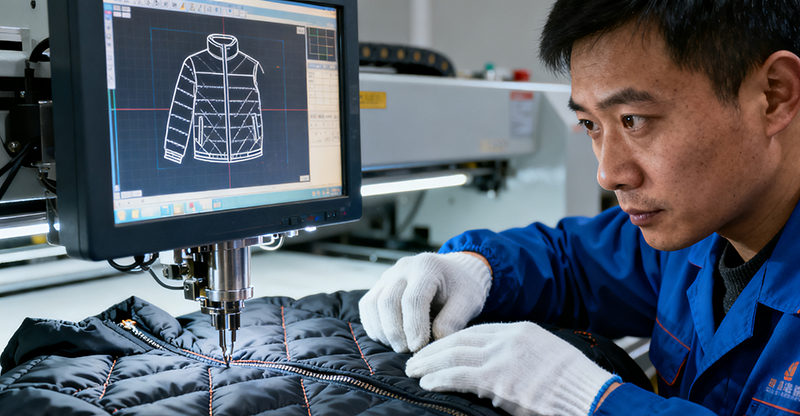
Performance puffer jacket manufacturing is the process of engineering an insulated jacket around measurable functional requirements, not just warmth. A performance puffer must hold up against wind, rain, cold, and repeated washing while keeping weight low and movement free. For brands sourcing from overseas, the difference between an ordinary puffer and a performance puffer is decided in the factory: shell fabric selection, insulation type, seam and zipper construction, testing protocols, and quality control. This guide explains how Ginwen, a Dongguan-based B2B jacket factory in China, manufactures performance puffer jackets for European and North American brands, including materials, construction methods, testing, timelines, MOQ, and certifications. A performance puffer jacket is an insulated jacket engineered so that its functional claims, such as waterproofing, breathability, wind resistance, or packability, can be verified through defined specifications and tests. The term covers several product categories: ski and snowboard jackets, hiking and mountaineering pieces, cycling and commuting shells, and technical workwear. Buyers in these segments do not buy on style alone. They buy on numbers, such as hydrostatic head, breathability rating, fill power, fabric weight, and finished garment weight. When a brand asks a factory to build a performance puffer, the factory must translate marketing language into engineering parameters. "Waterproof" becomes a minimum hydrostatic head measured in millimeters. "Breathable" becomes a moisture vapor transmission rate measured in grams per square meter per 24 hours. "Warm" becomes a combination of insulation type, fill weight, and loft. "Light" becomes a target finished weight for each size. Without these numbers, the product cannot be tested, compared, or honestly marketed in the EU or North America. Below are the core performance parameters a brand should specify before sampling. These are industry-standard technical specifications used by fabric mills and garment factories, and they should be written into the technical pack so that every party measures against the same standard. The audience for performance puffers includes outdoor brands, ski and winter sports labels, cycling and commuter brands, and industrial workwear programs. Each segment weights these parameters differently. A ski brand prioritizes waterproofing and breathability. A commuter brand prioritizes wind resistance and packability. A workwear program prioritizes abrasion resistance and durability of taped seams. The factory brief must state the segment clearly, because the segment determines the bill of materials and the testing plan. The shell is the first line of defense and the largest visible component of a performance puffer. Most performance shells are woven from nylon or polyester in a denier range of roughly 10D to 40D. Lower denier fabrics are lighter and softer but less abrasion resistant. Higher denier fabrics are tougher and more wind resistant but heavier. A common strategy is to use a lighter face fabric with a reinforcing layer in high-wear areas such as shoulders, cuffs, and the hem. Water and wind resistance are achieved in three ways: a durable water repellent (DWR) finish on the face, a coating or membrane laminated to the back of the fabric, or a combination of both. DWR causes water to bead and roll off the surface. A polyurethane (PU) coating adds water resistance at low cost but limits breathability. A waterproof breathable membrane, such as an ePTFE or polyurethane-based film, provides high hydrostatic head while allowing moisture vapor to escape. Fully taped seams are required when a jacket is marketed as fully waterproof, because needle holes become leak points without seam sealing. Ripstop weaves are common in performance shells because the reinforced grid stops small tears from spreading. A 20D or 30D ripstop nylon with a DWR finish is a workhorse choice for three-season performance puffers. For colder, wetter programs, brands often move to a 3-layer or 2.5-layer laminate construction. The layer count refers to the face, membrane, and protective backer, and it affects hand feel, durability, and cost. A 3-layer fabric is more durable but stiffer. A 2-layer fabric is softer and often used with a separate lining, which is common in insulated jackets where the lining is already present. Fabric selection also affects the quilting process. Thin, slippery 10D fabrics require careful handling during sewing and baffle construction to avoid puckering and needle damage. Heavier 30D and 40D fabrics are easier to sew but produce a stiffer hand feel and a heavier jacket. When a brand has a target finished weight, the factory calculates shell weight, insulation weight, lining, and trims together, then adjusts the fabric choice to hit the number. Insulation is the heart of a puffer jacket, and for performance models the choice between down and synthetic fill is a strategic decision that affects warmth, weight, wet-weather behavior, cost, and certification requirements. Down offers the highest warmth-to-weight ratio available. Synthetic insulation performs better when wet and is easier to source without animal-derived materials. Many performance programs use both: down for the body where loft matters most, and synthetic in hoods, cuffs, and areas exposed to moisture and compression. Down is graded by fill power, which measures the loft, or volume, that one ounce of down occupies. Higher fill power numbers mean more loft per gram, which translates to more trapped air and more warmth at lower weight. A 550-650 fill power down is a solid workhorse for everyday performance puffers. A 700-800 fill power down is used when weight reduction is a priority, such as alpine or backcountry programs. Down also requires responsible sourcing. If your target market includes European retailers, RDS certification is routinely requested because it verifies that the down comes from animals that were not live-plucked or force-fed. Synthetic insulation is made from polyester fibers engineered to mimic the loft of down. Its decisive advantage is that it retains most of its warmth when wet, it dries quickly, and it is easier to compress into packable designs without losing recovery. Synthetic is also the default choice for vegan product lines and for workwear that is washed frequently. The trade-off is warmth-to-weight ratio: a synthetic jacket needs more fill weight than a comparable down jacket to reach the same warmth, which makes the jacket heavier for the same warmth level. 700-800 fill power down for alpine and weight-critical programs. Maximum warmth per gram, premium positioning, requires RDS certification and careful moisture management. 550-650 fill power down for everyday performance puffers. Balanced cost and warmth, ideal for ski and commuting programs that want certified down without premium pricing. Polyester-based insulation that retains warmth when wet, dries fast, and supports vegan positioning. Heavier for the same warmth, ideal for wet climates and frequent washing. Down in the body with synthetic in hood, cuffs, and lower panels. Combines lightweight warmth with wet-weather durability where it matters most. Construction quality separates a performance puffer from a fashion puffer. The way insulation is contained, the way seams are sealed, and the way zippers and cuffs are finished determine whether the jacket performs in the field or fails after a season. The most important structural decision is how the insulation is held in place. Stitched-through quilting sews the shell and lining together through the insulation, which is simple and lightweight but creates cold spots at every stitch line. Box baffle construction builds internal fabric walls that hold the down in place without stitching through, which eliminates cold spots but adds weight, labor, and cost. Horizontal channel quilting is a middle ground used widely in performance and fashion puffers. For waterproof models, every seam on the shell must be sealed with tape. Seam tape is applied to the inside of the seam on a machine that bonds the tape to the fabric with heat and pressure. Seam sealing is one of the most labor-intensive steps in performance outerwear production, and it is also one of the most common sources of quality defects, which is why factories that build waterproof garments run a 100% water test on finished pieces rather than testing only a sample. The features list below is what buyers typically specify for a performance puffer. Each feature has a function, and each function should be verified in the sample review. Performance claims are only as credible as the test data behind them. A factory producing performance outerwear should run fabric-level tests before cutting, garment-level checks during production, and final inspections before shipment. The testing plan should be agreed before bulk production and written into the quality agreement, because test standards differ between markets. European buyers often reference EN standards, while North American buyers reference ASTM methods. State your market in the brief so the factory tests against the right standard. At the fabric stage, the mill tests water resistance, breathability, color fastness, shrinkage, and abrasion resistance. At the garment stage, the factory verifies seam strength, zipper function, snap and button attachment, insulation distribution, and weight against spec. At the final stage, an AQL-based inspection samples finished pieces and checks workmanship, measurements, and packaging. AQL 2.5 is a common inspection level in the apparel industry. The factory should also run a wash test on the first production pieces to confirm the DWR and down loft survive laundering, because this is where many performance garments fail in real use. Ginwen runs in-line quality control through the production line and performs final inspection before shipment. For performance programs, we recommend that the buyer either visits the factory during production or appoints a third-party inspection company, because an independent inspection report gives the brand a document it can rely on for its own quality records. We share test reports and inspection results with buyers on request. Performance puffer programs need longer lead times than simple fashion styles, because fabric testing, seam taping, and garment-level QC add steps that cannot be skipped. At Ginwen, sampling takes 7-14 days depending on the complexity of the design and the availability of materials. Bulk production takes 25-40 days after sample approval and material confirmation. These are the real numbers we work with at our factory in Dongguan, and they assume the fabric and trims are confirmed at the start. If a new membrane fabric must be developed or a custom zipper must be made, add development time before sampling. 1-3 days. Share the technical pack, target price, quantities, and performance requirements. We respond with a detailed quotation. 7-14 days. CAD pattern, material sourcing, sample sewing, fit and feature review. 3-5 days. Buyer reviews fit, features, and test results, then approves before bulk. 25-40 days. Cutting, sewing, filling, seam sealing, and in-line QC. Final AQL inspection, packaging, and shipment. Sea freight typically takes 25-35 days to Europe or North America. Total estimated timeline: 6-12 weeks from first contact to delivery, depending on sampling rounds and shipping method. MOQ is a critical planning number. Our MOQ is 50 pieces per style, which makes performance puffer programs accessible to startups, capsule collections, and private label brands that cannot commit to the thousands of pieces required by large factories. The same MOQ applies whether you source a factory-designed style or develop a fully custom pattern. For a performance program with custom fabrics and membranes, the effective minimum is often driven by fabric mill minimums rather than by the factory, so confirm fabric MOQ with your sourcing manager early. Sample fees range from USD 50 to USD 200 depending on complexity, and the fee is deducted from your bulk order. Payment terms are 30% deposit to start production and 70% balance before shipment, which is the standard arrangement at Ginwen and in the wider Chinese garment industry. Budget planning should also include the cost of the sample itself, shipping of samples, and any third-party inspection fees if you appoint an inspection company. Certifications are the fastest way to check whether a factory can serve the EU and North American markets. Four certificates matter most for performance puffer programs: ISO 9001 for quality management, BSCI for social compliance, RDS for down sourcing, and OEKO-TEX Standard 100 for chemical safety of textiles. None of these is a marketing badge. Each is a document issued by an accredited body after an audit, and each has a scope that lists the factories and product categories it covers. Quality management system certification. Shows the factory has documented processes for production and continuous improvement. Preferred by professional procurement teams. Social compliance audit covering working conditions, health and safety, and labor rights. Increasingly required by European retail chains and e-commerce platforms. Responsible Down Standard for ethical down sourcing. Required by most EU and US retailers that sell down products. Ask for the scope certificate covering your factory. Confirms textiles contain no harmful substances. Many EU buyers treat this as a minimum requirement for market access. Our MOQ is 50 pieces per style. The same MOQ applies to custom patterns and factory-designed styles. Custom fabric development may add mill-level minimums. Yes. We work with waterproof breathable fabrics and membranes, run seam taping on the production line, and perform water testing on finished garments. Specify the target hydrostatic head in your brief. Yes, we source RDS-certified down for programs that require it. We can provide the RDS scope certificate and down traceability documents for your order. Sampling takes 7-14 days depending on design complexity and material availability. Sample fees range from USD 50 to USD 200 and are deducted from your bulk order. Yes. We accept customer-supplied fabrics and can run the specified tests on your material before bulk production. We can also recommend verified mills for performance fabrics. Manufacturing a performance puffer jacket comes down to specifications, materials, construction, testing, and a factory that documents all four. Start with a clear technical pack, verify certifications against the production factory, and approve a tested sample before committing to bulk. With MOQ from 50 pieces per style and sampling in 7-14 days, a performance program is achievable even for brands launching their first technical outerwear line. Ready to build your performance puffer program? Contact our team or submit your requirements for a free consultation. You can also browse our product catalog or read more manufacturing guides on our blog.Performance Puffer Jacket Manufacturing
Table of Contents
What Defines a Performance Puffer Jacket
Performance Parameter What It Measures Typical Specification Range Why Buyers Care Hydrostatic head Water resistance of the shell fabric 5,000-20,000 mm Determines rain and snow protection Moisture vapor transmission rate Breathability of the shell 5,000-25,000 g/m²/24h Prevents overheating during activity Fill power Loft and warmth of down per gram 550-800+ cu in/oz Higher fill power means lighter warmth Fabric weight Mass per square meter of shell fabric 25-100 g/m² Drives finished jacket weight Finished garment weight Total jacket weight per size 300-900 g depending on size Defines the "lightweight" positioning Water column after washing Durability of the water resistance MUST retain 80%+ of initial value Confirms the claim survives real use Shell Fabrics for Performance
Shell Option Construction Water Resistance Breathability Best Use Case DWR-only nylon Woven nylon with DWR finish Light showers, beads off High Dry-cold city and commuting puffers PU-coated fabric Woven face with PU coating Moderate, short rain Low Budget ski and workwear shells Membrane laminate Face fabric bonded to film High, 10,000-20,000 mm Moderate to high Full waterproof performance puffers Recycled shell Recycled nylon or polyester Depends on finish Depends on finish Sustainability-focused brand programs Insulation: Down vs Synthetic for Performance
High Fill Power Down
Standard Down
Synthetic Insulation
Hybrid Fill
Factor Down (550-800 fp) Synthetic Warmth-to-weight ratio Best available Good, heavier for equal warmth Performance when wet Loses loft and warmth Retains most warmth Packability Excellent with care Good, faster recovery Sourcing certification RDS commonly required No animal-derived requirement Typical use Ski, alpine, commuting Wet climates, workwear, vegan lines Construction and Features That Define Performance
Structure
Sealing
Hood and Fit
Details
Testing and Quality Control for Performance Jackets
Timeline, MOQ and Budget for Performance Programs
Consultation and Quotation
Sample Development
Sample Approval
Bulk Production
Final Inspection and Shipping
Certifications Buyers Should Verify
ISO 9001
BSCI
RDS
OEKO-TEX Standard 100
Frequently Asked Questions
What is the MOQ for performance puffer jackets?
Can you manufacture a fully waterproof performance puffer?
Do you offer RDS-certified down?
How long does sampling take?
Can I supply my own shell fabric or membrane?