Private Label Down Jacket Manufacturing Guide
- Share
- Issue Time
- Sep 1,2026
Summary
Private label down jacket manufacturing explained for 2026: a phased decision framework covering sourcing profiles, factory scorecards, sampling depth, cost structure, MOQ 50, payment terms, and quality gates. Built for brand founders and procurement teams planning custom down jacket programs.
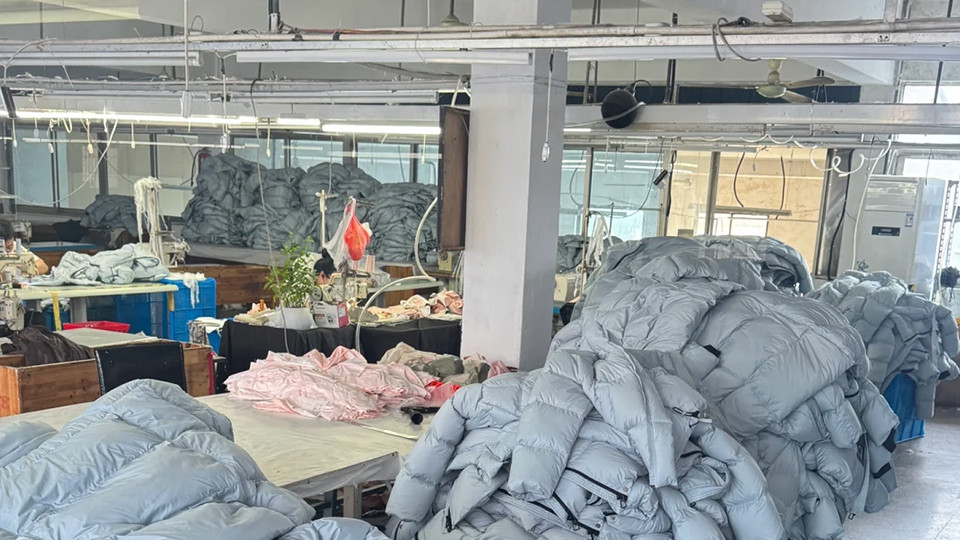
Private label down jacket manufacturing is the process of producing down-filled jackets under your own brand name, from pattern development and fabric selection to filling, sewing, labeling, and bulk quality control, with a factory acting as your production partner rather than a mere supplier. This 2026 guide is built as a phased decision framework for procurement teams and brand founders: it tells you what information to prepare, which factory signals to verify, how to compare quotations, and which commercial terms to lock down before bulk production starts. Each step ends with a decision point, so you can move from requirement to signed production agreement with fewer surprises and a clearly documented standard for your first order and future reorders. The most common mistake brands make is contacting factories with only a reference photo and a target price. A factory cannot quote accurately, select filling, or recommend construction without knowing your market, your warmth requirement, your price band, and your launch quantity. A sourcing profile is a one-page document that answers seven questions before any conversation begins. When your sourcing profile is complete, you can send the same document to three to five shortlisted factories and compare their responses on equal terms. Factories that ask clarifying questions and flag cost drivers in your specification usually understand production better than factories that quote instantly without any questions. Shortlisting should be based on verifiable capability signals, not on website appearance alone. A practical scorecard covers four areas: compliance and certifications, production capacity, service depth, and communication quality. Score each candidate from 1 to 5 in every area, then compare totals. For down jacket programs specifically, verify four certifications because they are the ones European and North American buyers actually request in documents, not in marketing materials. ISO 9001 covers the factory quality management system, BSCI covers social compliance audits, RDS covers responsible down sourcing through the supply chain, and OEKO-TEX Standard 100 covers chemical safety of fabrics, linings, and trims. Quality management system certification. Demonstrates documented processes for production control, corrective actions, and continuous improvement. Preferred by professional procurement teams. Social compliance audit covering working conditions and ethical manufacturing. Increasingly required by retail chains and marketplace platforms before supplier approval. Responsible Down Standard for ethical down sourcing. Confirms that down and feathers are traceable to certified farms and processing facilities. Chemical safety certification for textiles. Confirms fabrics, linings, and trims have been tested against a list of harmful substances. Beyond documents, check production capacity in concrete terms: how many down jacket styles the factory can run in parallel, how many sewing lines are dedicated to down products, and whether filling, quilting, and down-proof fabric selection happen in-house or are subcontracted. Subcontracting is not automatically a problem, but you must know where the risk sits before you approve a supplier. Communication quality is the fourth scorecard area and the easiest one to test early. Send the same sourcing profile to every candidate and measure response quality: do they answer every question, do they ask clarifying questions, and do they respond within a reasonable window? Down jacket programs involve many revisions, approvals, and seasonal deadlines, so a factory that communicates poorly during the easy sales phase will not communicate better during the stressful production phase. Consistent, documentable communication is a capability, not a courtesy. The sample stage is where a private label program is actually defined. A down jacket sample is not only a fit check; it is the first physical proof that the factory can combine shell fabric, lining, down filling, baffle construction, zippers, and branding into one coherent product. Evaluate factories on how deep their sampling process goes, not on how fast they promise a first sample. In the 2026 market, a professional sampling process for custom down jackets typically includes pattern and CAD development, fabric and down sourcing, first sample construction, fit correction rounds, and a final approved sample that becomes the bulk standard. A factory that documents revision notes and locks trim references at approval time protects you from drift between sample and bulk. Sample fees are a normal part of the process and should be stated in writing before any work starts. A transparent factory explains what the fee covers, how long development takes, and whether the fee is deducted from your bulk order. This is a standard commercial practice rather than a red flag. When quotations arrive, do not compare only the total ex-factory price. Two factories can quote the same total while allocating cost very differently, and the allocation tells you where corners might be cut later. Ask each factory to break the price into fabric, down filling, trims and hardware, labor and construction, and finishing or treatments. Down filling deserves special attention because it is usually the largest material cost in a down jacket. Clarify the fill power, the mix ratio of down to feather, the fill weight per jacket, and whether the quoted filling is RDS-certified. A lower price achieved by reducing fill weight or switching to a higher feather ratio will change warmth and hand feel in ways your customers will notice. A worked example shows why the allocation matters. Suppose Factory A quotes a jacket at $38 with 700 fill power goose down, while Factory B quotes $36 with 700 fill power duck down and a lighter fill weight. The total difference looks small, but the down specification alone can account for several dollars per garment, and the hand feel and warmth will differ noticeably in cold weather. Compare the specification lines first, then the price lines. If a factory cannot name the fill power, fill weight, and down-to-feather ratio it quoted, the quotation is not yet comparable with the others on your table. Commercial terms should be written into a clear agreement before bulk production begins. Three terms matter most for private label down jacket programs: minimum order quantity, payment schedule, and production window. MOQ determines how much risk you carry on the first order and how flexibly you can test the market. A factory that offers a low MOQ per style lets you launch a capsule or validate demand before committing to deep inventory. When comparing MOQs, confirm whether the quantity applies per style or across a combined order, and whether mixed sizes are supported within one style. Payment terms in the industry usually follow a deposit-and-balance model. A 30% deposit confirms materials and production slots, and the balance is settled before shipment. Be cautious with any factory demanding a large percentage before sample approval, and be equally cautious with a factory that asks for no deposit at all, since that often signals an unstable order book. Timeline planning matters most for down jackets because they are seasonal products. If your jackets must be on shelves in October, work backward from that date and reserve production capacity early. The 25 to 40 day bulk window is a starting point; peak season, fabric availability, and complex trims all add time, so book your production slot as early as your design is finalized. Quality control in private label manufacturing is a series of gates, not a single final inspection. Each gate catches a different class of problem, and each one is cheaper than the one after it. Define the gates with your factory before production starts so both sides know what will be checked and when. For down jackets, pay special attention to down-proof construction and filling consistency. Down can migrate through seams if the fabric, lining, or stitching is not down-proof, and filling weight can drift between garments if the filling process is not controlled. A factory that measures fill weight per garment and tests for down leakage has the right controls in place. 1-3 days. Define market, price band, fill power, quantity, and timeline before contacting factories. 1 week. Score certifications, capacity, and communication against the same scorecard for every candidate. 7-14 days. Pattern, materials, first sample, fit revision, and approval with written notes. 1 week. Compare itemized quotations covering fabric, filling, trims, labor, and excluded costs. 2-3 days. Lock MOQ, payment schedule, production window, and quality gates in writing. 25-40 days. Run the five quality gates from pre-production sample to packed cartons. Full private label cycle at a glance: 7-14 days sampling, 25-40 days bulk, with quality gates at every stage from first sketch to shipment-ready cartons. Private label manufacturing is not one single service. It is a range of paths with different levels of design involvement, and the right path depends on your team, your budget, and how original the product needs to be. Use this decision tree to match your situation to the right working model. Your down specification sits inside this decision. Duck down is a cost-effective choice for value and mid-range products, while goose down with higher fill power suits premium positioning. Whatever path you choose, the decision tree keeps the same sequence: define, screen, sample, cost, commit, control. Most factory relationships fail for predictable reasons. Knowing the warning signs in advance lets you reject weak candidates early and spend your energy on serious partners. OEM means you provide the design and the factory manufactures it to your specification. ODM means the factory helps develop the product from its existing design expertise. Private label is the branding layer: your labels, hangtags, and packaging applied to the manufactured product. Many programs combine OEM or ODM development with full private label branding. MOQ varies by factory. Ginwen works with a minimum of 50 pieces per style with mixed sizes supported, which suits startup launches, capsule collections, and growing private label programs. Always confirm whether the MOQ applies per style or across a combined order before signing. Sample development typically takes 7 to 14 days depending on complexity. Sample fees at Ginwen range from $50 to $200 and are deductible from your bulk order when you proceed to production. The fee covers pattern work, materials, and sample construction. Bulk production generally takes 25 to 40 days after sample approval, depending on style complexity, material availability, and season load. Ordering early in the season secures capacity, while peak season orders may require a longer window. For European and North American markets, the commonly requested certifications are ISO 9001 for quality management, BSCI for social compliance, RDS for responsible down sourcing, and OEKO-TEX Standard 100 for chemical safety. Request current certificates and confirm the scope covers the production site. Prepare a sourcing profile covering your target market, price band, fill power and fill weight requirements, silhouette and fit, branding scope, first-order quantity with size ratio, and timeline. Reference images or a tech pack help the factory quote accurately. You can send your requirements through the inquiry page and receive a detailed response. Private label down jacket manufacturing works best when both sides follow the same disciplined sequence: define your sourcing profile, screen factories with a verifiable scorecard, verify sampling depth, compare cost structures, lock commercial terms, and control quality through every gate. The decision framework in this guide applies to first orders and reorders alike, and it is the process we follow with brand clients every season. Ready to start your private label down jacket program? Submit your requirements or contact our team for a detailed quotation. You can also browse our custom down jacket capabilities, review our OEM and ODM services, or read more manufacturing guides on our blog.Private Label Down Jacket Manufacturing Guide
Table of Contents
Step 1: Build Your Sourcing Profile Before You Shortlist Factories
Step 2: Screen Factories with a Scorecard
ISO 9001
BSCI
RDS
OEKO-TEX 100
Step 3: Verify Sampling Depth and Sample Fee Terms
Sampling Element What a Strong Factory Does What to Reject Pattern and CAD Creates or adapts patterns digitally, shares measurement sheets, explains size grading for your market Only copies your reference garment without documenting measurements Material sourcing Presents shell, lining, and down options with prices and lead times for each choice Uses unspecified materials and refuses to name suppliers Fit development Schedules at least one fit revision round and records changes in writing Ships one sample and treats it as final without feedback Branding test Samples logo application, label placement, and hangtag positioning on the actual garment Shows branding only as digital mockups Approval standard Locks the approved sample as the bulk reference with signed-off notes Moves to bulk with verbal approval only Step 4: Compare Quotations by Cost Structure
Cost Component Typical Share in a Down Jacket Questions to Ask Shell and lining fabric Largest single material line What is the denier, the down-proof rating, and the supplier? Down filling Major material cost What fill power, fill weight, and down-to-feather ratio is quoted? Trims and hardware Visible quality signal Which zipper brand, which snaps, and are they custom-colored? Labor and construction Reflects factory floor skill How many sewing stations, and is quilting done in-house? Finishing and treatments Adds performance or hand feel Is a DWR or down-proof membrane treatment included in the price? Step 5: Lock MOQ, Payment, and Production Timeline
Step 6: Run Quality Gates from Pre-Production to Shipment
Sourcing Profile
Factory Screening
Sample Development
Cost Comparison
Commercial Agreement
Bulk Production
Decision Tree: Which Private Label Path Fits Your Brand?
OEM Path: Your Design, Factory Execution
ODM Path: Factory-Backed Development
Full Private Label
Hybrid Approach
Red Flags to Watch When Evaluating Down Jacket Factories
Frequently Asked Questions
What is the difference between OEM, ODM, and private label for down jackets?
What is the minimum order quantity for private label down jackets?
How long does sampling take and what does it cost?
How long does bulk production take for down jackets?
What certifications should a private label down jacket factory hold?
What information should I prepare before contacting a factory?