Private Label Winter Jacket Manufacturing
- Share
- publisher
- Ginwen Production Team
- Issue Time
- Sep 8,2026
Summary
A practical guide to private label winter jacket manufacturing: compare down, puffer, softshell, and wool categories, follow a month-by-month sourcing calendar for US and EU seasons, and learn MOQ, sampling, cost structure, and quality gates from a multi-category Dongguan jacket factory.
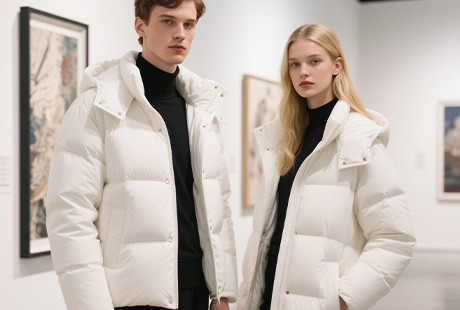
Private label winter jacket manufacturing means contracting a factory to produce cold-weather outerwear under your own brand, using your designs or the factory's ODM patterns, with your labels, packaging, and quality specifications. For a US or EU brand owner, the practical question is rarely "can it be made" but "which winter jacket category should I build my line around, and when must I start sourcing to hit my retail season." Ginwenwear, a Dongguan-based B2B jacket factory, manufactures down jackets, puffer jackets, softshell jackets, and wool-blend outerwear under one roof, with a MOQ of 50 pieces per style, sampling in 7 to 14 days, and bulk production in 25 to 40 days. This guide maps the four main winter jacket categories against market positioning, gives you a month-by-month sourcing calendar for the US and EU winter season, and explains the manufacturing decisions that change cost, lead time, and quality. If you need the full process behind a private label down jacket manufacturing program, that guide covers the decision tree in depth. Most winter jacket factories describe themselves by one hero product, but a brand's outerwear line usually spans several insulation strategies. Before talking about stitching and zippers, you need to decide which of the four families fits your positioning, because each one changes the fabric bill, the fill or insulation cost, and the factory capability you should verify. Down and puffer jackets share the majority of production machinery, which is why most buyers treat them as one sourcing lane. Softshell and wool coats need separate sewing skills and, in the case of laminated softshell, a factory with taped-seam equipment. If your winter line mixes all four, you can still use one supplier, but you should verify each capability separately instead of assuming one production line covers everything. For brands that also plan cold-weather technical pieces in the same season, the private label outdoor jacket manufacturing framework explains how waterproof and breathable requirements are handled in the same facility. The fastest way to kill a winter jacket program is to pick a category by personal taste instead of by market data. The US and EU winter outerwear markets reward different insulation stories, and the same category can sell at very different price points in Minneapolis versus Milan. Ask four questions before any design work starts. Best for cold-climate performance and premium positioning. Budget for RDS-certified down, down-proof fabrics, and baffle or box-wall construction. Warmest weight-to-warmth ratio in the matrix. The fashion-forward volume driver. Works with down or recycled synthetic fill. Quilting gauge and baffle width define the look, so agree the quilting spec in the sample stage and lock it before bulk. For brands selling motion, commute, and layering. Stretch face fabric, membrane or coating, and minimal insulation keep it packable. Verify lamination quality, which fails invisibly until after wash. Urban tailoring story for the premium shelf. Requires wool-friendly sewing, interfacing control, and shrinkage management in finishing. A slower, more skill-dependent lane than puffer production. The single most common mistake in private label winter jacket manufacturing is starting too late. Because bulk production takes 25 to 40 days and sea freight from South China to the US or EU takes 30 to 45 days, a winter program must begin in late spring, not in September. The calendar below assumes you sell into the northern hemisphere winter and want stock in your warehouse by early September for October sell-in. Confirm category mix, target prices, and retail calendar. Share sketches or reference images with the factory for feasibility feedback before sampling. Factory develops first samples in 7 to 14 days per round. Order two rounds minimum: one for fit and materials, one for final color and trim approval. Approve fit, insulation, hardware, and label placement in writing. Confirm the final unit price, MOQ per style, and payment schedule before production. Bulk runs 25 to 40 days depending on quantity and category. Softshell and wool styles may sit at the longer end; standard down and puffer styles usually finish in 30 to 35 days. Arrange third-party or factory pre-shipment inspection, then ship. Sea freight takes 30 to 45 days to the US west or east coast and 35 to 45 days to northern Europe. Goods clear and reach your warehouse in time for October sell-in and the peak selling window of November to January. Total lead time: start in January for September stock - about 8 months of comfortable runway, of which only 7 to 14 days are sampling and 25 to 40 days are sewing. Each category in the winter matrix has a small set of manufacturing details that determines whether the product performs, survives the wash, and looks like the sample. These are the points a sourcing manager should put in the tech pack, because they are the same points a factory will ask about before quoting. Most successful winter brands do not launch one jacket; they launch a line that covers cold entry points. A balanced line lets you test demand with a core style, build a price ladder, and fill your brand story with more than a single silhouette. The right structure depends on your capital, but the framework below is a proven starting shape for a first winter season. When the line spans down, puffer, softshell, and wool, plan production in waves instead of one giant order. Wool coats move slowest and need the longest sewing time per unit; softshell styles have the lowest fill cost but the most fabric engineering; puffers are the fastest to replenish because their pattern blocks are simple. If you are new to the market and want to understand the startup budget and 12-week calendar for a down jacket brand, that guide gives the capital view before you commit to a full matrix. Winter jacket pricing is easier to predict when you understand the cost stack, because the factory quote is a sum of fabric, fill, trims, cutting, sewing, and finishing rather than a mystery number. For a private label winter jacket program at Ginwen, the commercial terms are the same across all four categories, which simplifies planning for a brand that mixes styles. You can also browse our jacket product catalog to see production-ready silhouettes while you compare quotes by category. If your winter program includes multiple categories, ask the factory for a matrix quote on one sheet: same brand, same trims, different categories. This exposes where the real cost sits and helps you set retail prices that protect margin on every SKU in the line. Quality in private label winter jacket manufacturing is a system, not a final inspection. A capable factory will accept clear quality gates at each stage, and a buyer should never rely on a single end-of-line check to catch problems that compound across 1,000 pieces. Ginwen holds ISO 9001 for quality management, BSCI for social compliance, RDS for responsible down sourcing, and OEKO-TEX Standard 100 for fabric safety, and the same standards apply whether you produce down jackets, puffers, softshell, or wool coats. Ask to see the certificates that name the producing factory, not just the trading company, and confirm the fabric and fill suppliers also sit inside the certified chain. For the complete stage-by-stage workflow including PP approval and packing, read our private label jacket packaging guide and the factory process walkthroughs on the Ginwen blog. OEM manufacturing means the factory sews your existing design and tech pack to your specification. Private label goes further: the finished jackets carry your brand name, labels, packaging, and often your exclusive design or pattern, so the product is associated with your brand rather than the factory. At Ginwen both routes share the same MOQ of 50 pieces per style and the same 25 to 40 day bulk window. Yes, but verify each capability. Down and puffer styles share most equipment and are the easiest to combine. Softshell needs lamination-capable fabric sourcing and often seam taping. Wool coats need tailored-sewing skills and pressing equipment. A multi-category factory like Ginwen can quote all four, yet each category should be evaluated on its own production line and sample history. For a northern hemisphere winter sell-in starting in October, begin in January to February of the same year. Sampling needs 7 to 14 days per round, bulk production needs 25 to 40 days, and sea freight from South China adds 30 to 45 days. Starting by May at the latest keeps you out of air-freight territory and protects you from the summer production rush. Ginwen works from 50 pieces per style per colorway. This MOQ applies across down, puffer, softshell, and wool styles and suits first-season brands, capsule drops, and pilot programs that do not yet have the volume for a 500-piece commitment. Sample fees range from $50 to $200 per style depending on complexity, fill type, and fabric. The fee is deducted from your bulk order when you confirm production, so sampling is not a sunk cost for orders that move forward. For down products, RDS certification is the market expectation for traceable sourcing, and OEKO-TEX Standard 100 on fabrics and trims answers EU chemical-safety requirements. ISO 9001 and BSCI cover factory quality and social compliance. Certificates must name the producing factory and cover the supply chain you actually use. Yes, and it is usually the smarter route. Launch with one hero style, prove fit and sell-through, then add volume styles and adjacent categories in the next season. Because patterns and trims can be reused, each added style costs less to develop than the first one. Send target quantity, category, filling type and fill power or insulation, shell fabric description or reference, size range, trims, and target ex-works price. Include reference photos if you do not have a tech pack. With that brief, Ginwen typically replies with a quotation within one working day. Private label winter jacket manufacturing succeeds when the category matrix, sourcing calendar, and quality gates are decided before the first sample is cut. Choose the categories your market actually needs, start early enough to ship by sea, and lock fabric, fill, and trims through written approvals at every stage. A multi-category factory with 50-piece MOQs, 7 to 14 day sampling, and 25 to 40 day bulk production lets you test a full winter line without over-committing. Ready to build your winter jacket line? Send your requirements for a free consultation and a category-by-category quotation. Our team will confirm feasibility, sampling cost, and lead time within one working day.Private Label Winter Jacket Manufacturing: A Category Matrix and Seasonal Sourcing Calendar for Brands
Table of Contents
The Four Winter Jacket Categories Private Label Brands Actually Source
Category Insulation Core Warmth Profile Typical Retail Positioning Key Manufacturing Risk Down jackets Duck or goose down, 550-800+ fill power Highest warmth-to-weight Mid to premium outdoor and fashion Down-proof construction, RDS traceability Puffer jackets Down or synthetic fill in baffled quilting High, boxy silhouette Streetwear, fashion, entry premium Baffle spacing consistency, fill evenness Softshell jackets Thin fleece or no insulation, stretch face Light to mid, wind-resistant Sport, commute, layering Lamination and seam taping quality Wool and wool-blend coats Wool or wool-poly blend shell, optional lining Mid, tailored drape Premium urban and tailored Fabric shrinkage, lining puckering How to Match the Winter Jacket Category to Your Market
Down Jackets
Puffer Jackets
Softshell Jackets
Wool & Wool-Blend Coats
The Seasonal Sourcing Calendar: When to Start a Winter Jacket Program
January to February: Range Planning
February to March: Sampling
April: Sample Approval and Price Confirmation
May to June: Bulk Production
July: Inspection and Shipment
September: Stock Ready
Category-Specific Manufacturing Details That Change Your Spec
Down jacket manufacturing details
Puffer jacket manufacturing details
Softshell manufacturing details
Wool and wool-blend coat manufacturing details
Building a Balanced Winter Jacket Line Across Categories
Hero Style (1 SKU)
Volume Styles (2-4 SKUs)
Weather Edge Styles (1-2 SKUs)
Premium Capsule (optional)
MOQ, Sampling, and Cost Structure for Winter Jacket Programs
Cost Block Typical Share of Ex-Works Price What Drives It Shell and lining fabric 30-45% Fiber content, weight, DWR or membrane, recycled vs conventional Fill or insulation 10-25% Fill power, down ratio, synthetic type, fill weight per size Trims and hardware 5-12% Zippers, snaps, drawcords, custom logo hardware Cutting, sewing, and finishing 20-35% Construction complexity, quilting, taping, pressing, style count Labels, packaging, QC 3-8% Brand labels, hangtags, polybags, cartons, inspection
Quality Gates to Set Before Bulk Production
Frequently Asked Questions
What is the difference between private label and OEM winter jacket manufacturing?
Can one factory make down, puffer, softshell, and wool jackets?
When should I start sourcing for the next winter season?
What is the MOQ for a private label winter jacket?
How much does a sample cost and is it refundable?
Do I need down and fabric certifications for the EU and US markets?
Can I start with one category and add others later?
What information do I need to send for an accurate winter jacket quote?