Puffer Jacket Manufacturing Process (MOQ 60) | Step-by-Step From Sampling to Bulk
- Share
- Issue Time
- Jan 23,2026
Summary
Learn the puffer jacket manufacturing process from tech pack to bulk production—materials, quilting, filling, trims, and in-line QC. Start retail-ready production at MOQ 60 pcs per style with Ginwen.
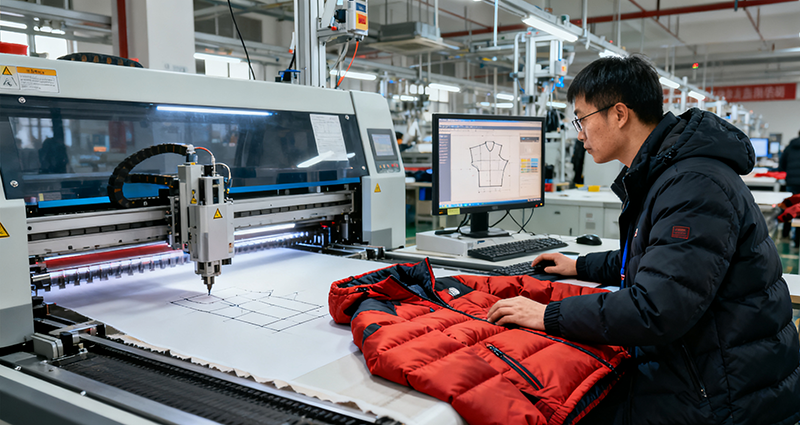
Puffer Jacket Manufacturing Process: From Tech Pack to Bulk Production
MOQ 60 pcs · Sampling · Quilting & Filling · In-line QC · Retail-Ready Delivery
A puffer jacket looks simple on the outside, but the manufacturing process is detail-driven. The quality you see in-store comes from controlled steps: pattern accuracy, quilting alignment, insulation balance, trim installation, and in-line quality checks. If any step is rushed, problems show up as returns—fit issues, cold spots, zipper failures, or messy finishing.
This guide explains the puffer jacket manufacturing process clearly, step by step—what happens at each stage, what brands should confirm, and how to launch professionally with MOQ 60 pcs per style.
What Makes Puffer Jacket Production Different?
Insulation, quilting, and workmanship must stay consistentUnlike basic apparel, puffer jackets must manage structure and warmth. That means factories must control not only sewing quality, but also how insulation is distributed, how baffles are built, and how trims perform in cold-weather use.
- Pattern accuracy and size grading consistency
- Quilting alignment and panel symmetry
- Insulation balance to avoid cold spots
- Trim reliability: zippers, snaps, cords, hardware finishes
- Clean finishing: seam control, loose threads, appearance checks
Puffer Jacket Manufacturing Process (Step-by-Step)
A practical workflow used for sampling and bulk productionBelow is a typical workflow for private label and OEM/ODM programs. The most reliable factories follow a structured path and lock specifications early to protect repeatability in bulk.
- Tech pack review and requirement confirmation (materials, fit, trims, branding, packaging)
- Fabric and insulation sourcing (shell, lining, padding/down choice, trims and accessories)
- Pattern making and size grading (measurement control and tolerances defined)
- Sample development (prototype + revisions until approval)
- Pre-production confirmation (labels, packaging rules, approved measurements, trim specs)
- Fabric inspection and shade control before cutting
- Cutting and panel preparation (matching and accuracy checks)
- Quilting / baffle construction (alignment and stitch control)
- Filling or insulation insertion (distribution and balance checks)
- Assembly sewing (zippers, pockets, cuffs, collars, hoods as required)
- Finishing (thread trimming, pressing/appearance control, label attachment)
- In-line QC + final inspection + packing verification
- Shipment coordination and reorder documentation
The fastest production is not always the best. A stable process with checkpoints protects your bulk output and reduces returns.
Stage 1: Materials & Construction Decisions
Quality starts with smart fabric and insulation selectionYour fabric and insulation choices determine warmth, weight, hand feel, and price point. A good factory helps you match materials to your market positioning and ensures consistency across batches.
Shell & Lining
- Matte, glossy, or ripstop options
- Water-repellent finishes based on target use
- Fabric stability to reduce seam distortion
- Shade control for repeat orders
Insulation
- Down or recycled down for premium warmth
- Synthetic eco-fill for clean care and consistent loft
- Balance rules to avoid cold spots
- Weight targets aligned to your retail tier
Stage 2: Sampling and Fit Approval
The sample is your production blueprintSampling is where most brands either build a strong foundation—or create long-term problems. The goal is not only to approve “a nice sample,” but to lock a repeatable standard that bulk production can follow.
- Measurements and tolerances (including size grading rules)
- Quilting layout alignment and panel symmetry
- Trim function (zippers, snaps, cords) and durability expectations
- Insulation balance and appearance (loft, puffiness, distribution)
- Label placement and packaging requirements
If the sample process is poorly documented, bulk production will drift over time—even with the same factory.
Stage 3: Bulk Production at MOQ 60
Retail-ready production with controlled riskMOQ 60 per style is ideal for brands that want a real size run without heavy inventory risk. A good factory should still support professional standards at low volume: stable materials, in-line QC, and correct private label execution.
| Production Step | Main Control Point | Common Risk If Skipped |
|---|---|---|
| Fabric inspection | Defects + shade match | Color inconsistency, visible fabric flaws |
| Cutting | Panel accuracy + matching | Fit issues, asymmetry, stitching distortion |
| Quilting / baffles | Alignment + stitch control | Uneven lines, poor appearance, weak seams |
| Filling / insulation | Distribution balance | Cold spots, uneven silhouette, customer complaints |
| Assembly + trims | Function testing | Zipper failures, weak snaps, poor durability |
| Finishing + packing | Appearance + labels + packaging rules | Retail unready delivery, labeling mistakes |
A stable factory process reduces defect rates and keeps your first drop aligned with your brand standard.
Stage 4: Quality Control That Protects Your Brand
QC must happen during production, not only at the endPuffer jackets have multiple failure points, so in-line QC is essential. This is how reliable factories prevent problems before they become expensive rework or customer returns.
- Incoming material checks for fabric defects and shade variation
- Measurement checks at key sewing stages
- Quilting alignment verification on panels and finished body
- Insulation balance checks to avoid cold spots
- Trim function tests (zipper run, snap strength, cord performance)
- Final appearance checks: cleanliness, loose threads, finishing quality
- Packing verification: labels, hangtags, folding, carton marks
Ginwen: A Practical Partner for Puffer Jacket Manufacturing at MOQ 60
Sampling discipline · In-line QC · Private label readiness · Bulk repeatabilityAt Ginwen, we support brands that need a clear, repeatable process—from sampling to bulk production. We focus on consistent workmanship, controlled materials and trims, and quality checkpoints that protect your brand reputation.
- MOQ 60 pcs per style with mixed-size support
- Efficient sampling and revision cycles
- Clear confirmation of measurements, tolerances, and construction details
- In-line QC checkpoints for quilting, measurements, and trims
- Private label execution: labels, hangtags, and packaging rules
- Stable documentation for reorders and scalable production
FAQ
Process and production questionsHow long does puffer jacket manufacturing take?
Timing depends on materials and complexity. A reliable process includes sampling, approval, bulk production, and final inspection. Planning is easier when specs are locked early and materials are confirmed before cutting.
What causes the most defects in puffer jackets?
Common issues include quilting misalignment, uneven insulation distribution, measurement drift, and trim failures. In-line QC checkpoints prevent these problems before final inspection.
Can a factory produce retail-ready puffers at MOQ 60?
Yes. MOQ 60 can still support mixed sizes, private label execution, and quality control when the factory has a structured workflow.
What should I send to request a quote?
Send your tech pack or reference images, fabric and insulation preferences, trims, size range, branding and packaging details, destination, target delivery date, and quantity (MOQ 60 pcs per style).
Conclusion
A reliable puffer jacket manufacturing process is built on structure: clear specs, disciplined sampling, controlled materials, and in-line QC checkpoints. That’s how brands reduce returns and scale with confidence.
Start with MOQ 60, lock your standards early, and build repeatability into every reorder—so your brand stays consistent as you grow.