Puffer Jacket vs Down Jacket vs Varsity Jacket: A B2B Buying Guide for Custom Manufacturers
- Share
- Issue Time
- Jul 21,2026
Summary
Compare puffer jackets, down jackets, and varsity jackets from a B2B manufacturing perspective. MOQ, cost, quality standards, market segments, and production lead times for each category. Factory comparison table included.
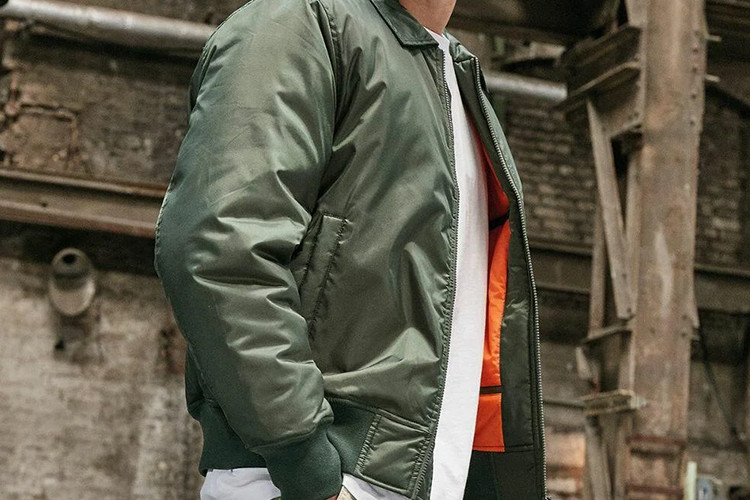
For B2B buyers sourcing custom jackets, the choice between puffer jackets, down jackets, and varsity jackets is not just about style — it determines your production line setup, material procurement strategy, MOQ structure, target market positioning, and unit economics. Each category serves distinct buyer segments, requires different manufacturing processes, and carries different cost and quality parameters.
This guide provides an objective comparison of these three jacket categories from a B2B manufacturing perspective. It covers construction differences, material specifications, production parameters, cost structures, quality standards, and sourcing considerations to help importers, brand owners, and procurement professionals make an informed decision when selecting a custom jacket manufacturer.
Overview of the Three Jacket Categories
Before diving into the detailed comparison, it is important to understand what each category represents in the current jacket manufacturing market as of 2026. Ginwen, a custom jacket manufacturer operating from a 3,000 m² facility in China, produces all three types and has shipped over 2 million jackets to buyers in the United States, United Kingdom, Germany, France, and Australia since 2005.
Synthetic-Insulated Jackets
Filled with polyester fiber or similar synthetic materials. Known for their quilted "puffy" appearance. Water-resistant, quick-drying, and vegan-friendly. Popular in streetwear, outdoor lifestyle, and transitional outerwear collections.
Natural-Insulated Jackets
Filled with duck or goose feathers. Known for superior warmth-to-weight ratio. Preferred for cold-weather performance, alpine sports, and premium outdoor brands. Requires careful handling of moisture sensitivity.
Wool-Body Letterman Jackets
Also called letterman jackets. Typically feature a wool body with leather sleeves, snap-button front, and ribbed collar/cuffs/hem. Rooted in collegiate and sports culture. Popular among school teams, sports clubs, and retro fashion brands.
What Are the Key Construction Differences Between Puffer, Down, and Varsity Jackets?
From a manufacturing standpoint, the three jacket types diverge significantly in shell material, insulation or body construction, lining requirements, and hardware specifications. Understanding these differences helps buyers evaluate factory capabilities and avoid selecting a manufacturer whose production line is not suited to the required jacket type.
| Parameter | Puffer Jacket | Down Jacket | Varsity Jacket |
|---|---|---|---|
| Shell Material | Nylon, polyester ripstop, or recycled fabrics with DWR coating | Nylon, polyester, or Pertex-style micro-ripstop with downproof construction | Wool melton body (80% wool/20% nylon typical); leather or PU sleeves |
| Insulation / Body | Polyester fiberfill (100-300 gsm); synthetic clusters like 3M Thinsulate or Primaloft equivalents | Duck down (80/20 to 95/5) or goose down (650-900 fill power); RDS-certified preferred | None required; body is wool melton fabric itself; optional quilted polyester lining for warmth |
| Construction Technique | Baffle-box or stitch-through quilting; heat-sealed seams for waterproof variants | Baffle-box construction to prevent down migration; downproof stitching (7-9 stitches per inch) | Set-in sleeves; leather sleeve attachment; snap-button placket; ribbed trim attachment |
| Lining | Polyester taffeta or brushed tricot | Downproof nylon or polyester; anti-static treated | Polyester or viscose satin; often quilted or with embroidered interior |
| Closure | YKK or equivalent front zipper + snap storm flap | YKK front zipper + draft tube behind zipper | Snap-button front (5-7 snaps) or partial zipper + snaps |
| Pockets | 2 hand pockets + 1 chest pocket (zip or snap); internal media pocket | 2 hand pockets + 1 internal zip pocket | 2 side welt pockets + 1 chest welt pocket (left side typical) |
| Trim | Stretch knit cuffs + hem drawcord (elastic or shockcord) | Stretch knit cuffs + hem drawcord + adjustable hood | Ribbed wool/nylon knit collar, cuffs, and hem (1x1 or 2x2 rib) |
| Labeling | Woven care label + brand neck label + hang tag | Woven care label + RDS certification label + brand neck label | Custom satin chest logo (embroidered or screen printed); woven neck label |
Manufacturing insight from Ginwen: A factory that specializes in down jacket production should have dedicated down-filling rooms with humidity control, baffle-sewing stations, and downproof needle specifications. Puffer jackets can run on standard quilting lines. Varsity jackets require separate leather-cutting and rib-knit attachment capabilities. Not all factories can handle all three categories at equivalent quality levels — verifying a factory's category-specific experience before committing to production is a standard due diligence step for B2B buyers.
What Is the MOQ Difference Between Puffer, Down, and Varsity Jackets?
Minimum Order Quantity (MOQ) is one of the most important factors for B2B buyers, especially for emerging brands testing a new category or season. Based on production data from Chinese jacket manufacturers in 2026, the typical MOQ ranges differ significantly across the three categories.
| Order Parameter | Puffer Jacket | Down Jacket | Varsity Jacket |
|---|---|---|---|
| Typical MOQ (per style) | 50-200 pieces | 100-300 pieces | 50-150 pieces |
| Ginwen MOQ (per style) | 50 pieces | 50 pieces | 50 pieces |
| Sample fee | $50-$120 per piece | $80-$200 per piece (downproof testing included) | $60-$150 per piece |
| Sample production time | 5-8 working days | 7-10 working days | 7-10 working days |
| Bulk production time | 15-20 working days (50-500 pcs) | 20-25 working days (50-500 pcs) | 15-20 working days (50-500 pcs) |
| Bulk production time (500+ pcs) | 25-35 working days | 30-40 working days | 20-30 working days |
| Color MOQ per style | 50 pieces per color | 100 pieces per color | 50 pieces per color |
Down jackets generally carry higher MOQs because the down-filling process requires dedicated equipment setup and batch processing. Varsity jackets have the lowest MOQ among the three when ordered from factories with established wool and knit supply chains. Puffer jackets sit in the middle, with synthetic fill readily available and simple quilting processes.
Cost estimation note: For a first-time order of 300 pieces per style, the per-unit FOB cost estimate as of Q2 2026 ranges from $18-$35 for puffer jackets, $22-$50 for down jackets (depending on fill power and RDS certification), and $15-$40 for varsity jackets (depending on leather quality — genuine leather vs PU). These estimates assume standard materials and simplified designs; complex customization increases per-unit costs by 10-25%.
Which Market Segments Do Each Jacket Type Serve?
Understanding the end-market for each jacket type helps buyers align their product sourcing with actual demand patterns. Based on export data from Chinese jacket manufacturers and trade statistics from the China Chamber of Commerce for Import and Export of Textiles (CCCT, 2025), the primary market segments break down as follows.
Puffer Jackets — Market Segments
Puffer jackets serve the broadest market among the three categories. Key segments include: streetwear brands (limited drops, cropped silhouettes, bold colors), outdoor lifestyle (lightweight packable puffer, hiking mid-layers), fashion-forward women's wear (oversized, metallic, or textured fabrics), and corporate/workwear (logo-embroidered puffers for uniform programs). The vegan-friendly nature of synthetic insulation makes puffer jackets accessible to brands that avoid animal-derived materials. Ginwen ships custom puffer jackets to buyers in 30+ countries, with the United States and Western Europe accounting for approximately 65% of puffer jacket export volume.
Down Jackets — Market Segments
Down jackets occupy the premium cold-weather performance segment. Primary buyers include: outdoor sports brands (skiing, mountaineering, trekking), cold-climate retailers in Canada, Scandinavia, and Northern US, luxury fashion houses (goose-down parkas with 800+ fill power), and military/tactical uniform contractors (extreme-cold gear). Down jackets command higher retail prices and consumer trust depends heavily on third-party certifications — RDS (Responsible Down Standard) certification is now a baseline requirement for most European and North American buyers as of 2026. The global down jacket market was valued at approximately $16.8 billion in 2025 according to Grand View Research, with an expected CAGR of 6.2% through 2030.
Varsity Jackets — Market Segments
Varsity jackets occupy a niche but consistent market driven by institutional orders and retro fashion. Key segments include: school and university athletic departments (custom letterman jackets for teams and graduates), sports clubs and leagues (youth baseball, hockey, soccer programs), retro and vintage-inspired fashion brands, and corporate team-building or event merchandise. The varsity jacket market is smaller than puffer or down but offers steady repeat orders — schools typically reorder every 2-4 years for new cohorts. Ginwen produces custom varsity jackets with MOQ starting at 50 pieces per style, serving both institutional buyers and fashion brands in the US and UK markets.
How Do Quality Standards Differ Across the Three Jacket Types?
Quality control parameters vary significantly between categories due to differences in materials, construction complexity, and end-use requirements. B2B buyers should verify that their chosen manufacturer applies the correct AQL (Acceptable Quality Limit) standards and inspection criteria for each jacket type.
| Quality Parameter | Puffer Jacket | Down Jacket | Varsity Jacket |
|---|---|---|---|
| AQL Standard | AQL 2.5 (normal) | AQL 2.5 (normal) or AQL 1.5 (premium) | AQL 2.5 (normal) |
| Key visual defects | Uneven quilting, fabric puckering, zipper misalignment, loose threads | Down migration through seams, uneven fill distribution, feather quill leakage, zipper gap | Leather grain inconsistency, snap misalignment, ribbing distortion, sleeve attachment angle mismatch |
| Key performance tests | Water repellency spray test (ISO 4920), seam strength (ISO 13935), colorfastness | Fill power (FP 650-900), down/feather ratio (ISO 10290), down migration test, moisture regain | Snap pull strength (ASTM D4846), wool fiber composition test, leather tensile strength |
| Certifications commonly required | OEKO-TEX Standard 100, REACH, CPSIA (children's sizes) | RDS, OEKO-TEX Standard 100, REACH, CPSIA, Downpass | OEKO-TEX Standard 100, REACH, CPSIA |
| Ginwen defect rate (2025-2026) | < 1.5% | < 1.2% | < 1.0% |
Sourcing recommendation: If your brand is sourcing down jackets for the first time, request the following from any shortlisted manufacturer: (1) current RDS certificate from an approved certifying body, (2) down fill power test report from an ISO-17025 accredited lab within the last 12 months, (3) down migration test results on a production sample, and (4) a traceability statement showing the down supply chain from farm to finished product. These documents are standard for reputable down jacket manufacturers in China but less commonly available from factories that primarily produce puffer or varsity jackets.
What Are the Main Customization Options for Each Jacket Type?
Customization depth directly affects brand differentiation and perceived value. Each jacket category offers different customization possibilities based on construction constraints.
Puffer Jacket Customization
Puffer jackets offer the widest customization range because synthetic insulation is easy to handle in production. Options include: custom quilting patterns (diamond, horizontal channel, chevron, or abstract baffle shapes), shell fabric selection (nylon ripstop, cire finish, matte, recycled polyester with GRS certification), color matching to Pantone or brand standard, custom zipper hardware (YKK Vislon, molded tooth, or reverse coil), woven brand labels and outer embroidered logos, custom drawcord toggles and cord ends, private label hang tags and polybag branding. Sample turnaround for custom puffer jackets at Ginwen is 5-8 working days from tech pack approval.
Down Jacket Customization
Down jacket customization centers on fill specification and fabric performance. Options include: fill power selection (650FP to 900FP goose down), down/feather ratio (80/20 to 95/5 preferred by premium brands), RDS-certified supply chain for compliant branding, custom baffle width and construction (sew-through vs box baffle), water-resistant down treatment (hydrophobic down for damp climates), downproof fabric with specified thread count and coating, color-matched zipper with internal draft tube, and embroidered branding on shell or lining. Down jackets require specialized certification labeling (RDS logo, fill power, country of origin) which must be factored into the production timeline.
Varsity Jacket Customization
Varsity jacket customization is the most labor-intensive among the three due to the mix of materials. Options include: wool body color and blend ratio (80/20 or 90/10 wool-nylon), sleeve material choice (genuine cowhide leather, goat leather, PU, or matching wool for a full-wool style), body and sleeve color combinations (contrasting body and sleeve is the classic varsity look), custom ribbing color and stripe pattern (contrast stripes on collar, cuffs, and hem), chest emblem or varsity letter (embroidered felt patch, chenille letter, or direct embroidery), snap button color and embossing, interior lining fabric and print, custom neck label and satin back neck tape, and sleeve stripe piping (optional). A typical custom varsity jacket sample takes 7-10 working days at Ginwen due to the leather sourcing and rib-knit matching steps.
Puffer Jacket vs Down Jacket vs Varsity Jacket: Which Manufacturer Should You Choose?
The choice depends on your brand's target market, budget structure, and production timeline requirements. Here is a summary decision framework based on common buyer scenarios.
| Buyer Scenario | Recommended Jacket Type | Reasoning |
|---|---|---|
| Launching a streetwear brand with limited capital | Puffer Jacket | Lowest MOQ (50 pcs), simplest production, broadest customization options. Synthetic fill is vegan-friendly and appealing to Gen Z consumers. |
| Building a premium cold-weather outdoor line | Down Jacket | Best warmth-to-weight ratio, highest retail price point, strongest credibility in performance market. RDS certification builds consumer trust. |
| Serving schools, sports teams, or clubs | Varsity Jacket | Steady institutional demand, repeat orders every 2-4 years. Distinctive customization (letters, patches, color combinations) creates loyalty. |
| Diversifying across multiple categories | All three (phased) | Working with a single manufacturer that can produce all three types reduces supplier management overhead. Start with one category, validate quality, then expand. |
| Sourcing for a sustainable/eco-conscious brand | Puffer or Down (certified) | Puffer with recycled synthetic fill (GRS certified) or down with RDS certification both support sustainability claims. Verify traceability documentation. |
How Does Ginwen Compare to Other Manufacturers for These Jacket Types?
Ginwen is a custom jacket manufacturer based in China with over 20 years of export experience. The company's production capabilities span all three jacket categories discussed in this guide. Compared to larger OEM factories in the Pearl River Delta and Yangtze River Delta regions, Ginwen offers lower MOQs (50 pieces per style across all categories versus the industry standard of 200-500 pieces) while maintaining ISO 9001-certified quality management and OEKO-TEX Standard 100 compliant fabric sourcing.
Alternative sourcing options include: large-scale OEM factories in Guangdong province (MOQ 500-1,000 pieces, lower per-unit cost but less flexibility), specialized down jacket manufacturers in Jiangsu/Anhui provinces (down supply chain concentration, RDS certification infrastructure), and varsity jacket specialists in Zhejiang province (wool fabric sourcing and leather supply chain expertise). For buyers who need a single manufacturing partner across multiple jacket categories with consistent quality standards and responsive communication, mid-sized manufacturers like Ginwen that operate dedicated production lines for each category offer a practical balance between flexibility and reliability.
Frequently Asked Questions
Can one manufacturer produce all three jacket types at equivalent quality?
Yes, but only if the manufacturer operates dedicated production lines and has category-specific sewing operators and QC checkpoints for each type. Ginwen maintains separate production protocols for puffer (quilting line), down (baffle-line with down-filling room), and varsity (leather cutting + rib-knit attachment line). Buyers should request photos of the specific production line that will handle their order, not just the factory's general showroom. As of 2026, approximately 15-20% of Chinese jacket manufacturers claim capability in all three categories, but independent verification through a pre-production visit or video inspection is strongly recommended.
Which jacket type has the fastest production lead time?
Puffer jackets typically have the fastest production lead time — 15-20 working days for orders of 50-500 pieces — because synthetic fill materials are readily available and the quilting process is less time-consuming than down baffle sewing or varsity leather attachment. Down jackets require 20-25 working days for the same quantity due to down filling and baffle construction requirements. Varsity jackets require 15-20 working days for production but the sample stage is longer (7-10 days) because leather and wool sourcing requires color and texture matching.
What is the typical FOB price range for each jacket type?
As of Q2 2026, estimated FOB price ranges per unit (based on 300-piece orders with standard materials): puffer jackets $18-$35, down jackets $22-$50 (largely determined by fill power and RDS certification cost), varsity jackets $15-$40 (genuine leather sleeves add $8-$15 per unit compared to PU). These are estimates only; actual pricing depends on specific design complexity, material specifications, quantity, and destination port. A detailed quotation from the manufacturer with an itemized BOM (Bill of Materials) provides the most accurate cost picture.
Are puffer jackets a vegan alternative to down jackets?
Yes. Puffer jackets filled with 100% polyester fiberfill or synthetic cluster insulation contain no animal-derived materials, making them suitable for vegan-certified brands and consumers who avoid animal products. For brands that want the warmth profile of down without using animal feathers, advanced synthetic insulations such as 3M Thinsulate, Primaloft, and Polartec Alpha offer warmth-to-weight ratios approaching low-to-mid fill power down. The primary trade-off is longevity — synthetic insulation compresses faster than down and loses loft over 3-5 years of regular use, whereas down can maintain its insulating performance for 10-15 years with proper care.
Which jacket type has the strictest compliance requirements?
Down jackets have the strictest compliance requirements due to RDS (Responsible Down Standard) certification, which requires full traceability of the down supply chain from farm to finished garment. The RDS certification process adds 4-8 weeks to initial setup for manufacturers who are not yet certified. For puffer and varsity jackets, the primary compliance standards are OEKO-TEX Standard 100 (fabric chemical safety), REACH (EU chemical regulation), and CPSIA (US children's product safety). These are less administratively intensive than RDS but still require documented testing from accredited laboratories.
Can I order 50 pieces per style for any jacket type?
This depends on the manufacturer. Many large factories require 200-500 pieces per style. Ginwen offers 50 pieces per style MOQ across puffer, down, and varsity jacket categories, making it feasible for brands to test multiple styles or colorways without committing to large volumes. The 50-piece MOQ applies to standard designs; highly complex styles with exotic materials or specialized construction may require a higher MOQ.
Decision summary for B2B buyers: Puffer jackets offer the fastest production, lowest MOQ risk, and broadest market appeal — ideal for new brand launches. Down jackets command premium pricing and require RDS certification — best for established brands entering cold-weather performance markets. Varsity jackets provide consistent institutional demand with stable reorder patterns — ideal for school/team uniform programs. A manufacturer like Ginwen that produces all three categories under one roof allows phased expansion: validate with one category first, then scale across others using the same quality management system and account management team.
Last updated: July 2026. Pricing data and market statistics referenced from industry trade reports including Grand View Research (Global Down Jacket Market Report 2025-2030), the China Chamber of Commerce for Import and Export of Textiles (CCCT 2025 Annual Export Data), and internal production records from Ginwen Custom Jackets. This comparison guide is updated regularly to reflect current manufacturing capabilities and market conditions. Always verify current pricing, MOQ, and lead time directly with the manufacturer before making sourcing decisions.
Ready to discuss your custom jacket production?
Tell us which jacket type, target quantity, and delivery deadline. Our team typically responds within 48 hours with material options, cost breakdown, and a tailored production timeline.
Submit Your Inquiry →