Sustainable Puffer Jacket Manufacturing
- Share
- Issue Time
- Aug 26,2026
Summary
How sustainable puffer jackets are manufactured: recycled shells and linings, responsible fill options, factory energy water and waste practices, certifications, production timeline, QC and compliance documentation. Factory data from Ginwen: MOQ 50 pcs per style, sampling 7-14 days, bulk 25-40 days, sample fee USD 50-200 deductible.
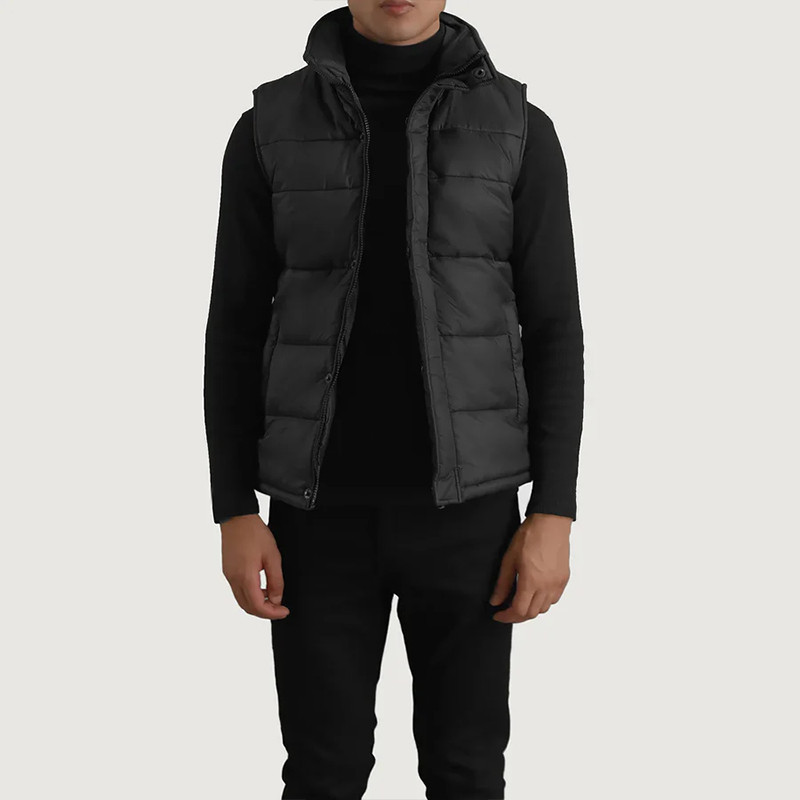
Sustainable puffer jacket manufacturing means producing a padded jacket with recycled or responsibly sourced materials, cleaner production practices, and verifiable certifications, without giving up the warmth, durability, and fit that the product category demands. In practice this breaks down into four workstreams: recycled shells and linings, responsible insulation such as RDS-certified down or recycled synthetic fiber, factory-level practices for energy, water, and waste, and third-party certifications such as OEKO-TEX, RDS, BSCI, and ISO 9001 that let a brand make defensible claims. At a B2B jacket factory like Ginwen in Dongguan, a sustainable program follows the same production framework as a standard program, with the same MOQ of 50 pieces per style, sampling in 7 to 14 days, and bulk production in 25 to 40 days, but with a different material bill and a stricter documentation trail. Sustainability in puffer jacket production is not a single material or a single certificate. It is a set of decisions across the product lifecycle, and the most credible programs treat it as a documented process rather than a marketing label. The three areas that carry the most weight with European and North American buyers are material inputs, production practices, and certification evidence, and each one has concrete, verifiable elements that a factory can show in its documentation. Material inputs are where most brands start. A recycled shell fabric, a recycled lining, recycled insulation, and recycled trims reduce the demand for virgin petroleum-based fibers, and these materials are now available at weights and prices that work for commercial puffer programs. Responsible insulation is the second decision: RDS-certified down documents the ethical treatment of birds through the supply chain, while recycled synthetic insulation avoids animal materials entirely and is easier to claim as a vegan product. Both options are producible at scale, and the choice is driven by the brand's positioning and target price. Production practices are the part of sustainability that happens inside the factory: how energy is used, how fabric waste is handled, how water and chemicals are managed, and how workers are treated. These are the elements that BSCI and ISO 9001 audits examine, and they are also the elements that a brand cannot see from a product photo, which is why factory documentation and audit reports matter in the sourcing decision. The honest framing for a brand is that material choices are visible sustainability, while production practices and certifications are verifiable sustainability, and a credible program needs both. Recycled materials are the backbone of most sustainable puffer programs, and the available range now covers every layer of the garment. The table below shows the recycled options we work with for shells, linings, insulation, and trims, and how each one behaves in production. Recycled nylon and recycled polyester are the two workhorse materials for sustainable puffer programs. Recycled nylon is made from pre- and post-consumer nylon waste and performs almost identically to virgin nylon at the weights puffer programs use, which is why it is the default choice for premium sustainable lines. Recycled polyester is produced from PET bottles and polyester waste, costs a little less, and is widely available in twill and ripstop constructions. Both materials can be finished with DWR, and both are OEKO-TEX testable, which is the certification most buyers expect on fabrics that touch the skin or are worn against the body. Material sourcing lead time is the practical difference between a sustainable program and a standard one. Recycled fabrics are made in narrower production windows than virgin fabrics, and popular recycled specifications can be out of stock at the mill, so the factory confirms availability before quoting a firm lead time. For a brand, this means the material decision should come early: if the shell is recycled, the fabric order should be placed with the sample order so the bulk fabric is reserved, and the brand should accept that the sample and bulk will use the same recycled fabric lot for color consistency. The fill is the most discussed sustainability decision in a puffer jacket, because it is the product's defining component and the one with the most ethical and environmental nuance. There is no single correct answer: the right fill depends on the brand's values, target price, and climate positioning. The comparison below covers the main responsible fill options used in commercial production. Down certified under the Responsible Down Standard documents that the birds were not live-plucked or force-fed and that the supply chain is traceable. RDS duck and goose down from 650 to 800 fill power is available for puffer programs sold in Europe and North America. Polyester batting made from recycled fibers provides reliable warmth, easy machine washing, and a clear vegan story. Modern high-loft recycled batts perform well in city temperatures and cost less than down. Fills derived from plant sources such as corn or wood pulp are entering the market, offering a bio-based story. Availability and price vary by region and season, so the factory confirms current sourcing before costing. Down in the body panels and recycled synthetic in the hood, sleeves, and collar. This reduces down volume, lowers cost, improves washability, and is a common compromise for sustainable streetwear lines. For down programs, RDS certification is the baseline for the European and North American retail markets, and the certification must cover the specific supply chain that fills the jackets. The factory should be able to show the RDS scope certificate and the transaction certificates for the down lots used in your order. For synthetic programs, the recycled content of the batting should be stated, and the batting supplier's documentation should accompany the sample. Both paths are verifiable, and both support a defensible product claim when the documents are kept with the production records. Fill weight planning follows the same logic as a standard puffer: the grams of fill per size are specified on the sample and locked for bulk. Sustainability does not change the engineering; a 0 to 10 degree Celsius city puffer still needs roughly 100 to 200 grams of down or an equivalent loft of synthetic batting. What changes is the sourcing story, the documentation, and sometimes the cost structure, so the fill decision should be finalized before the first costing rather than adjusted later. Production practices are the factory-level part of sustainability, and they are the part a brand should verify rather than assume. The most useful framework for a buyer is to look at three areas: how the factory manages energy, how it handles water and chemicals, and how it treats fabric waste. Each area produces concrete, checkable evidence that separates a genuine program from a marketing story. The single most practical waste-reduction lever in puffer production is marker efficiency. Jacket patterns are irregular, and the way panels are nested on the cutting table determines how much fabric becomes offcut. A well-optimized marker can save several percent of fabric on a puffer program, which reduces both cost and waste, and this is one area where the factory's pattern team makes a direct sustainability contribution. Brands can ask for the planned marker efficiency on their order; it is a normal production number, not a secret. Water and chemical management in puffer production is mostly about finishing and washing rather than the sewing itself. Fabrics are finished at the mill or at finishing partners, so the relevant questions are whether the fabrics are OEKO-TEX tested and whether the finishing partners hold environmental permits and compliance records. Sewing and filling generate little water use by themselves, which is worth knowing when a brand compares the environmental profile of a puffer against, for example, a garment that requires heavy washing or dyeing. Certifications are the language buyers and retailers use to verify sustainability claims, and the four that matter most for puffer programs are OEKO-TEX, RDS, BSCI, and ISO 9001. Each one answers a different question, and a factory that holds all four can document material safety, responsible fill sourcing, social compliance, and quality systems in one package. The table below explains what each certification covers and what it means for a puffer program. It is worth understanding the difference between a factory certification and a product certification. OEKO-TEX certifies materials, so the certificate applies to the tested fabric rather than to every garment the factory produces. RDS certifies the down supply chain, and the transaction certificates follow the specific down lots. BSCI and ISO 9001 certify the factory as an organization. When a brand prepares its product claims, it should match each claim to the right certificate and keep the certificates in the compliance file for the retailer. A sustainable puffer program follows the same manufacturing timeline as a standard program, with the main difference in the material sourcing stage. Recycled fabrics and certified down have their own availability windows, so the sourcing check happens before the quotation is finalized. The timeline below shows the standard flow we run at Ginwen for sustainable programs. 1 to 3 days. The brand shares the brief and target price, and the factory confirms availability of recycled fabrics, certified fill, and trims before quoting. 7 to 14 days. Pattern, material sourcing, sample sewing, and fit review. The sample is sewn with the actual recycled and certified materials planned for bulk. 3 to 5 days. Fit and material approval, plus the compliance package: OEKO-TEX test reports, RDS certificates where applicable, and recycled content declarations. 25 to 40 days. Fabric and trim confirmation, cutting with optimized markers, sewing, filling, and in-line QC at every station. 2 to 4 days. AQL inspection, labeling with care instructions, recycled polybag and carton packing, and shipment booking. Sea freight 25 to 40 days, air 5 to 10 days, express 3 to 7 days. The compliance file travels with the order so the brand has everything for retailer submissions. Total estimated timeline: 6 to 9 weeks from sample approval to delivery by sea, plus 7 to 14 days of sampling time at the start. Documentation is the part of a sustainable program that most brands underestimate. The sample approval package for a sustainable order is larger than for a standard order: fabric test reports, recycled content declarations, RDS transaction certificates if down is used, and any retailer-specific forms. At Ginwen we assemble this package as production progresses rather than at the end, because certificates are easier to collect while the materials are in the factory than after the goods have shipped. Quality control for a sustainable puffer program runs the same checkpoint system as any puffer order, with two additions: the fill weight and material identity checks are documented more strictly, and the compliance documents are verified against the physical goods. The table below shows the inspection points and how the sustainable documentation attaches to each one. Material identity checking deserves emphasis in sustainable programs, because the recycled content claim depends on the actual fabric in the garment, not the fabric on the quotation. When the fabric arrives, the factory checks the delivery against the order, records the lot number, and keeps the mill's declaration with the order file. If the brand or a third-party auditor later inspects the goods, the trail from fabric lot to finished garment must be traceable, and that traceability is built during production, not after. Physical testing for sustainable programs is the same as for standard programs: down-proof testing for down-filled styles, zipper cycle testing, seam strength, and a wash test where the brand plans machine washing. Color fastness testing is recommended for sustainable fabrics, because recycled fibers can behave slightly differently from virgin fibers in dyeing, and the approved shade must be locked on the actual bulk fabric. Testing is agreed at the sampling stage so the results are available before bulk production begins. Sustainable materials do not change the commercial structure of a puffer program at our factory. The same flexible terms that make puffer production accessible to emerging brands apply to sustainable programs, which matters because sustainability-oriented brands are often smaller and newer, and they need the same low entry point as everyone else. Two cost notes apply specifically to sustainable programs. First, recycled fabrics are usually priced close to virgin equivalents at the weights puffer programs use, but certified down and specialized recycled batts can carry a premium, and the premium is visible in the quotation rather than hidden. Second, the documentation work has a cost in time more than money: the compliance package is assembled during production, and the brand should expect the factory to request material decisions early so certificates and lots can be matched. Neither factor changes the MOQ or the payment terms; they change the planning, not the framework. The sample fee deduction works exactly as in a standard program. The USD 50 to 200 sample fee is paid to start development and is deducted from the first bulk order, and the sample is sewn with the actual recycled and certified materials so the sample approval is a true representation of the bulk product. Brands that plan several sustainable styles can sample them together and consolidate the first bulk order to spread the development cost. A sustainable puffer program succeeds or fails on the quality of the brief, because the material and documentation decisions are made early and are expensive to change later. The checklist below is the information set a factory needs to plan and cost a sustainable program correctly on the first round. Once the brief is complete, the factory returns a quotation with sample fee, MOQ, and production schedule, together with the material and certificate plan. At Ginwen we respond to complete briefs within 24 hours, and we flag any material or certificate that needs confirmation before sampling so the brand is not surprised later in the process. Yes. Our MOQ is 50 pieces per style for sustainable programs as well as standard ones. Recycled nylon, recycled polyester, and recycled synthetic fill are available at this quantity, and the sample fee of USD 50 to 200 is deducted from the first bulk order. We hold ISO 9001 for quality management, BSCI for social compliance, RDS for responsible down, and OEKO-TEX Standard 100 for material safety. Current certificates are provided during supplier evaluation, and order-specific documents such as RDS transaction certificates are kept with each order's records. Yes. RDS down is available from 650 to 800 fill power for programs at our standard MOQ. The RDS scope certificate and the transaction certificates for the down lots used in your order are provided as part of the compliance package. Sampling takes 7 to 14 days and bulk production 25 to 40 days, the same as standard programs. The difference is material sourcing: recycled fabrics and certified fill are checked for availability before the quotation is finalized, so the schedule is set on real availability rather than assumption. Send us your requirements with the design, quantity, target price, and the certifications or claims you plan to use. We respond within 24 hours with a detailed quotation including sample fee, MOQ, production schedule, and the material and certificate plan. Sustainable puffer jacket manufacturing is a practical, documented process built on four pillars: recycled materials, responsible fill, cleaner factory practices, and verifiable certifications. The commercial framework stays accessible, with an MOQ of 50 pieces per style, sampling in 7 to 14 days, bulk production in 25 to 40 days, and a deductible sample fee, so sustainability is a positioning choice rather than a barrier to entry. Ready to develop a sustainable puffer program? Contact our team or submit your requirements for a free consultation. You can also browse our product catalog or read more manufacturing guides on our blog.Sustainable Puffer Jacket Manufacturing
Table of Contents
What Sustainable Manufacturing Means for Puffers
Recycled and Responsible Materials
Component Recycled Option Typical Specification Production Notes Shell fabric Recycled nylon ripstop 20D-40D, 60-110 gsm, DWR finish Down-proof when combined with the right lining, takes matte and gloss finishes Shell fabric Recycled polyester 75-150 gsm, twill or ripstop Good color fastness, slightly less packable than nylon Lining Recycled nylon taffeta 20D-30D, 50-70 gsm Must pass down-proof testing for down-filled styles Insulation Recycled polyester batting High-loft batts, 100-200 gsm Consistent fill, easy machine insertion, vegan-friendly Trims Recycled zippers, tapes and labels Standard sizes and colors Confirm availability and color range early in sampling Packaging Recycled polybags, recycled cartons Standard packing sizes Carton and polybag claims are easy wins for the brand story Responsible Fill: Down, Synthetic and Alternatives
RDS Down
Recycled Synthetic Fill
Plant-Based Alternatives
Hybrid Fill Systems
Factory Practices: Energy, Water and Waste
Energy Management
Water and Chemicals
Waste Handling
Social Compliance
Certifications That Matter to Buyers
Certification What It Covers Why It Matters for Puffers OEKO-TEX Standard 100 Fabrics and materials tested for harmful substances Shell, lining, and trims are verified safe for skin contact RDS (Responsible Down Standard) Ethical down sourcing, no live plucking, traceability Required by most EU and US retailers for down products BSCI Social compliance, working conditions, worker rights Expected by large retail chains and e-commerce platforms ISO 9001 Quality management systems across production Signals consistent process control and documented QC Production Timeline for a Sustainable Program
Consultation and Material Check
Sample Development
Sample Approval and Documentation
Bulk Production
Inspection and Packing
Shipping and Compliance Handover
Quality Control and Testing
Checkpoint What Is Checked Documentation Produced Incoming material inspection Recycled fabric shade and finish, fill certificates, trim quality Material certificates matched to delivered lots Cutting check Panel accuracy, marker efficiency, grain direction Marker utilization record for the order In-line sewing inspection Stitch quality, quilting alignment, fill weight per panel Fill weight records per size and style Finishing inspection Zipper and pocket function, trim placement, label accuracy Care label and fiber content label verification Final AQL inspection Random sampling per AQL 2.5, measurements, cleanliness Inspection report for the shipment Compliance handover Certificates match the shipped goods and quantities Compliance package for the brand and retailer MOQ, Sampling and Payment Terms
How to Plan a Sustainable Puffer Program
Frequently Asked Questions
Can I produce a puffer jacket with recycled materials at a low MOQ?
What certifications does the factory hold?
Is RDS-certified down available for small orders?
How do recycled materials affect the production timeline?
How do I get a quotation for a sustainable puffer program?