Top 10 Winter Jacket Manufacturers in China | OEM & Private Label
- Share
- Issue Time
- Dec 14,2025
Summary
Discover the top 10 winter jacket manufacturers in China. From low MOQ OEM factories to high-capacity suppliers, find reliable partners for custom winter jackets.
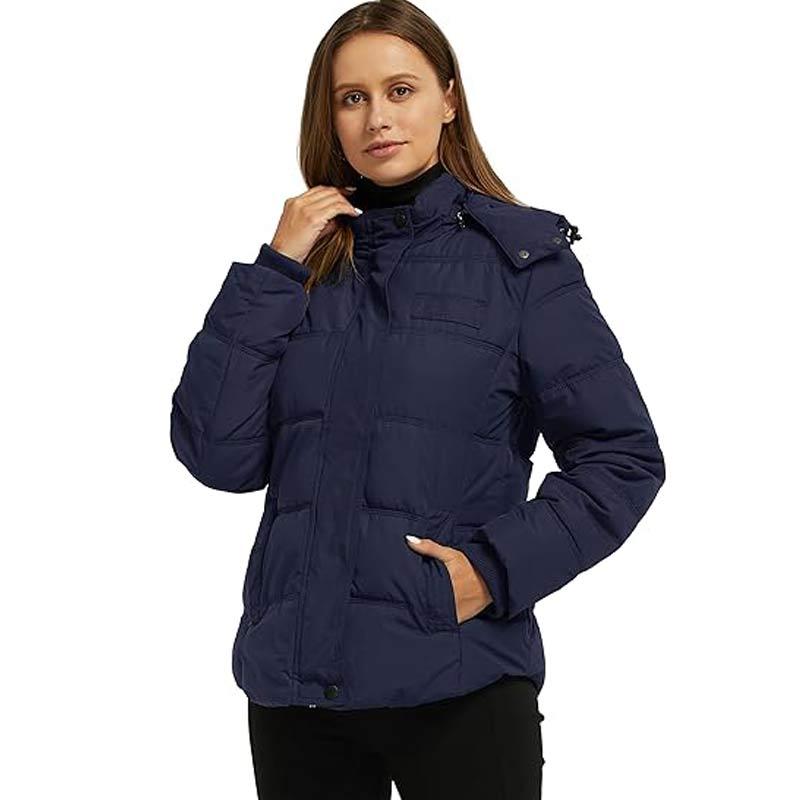
Top 10 Winter Jacket Manufacturers in China: A 2026 OEM and Private Label Buyer Map
China is still the largest production base for winter jackets, and the real question for most buyers is not whether to source here but which type of factory fits the programme. There is no single best winter jacket manufacturer, because a 50-piece capsule drop and a 5,000-piece retail roll-out need different partners. This guide maps the ten manufacturer profiles you will meet in China, explains the MOQ, sampling, payment and certification numbers to expect in 2026, and shows how to compare quotes without getting locked into a factory that cannot scale. If you already know your target price and quantity, you can shortlist from our custom winter jacket collection and start sampling within two weeks.
Table of Contents
Why China Remains the Leading Winter Jacket Manufacturing Base
Winter jacket production depends on a supply chain that few countries can assemble in one place: down and synthetic fill, high-density nylon and polyester shells, laminated membranes, zippers and hardware, quilting machinery, and a workforce experienced in baffle construction. China has all of these within a few hundred kilometres of its main apparel clusters, which is why the country still produces the majority of the world's quilted outerwear.
For B2B buyers the practical benefits are threefold. First, material depth: a factory can source 550 to 800 fill power down, recycled fill, ripstop shells and PFC-free DWR finishes without waiting on long import cycles. Second, process depth: automated quilting, ultrasonic bonding, seam sealing and in-house QC labs are normal rather than premium add-ons. Third, flexibility: the same cluster can serve a boutique brand running 50 pieces per style and a wholesaler running five-figure volumes per season. You can read more about how our own operation is organised on our about us page.
Geographically, winter jacket production clusters around a handful of provinces. Zhejiang and Jiangsu lead in technical fabrics and down programmes, Guangdong in fashion and fast-turn puffer production, Fujian in heavier cold-climate construction, and inland provinces such as Anhui and Sichuan in high-volume and institutional manufacturing. Knowing which cluster a factory belongs to is a useful early signal about the kind of order it handles best, and it explains why the profiles below appear in the locations they do.
[IMAGE_PLACEHOLDER] Wide shot of a winter jacket factory floor in China with quilted baffle panels moving along industrial sewing and quilting stations.
How This Buyer Map Was Built
Static rankings of named factories age quickly: capacities change, certification scopes expire, and a factory that is right for one buyer is wrong for another. Instead of publishing a list that becomes misleading, this guide maps the ten manufacturer profiles that actually exist in the Chinese winter jacket market. Each profile describes the operating model, the typical buyer it suits, and the points you should verify before sending a deposit.
Every profile is scored against the same six evaluation criteria used in our other outerwear manufacturing guides:
- OEM and ODM depth: can the factory work from your tech pack, and can it also develop a pattern from a reference sample?
- MOQ flexibility: the smallest order that still gets a dedicated line and quality control.
- Insulation and shell capability: down, recycled down, synthetic fill, membranes and coatings.
- Compliance: ISO 9001, BSCI or SEDEX, RDS and OEKO-TEX coverage for the specific production site.
- Lead time reliability: sampling speed and historical on-time rate for bulk, not just the headline number.
- Communication and QC documentation: English-speaking merchandisers, inline inspection reports and a clear defect policy.
| Criteria | What to Ask For | Red Flag |
|---|---|---|
| OEM / ODM depth | Pattern maker on staff, sample room photos, grading chart | Only "copy the photo" answers |
| MOQ flexibility | Written MOQ per style and per colour | MOQ that changes after quoting |
| Compliance | Certificates naming the production site | Certificates for a different address |
| Lead time | Sampling and bulk days stated separately | One vague "fast delivery" promise |
| QC documentation | Inline and final inspection reports | No inspection record offered |
The 10 Winter Jacket Manufacturer Profiles in China
Most factories combine two or three of these profiles. Identifying which one a supplier leads with tells you quickly whether the partnership will hold as your volumes grow.
1. Low-MOQ Private Label Specialist
Concentrated in Zhejiang and Guangdong, these factories build their business around small, well-controlled runs. They usually keep a permanent sample room, buy trim in smaller quantities and accept MOQ from 50 pieces per style, which makes them the natural first partner for a new brand.
- Strength: dedicated pattern maker, fast sampling, low inventory risk for you
- Watch for: unit cost is higher and line capacity is limited in peak season
- Best for: startups, capsule collections, DTC tests
2. Performance and Technical Outerwear Specialist
These suppliers work with laminated shells, taped seams and rated waterproof and breathable membranes. They are the factories to approach when the jacket has to survive real weather rather than only look warm in a product photo.
- Strength: seam sealing equipment, membrane lamination knowledge, lab testing partners
- Watch for: technical shells raise MOQ because fabric is ordered per colour
- Best for: outdoor labels, ski and snowboard lines, commuter performance ranges
3. Heavy-Insulation Cold-Climate Factory
Focused on long parkas and high-fill jackets for northern markets, these producers are experienced in box baffle construction and high fill power down. They understand the difference between a jacket that is warm in a showroom and one that holds loft at minus twenty.
- Strength: box baffle quilting, high fill power handling, cold-climate fit blocks
- Watch for: heavier styles increase shipping cost and packing volume
- Best for: retailers in Canada, Northern Europe and Northeast Asia
4. Fashion Winter Jacket OEM Supplier
These factories follow trend cycles closely and are strong at silhouettes, colour blocking and seasonal trims. They frequently run both light puffers and insulated fashion coats on the same line, which suits brands that refresh the range twice a year.
- Strength: trend-driven design support, quick colour and trim changes
- Watch for: confirm the fill and shell specification, not only the look
- Best for: fashion labels, lifestyle brands, department store private label
5. High-Volume Bulk Manufacturer
Large export factories run continuous lines with automated cutting and quilting. Their advantage is unit cost at scale, and their MOQ usually starts in the thousands per style. Ordering here without a validated sample is the most common sourcing mistake.
- Strength: lowest unit cost, predictable throughput, strong export documentation
- Watch for: less tolerance for mid-season design changes
- Best for: wholesalers, mass-market retail, established seasonal programmes
6. Sustainable and Recycled-Material Factory
These suppliers build their offer around recycled shells, recycled synthetic fill, RDS-certified down and PFC-free water repellency. Buyers in the EU and North America increasingly ask for traceability documents alongside the garment.
- Strength: RDS and OEKO-TEX documentation, recycled fabric sourcing
- Watch for: confirm the certificate covers the exact site and material
- Best for: eco-positioned brands, EU retailers with chemical compliance policies
7. Lightweight Transitional Insulation Supplier
Specialists in thin synthetic-fill jackets for spring, autumn and travel ranges. Fill weights are low, packability is high, and the construction is usually sewn-through rather than box baffle.
- Strength: light garment handling, packable design, low freight cost per unit
- Watch for: sewn-through seams reduce warmth in exposed conditions
- Best for: travel and urban brands, three-season collections
8. Boutique Private Label Design Studio
Shanghai and Hangzhou host small studios combining design services with manufacturing coordination. They are not the cheapest, but they will develop a pattern, source trims and manage a small factory network on your behalf.
- Strength: design and development support, small batches, strong brand alignment
- Watch for: they may subcontract production, so ask who actually sews
- Best for: first-time brands, premium capsules, limited editions
9. Value-Focused Budget Manufacturer
These producers optimise for entry-level price points using standard shells, basic hardware and simplified construction. For price-sensitive markets the trade-off in material hand-feel is often acceptable.
- Strength: very low unit cost, stable high-volume output
- Watch for: check thread quality, zipper brand and baffle consistency carefully
- Best for: discount retail, promotional ranges, entry-level winter wear
10. Oversized Parka and Institutional Supplier
Factories in inland provinces such as Sichuan specialise in extra-long parkas, heavy down coats and uniform-style winter outerwear for institutional buyers, where durability and warmth matter more than fashion detail.
- Strength: heavy construction, durable materials, uniform-grade consistency
- Watch for: pattern blocks are often basic, so fit refinement may be needed
- Best for: workwear, cold-region institutions, long parka programmes
[IMAGE_PLACEHOLDER] Close-up of a quilter operator guiding a down-filled baffle panel through an industrial quilting machine inside a jacket factory.
MOQ, Sampling Fees and Payment Terms in 2026
These are the numbers that decide whether a project is viable. Ask every candidate factory to state them in writing before the sample is confirmed, because verbal MOQ tends to move once tooling and fabric orders begin.
| Manufacturer profile | Typical published MOQ | Suits |
|---|---|---|
| Boutique and low-MOQ specialist | 50 pcs per style | Startups, capsule drops |
| Mid-size export factory | 200 to 500 pcs per style | Growing DTC brands |
| Large-volume exporter | 1,000 pcs per style and above | Retail and wholesale programmes |
Ginwen keeps a single published starting point of 50 pieces per style, which applies to both down and synthetic winter jackets. Sampling runs on a separate track: expect 7 to 14 working days for a first sample, with a sample fee of 50 to 200 US dollars per style depending on materials and construction complexity. That fee is normally credited against the bulk invoice once the order is placed.
Payment terms across the industry follow the same shape. The standard structure is a 30 percent deposit on order confirmation and the remaining 70 percent against the shipping documents before release. Anything that asks for full prepayment, or that will not put the terms in the proforma invoice, should be treated as a warning sign. To compare our own terms against your brief, send us your requirement with quantity, target price and delivery window.
Certifications and Compliance to Verify
Certification is where a supplier shortlist becomes trustworthy or falls apart. What matters is not the logo on the website but whether the certificate names the factory that will actually cut and sew your order. Request current copies and check the facility address, the scope of products and the expiry date. Our compliance team can also explain which document each market typically requires.
ISO 9001
Quality management system certification. It shows the factory documents procedures, inspections and corrective actions rather than relying on individual supervisors.
BSCI / SEDEX
Social compliance audits covering working hours, wages, safety and labour practices. Large retail chains and marketplaces frequently require one of these before onboarding a supplier.
RDS
The Responsible Down Standard traces down from farm to finished garment and confirms animal welfare requirements. Essential for any down jacket sold into the EU or North America.
OEKO-TEX
Tests fabrics, linings, zippers and trims for harmful substances. It is the document most often requested by EU buyers as a minimum market-access requirement.
Production Timeline from Enquiry to Delivered Goods
A winter jacket programme runs through five predictable stages. The two that buyers underestimate are sample revisions and shipping, both of which can add weeks if they are not planned for.
Brief and Quotation
1 to 3 working days. Share the tech pack or reference sample, target quantity, target price and market.
Sampling
7 to 14 working days. Pattern development, fabric and filling selection, sample sewing and fit review.
Sample Approval
3 to 7 days. Fit and construction comments, revision round if needed, written approval before bulk.
Bulk Production
25 to 40 days depending on fill, baffle construction and order volume, with inline quality control throughout.
Inspection and Shipping
Final inspection, packing, then air, express or sea freight depending on the delivery window you agreed.
Plan on 8 to 12 weeks end to end for a first winter jacket order, including one sample revision round.
Seasonality is the variable that breaks winter jacket calendars. Factories fill their lines from mid-year onwards for autumn shipping, so an approved sample in spring is worth far more than a late quotation in September. Build sample approval into the calendar at least twelve weeks before your shipping month, and confirm the factory's capacity for that specific month rather than accepting a generic lead time that was quoted in a quiet period.
[IMAGE_PLACEHOLDER] Quality control inspector measuring a finished quilted winter jacket against a specification sheet on a packing table.
How to Shortlist and Compare Quotes
Once you have two or three candidates, compare them on the same document rather than on memory. Ask every factory to quote the same style, the same fill specification and the same quantity, then normalise the answers before deciding.
- Fix the specification first. Shell fabric, fill type and fill power, lining, zipper brand and packaging must be identical across quotes, otherwise the price comparison is meaningless.
- Ask for a cost breakdown. Fabric, filling, trims, labour, packaging and testing should appear as separate lines so you can see where the cost sits.
- Check the sample against the quote. A sample made from better materials than the bulk order allows is the most common bait-and-switch pattern in outerwear.
- Confirm the compliance scope. Match certificate site names to the factory address on the invoice.
- Ask about capacity in your shipping month. A factory that is full in October cannot promise a December delivery, whatever the standard lead time says.
- Agree on the defect policy in writing. Define the acceptable AQL level, who pays for rework, and how replacement units ship.
For buyers who want one partner to handle both development and production, end-to-end OEM and ODM support removes the handover risk that appears when a design studio and a factory work separately.
How Ginwen Supports Custom Winter Jacket Programmes
Ginwen operates a single production system that covers pattern development, quilting, filling, sewing, quality control and export packing. That means a brand can start with one style at 50 pieces, validate the fit and the market, and scale the same construction to a seasonal volume without changing supplier or reopening the pattern file. You can review live styles in our custom down jacket programme.
Design and Pattern
- CAD pattern development and grading
- OEM from your tech pack or ODM development
- Size sets adapted to your market
- Fit revisions before bulk approval
Materials
- Nylon, polyester and recycled shells
- Down, recycled down and synthetic fill
- Water-repellent and laminated options
- Duck and goose down programmes
Branding
- Embroidery, patches and heat transfer
- Woven labels, neck tags and hang tags
- Custom zipper pulls and hardware
- Retail packaging and barcode labels
Quality Control
- Incoming fabric and fill inspection
- Inline checks during quilting and sewing
- Final inspection before packing
- Written inspection records for your file
Frequently Asked Questions
What is the minimum order quantity for a custom winter jacket in China?
It varies by factory profile. Boutique suppliers and low-MOQ specialists commonly start at 50 pieces per style, mid-size export factories at 200 to 500 pieces, and large-volume exporters at 1,000 pieces and above. MOQ is normally counted per style and per colour, so a two-colour programme can double the minimum.
How long does winter jacket sampling take?
A first sample typically takes 7 to 14 working days after the tech pack and materials are confirmed. Complex constructions such as box baffle down jackets with sealed seams sit at the upper end of that range, and one revision round should be built into the calendar.
What do factories charge for samples?
Expect a sample fee of roughly 50 to 200 US dollars per style, depending on the shell, fill and hardware. Most manufacturers deduct the fee from the bulk invoice once the production order is confirmed, so the sample is effectively free at volume.
What payment terms are standard for winter jacket production?
The common structure is 30 percent deposit on order confirmation and 70 percent balance against shipping documents. Terms are set out in the proforma invoice, and factories that will not document them in writing should be avoided.
Which certifications should a winter jacket manufacturer hold?
ISO 9001 for quality management, BSCI or SEDEX for social compliance, OEKO-TEX for chemical safety of fabrics and trims, and RDS for down sourcing. The certificate must name the production site that will make your order, not only the parent company.
How do I choose between a low-MOQ factory and a large-volume one?
Choose by stage, not by size. Use a low-MOQ partner to validate the fit, the fill specification and the market, then move to a larger supplier once volumes justify it. Some factories, including ours, cover both ends so the pattern file and construction do not have to be rebuilt when you scale.
What information does a factory need to quote a winter jacket?
A reference sample or tech pack, target quantity per style and colour, target retail price, shell and fill preferences, size range, and the delivery window. Supplying these in one document usually cuts a full quotation round out of the timeline.
Choosing a winter jacket manufacturer comes down to matching the factory profile to your stage: low-MOQ private label while you validate, technical specialists when performance drives the price, and high-volume lines once the programme is proven. Check MOQ, sample fees, payment terms and certificate scope in writing, and never move to bulk without an approved sample.
If you want to start with a 50-piece run and scale from there, contact our team with your style, target quantity and delivery window. We will confirm MOQ, sampling time and production dates for your specific programme before you commit.