Top 8 Custom Varsity Jacket Manufacturers in China
- Share
- Issue Time
- Jul 30,2025
Summary
How to evaluate custom varsity jacket manufacturers in China: the eight supplier profiles brands actually meet, the construction specs that decide quality, in-house patch and embroidery capability, MOQ 50 pcs per style, sampling in 7 to 14 working days, sample fees of USD 50 to 200, bulk in 25 to 40 working days, 30% deposit and 70% balance, plus the certifications that must name the production site.
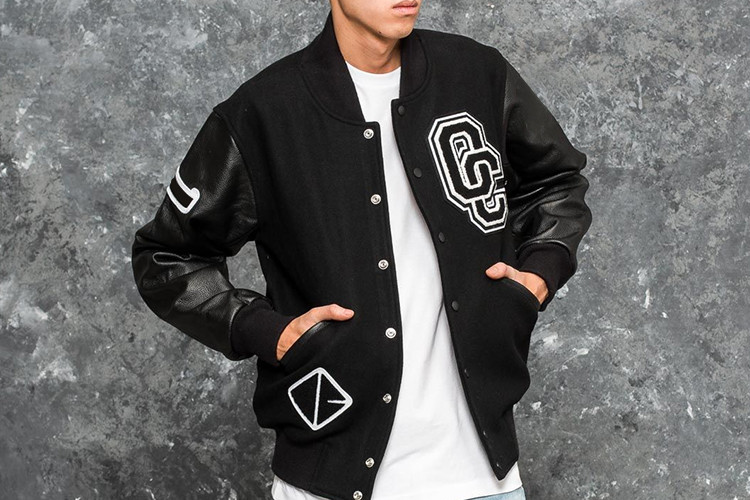
Top 8 Custom Varsity Jacket Manufacturers in China: A Buyer's Evaluation Guide
Every season, hundreds of brands search for the top custom varsity jacket manufacturers in China and land on a list of company names with no way to check whether those companies actually make letterman jackets. The truth is that a varsity jacket is one of the hardest outerwear styles to produce well. It combines wool or melton body panels, contrast leather or synthetic sleeves, heavy rib-knit collar and cuffs, snap closures, and a chenille or embroidered patch that must be positioned by hand and measured by eye. A factory that produces excellent puffer jackets can still fail completely on a varsity jacket, because the skill set is different. This guide explains the eight manufacturer profiles you will actually meet in China, what each one can and cannot do, and the specification, certification, sampling and payment details you should confirm before you send a deposit.
Table of Contents
What a Custom Varsity Jacket Manufacturer Actually Builds
A real varsity jacket manufacturer is not simply a sewing line that accepts a tech pack. The style requires a specific chain of operations, and each link can break independently. Before you compare factory names, understand what you are buying: a development partner that can grade a body block, source matching trims, produce a patch that reads cleanly at three metres, and repeat the same fit across four size runs without drift.
Pattern and Fit
- Body block development for men, women and youth
- Drop-shoulder and set-in sleeve variants
- Size grading by market (US, EU, UK, AU)
- Fit corrections after sample review
Panel Cutting
- Melton wool, wool blend and poly-wool bodies
- Leather, PU and synthetic sleeve panels
- Cutting allowance control on heavy fabrics
- Colour consistency across multiple rolls
Branding
- Chenille and embroidered patches
- Direct embroidery on chest and back
- Woven labels, hang tags and size tags
- Custom packaging and polybag branding
Assembly and Trims
- Heavy rib collar, cuffs and waistband
- Snap, zipper and button plackets
- Quilted or satin linings
- Pockets, storm flaps and inner pockets
The commercial model the factory uses matters just as much as its machines. The table below separates the three models that are routinely confused with each other.
| Model | Who Owns the Design | Best For | Typical Starting Point |
|---|---|---|---|
| OEM | You own the design and tech pack | Brands with an existing varsity block | Pattern grading and bulk production |
| ODM | Factory contributes the design | Startups and licensing programs | Existing blocks adapted to your branding |
| Private Label | You own the brand, factory owns the block | Retail and e-commerce labels | Trim, patch and label changes only |
If you are unsure which model fits your project, the OEM and ODM service overview explains how development responsibility is split in each case, and our custom varsity jacket page shows the finished construction.
The 8 Manufacturer Profiles You Will Meet in China
The eight profiles below are the business types you will encounter when you request quotations for a varsity jacket program. They are not a ranking and they are not a list of company names. Every profile can be the right answer for a specific order size, timeline and price point. Match the profile to your program before you match the price.
1. The Integrated Varsity Specialist
This factory runs the full chain in one facility: pattern, cutting, patch production, embroidery, assembly, pressing and packing. It usually holds ISO 9001 and a social compliance audit such as BSCI or SEDEX, and it can supply OEKO-TEX documentation for the fabrics it uses. The advantage is accountability. When a patch is miss-positioned, one team owns the problem. The trade-off is that integrated specialists often have a higher opening price than a pure assembly workshop, because their overhead includes the patch and embroidery departments. This profile suits brands running repeated varsity programs in multiple colourways and school or team accounts that need consistent fit across sizes.
2. The Chenille and Letterman Patch House
Some suppliers exist primarily to make patches, and only secondarily to assemble garments. Their strength is artwork translation: they can take a low-resolution school logo and return a chenille patch with clean edges, correct letter spacing and a felt or twill background that does not pucker. Their weakness is garment engineering. If you buy patches from a patch house and garments elsewhere, you own the risk that the patch placement, backing and stitch count do not match the jacket body. This profile works well for brands that already have a trusted sewing partner and only need the branding element upgraded.
3. The Wool and Melton Fabric Mill With a Sewing Floor
Several Chinese mills weave melton and wool blends for varsity bodies and then operate a sewing division to capture more of the value chain. Buying here can secure fabric continuity, which matters if your program runs for several seasons and you need the same hand feel and shade. The risk is a narrow trim and hardware range, because the mill is focused on fabric rather than on trims. Ask directly who supplies the rib-knit, the snaps and the lining, and confirm the trim suppliers are stable rather than opportunistic.
4. The Leather and Sleeve Panel Specialist
Varsity jackets typically pair a wool body with leather or synthetic sleeves, and some factories specialise in the sleeve panel. Their skill is in matching the sleeve weight to the body weight so the jacket hangs correctly instead of twisting at the shoulder seam. Genuine leather sleeves raise cost, duty classification and care requirements, while PU and synthetic sleeves reduce cost and simplify compliance with animal-material policies. This profile is valuable when your design uses three-panel or contrast sleeves, but you should confirm the factory can also cut and assemble the body panels, otherwise you are coordinating two factories.
5. The Knit and Ribbing Specialist
Collar, cuffs and waistband are the parts of a varsity jacket that fail first. A knit specialist produces rib with the correct elasticity, recovery and stripe alignment, and can match a contrast colourway exactly to the body. Factories that buy rib from an open market often accept whatever elasticity is available that month, which is why some jackets develop loose cuffs after two washes. If your design uses two or three contrast colours in the rib, this profile deserves a serious quote even if the price is slightly higher.
6. The Blanks and Stock Program Supplier
These suppliers hold finished, unbanded varsity jackets in stock and add your patch, embroidery and labels after the order is placed. The advantage is speed and no minimum on the body block, because the garment already exists. The limitation is control: the fabric quality, fit and colour are fixed by whatever the supplier stocked, and a stock program rarely supports a custom body length, a women-specific block or a unusual sleeve treatment. Use this profile for fast market tests and pop-up collections, not for a signature fit you intend to own for years.
7. The Export Trading Wholesaler
A trading wholesaler does not sew. It aggregates factories, handles documentation, consolidates shipments and often offers the smoothest English-language communication. This can be genuinely useful for a first order into a new market, especially when you need one invoice covering varsity jackets, hoodies and accessories from several production sites. The risk is visibility. When a defect appears, the wholesaler must negotiate with the actual factory, and your leverage is indirect. If you work with a trading wholesaler, insist on knowing the production site and, where possible, request a third-party inspection at that site.
8. The Full-Package ODM Design House
An ODM design house sells the design as well as the production. You arrive with a brand concept, a target retail price and a market position; the house proposes a varsity block, a colourway range and a trim story, then manufactures it. This removes the need for an in-house technical designer, which is decisive for founders without apparel experience. The trade-off is originality. ODM blocks are reused across clients, so two brands buying the same off-the-shelf block can end up with near-identical garments unless the trim, patch and colour detailing are pushed hard.
Where Ginwen Fits
Ginwen operates as an integrated varsity and outerwear manufacturer with in-house pattern, cutting, patch, embroidery and assembly capacity. Varsity programs start at an MOQ of 50 pcs per style, counted by style and colourway with sizes mixed inside that quantity, which keeps the entry point practical for a first season. Sampling runs 7 to 14 working days, bulk production runs 25 to 40 working days after sample approval, and sample fees of USD 50 to 200 are credited against the bulk order. If you want to see how a specific specification would be produced, you can send the technical details and we will respond with a feasibility note, or review the women's custom varsity jacket build for a women-specific block.
Construction Specs That Decide Quality
Two quotes for the same varsity jacket can differ by forty per cent while looking identical on paper. The difference is almost always hidden in five specification decisions. Fix these before you compare prices.
| Specification | Cheap Version | Durable Version | What It Changes |
|---|---|---|---|
| Body fabric | Low wool-content poly blend | Melton with higher wool content | Warmth, drape, pilling after wear |
| Rib quality | Thin two-by-two rib, low recovery | Dense rib with elastic recovery | Cuff and waistband shape over time |
| Patch method | Printed twill applique | Chenille with felt background | Depth, perceived value, wash life |
| Sleeve material | Thin PU with visible backing | Thicker PU or genuine leather | Hand feel, durability, price tier |
| Lining | Unlined or basic taffeta | Quilted or satin-finished lining | Comfort, slipping, insulation option |
Patch, Embroidery and Branding Capability
Varsity jackets are a branding-led product. The patch and the sleeve embroidery are what customers photograph and post, so branding capability deserves its own evaluation step. Three questions separate a real capability from a promise.
Is Patch Production In-House?
Factories that produce chenille patches internally control lead time, colour matching and rework speed. Factories that outsource patches inherit a second timeline that you cannot see or influence.
Can They Digitise Artwork?
Ask what happens when you supply a low-resolution logo. A capable supplier will re-draw and confirm the artwork proof before stitch-out, rather than running the file as received.
Who Sets Patch Placement?
Placement tolerance is the most common complaint on delivered varsity jackets. Ask for the placement measurement in millimetres and the method used to hold it constant across a run.
Are Labels and Tags Covered?
Woven main labels, size tags, care labels and hang tags should be quoted together with the garment so that the finished product arrives retail ready.
If your program includes a down-filled or insulated liner beneath the varsity shell, the down portion introduces its own sourcing questions. In that case the same supplier should be able to demonstrate RDS documentation for the down component alongside OEKO-TEX documentation for the shell fabrics, because the certification evidence must cover the actual production site.
MOQ, Sampling and Payment: The 9-Month Standard Terms
Minimum order quantity is the single most misunderstood number in varsity sourcing. A quoted MOQ can mean per style, per colourway, per size or per shipment, and the difference can triple your first order. Ask for the definition in writing before you plan your buy.
| Term | Standard for a Custom Varsity Program |
|---|---|
| Minimum order quantity | 50 pcs per style, counted by style and colourway, sizes mixed inside the quantity |
| Sample development | 7 to 14 working days from confirmed artwork and specification |
| Sample fee | USD 50 to 200 per style depending on patch complexity, credited against the bulk order |
| Bulk production | 25 to 40 working days after sample approval and deposit |
| Payment terms | 30% deposit to start, 70% balance before shipment |
Payment structure is equally important. A 30% deposit with a 70% balance before shipment keeps the supplier funded for materials while giving you a final inspection point before the balance leaves your account. If a supplier demands full payment before production, or asks for a deposit above 50%, treat it as a risk signal and request a reference from a comparable brand.
Production Timeline From Artwork to Delivered Bulk
A varsity jacket program has one extra stage that most outerwear styles do not: patch development. Plan for it explicitly, because patch proofing can add a week if the artwork needs re-drawing.
Brief and Quotation
Share the tech pack, fabric weight, patch artwork, colourways and target quantity. A complete brief usually returns a costed quotation in one to three working days.
Artwork and Patch Proof
The patch is digitised and a digital proof is approved before stitch-out. This step protects you from a bulk run built on the wrong logo version.
Sample Development
7 to 14 working days. You receive a finished sample with the actual patch, rib and sleeve materials, not a substitute.
Sample Approval and Deposit
Confirm fit, placement and colour in writing, then release the 30% deposit so materials can be booked.
Bulk Production
25 to 40 working days. Cutting, patch production, assembly and pressing run in sequence, with in-line quality checks at each stage.
Final Inspection and Shipping
Pre-shipment inspection against the approved sample, then shipment after the 70% balance is settled.
Total estimated timeline: 8 to 12 weeks from confirmed brief to delivered bulk, depending on patch complexity and shipping method.
Certifications and Documents to Collect Before You Commit
Certification documents are only useful if they cover the site that will produce your order. A group-level certificate issued to a head office or a different factory does not protect you. Request the scope statement and confirm the production address appears in it.
ISO 9001
Quality management certification. It indicates documented procedures for inspection, corrective action and traceability, which is what makes a defect claim enforceable.
BSCI or SEDEX
Social compliance audit covering labour conditions. Increasingly requested by retail chains and marketplaces before they will list a supplier's goods.
OEKO-TEX Standard 100
Confirms fabrics, linings and trims are tested for harmful substances. It is the most common fabric-level requirement for European buyers.
RDS Where Applicable
Responsible Down Standard applies only when the style contains a down-filled component, such as an insulated liner or a layered program. If down is not used, ask for the shell and lining certifications instead.
Quality Control Gates for Varsity Jacket Bulk Orders
Patch placement, rib recovery and sleeve alignment are the three defects that cause the most chargebacks on varsity programs. Build a gate for each rather than relying on a single final inspection.
| Gate | When | What to Check |
|---|---|---|
| Fabric and trim receipt | Before cutting | Fabric weight, shade continuity, rib elasticity, snap function |
| Cut panel audit | After cutting | Panel dimensions against the graded pattern, grain direction, ply alignment |
| Patch and embroidery check | Before assembly | Stitch density, colour accuracy, edge cleanliness, measured placement |
| In-line assembly check | During sewing | Sleeve alignment, seam strength, lining attachment, pocket position |
| Pre-shipment inspection | Before packing | AQL sampling, measurement tolerance, labelling, packing method |
Ask for the inspection report format at quotation stage. A supplier that can describe its sampling plan and tolerance table in advance is usually the same supplier that will accept a claim later without argument.
[IMAGE_PLACEHOLDER] English prompt: quality inspector measuring patch placement in millimetres on a varsity jacket panel with a steel ruler before assemblyHow to Compare Varsity Jacket Quotes Fairly
Price comparison fails when the underlying scope differs. Normalise five cost drivers before you rank the quotes, otherwise the cheapest number will be the cheapest garment rather than the best value.
- Fabric weight and composition. A 550 gsm melton body is not the same product as a light poly blend, and the difference dominates the unit cost.
- Patch specification. Chenille with a felt background, multi-colour twill, direct embroidery and printed applique sit at very different price points.
- Sleeve material. Genuine leather, thick PU and thin synthetic panels carry different costs and different care instructions.
- Rib and hardware. Dense recovery rib, custom snaps and branded zipper pulls add cost but extend garment life.
- Inspection and documentation. Third-party inspection, test reports and certificate maintenance are real costs that some quotes quietly omit.
Once the scope is normalised, compare lead time, communication speed and willingness to accept a pre-shipment inspection. Those three factors predict the experience of your second and third order far better than the first invoice will.
Common Mistakes When Hiring a Varsity Jacket Manufacturer
Buying on Price Alone
- Ignoring fabric weight in the comparison
- Accepting an undefined MOQ
- Skipping the patch proof stage
Planning Without Patch Time
- Assuming patch work starts with sewing
- Booking launch dates before sample approval
- Leaving no buffer for artwork redraw
Skipping the Tech Pack
- Briefing by reference photo only
- No measurement table for size runs
- No written colourway specification
No Final Inspection
- Paying the balance before checking goods
- No documented AQL sampling plan
- No photos of the packed cartons
If you want a second opinion on a supplier you are already talking to, the checks in this guide can be applied as a scorecard. Anything you cannot confirm in writing should be treated as unverified. Our company background and product catalogue show how we structure our own programs, and the manufacturing guides section covers adjacent styles such as puffer and down jackets if your range extends beyond varsity.
Frequently Asked Questions About Custom Varsity Jacket Manufacturers
What is the minimum order quantity for a custom varsity jacket?
For a fully custom program the usual starting point is 50 pcs per style, counted by style and colourway with sizes mixed inside that quantity. Stock or blanks programs can start lower because the body garment already exists, but they limit how much you can change the fit and fabric.
How long does sampling take?
Sample development typically runs 7 to 14 working days after the artwork proof and specification are confirmed. Complex multi-colour chenille patches or genuine leather sleeves can push toward the longer end of that range.
What does a sample cost?
Sample fees usually fall between USD 50 and 200 per style depending on patch complexity and material usage. The fee is normally credited against the bulk order, so the sample is effectively free once you proceed.
How long is bulk production?
Bulk production runs 25 to 40 working days after sample approval and deposit receipt. Add shipping transit time on top of that, and plan for a full 8 to 12 weeks from brief to delivered goods.
What payment terms should I expect?
The standard structure is 30% deposit to begin material booking and a 70% balance before shipment. Requests for full payment in advance, or deposits above 50%, deserve extra scrutiny.
Can I order a women-specific varsity block?
Yes. A women-specific block adjusts shoulder width, body length, waist shaping and sleeve taper rather than simply shrinking a men's pattern. If your range includes women's styles, confirm the supplier holds a separate women's block and can show a graded size set.
Can one factory make both varsity and puffer jackets?
Some integrated manufacturers produce both, but the construction skills differ. Varsity work depends on patch, rib and panel assembly, while puffer work depends on baffle construction, fill control and down-proof shells. Evaluate the factory separately on each category rather than assuming one capability transfers.
Which certifications should I verify before paying a deposit?
Ask for ISO 9001, a social compliance audit such as BSCI or SEDEX, and OEKO-TEX documentation for the fabrics in your specification. If the style includes a down component, add RDS documentation for that down. In every case, confirm the certificate scope names the factory that will produce your order.
[IMAGE_PLACEHOLDER] English prompt: rows of finished varsity jackets in mixed colourways hanging on a rack in the packing area of a custom outerwear factory
The top custom varsity jacket manufacturers in China are not distinguished by their company names but by whether their profile matches your program, whether their specification is written down, and whether their certification scope covers the factory floor your order will run on. Use the eight profiles to shortlist, the specification table to normalise quotes, and the quality gates to protect the run once it starts.
Ready to price a varsity program? Send your specs and artwork and we will return a feasibility note with MOQ, sampling time and lead time. You can also contact the production team directly, or start from the OEM and ODM service page if you need design support as well as manufacturing.