Factory Facts
Urban Style Puffer Jacket Production
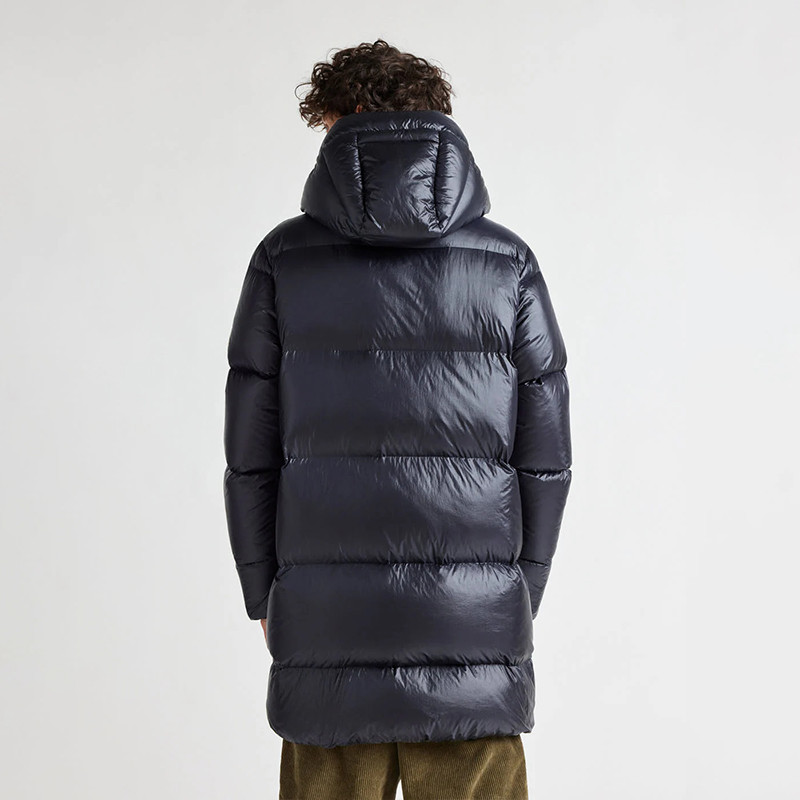
An urban style puffer jacket is produced by combining a streetwear-driven silhouette, a shell fabric with a matte or technical finish, an insulation system matched to city temperatures, and detail decisions such as oversized hoods, zippered pockets, and tonal or reflective trims. The production path runs through pattern and fit development, shell and insulation sourcing, sample sewing with wear testing, bulk cutting and sewing, filling, quality control, and packing, and the total lead time from sample approval to finished goods is 25 to 40 days at a jacket factory such as Ginwen, with sampling itself taking 7 to 14 days. This guide explains how urban puffer jackets are actually produced at a B2B factory in Dongguan, what design decisions change the manufacturing process, and what a brand needs to prepare before requesting a quotation.
What Defines an Urban Puffer Jacket
An urban puffer jacket is a padded jacket designed around city life rather than mountain use. Where a technical outdoor puffer prioritizes weight, packability, and alpine performance, an urban puffer prioritizes silhouette, fabric finish, and everyday function: a boxy or cropped shape, a matte or high-gloss shell, enough warmth for commutes between 0 and 10 degrees Celsius, and pockets positioned for phones, wallets, and transit cards. The category borrows heavily from streetwear, so details such as oversized hoods, dropped shoulders, tonal logo patches, and contrasting zipper tapes are common, and the fabric story is usually as important as the warmth story.
Urban puffers are produced across the full price spectrum, from fast-fashion styles at retail under 50 USD to premium streetwear drops above 400 USD, and the manufacturing differences are mostly in materials and finish quality rather than in the basic construction method. The garment structure itself is the same sewn-through or box-baffle puffer construction used for other padded jackets: an outer shell, an insulation layer, and a lining, joined by quilting lines that create the characteristic puffed channels. What changes between programs is the pattern work, the fabric selection, the hardware, and the level of QC, which is why the same factory can produce both value and premium urban lines on the same production floor.
For a brand, the practical implication is that the urban style decision should be made before sampling: the silhouette, shell finish, and detail package determine the bill of materials, the sewing complexity, and therefore the FOB price and lead time. A simple boxy matte puffer with two pockets and a standard hood is one of the fastest styles to produce, while a style with a waterproof membrane, custom hardware, and multi-panel quilting adds sewing time and material cost. Understanding which elements drive cost helps a brand brief the factory correctly on the first round and avoid expensive sample revisions.
50
Pieces MOQ per Style at Ginwen
7-14
Days for Sample Development
25-40
Days for Bulk Production
Silhouette and Fit Engineering
The silhouette is the first thing a buyer sees on an urban puffer, and it is also the first thing the factory pattern team works on. Urban puffer silhouettes fall into a few repeatable families, and each one changes the pattern, the measurement chart, and the sewing method. The table below shows the silhouettes most commonly produced for urban programs and what they mean for manufacturing.
| Silhouette | Key Pattern Features | Typical Fit | Production Notes |
|---|
| Boxy cropped | Straight side seams, short length at hip or above, wide shoulders | Relaxed, streetwear | Simple panels, fast sewing, low material waste |
| Oversized | Extra body width, dropped shoulder, extended sleeves | Very relaxed | Higher fabric consumption per piece, heavier fill weights |
| Slim street | Tapered waist, narrower sleeves, shorter drop | Fitted, modern | More seam shaping, more fitting rounds on the sample |
| Longline | Extended length to mid-thigh, straight or A-line cut | Relaxed to regular | Longer panels, more fill, higher unit cost |
| Cropped bomber | Ribbed or elastic hem and cuffs, short body | Cropped, sporty | Ribbing adds a sewing operation and trim sourcing |
Fit engineering starts with the measurement chart. European and North American brands usually supply their own size specifications or ask the factory to grade from an existing block, and the grading between sizes matters as much as the base size. An urban puffer that fits perfectly in size M but is boxy in the wrong places in sizes S and L will generate fit complaints and returns, so the pattern team checks the graded measurements before cutting the first sample. At Ginwen we confirm the measurement chart in writing before pattern work begins, because changing measurements after sampling means a new pattern and a new sample round, which adds days to the timeline.
Drop shoulder construction deserves special attention in urban programs. A true drop shoulder moves the shoulder seam down the arm, which changes how the sleeve is set and how the quilting lines meet at the shoulder. If the drop is large, the factory may need a two-piece sleeve with an elbow seam to prevent the fabric from pulling, and this adds a sewing operation. Cropped styles also require care with the hem finish: an urban cropped puffer with a straight hem needs a clean edge treatment such as binding or a hem facing, while a bomber-style cropped puffer uses ribbing, which is a separate trim with its own sourcing lead time.
Tip: Send the factory your target size chart and two reference images of the silhouette you want, one front and one back. Reference images communicate fit intent faster than measurements alone, and they help the pattern team avoid a first sample that is technically correct but visually wrong for the streetwear market.
Shell Fabrics and Finishes
The shell is the most visible material decision in an urban puffer program, and it is the largest single cost driver after insulation. Urban programs use a narrower fabric palette than outdoor programs because the priority is look and hand feel rather than alpine performance, but the technical requirements are still real: the fabric must be down-proof or fiber-proof, it must take the chosen finish, and it must survive city wear. The table below lists the shell options we produce most often for urban puffer programs.
| Shell Fabric | Weight Range | Finish Options | Best For |
|---|
| Matte nylon 20D-40D | 60-110 gsm | DWR, matte coating | Everyday urban puffers, clean streetwear look |
| High-gloss nylon | 70-120 gsm | Gloss laminate or coating | Statement styles, reflective streetwear |
| Recycled nylon | 70-110 gsm | DWR, matte or semi-gloss | Sustainable brand programs, EU and US retail |
| Polyester twill | 110-160 gsm | Soft touch, peached | Quiet luxury, less shiny urban looks |
| Cotton-nylon blend | 130-180 gsm | Waxed or matte | Premium heritage streetwear, heavier weight |
| Ripstop nylon with membrane | 90-140 gsm | Waterproof laminate, taped seams | All-weather urban puffers |
Matte nylon dominates urban production because it reads as modern and wearable, and it hides minor surface wrinkles better than gloss. High-gloss nylon is the opposite: it creates the classic shiny puffer look that drives a large share of streetwear sales, but gloss surfaces show creases, and the coating must be applied carefully so it does not crack at the seams during quilting. Recycled nylon is increasingly standard for urban programs sold in Europe because buyers and retailers expect a sustainability story, and recycled face fabrics are now widely available at comparable prices to virgin nylon at the weights urban programs use.
Finish selection affects both appearance and production. A DWR treatment is the default for urban puffers because light rain and drizzle are part of city life, and it is applied at the mill or by the factory's finishing partner before cutting. Heavier finishes such as PU coating add water resistance and a more structured hand feel but also add stiffness, which can change how the quilting lies. Before bulk production, the factory runs a small finishing test on the actual shell so the final look and drape match the approved sample, because a fabric change between sample and bulk is the most common source of color and hand-feel complaints in jacket programs.
Color and finish caution: Gloss coatings and laminated membranes cannot be re-dyed after production. If the brand changes the color after the fabric is coated, the fabric must be re-purchased, which adds weeks and cost. Lock the shell color and finish before fabric is ordered, and approve a physical color swatch, not only a digital image.
Insulation and Warmth Engineering
Urban puffers are insulated with either down or synthetic fiber, and the choice drives warmth, price, and the brand story. Down offers the best warmth-to-weight ratio and the most compressible pack, while synthetic insulation keeps some warmth when wet, is easier to clean, avoids animal-derived materials, and costs less per garment. Hybrid programs that use down in the body and synthetic in the hood, sleeves, or collar are common in urban lines because they balance warmth, cost, and washability.
Down Insulation
650 to 750 fill power duck or goose down is the standard range for urban programs. Fill weight typically runs 100 to 200 grams for city temperatures around 0 to 10 degrees Celsius, and RDS certification is expected for EU and US retail programs.
Synthetic Fiber
Polyester battings and hollow-fiber fills provide dependable warmth at lower cost with easier care. Modern high-loft synthetics approach down in warmth-to-weight, and recycled polyester versions support sustainability claims.
Hybrid Fill
Down in the core panels and synthetic in hood, sleeves, and collar. This keeps the body warm where it matters, cuts cost and weight, and makes the jacket machine-washable without the risk of down clumping in narrow sleeves.
Fill Weight Planning
Fill weight is specified in grams per size and locked on the approved sample. Under-filling is the fastest way to cut cost, so a responsible factory weighs the fill per panel during production and records it on the QC sheet.
Warmth engineering for urban puffers is about matching the insulation to the use case, not maximizing it. A commuter jacket worn for 30 minutes outdoors and then in a heated office needs less fill than a jacket worn all day outside, and too much fill makes the garment bulky, hot, and more expensive. Most urban programs settle on a fill weight that covers 0 to 10 degrees Celsius with a mid-layer, which keeps the jacket light enough for the streetwear silhouette while remaining genuinely warm. The fill power and fill weight are both stated on the specification sheet, and the factory uses the approved fill weight for every production piece.
Down-proofness is a production requirement, not a marketing feature. The shell and lining fabrics must be tight enough to hold the fill, and the quilting needle size and stitch density must be set so that down does not migrate through the needle holes over time. Factories verify this with a down-proof test on the fabric combination before bulk, and the test result is part of the pre-production approval. If the fabric fails, the lining is changed or a tighter construction is specified before the line starts, because once bulk sewing begins, fixing a down-proof problem means re-cutting fabric.
Urban Details: Hardware, Pockets and Trims
Details are where an urban puffer earns its price premium. The same basic puffer construction can be sold at very different retail prices depending on the zipper quality, the pocket design, the hood treatment, and the finishing of the trims. Urban programs typically specify a distinct detail package, and every detail has a manufacturing consequence. The checklist below covers the details we most often engineer for urban puffer programs.
- Zippers. Molded plastic zippers with chunky sliders create the streetwear look and are durable, while coil zippers are lighter and cheaper. Two-way zippers on longline styles allow sitting and bending. Zipper pullers are a common custom branding point, and custom pulls add a small tooling cost and lead time.
- Pockets. Urban programs favor zippered hand pockets over open patch pockets because they secure phones and wallets in crowds. An internal media pocket with a headphone or charging port hole is a differentiator that costs little to add. Pocket linings are often a contrasting color as a design detail.
- Hoods. Oversized hoods with cord locks are the signature urban detail, and a detachable hood adds a zipper or snap operation. Hood sizing must match the body proportions, so the hood pattern is developed with the body pattern, not separately.
- Trims and branding. Tonal rubber or PVC logo patches, embroidered logos, reflective piping, and contrast binding are the usual branding tools. Embroidery is the most durable option; heat-transfer logos are cheapest but less durable on high-wear areas such as chest and sleeve.
- Hardware finishes. Matte black, gunmetal, and antique silver hardware are the standard urban finishes. Finish color must be approved on the actual zipper and snaps before bulk because the same finish can look different on different base metals.
- Cuffs and hem. Urban puffers use either a straight hem with binding, a drawcord hem, or ribbed cuffs. Drawcords add function and a design accent but add a cord-lock and stopper operation to the line.
Each detail on this list adds either material cost, sewing time, or both, so the detail package should be fixed before costing. A common mistake in urban programs is adding details during sampling without re-costing, which produces a pleasant surprise sample and an unpleasant final invoice. The professional workflow is to agree the full detail package, cost it, then sample it, so the sample price and the bulk price are consistent.
Production Process from Pattern to Bulk
Urban puffer production follows the same manufacturing milestones as any padded jacket program, and the timeline below is the standard flow we run at Ginwen. The total from first contact to delivery depends on sampling rounds, fabric sourcing, and shipping method, but the production windows themselves are fixed and predictable.
1
Consultation and Quotation
1 to 3 days. The brand shares the tech pack, target price, quantity, and timeline, and the factory returns a quotation with sample fee, MOQ, and production schedule.
2
Pattern and Sample Development
7 to 14 days. Pattern drafting, grading, material sourcing, sample sewing, and fit review. Urban silhouettes with drop shoulders or cropped lengths may need an extra pattern round.
3
Sample Approval
3 to 5 days. The brand reviews fit, materials, and details, requests adjustments, and approves the final sample before bulk.
4
Bulk Production
25 to 40 days. Fabric and trim confirmation, spreading and cutting, sewing, filling or quilting, and in-line QC checks at every station.
5
Final Inspection and Packing
2 to 4 days. AQL inspection, hang tags and labels, polybag packing, carton packing, and booking the shipment.
6
Shipping
Sea freight to Europe or North America typically runs 25 to 40 days, air freight 5 to 10 days, and express courier 3 to 7 days. Shipping method is chosen against the brand's launch date.
Total estimated timeline: 6 to 9 weeks from sample approval to delivery by sea, excluding sampling time.
Cutting and sewing are where the urban detail package shows up in labor cost. Quilting is done either before cutting, on the flat fabric, or after the panels are sewn, depending on the pattern. Most urban puffers are quilted on the flat shell before cutting because it is faster and produces cleaner channel lines, while styles with complex paneling are quilted on the finished panels. Filling is done by machine for down, with each baffle tube filled to the approved gram weight, and by inserting pre-cut batting for synthetic styles. Every filled piece is weighed and checked against the specification before the lining is closed.
Quality Control and Testing
Quality control for urban puffer programs is organized around checkpoints rather than a single final inspection. Each checkpoint catches a different class of defect, and together they protect the brand from the most common complaints in padded jackets: uneven filling, leaking down, crooked quilting, weak zippers, and size variation. The table below shows the inspection points we run on every urban puffer order.
| Checkpoint | What Is Checked | Defects Caught |
|---|
| Incoming material inspection | Shell color and finish, fabric weight, zipper and snap function, trim quality against approved samples | Wrong shade, off-spec fabric, weak hardware |
| Cutting check | Panel accuracy, grain direction, marker efficiency, notch alignment | Misaligned panels, wrong grain, fabric flaws in cut pieces |
| In-line sewing inspection | Stitch quality, seam allowance, quilting alignment, filling weight per panel | Crooked quilting, open seams, uneven fill, needle holes |
| Finishing inspection | Hood attachment, zipper operation, pocket function, trim placement, label placement | Puckered zippers, misaligned logos, faulty pockets |
| Final AQL inspection | Random sampling per AQL 2.5, measurement check against size chart, cleanliness and pressing | Size deviation, sewing defects, packaging issues |
| Packing check | Polybag and carton condition, quantity verification, carton marking, shipping mark accuracy | Short shipment, wrong labels, damaged cartons |
Beyond the sewing checkpoints, urban puffer programs normally include a small set of physical tests on the pre-production sample: a down-proof test, a zipper cycle test, a seam strength check, and a wash test where the brand plans machine washing. Color fastness testing is recommended for dark and saturated urban colors because city wear involves frequent contact with wet surfaces and other garments. Testing protocols are agreed at the sampling stage so the factory buys the right test materials and the results are available before bulk production starts.
Inspection note: If your brand works with a third-party inspection company, book the inspection before the goods are packed, not after. A final inspection on packed cartons can check quantity and packaging, but it cannot check fill weight, quilting alignment, or zipper function without unpacking the entire order. In-line inspections catch these issues while they are still cheap to fix.
MOQ, Sampling and Payment Terms
Urban puffer programs are accessible to brands of very different sizes, because the minimum order quantity at a flexible B2B factory is far lower than at a mass-production plant. The commercial terms below are the standard framework we work with at Ginwen, and they are the terms a brand should expect to discuss in the first quotation round.
Ginwen's standard terms: MOQ is 50 pieces per style. Sampling takes 7 to 14 days and the sample fee is USD 50 to 200, fully deductible from the bulk order. Bulk production takes 25 to 40 days. Payment is 30% deposit to confirm the order and 70% balance before shipment. We hold ISO 9001, BSCI, RDS, and OEKO-TEX certifications, and we support OEM, ODM, and private label programs.
The MOQ of 50 pieces per style matters for launch strategy. A brand can test two or three styles at 50 to 100 pieces each in one season, learn which silhouette and color sell, and then reorder the winning styles in larger volume with the same pattern and materials. This is the standard private label path for urban puffer brands: small first orders to validate, larger reorders to build margin. Because the pattern and sample are already approved, reorders skip the sampling stage and go straight to production, which shortens the second lead time considerably.
Payment terms are standard for the industry: a 30% deposit confirms the order and covers fabric and trim purchasing, and the 70% balance is paid before shipment against the packing list. For first-time partners, some factories ask for the deposit to be confirmed before fabric is ordered, because fabric is the largest single cost in the order. The sample fee is deducted from the deposit or the balance on the first bulk order, which is why the sample fee is best understood as a reservation cost rather than a charge.
| Cost Factor | Typical Impact on FOB Price | How to Control It |
|---|
| Shell fabric grade | Recycled and technical shells cost more than basic nylon | Match the shell to the retail price point before costing |
| Insulation type and fill weight | Down costs more than synthetic; heavier fill costs more | Lock fill weight per size on the approved sample |
| Hardware and trims | Custom molded zippers and pulls add cost and lead time | Use standard hardware for the first order, customize on reorders |
| Quilting and panel complexity | Complex paneling adds sewing minutes per piece | Simplify panel count while keeping the silhouette |
| Order quantity | Larger quantities reduce unit cost through fabric and labor efficiency | Consolidate colors and sizes to fewer styles |
How to Brief a Factory for an Urban Puffer
A clear brief is the difference between a two-round sampling process and a five-round one. Factories build samples from the information the brand provides, and missing information means assumptions, and assumptions mean revisions. The list below is the information set that lets a factory produce the right urban puffer on the first attempt.
- Tech pack or specification sheet. Include flat sketches, measurements or a size chart, fabric references, and color codes. A simple illustrated PDF is enough; it does not need to be a professional-grade tech pack.
- Reference images. Front and back photos of the silhouette you want, plus close-ups of the hood, pockets, and trims. Reference images communicate the streetwear intent that words cannot.
- Material direction. Shell type and finish, insulation type and target fill weight, lining preference, and hardware finish. If you are unsure, state the target retail price and let the factory propose a material package.
- Target price and quantity. The target FOB price and the order quantity per style per color. These two numbers determine which material and construction options are realistic.
- Timeline. The launch date and the required delivery date. This decides the shipping method and flags any sampling shortcuts that are possible.
- Branding and compliance. Logo placement and method, label and hang tag requirements, packaging needs, and any certifications your market requires such as RDS or OEKO-TEX.
Once the brief is complete, the factory returns a quotation with sample fee, MOQ, and production schedule, and the sampling stage begins. At Ginwen we respond to complete briefs within 24 hours with a detailed quotation, and we keep the brand informed at each milestone: pattern complete, sample sewn, sample shipped. The communication rhythm matters as much as the sewing quality, because urban programs often operate on tight seasonal calendars.
Frequently Asked Questions
What is the MOQ for an urban puffer jacket program?
Our MOQ is 50 pieces per style, which lets emerging streetwear brands test a full small collection in one season. Mixed colors are normally allowed within the 50-piece style minimum, and reorders of an approved style can be produced at any quantity above the same minimum.
How long does sampling take for an urban puffer?
Sample development takes 7 to 14 days from pattern start to sample completion, depending on whether materials need to be sourced and how many adjustment rounds are needed. The sample fee is USD 50 to 200 and is deducted from the first bulk order.
Can you produce an urban puffer with recycled materials?
Yes. Recycled nylon shells, recycled polyester insulation, and recycled trims are all available, and we hold OEKO-TEX certification on the materials we use. Recycled fabrics are specified in the material direction stage so the sample is built with the final bulk fabric.
Do you support OEM, ODM, and private label?
We support all three. OEM produces your existing design to your specification, ODM develops the design from concept using our patterns and expertise, and private label adds your branding, packaging, and labeling to either path.
How do I get a quotation for an urban puffer program?
Send us your requirements with the design, quantity, target price, and timeline. We respond within 24 hours with a detailed quotation including sample fee, MOQ, and production schedule.
Urban style puffer production is a repeatable, well-understood manufacturing process once the silhouette, shell, insulation, and detail package are defined. The factory decisions that matter are material selection, pattern engineering for the streetwear fit, fill weight control, and checkpoint-based QC, and the commercial framework of MOQ 50 pieces per style, sampling in 7 to 14 days, bulk in 25 to 40 days, and a deductible sample fee makes the category accessible to brands of any size.
Ready to produce your urban puffer collection? Contact our team or submit your requirements for a free consultation. You can also browse our product catalog or read more manufacturing guides on our blog.