Waterfowl Down vs Goose Down: Species, Loft and Cost
- Share
- publisher
- Ginwen Production Team
- Issue Time
- Nov 14,2026
Summary
Waterfowl down covers both duck and goose down, so species, loft and cost must be specified separately. Goose clusters reach higher fill power more easily, while well-graded duck fill delivers comparable warmth at 600-700 fill power for less. This guide covers cluster anatomy, EN 12130 fill power bands, odor and oil content limits, the species premium, a per-garment cost model, lot tests and a ten-line spec sheet. Ginwen terms: MOQ 50 pcs per style, sampling 7-14 days, bulk 25-40 days.
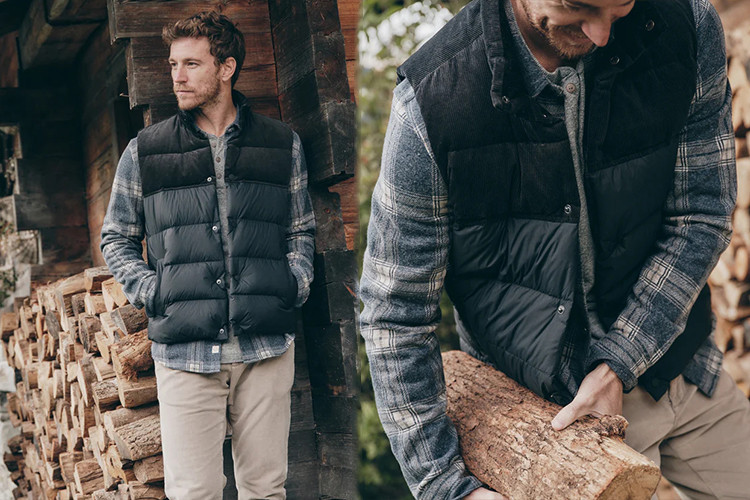
Waterfowl Down vs Goose Down: Species, Loft and Cost
Waterfowl down is an umbrella term that covers both duck down and goose down, so the label itself tells a buyer almost nothing about quality or price. The real decision sits in three places: the species behind the cluster, the loft that cluster can hold, and the procurement cost that follows from both. Goose down usually carries a premium because mature goose clusters tend to be larger and recover faster, but duck down can deliver the same fill power in a jacket at a lower material cost when the sorting and washing are done properly. This guide breaks the comparison down for brand owners, sourcing managers and founders who need to write a defensible fill specification and understand where each dollar goes. If you are still mapping the wider material system, start with our down jacket manufacturing guides and then come back to species selection.
Table of Contents
- What Waterfowl Down Means
- Loft and Fill Power
- Cluster Structure by Species
- Odor and Cleanliness
- Fill Power Bands and Price
- Where the Species Premium Goes
- The Commercial Case for Duck
- When Goose Earns Its Price
- Ratio and Composition Claims
- Origin, Traceability and Certification
- A Cost Model You Can Rebuild
- The Spec Sheet to Lock First
- Tests Buyers Should Require
- Common Buying Mistakes
- Frequently Asked Questions
What Waterfowl Down Actually Means in a Specification
In trade documents, waterfowl down refers to the under-plumage clusters collected from birds in the order Anseriformes, which includes geese and ducks. The term is useful for customs classification and for sustainability programs that treat both species under one welfare standard. It is not a quality grade. Two shipments labeled waterfowl down can differ by a factor of two in fill power and by a wide margin in cleanliness, simply because one was sorted and washed to a higher standard than the other.
Goose down comes from geese, most commonly European and Chinese grey and white geese raised for meat and foie gras byproducts. Duck down comes from ducks, including common domestic ducks and Muscovy. Both species produce clusters, which are the soft three-dimensional tufts that trap air. Both also produce feathers, the flat quills that add weight without insulation. Commercial fill is therefore always a blend of clusters and feathers, expressed as a ratio such as 90/10 or 80/20 by weight.
The species label matters to consumers, and that is exactly why it deserves a precise specification rather than a marketing phrase. A jacket described only as waterfowl down gives a buyer no way to compare it with a goose down product, and it gives a factory no clear target for sorting. When we quote a program, the fill line always names species, cluster ratio, fill power and test method, because those four values determine both performance and cost.
Loft Is the Number That Decides Warmth, Not the Species Name
Loft, reported as fill power, measures how much volume a fixed mass of down occupies under a defined load. In the European test method under EN 12130, the result is expressed in millimeters per thirty grams of down. In the US IDFB-linked method it is expressed in cubic inches per thirty grams. The two scales are not identical, so a specification must state which method produced the number. A fill power quoted without a method is a marketing figure, not a purchasing one.
Loft matters because warmth in a down garment comes from trapped air, not from the fiber mass itself. Higher loft means fewer grams of down are needed to fill the same baffle volume, which reduces weight and often improves packability. That is why a 700 fill power jacket can weigh less than a 550 fill power jacket with the same warmth target, and why high-loft down commands a disproportionate price at the raw material stage.
Species influences loft because mature geese generally produce larger clusters with more rigid nodes, and larger clusters tend to test higher. But species is not destiny. Sorting, grading and blending decide the final number far more than the bird does. A carefully graded duck down can reach the 700 range, while an unsorted goose batch can fall into the low 500s. Buyers who fixate on the species word while ignoring the test report are paying for a story rather than a performance specification.
Cluster Structure: How Goose and Duck Differ at Fiber Level
A down cluster is a small spherical structure with a central quill point and dozens of barbs radiating outward, each barb carrying barbicels that interlock with neighbors. That geometry is what springs back after compression. The difference between species shows up in node density, barb length and the stiffness of the cluster spine. Goose clusters are typically larger in diameter and have a slightly more open structure, which gives them more air volume per gram and faster recovery after a long compression cycle.
Duck clusters are usually smaller but tend to be denser and firmer in the hand. In a baffled jacket this reads as a slightly more uniform fill with less migration inside wide chambers, and it is one reason duck down performs well in mid-weight everyday outerwear where the baffles are large and the fill weight is moderate. Goose down's advantage is strongest in weight-critical products: expedition parkas, ultralight sleeping bags, and packable jackets where every gram must earn its warmth.
Durability is a related but separate question. Compression recovery depends on cluster integrity, and integrity depends on how gently the down was washed, dried and handled. Over-drying makes clusters brittle. Under-drying leaves residual moisture that encourages clumping and odor. A well-processed duck down can outlast a poorly processed goose down by several seasons, which is why we ask suppliers for processing records rather than only species declarations.
Goose Clusters
Larger diameter, more open structure, higher air volume per gram, faster recovery. Best suited to high-loft and weight-critical programs where the shell budget can support a premium fill.
Duck Clusters
Smaller but denser and firmer, with reliable bulk supply and a lower and more stable raw material price. Strong choice for mid-loft commercial outerwear and volume programs.
Recovery Behavior
Both species recover well when correctly processed. Cluster integrity, not species alone, decides how a jacket looks after a season of compression in transit and storage.
Sorting Effect
Grading removes small clusters and feathers. The same raw species can be sold as two very different fill powers depending on how many passes it goes through.
Odor, Oil Content and the Cleaning Standard Nobody Checks
Odor is the most common complaint buyers raise about duck down, and it is almost always a processing issue rather than a species defect. Raw down carries natural oils and dust. Commercial processing uses repeated washing, rinsing and drying cycles, and the quality of those cycles is measurable. Oil and fat content is tested under EN 1163, and a low residual value is a better predictor of odor performance than the word duck on the label.
Ask for the oil and fat content figure, the number of wash cycles, the drying temperature profile and the odor assessment result. A supplier who cannot answer those questions is selling commodity fill, not an engineered material. High-loft down is especially sensitive, because aggressive drying to reach a loft target can leave the cluster brittle and the odor compounds bound to the fiber.
For North American and European brands, odor complaints surface in reviews and returns long after the shipment clears customs. That makes cleanliness a commercial risk item, not a hygiene detail. We specify a maximum oil and fat content and a documented odor rating before a bulk order is released, and we keep the test report with the lot number so a complaint can be traced back to a specific wash batch.
Fill Power Bands and How Price Moves Between Them
Fill power is sold in bands, usually at fifty-point intervals. The cost curve is not linear. Moving from 550 to 600 is a modest step, because the raw material pool is deep and sorting losses are small. Moving from 700 to 800 is a much larger step, because the share of clusters large enough to reach that band shrinks quickly and the number of sorting passes rises. Above 800, supply becomes seasonal and lot-specific, and the price can move substantially within a single buying cycle.
This is where the species question becomes a cost question. High bands are dominated by goose because goose clusters are more likely to reach them naturally. A buyer who specifies 800 fill power is implicitly specifying a goose-heavy supply chain, whether or not the label says goose. A buyer who specifies 650 fill power has real species flexibility and can often choose duck without a measurable performance penalty in a mid-weight jacket.
| Fill Power Band | Typical Species Mix | Cost Behavior | Best Fit |
|---|---|---|---|
| 550 to 600 | Duck-led, some goose | Stable, deep supply, low sorting loss | Everyday puffer, volume programs |
| 600 to 700 | Duck or goose, blend common | Moderate step-up, good availability | Mid-weight fashion and travel jackets |
| 700 to 800 | Goose-led | Sharper step-up, sorting-sensitive | Premium light down, packable styles |
| 800 and above | Goose, selected lots | Seasonal, lot-specific, volatile | Expedition, ultralight, luxury |
When a brand asks us to hit a price point, the first lever we discuss is the fill power band, not the species. Dropping one band often saves more than switching species within the same band, and it usually has a smaller effect on the consumer experience than the marketing copy suggests. The second lever is fill weight, which is a design decision the brand controls directly.
Where the Species Premium Actually Goes
Goose down costs more for several compounding reasons, and understanding them helps a buyer negotiate instead of simply accepting a number. The first driver is raw material scarcity at high loft. The second is sorting yield: to reach a high band, a processor discards a larger share of each incoming lot, and that loss is priced into the surviving kilograms. The third is supply geography and seasonality, since goose down production is tied to meat industry cycles that do not respond quickly to apparel demand.
The fourth driver is documentation. Traceable goose down with a full chain of custody, transaction certificates and farm-level records carries administrative and audit costs that commodity duck down does not. The fifth is lot size. A brand that needs two hundred kilograms of a specific high-loft goose lot pays a different price per kilogram than a brand that can absorb a full container of a standard duck lot.
There is also a hidden cost in change management. Switching from duck to goose mid-season forces new fill power testing, new bulk approval, and sometimes a baffle redesign because the loft behavior differs. Those engineering hours rarely appear in a quote comparison, but they are real. Our down jacket product range is built so that fill specifications can be swapped at the sampling stage rather than after bulk approval.
The Commercial Case for Duck Down
Duck down is the backbone of the global down apparel market for a simple reason: supply depth. Duck farming is widespread, processing capacity is broad, and the raw material is available in consistent lots across the year. That consistency matters to a production planner more than a small loft advantage, because a delayed fill delivery stops a whole line. When a brand runs a replenishment program with repeat orders every quarter, a fill specification that depends on seasonal goose lots is a scheduling risk.
Price stability is the second argument. Duck down moves with the general market, but it rarely spikes the way selected high-loft goose lots do. For a brand building a three-year cost model, that predictability is worth real money. The third argument is regulatory: duck down is fully covered by the Responsible Down Standard and by OEKO-TEX testing, so choosing duck does not weaken a compliance story. A duck program with RDS and OEKO-TEX documentation is acceptable to most European and North American retail buyers.
The practical limit is the loft ceiling. If a design requires 750 fill power or more in a thin baffle, duck becomes difficult and expensive to source, and the sorting yield advantage disappears. Below 700, duck is usually the rational commercial choice, and the consumer will not detect a difference in warmth when the fill weight and baffle design are correct.
Supply Depth
- Broad processing capacity
- Consistent lots across seasons
- Predictable replenishment timing
- Lower risk of line stoppage
Cost Predictability
- Lower raw material base
- Fewer seasonal spikes
- Stable three-year modeling
- Better margin at mid-loft
Compliance Fit
- Covered by RDS scope
- OEKO-TEX tested lots
- Audit-ready documentation
- Accepted by EU and US buyers
Performance Window
- Strong from 550 to 700 fill power
- Excellent in large baffles
- Firm hand and even fill
- Reliable compression recovery
When Goose Down Earns Its Premium
Goose down becomes the right answer when weight and pack volume are the product's core promise. An ultralight jacket that must compress into its own pocket, a mountaineering parka rated for extreme cold, or a travel layer sold on grams per warmth all benefit from the extra loft per gram that large goose clusters provide. In those products the fill is a performance component, and the premium is small relative to the retail price and the engineering effort around it.
The second case is premium positioning. Some markets expect the word goose, and a brand competing in a luxury or heritage segment may need it to support the story and the price architecture. That is a legitimate commercial reason, provided the specification is honest and the fill power is real. Selling goose-labeled down that tests at commodity loft is a reputational risk that no margin justifies.
The third case is a very cold climate program where the fill weight is already high and the brand wants to reduce total garment weight without changing the silhouette. Here goose down allows a thinner baffle or a lighter shell, which compounds the weight saving. Our team reviews these trade-offs during sampling, and we will say plainly when a goose specification is not earning its cost. You can send your fill requirements and we will model both species against your target retail price.
Ratio and Composition Claims: What 90/10 Really Promises
The ratio in a down specification describes the share of clusters versus feathers by weight, not by count. A 90/10 fill is ninety percent clusters and ten percent feathers by weight. Because feathers are heavier than clusters of the same volume, a ten percent feather share by weight still means a meaningful number of feathers in the mix. That is normal and permitted, but it must be declared correctly under the labeling rules that apply in the destination market.
Under EN 12934, down and feather compositions are designated in defined classes with tolerances, and the label must reflect the tested composition rather than the intended one. A lot sold as 90/10 can test slightly outside the nominal figure and still conform within tolerance, which is why the tolerance must be written into the purchase order. Without it, an inspector can reject a shipment that the supplier considers compliant, or accept one that underdelivers on cluster content.
There is also a performance consequence. Feather content lowers loft per gram and increases the risk of quill poke through lightweight shells. For a thin, high-loft fashion jacket, a 90/10 specification with a tight tolerance is worth more than a nominal 95/5 claim that arrives at 90/10. Buyers should test the received lot rather than trust the invoice, and should keep a retained sample from each shipment.
Origin, Traceability and the Certification Paper Trail
Traceability is now a purchasing requirement rather than a nice-to-have. The Responsible Down Standard provides chain-of-custody assurance from farm to finished product, and it covers both goose and duck. A valid claim requires more than a logo on a hangtag: the factory must hold a scope certificate, the down supplier must hold a transaction certificate for the specific lot, and the finished goods must be traceable through the production records.
OEKO-TEX Standard 100 addresses chemical safety of the fill and the shell, which is a separate question from animal welfare. ISO 9001 covers quality management at the factory level, and BSCI or an equivalent social audit covers labor conditions. A complete file for a European buyer usually contains all four, plus the fill power and composition test reports for the actual lot. We maintain ISO 9001, BSCI, RDS and OEKO-TEX documentation at our Dongguan facility and provide copies during supplier evaluation.
One detail buyers miss is scope. A certificate issued to a trading company does not automatically cover the factory that stitches the garment. Ask for the certificate holder name and the production site address, and check that they match the entity you are contracting with. This is the single most common documentation gap we see when a brand switches suppliers and inherits an old certificate pack.
A Procurement Cost Model You Can Rebuild
Most fill cost arguments go wrong because the parties compare a price per kilogram against a price per garment without connecting the two. A useful model starts from fill weight per garment and works outward. Multiply fill weight by fill cost per kilogram, add wastage from handling and baffle filling, then add the shell, lining, trims, labor, testing and freight. Only then does the species decision show its true effect on landed cost.
Fill weight is the variable with the largest leverage. A jacket with 120 grams of 650 fill power down may deliver the same warmth as one with 150 grams of 550 fill power, and the lighter option can be cheaper per garment even at a higher price per kilogram. That is the counterintuitive part of down sourcing: the more expensive material is sometimes the cheaper garment, because less of it is needed. Buyers who negotiate only on price per kilogram often pay more at the finished-goods level.
| Cost Line | What Drives It | Species Sensitivity | Buyer Lever |
|---|---|---|---|
| Raw down | Species, fill power band, lot size, season | High | Choose band before species |
| Sorting and grading | Target band, yield loss, number of passes | High | Accept a lower band for volume |
| Washing and drying | Oil and fat target, odor standard | Low | Fix a measurable cleanliness spec |
| Shell and lining | Denier, calendering, down-proof coating | None | Match shell to fill loft |
| Baffle construction | Baffle width, stitch type, seam sealing | Medium | Simplify baffle geometry |
| Testing and certification | Number of lots tested, audit scope | Medium | Test by lot, not by shipment |
| Freight and duty | Volume, destination, declared value | Medium | Consolidate shipments |
Run the model three times: once with duck at the target band, once with goose at the same band, and once with goose one band higher and a reduced fill weight. The third scenario is the one most brands never test, and it frequently produces the best warmth-to-cost ratio for a premium product. We build this comparison into every quotation so the decision is visible rather than assumed.
The Fill Spec Sheet to Lock Before You Request Quotes
A clear specification shortens sampling and prevents rework. The list below is the minimum we ask for before a fill quotation is meaningful. Without these values, a supplier is guessing, and a guess will be priced with a safety margin that you pay for.
- Species: goose, duck, or an explicitly permitted blend with percentages.
- Composition: cluster-to-feather ratio by weight, plus the tolerance band.
- Fill power: target value, test method, and the acceptable minimum for the received lot.
- Fill weight per garment by size, with a tolerance for filling loss.
- Cleanliness: maximum oil and fat content, plus an odor acceptance criterion.
- Traceability: certification scheme, scope holder, and transaction certificate requirement.
- Shell compatibility: denier and down-proof rating so the fill does not migrate.
- Baffle geometry: chamber width and stitch pattern, since both affect loft performance.
- Labeling: composition class and language requirements for the destination market.
- Documentation: test reports, certificate copies and retained samples per lot.
Once these ten lines are agreed, sampling becomes a verification exercise rather than a negotiation. Our standard sampling window is seven to fourteen days depending on shell development, and bulk production runs twenty-five to forty days after approval. Both windows assume the fill specification is fixed before the sample is cut.
Tests Buyers Should Require on the Received Lot
Testing is where a specification becomes enforceable. The table below lists the core tests, the standards they reference, and what each one actually proves. A supplier who resists lot-level testing is telling you something about their process control.
| Test | Reference | What It Proves | When to Run |
|---|---|---|---|
| Fill power | EN 12130 or IDFB method | Loft per unit mass under defined load | Every lot, before filling |
| Composition | EN 12934 designation | Cluster and feather shares by weight | Every lot, plus retained sample |
| Oil and fat content | EN 1163 | Residual fat linked to odor risk | Every lot for duck, periodic for goose |
| Odor assessment | Documented panel procedure | Perceived odor after conditioning | First lot and any process change |
| Chemical safety | OEKO-TEX Standard 100 | Absence of restricted substances | Annual scope plus lot spot checks |
| Traceability | RDS chain of custody | Farm-to-product custody continuity | Per shipment with transaction certificate |
Two practical notes. First, fill power testing is sensitive to conditioning, so the sample must be stabilized before measurement or the result will drift. Second, retain a sealed sample of every lot for at least one season. When a customer complaint arrives in month six, the retained sample is the only way to establish whether the fill met specification at shipment.
Six Buying Mistakes That Cost Real Money
Most fill problems we see in production repeat the same patterns. None of them require bad intent, only an incomplete specification or an assumption carried over from a previous supplier.
- Buying the species word instead of the test report. A goose label with no fill power report is weaker evidence than a duck lot with documented 650 loft.
- Ignoring the tolerance. A nominal 90/10 without a tolerance band invites either rejection or quiet underdelivery, depending on who inspects.
- Comparing price per kilogram only. Lower fill power means more grams per garment, which can erase the apparent saving at the finished-goods level.
- Specifying high loft for a low-loft design. Thin baffles cannot hold 800 fill power efficiently, so the premium is spent without a performance gain.
- Skipping cleanliness limits. Odor complaints surface after retail, when remediation is expensive and the brand carries the cost.
- Accepting a certificate that does not name the factory. Scope mismatch is the most common documentation failure in a supplier switch.
Sampling and Production Timeline for a Down Program
Once the fill specification is fixed, the timeline becomes predictable. Sampling covers pattern development, fill sourcing, baffle construction and fit review. We quote seven to fourteen days for sampling, with a sample fee of fifty to two hundred US dollars depending on complexity, deductible from the bulk order. Bulk production runs twenty-five to forty days after sample approval, with the exact window depending on shell availability and the number of colorways.
Payment terms are thirty percent deposit with seventy percent balance, and the minimum order is fifty pieces per style. That threshold matters for fill sourcing because down is bought in kilograms, not in garment units. A small program may share a lot with another style, which is efficient but requires planning so that both styles are filled from the same tested batch.
Fill Specification Review
One to three days. Species, ratio, fill power, cleanliness and certification scope confirmed in writing.
Sampling
Seven to fourteen days. Shell development, baffle construction, fill trial and fit review.
Sample Approval and Lot Booking
Three to seven days. Fill lot reserved and tested before bulk release.
Bulk Production
Twenty-five to forty days. Inline checks on fill weight, baffle integrity and shell penetration.
Final Inspection and Shipping
Lot test reports, retained samples and packing verification before dispatch.
Typical total: five to eight weeks from confirmed specification to ex-factory shipment, excluding ocean transit.
Frequently Asked Questions
Is waterfowl down the same as duck down?
No. Waterfowl down is an umbrella term covering both duck and goose down. Duck down is one subset of waterfowl down, and the label alone does not tell you which species or what fill power the fill actually delivers.
Is goose down always warmer than duck down?
Not automatically. Warmth depends on loft, fill weight and baffle design. Goose clusters tend to reach higher fill power more easily, but a well-graded duck fill at the same tested loft and the same fill weight performs comparably in a finished garment.
Why does duck down sometimes smell?
Odor usually comes from incomplete washing or drying rather than the species itself. Residual oil and fat, measured under EN 1163, is the practical indicator. Specify a maximum oil and fat content and a documented odor assessment rather than avoiding duck altogether.
What fill power should a mid-weight jacket use?
Most mid-weight commercial jackets sit between 600 and 700 fill power, where supply is deep, cost is stable and the performance is well matched to typical baffle dimensions. Higher bands make more sense in thin, weight-critical designs.
Can you produce a duck down program with RDS certification?
Yes. The Responsible Down Standard covers both duck and goose. The requirement is a valid scope certificate at the production site plus transaction certificates for the specific lots used in your order.
What is the minimum order for a custom down jacket?
Our minimum is fifty pieces per style, with sampling at seven to fourteen days and bulk production at twenty-five to forty days after approval. Fill lots are tested before filling so the received garments match the approved specification.
Waterfowl down versus goose down is not a binary quality choice. It is a sourcing decision that combines species, tested loft, cleanliness and cost per garment. Brands that specify all four get predictable performance and a defensible price; brands that specify only the species word get a story and a variable product.
If you are building a down program for the 2027 season, contact our team to review fill options against your target retail price, or submit your requirements for a quotation. You can also browse our down jacket range and read more technical guides on our manufacturing blog.