What Is Fill Power in Down Jackets? Complete Guide for Brands | Ginwen
- Share
- Issue Time
- Jun 28,2026
Summary
Learn what fill power means in down jackets and how it differs from fill weight and down ratio. Compare common fill-power levels, warmth, loft, cost, packability, testing, sampling, size grading, and quality control for custom down jacket manufacturing.
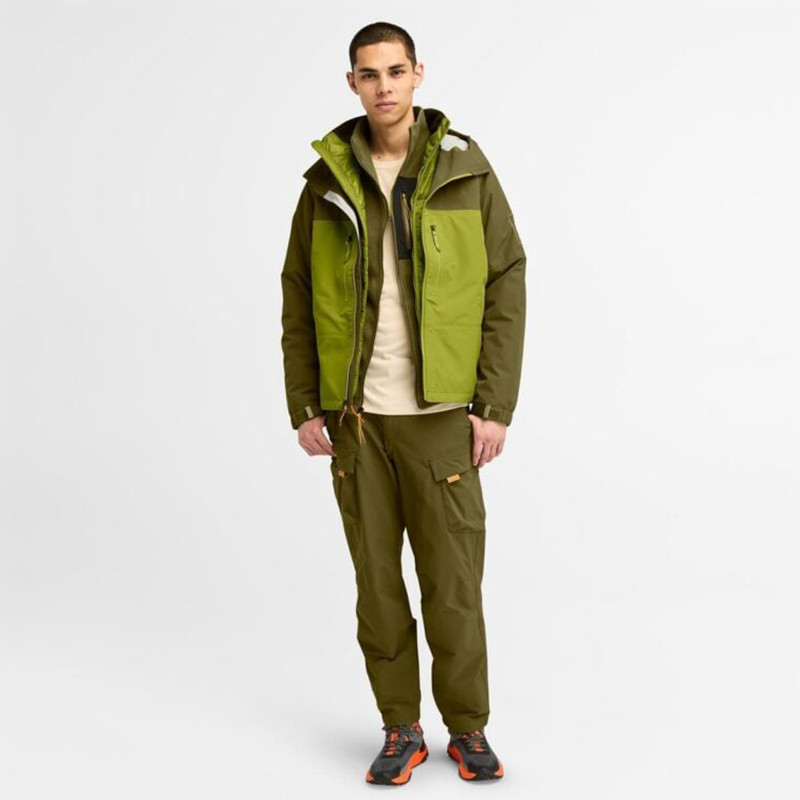
What Is Fill Power in Down Jackets?
Fill power is one of the most important—and most frequently misunderstood—specifications in down jacket manufacturing. It describes down loft efficiency, but it does not determine finished jacket warmth by itself.
Brands often assume that a jacket with a higher fill-power number will automatically be warmer than every jacket with a lower number. That is not necessarily true.
Fill power describes the loft or volume produced by a given quantity of down under standardized testing conditions. It helps indicate how efficiently the down can trap air relative to its weight.
However, fill power alone does not tell buyers how much down is inside the jacket, how the down is distributed, whether the jacket has cold spots, or whether the bulk order matches the approved sample.
Fill Power Does Not Tell Buyers
- How much down is inside the jacket
- How warm the finished garment will be
- How the down is distributed
- Whether the jacket has cold spots
- Whether the shell is wind resistant
- Whether the hood, collar, cuffs, and hem retain heat
- Whether the down is clean and properly processed
- Whether the filling is responsibly sourced
- Whether the bulk order matches the approved sample
To evaluate a down jacket properly, brands must consider fill power together with fill weight, down-to-feather ratio, down species, jacket construction, quilting, shell fabric, lining, fit, size grading, and quality control.
At Ginwen, we support custom down jackets, puffer jackets, padded jackets, winter coats, bomber jackets, and vests for fashion brands, startups, wholesalers, and private label businesses.
Ginwen’s MOQ usually starts from 50 pieces per style, sample development generally takes 7–14 days, and bulk production is typically arranged around 30 days after PP sample approval, depending on material availability, design complexity, order quantity, and production scheduling.
What Does Fill Power Mean?
Fill power measures how much space a specified weight of down occupies after it has been conditioned and tested using a recognized method.
In practical terms, fill power helps describe the down’s ability to expand, create loft, and trap insulating air.
A higher-fill-power down generally produces more loft for the same filling weight than a lower-fill-power down.
Higher Fill Power Can Support
- Lower garment weight
- Better compressibility
- Softer loft
- Stronger warmth-to-weight performance
- Premium product positioning
- Smaller packed volume
- Better recovery after compression
Fill power does not directly measure the finished jacket’s temperature rating.
Finished Warmth Also Depends On
- Total filling quantity
- Body and sleeve distribution
- Baffle construction
- Seam design
- Shell wind resistance
- Jacket length
- Hood and collar design
- Fit and layering allowance
- Moisture conditions
- User activity level
Simple Fill Power Example
Suppose two jackets use the same down fill weight.
Jacket A
Uses lower-fill-power down.
- May need more filling for similar loft
- May weigh more
- May have lower packability
Jacket B
Uses higher-fill-power down.
- May achieve greater loft with the same weight
- May feel lighter and softer
- May pack into a smaller volume
Now consider a different comparison.
Jacket C
Uses high-fill-power down but only a small fill weight.
Jacket D
Uses lower-fill-power down but a much larger fill weight.
Jacket D may be warmer because it contains more total insulating material.
Buyers should never compare finished jackets using fill power alone.
Fill Power vs Fill Weight vs Down Ratio
These three specifications answer different questions.
| Specification | What It Describes | Why It Matters |
|---|---|---|
| Fill Power | Loft efficiency of the down | Influences warmth-to-weight, compressibility, and premium positioning |
| Fill Weight | Total amount of down placed in the garment | Strongly influences actual warmth, volume, weight, and cost |
| Down-to-Feather Ratio | Proportion of down clusters and feathers | Influences loft, softness, weight, cost, and product claims |
A complete down jacket specification should clearly define all three.
What Is Fill Weight?
Fill weight is the total weight of down placed inside a jacket or a specific jacket section.
It May Be Recorded In
- Grams
- Ounces
- Weight per garment
- Weight per panel
- Weight by size
- Weight by body, sleeves, hood, or collar
Fill Weight Affects
- Finished warmth
- Jacket volume
- Finished garment weight
- Material cost
- Quilting appearance
- Baffle fullness
- Packability
- Size grading
- Production consistency
Two jackets can use the same 700-fill-power down but feel completely different if one contains substantially more down.
A lightweight jacket may use a relatively low fill weight to reduce bulk, while a cold-weather jacket may require more body filling, sleeve filling, hood insulation, and collar insulation.
What Is the Down-to-Feather Ratio?
The down-to-feather ratio indicates the declared proportion of down and feather content in the filling.
Common Specifications
- 70/30
- 80/20
- 90/10
- 95/5
A 90/10 specification generally indicates a filling intended to contain a higher proportion of down than feather under the applicable testing and labeling method.
Higher Down Content Often Supports
- Softer hand feel
- Better loft
- Lower weight
- Better compressibility
- Fewer noticeable feather quills
- Higher material cost
- Stronger premium positioning
Two 90/10 fillings can still differ in cluster size, fill power, cleanliness, odor, moisture content, species, processing quality, traceability, and bulk consistency.
Why Fill Power Is Not the Same as Warmth
Fill power measures loft efficiency, not complete garment warmth.
Warmth Depends On
- Fill power
- Fill weight
- Down distribution
- Baffle construction
- Shell wind resistance
- Jacket fit
- Jacket length
- Hood and collar insulation
- Cuff and hem closure
- Seam and zipper design
- Moisture exposure
- Layering underneath the jacket
Common Fill-Power Levels
Commercial down jackets are available across a wide range of fill-power specifications.
| Fill-Power Range | General Positioning | Common Product Direction |
|---|---|---|
| Below 550 | Entry-level or volume-focused | Basic fashion puffers and cost-sensitive programs |
| 550–600 | Commercial | Everyday winter jackets and standard private label outerwear |
| 600–650 | Mid-range | Fashion down jackets and general cold-weather products |
| 650–700 | Mid-to-premium | Lightweight winter jackets and better-quality puffers |
| 700–750 | Premium | Lightweight, packable, and higher-performance products |
| 750–800 | High premium | Technical, travel, and low-weight cold-weather jackets |
| 800+ | Specialized premium | High warmth-to-weight and advanced packable outerwear |
These categories are practical product-development guidelines rather than universal temperature ratings.
550 Fill Power
A 550-fill-power specification may be suitable for entry-level down jackets, commercial private label collections, fashion-focused puffers, heavier winter jackets, and cost-sensitive programs.
Advantages
- More accessible material cost
- Practical for commercial jackets
- Suitable when generous fill weight is acceptable
- Can create strong visual volume
Considerations
- More filling may be needed
- Finished garment weight may increase
- Packability may be lower
- Premium performance claims may be limited
600 Fill Power
A 600-fill-power down offers a practical balance for many commercial down jacket programs.
Suitable Applications
- Everyday down jackets
- Urban winter outerwear
- Private label collections
- Mid-market fashion brands
- Standard hooded down jackets
- Long winter coats
Advantages
- Balanced cost and loft
- Suitable for many jacket silhouettes
- Easier to position commercially
- Supports both fashion and functional designs
A low fill weight will not create a highly insulated jacket simply because the fill power is 600.
650 Fill Power
A 650-fill-power specification can support a mid-to-premium product position.
Suitable Applications
- Lightweight winter jackets
- Premium fashion puffers
- Travel jackets
- Urban outdoor collections
- Better-quality private label products
- Packable outerwear
Advantages
- Improved loft efficiency
- Lower weight compared with some lower grades
- Good balance between cost and performance
- Stronger premium perception
- Good compressibility
700 Fill Power
A 700-fill-power jacket is often positioned as a premium product.
Potential Applications
- Lightweight cold-weather jackets
- Premium travel outerwear
- Packable down jackets
- Higher-end fashion puffers
- Outdoor-inspired collections
- Low-weight winter jackets
Advantages
- Strong loft
- Good warmth-to-weight potential
- Better compressibility
- Soft volume
- Premium product story
Higher-quality down normally increases material cost and makes filling accuracy, testing, and supplier documentation more important.
800 Fill Power and Above
Down at 800 fill power and above is normally associated with premium or specialized products.
Suitable Products
- High-end technical jackets
- Lightweight expedition-inspired outerwear
- Premium packable jackets
- Travel products where weight is critical
- Specialist outdoor collections
- High-price winter products
Advantages
- Excellent loft efficiency
- Low weight
- Strong compressibility
- High-end market positioning
- Soft and responsive loft
Considerations
- Higher material cost
- Greater need for reliable testing
- Stronger supplier-control requirements
- More expensive sampling
- Greater importance of claim accuracy
600 vs 700 Fill Power
| Area | 600 Fill Power | 700 Fill Power |
|---|---|---|
| Loft Efficiency | Good | Higher |
| Weight for Similar Loft | Generally higher | Generally lower |
| Packability | Good | Better |
| Material Cost | Lower | Higher |
| Market Position | Commercial to mid-range | Premium |
| Fashion Use | Very suitable | Suitable for premium products |
| Technical Use | Limited to moderate | Stronger |
| Sample Cost | Lower | Higher |
| Customer Story | Everyday warmth | Lightweight premium warmth |
Choose 600 Fill Power When
- Cost control matters
- The jacket is fashion-led
- The garment can carry more filling weight
- Maximum packability is unnecessary
- The target customer expects everyday winter performance
Choose 700 Fill Power When
- Lower garment weight matters
- Packability is important
- Premium positioning is required
- The jacket is designed for travel or technical use
- The retail price supports higher material cost
700 vs 800 Fill Power
| Area | 700 Fill Power | 800 Fill Power |
|---|---|---|
| Product Position | Premium | High premium |
| Loft Efficiency | Strong | Very strong |
| Weight Reduction Potential | Good | Better |
| Packability | Very good | Excellent |
| Cost | High | Higher |
| Typical Use | Premium fashion and travel | Technical and specialist lightweight products |
| Consumer Benefit | Noticeable | Most valuable when the full jacket is optimized |
An 800-fill-power specification may provide limited commercial benefit in a heavy fashion coat with thick shell fabric, large metal trims, and oversized construction.
Fill Power and Jacket Cost
Fill power can significantly affect down cost.
Higher-Fill-Power Down Generally Requires
- Better-quality clusters
- More careful sorting
- More controlled processing
- Stronger supplier management
- More testing
- More detailed documentation
Cost Is Also Affected By
- Duck or goose source
- Down-to-feather ratio
- Total fill weight
- Responsible sourcing
- Recycled content
- Market availability
- Testing standard
- Down cleanliness
- Supplier MOQ
- Order quantity
- Seasonal market changes
A higher fill-power material may reduce the quantity needed to achieve a certain loft, but it does not automatically reduce the total jacket cost.
Duck Down vs Goose Down and Fill Power
Both duck and goose down can be supplied in different fill-power ranges.
Duck Down
Potential Advantages
- Widely available
- Commercially practical
- Suitable for many fashion jackets
- Good range of fill-power options
- More manageable cost
Possible Considerations
- Odor control
- Cluster size
- Supplier quality
- Traceability
- Testing consistency
Goose Down
Potential Advantages
- Strong premium perception
- Availability of high-loft grades
- Suitable for high-end products
- Often associated with lightweight performance
Possible Considerations
- Higher price
- Supplier availability
- Documentation requirements
- Unsupported marketing-claim risk
Brands should approve the tested material rather than selecting a filling based only on whether it is duck or goose.
How Fill Power Is Tested
Fill-power testing follows a controlled procedure rather than simply observing how fluffy the filling appears.
- Prepare and condition the sample
- Place a specified amount of filling into a measuring cylinder
- Allow the material to loft
- Apply a standardized measuring plate or load
- Record the volume occupied by the material
- Report the result according to the applicable test method
Different markets and test methods can use different conditioning or measurement procedures.
Brands and Suppliers Should Confirm
- Which test method applies
- Which laboratory performed the test
- Which units are used
- Whether the report applies to the actual bulk lot
- Whether retesting is required
- Which tolerance is acceptable
Why Test Methods Matter
A fill-power number without a stated testing basis can be misleading.
Results May Vary Because of Different
- Conditioning methods
- Humidity conditions
- Steaming procedures
- Sample preparation
- Cylinder dimensions
- Measurement timing
- Reporting systems
Questions to Ask
- What fill-power test method was used?
- Is the report from an independent laboratory?
- When was the material tested?
- Does the test apply to the sample or bulk lot?
- Can the supplier provide a current report?
- What tolerance will be accepted?
- Will the bulk down be retested?
Fill Power and Fill Weight Must Be Approved Together
A useful specification should not say only:
It should also define the down type, ratio, total fill weight, fill distribution, size grading, testing method, tolerance, and certification requirements.
Example Specification Structure
| Specification | Example Information |
|---|---|
| Filling Type | Duck down |
| Down Ratio | 90/10 |
| Fill Power | Target level confirmed by testing |
| Base-Size Fill Weight | Defined in grams |
| Body Fill | Defined by front and back panels |
| Sleeve Fill | Defined per sleeve |
| Hood Fill | Defined separately |
| Size Grading | Increased by size |
| Test Method | Agreed before sourcing |
| Certification | Confirmed if required |
| Tolerance | Agreed in writing |
How Fill Power Affects Jacket Design
Fill power can influence how a jacket is patterned and quilted.
Higher-Loft Down May Require
- More baffle volume
- Sufficient pattern ease
- Larger quilting channels
- More careful fill distribution
- Enough room in the hood and collar
- Control at sleeve and body seams
Design Areas to Review
- Chest volume
- Back volume
- Sleeve width
- Armhole shape
- Hood depth
- Collar thickness
- Baffle height
- Channel width
- Hem shape
- Pocket construction
- Lining ease
The jacket should be evaluated after filling, not only as an unfilled shell.
Fill Power and Quilting Design
Narrow Channels
Advantages
- Better control of down movement
- Defined appearance
- Easier distribution in small areas
Possible Disadvantages
- More stitching
- More potential cold lines
- Greater compression
- More leakage points
Wide Channels
Advantages
- Fuller appearance
- Strong loft
- Modern puffer silhouette
- Less visible stitching
Possible Disadvantages
- Greater filling migration risk
- Flat areas if distribution is poor
- More difficult fill control
Box-Baffle Construction
Potential Benefits
- Better loft utilization
- Reduced direct cold lines
- Strong thermal performance
Possible Challenges
- Higher labor cost
- More complex construction
- More development time
- Greater QC requirements
Fill Power and Cold Spots
Cold spots are areas where insulation is insufficient, compressed, or unevenly distributed.
Possible Causes
- Incorrect fill weight
- Uneven filling
- Down migration
- Overly wide channels
- Compressed seams
- Poor baffle design
- Unfilled zipper areas
- Thin shoulders
- Insufficient sleeve filling
- Inconsistent size grading
Cold-Spot Inspection Areas
- Shoulder seams
- Underarm
- Side seams
- Front zipper
- Pocket edges
- Sleeve elbows
- Cuffs
- Hood seams
- Collar
- Hem
- Quilting intersections
Fill Power and Size Grading
Larger sizes generally require more filling because they contain more surface area and internal volume.
Possible Fill-Weight Grading Methods
- Percentage increase by size
- Grams added to each body panel
- Separate sleeve increments
- Separate hood increments
- Body and sleeve grading tables
- Section-specific fill records
Risks of Using the Same Fill Weight for Every Size
- Small sizes may look overfilled
- Large sizes may look flat
- Warmth may vary by size
- Quilting may appear inconsistent
- Finished garment weight may be unbalanced
- Customer reviews may differ by size
Fill Power and Jacket Fit
A fitted jacket can compress down and reduce effective loft.
An oversized jacket may allow more loft but can also permit more internal air movement if cuffs, hem, and collar are loose.
Fit Questions
- Is there enough room for the down to loft?
- Is the chest too tight?
- Are the sleeves compressing the filling?
- Does the collar seal comfortably?
- Does the hem allow warm air to escape?
- Is the jacket designed for layering?
- Does the hood fit over a hat?
- Does the jacket retain its silhouette after filling?
Fill Power and Shell Fabric
High-quality down requires a compatible shell and lining.
The Fabric Should Support
- Downproof performance
- Low unnecessary weight
- Appropriate breathability
- Quilting
- Needle compatibility
- Wind resistance
- Water resistance where required
- Product durability
A heavy shell can reduce some of the weight advantage of high-fill-power down.
A very thin shell can improve weight and packability but may create snagging, needle-hole, leakage, abrasion, and sewing risks.
Fill Power and Water Resistance
Fill power does not describe moisture resistance.
Untreated down can lose loft when wet because the clusters may stick together.
Protection May Include
- Water-resistant shell fabric
- DWR finish
- Storm flaps
- Protected zippers
- Hood design
- Sealed construction where appropriate
- Clear care instructions
- Moisture-control packaging
A high-fill-power jacket is not automatically suitable for prolonged wet weather.
Fill Power and Packability
Higher-fill-power down can offer better compressibility because less material weight may be needed to create a given loft.
This Can Support
- Packable jackets
- Travel products
- Lightweight outdoor collections
- Compact storage
- Lower carrying weight
- Premium product positioning
Packability also depends on shell weight, lining weight, zippers, hardware, hood construction, jacket length, pocket structure, and total fill weight.
Fill Power and Product Positioning
Commercial Fashion Product
- Strong visual volume
- Manageable cost
- Easy color development
- Reliable sourcing
- Balanced fill power
- Generous fill weight
Premium Fashion Product
- Soft loft
- Lower weight
- Premium hand feel
- Refined shell
- Better fill power
- Strong quality documentation
Travel Product
- Low weight
- High compressibility
- Good recovery
- Packable construction
- Higher loft efficiency
- Lightweight trims
Technical Product
- Tested fill power
- Warmth-to-weight performance
- Advanced baffles
- Downproof lightweight shell
- Traceability
- Detailed QC records
Responsible Sourcing and Fill Power
Fill power describes loft performance. It does not confirm animal welfare or supply-chain traceability.
Brands May Need to Confirm
- Certification scope
- Supplier certification status
- Transaction documentation
- Chain of custody
- Material identity
- Product claim requirements
- Logo-use rules
- Certification validity
A high-fill-power product is not automatically responsibly sourced, and responsibly sourced down does not automatically have high fill power.
Recycled Down and Fill Power
Recycled down is recovered, cleaned, sorted, and prepared for reuse.
Its Performance Depends On
- Source material
- Sorting quality
- Cluster condition
- Down content
- Processing
- Final fill power
- Cleanliness
- Supplier consistency
Recycled Down Questions
- What is the recycled content?
- How is the material verified?
- What fill power is achieved?
- What is the down-to-feather ratio?
- Is a test report available?
- What cleanliness standard applies?
- Is the supply consistent?
- Can the same specification be reordered?
- What claims may the brand make?
Fill Power and Sample Development
The jacket sample should use the intended filling whenever possible.
A Down Sample Should Confirm
- Fill power
- Fill weight
- Down ratio
- Down species
- Loft
- Filling distribution
- Quilting appearance
- Finished weight
- Packability
- Leakage
- Odor
- Fit
- Hood volume
- Sleeve volume
- Recovery after unpacking
Substitute Filling
Sometimes the first development sample uses substitute down because the final certified material is not yet available.
The Manufacturer Should Document
- What material was substituted
- How it differs from final filling
- Whether the loft differs
- Whether the weight differs
- Whether the cost differs
- When the final filling will be used
What to Check in a Fill-Power Sample
Visual Checks
- Is the loft consistent?
- Are left and right sides balanced?
- Are the baffles equally full?
- Are the sleeves evenly filled?
- Is the hood balanced?
- Does the jacket look flat anywhere?
- Does the jacket appear overfilled?
- Are the quilting lines straight?
Physical Checks
- Does the jacket recover after compression?
- Is the jacket too heavy?
- Does the down move excessively?
- Are feather quills noticeable?
- Is there leakage?
- Is there odor?
- Is the collar comfortable?
- Is filling compressed at seams?
Document Checks
- Is the fill-power report available?
- Is the fill weight recorded?
- Is the ratio documented?
- Is the test method stated?
- Is certification available?
- Does the sample match the tech pack?
Bulk Fill-Power Control
A sample test report does not automatically prove that every bulk shipment uses matching material.
Bulk Control May Include
- Supplier batch identification
- Incoming material inspection
- Bulk laboratory testing
- Weight reconciliation
- Fill-power report review
- Down ratio testing
- Cleanliness testing
- Lot traceability
- Warehouse separation
- Production records
Important Bulk Questions
- Is the bulk filling from the same approved supplier?
- Does it match the approved lot?
- Has the bulk material been tested?
- Is the result within the agreed tolerance?
- Is the filling stored correctly?
- Are certified and non-certified materials separated?
- Can production records trace filling to finished goods?
Fill-Weight Control During Production
Fill power can only deliver consistent results if the factory controls the quantity placed in the jacket.
Fill Weight May Be Controlled By
- Whole garment
- Front panel
- Back panel
- Each sleeve
- Hood
- Collar
- Pocket insulation
- Size
- Color if shell behavior differs
Production Records May Include
| Record | Purpose |
|---|---|
| Style Fill Chart | Defines planned weight by section |
| Size Fill Chart | Defines increases by size |
| Filling Station Record | Records actual filling activity |
| Scale Calibration Record | Confirms weighing equipment accuracy |
| First-Piece Check | Confirms initial production |
| Random Weight Check | Monitors production consistency |
| Finished Garment Weight | Identifies abnormal variation |
Common Fill-Power Mistakes Brands Make
Mistake 1: Assuming Higher Fill Power Always Means Warmer
Warmth also depends on fill weight and garment construction.
Mistake 2: Specifying Fill Power but Not Fill Weight
The factory needs both.
Mistake 3: Ignoring the Test Method
Results from different testing systems may not be directly comparable.
Mistake 4: Using the Same Fill Weight for Every Size
Large sizes can become underfilled.
Mistake 5: Selecting Premium Down for a Poorly Designed Jacket
Heat can still escape through the zipper, collar, cuffs, hem, and seams.
Mistake 6: Changing Filling After Fit Approval
Different loft can change measurements and silhouette.
Mistake 7: Ignoring Shell Weight
A heavy shell can reduce the advantage of premium down.
Mistake 8: Approving Down from Photos
Photos cannot confirm fill power, cleanliness, odor, or composition.
Mistake 9: Making Unsupported Sourcing Claims
Fill power is not an animal-welfare certification.
Mistake 10: Failing to Test Bulk Filling
The approved sample and bulk material should match.
Fill-Power Red Flags
- Premium fill power is offered without test documentation
- The supplier cannot identify the test method
- Fill power and fill weight are treated as the same thing
- The same fill weight is used for every size without explanation
- No down composition report is available
- Downproof fabric is not discussed
- Panel-level filling is not controlled
- Leakage is not checked
- Bulk traceability cannot be explained
- Certification claims lack documentation
- First-bulk-piece checks are unavailable
- Vague terms such as “premium down” replace measurable specifications
How to Write Fill Power into a Tech Pack
A tech pack should clearly define the filling rather than using general descriptions.
Recommended Fill Specification Fields
- Filling type
- Duck or goose
- Virgin or recycled
- Down-to-feather ratio
- Target fill power
- Applicable test method
- Base-size fill weight
- Fill weight by panel
- Fill weight by size
- Accepted tolerance
- Cleanliness requirements
- Odor requirements
- Certification requirements
- Downproof requirements
- Quilting or baffle design
- Packaging recovery instructions
Avoid Vague Specifications Such As
- Premium down
- Warm filling
- High-quality goose down
- Thick puffer
- Lightweight but warm
- Similar to reference jacket
Questions to Ask a Down Jacket Manufacturer
- What fill-power levels are available?
- Which test method is used?
- Can you provide a laboratory report?
- Is the filling duck or goose down?
- What is the down-to-feather ratio?
- What fill weight do you recommend?
- Does the fill weight change by size?
- Is filling controlled by panel?
- Is recycled down available?
- Is responsibly sourced down available?
- What certification documentation can be provided?
- How is the down cleaned?
- How is odor controlled?
- How is bulk filling stored?
- How do you prevent material mixing?
- How do you control down leakage?
- What shell and lining do you recommend?
- Can you make a quilted test panel?
- Can the PP sample use final bulk down?
- Will bulk filling be retested?
- What tolerance applies to fill weight?
- How is loft protected during packing?
- How long should jackets recover after unpacking?
Recommended Fill-Power Strategy by Brand Type
Startup Fashion Brand
- Select a commercially available down specification
- Avoid unusually high custom requirements
- Begin with one hero style
- Use a practical shell and lining
- Define fill weight carefully
- Limit colors
- Request test documentation
Main goal: Balance quality, cost, and manageable MOQ.
Commercial Private Label Brand
- Use a mid-range fill-power specification
- Focus on reliable sourcing
- Control garment fill weight
- Build a commercially warm jacket
- Use practical quilting
- Maintain repeat-order consistency
Main goal: Deliver dependable value at a competitive price.
Premium Fashion Brand
- Consider higher-fill-power down
- Use a lightweight premium shell
- Develop soft, balanced loft
- Select refined trims
- Test fill power and composition
- Use a carefully approved PP sample
Main goal: Create lightweight warmth and premium perception.
Travel Brand
- Prioritize higher loft efficiency
- Reduce shell and trim weight
- Develop packable construction
- Test compression recovery
- Optimize hood and pocket design
- Provide clear packing instructions
Main goal: Reduce packed volume and carrying weight.
Technical Outdoor-Inspired Brand
- Use documented fill power
- Define fill weight by section
- Develop advanced baffle construction
- Test shell and lining
- Confirm sourcing certification
- Perform detailed bulk QC
Main goal: Support measurable warmth-to-weight performance.
How Ginwen Supports Fill-Power Development
Ginwen supports brands from down specification review through sampling and bulk production.
Ginwen Support Includes
- Product requirement review
- Tech pack review
- Fill-power discussion
- Fill-weight planning
- Down-to-feather ratio confirmation
- Duck down sourcing
- Goose down sourcing
- Recycled down options
- Responsible sourcing discussions
- Shell and lining recommendations
- Downproof fabric review
- Pattern-volume development
- Quilting and baffle planning
- Panel-level fill planning
- Size-based fill grading
- Sample development
- PP sample preparation
- Incoming filling inspection
- Filling weight control
- Distribution checks
- Leakage inspection
- Loft inspection
- Finished garment weight checking
- Packaging and recovery planning
- Final quality control
Ginwen works with startups, established fashion labels, wholesalers, private label businesses, and outerwear brands developing down jackets for different markets and price levels.
FAQ: Fill Power in Down Jackets
1. What does fill power mean in a down jacket?
Fill power measures down loft—how much volume a specified weight of down occupies under standardized test conditions. Higher fill power generally indicates more loft efficiency.
2. Does higher fill power mean a warmer jacket?
Not automatically. Actual warmth also depends on total fill weight, jacket construction, baffles, shell, fit, hood, cuffs, and other design factors.
3. What is the difference between fill power and fill weight?
Fill power measures loft efficiency. Fill weight measures how much down is placed inside the jacket.
4. Is 600 fill power good?
A 600-fill-power specification can be suitable for everyday winter jackets, fashion puffers, and commercial private label products when paired with appropriate fill weight and construction.
5. Is 700 fill power better than 600?
A 700-fill-power down generally provides more loft for its weight and can support lighter, more compressible products. It is also usually more expensive.
6. Is 800 fill power worth it?
It can be valuable for premium lightweight and highly packable products. It may provide less commercial value in heavy fashion coats where other materials and trims dominate garment weight.
7. What is a good fill power for a fashion down jacket?
Many fashion programs can use commercially available mid-range fill-power down. The correct choice depends on the target price, fill weight, silhouette, and warmth objective.
8. What is a good fill power for a packable jacket?
Higher-fill-power down is often useful for packable products because it can provide strong loft with relatively low weight. The complete jacket must also use lightweight materials and construction.
9. What does 90/10 down mean?
It generally describes a declared filling composition with a high proportion of down relative to feather under the applicable testing and labeling method.
10. Is goose down always higher fill power than duck down?
No. Both duck and goose down are available in different quality grades. Buyers should review the actual tested specification.
11. Does fill power affect jacket price?
Yes. Higher-fill-power down is generally more expensive, although final cost also depends on fill weight, down ratio, species, certification, testing, and market availability.
12. Does fill power change by jacket size?
The fill-power grade normally remains the same, but fill weight should often increase for larger sizes.
13. Can recycled down have fill power?
Yes. Recycled down can be tested for fill power, composition, and cleanliness like other down filling.
14. Does responsible sourcing certification confirm fill power?
No. Responsible sourcing certification and fill-power testing address different requirements. Fill power must be confirmed separately through the applicable performance test.
15. What is Ginwen’s MOQ for custom down jackets?
Ginwen’s MOQ usually starts from 50 pieces per style. The final arrangement depends on down specification, fabric, colors, trims, testing, and design complexity.
Develop the Right Down Jacket Specification with Ginwen
Fill power helps brands understand how efficiently down can create loft and trap insulating air relative to its weight. Higher fill power can support better warmth-to-weight performance, lower garment weight, stronger packability, softer loft, and premium positioning.
It does not determine finished jacket warmth on its own. Brands must evaluate fill power together with fill weight, down ratio, down species, quilting, shell and lining, jacket fit, fill distribution, size grading, sourcing documentation, and bulk quality control.
Ginwen supports custom down jackets from fill-power and fill-weight planning through fabric selection, pattern development, sampling, PP approval, bulk filling, quality control, packaging, and shipment preparation.
With OEM and ODM support, MOQ from 50 pieces per style, sample development generally taking 7–14 days, CAD pattern making, ISO 9001 and BSCI manufacturing systems, and bulk production typically around 30 days after PP sample approval, Ginwen can help brands turn down specifications into consistent commercial jackets.
Contact Ginwen Production Team