Why Fashion Brands Work with Custom Down Jacket Manufacturers | Strategic Guide 2026
- Share
- Issue Time
- Apr 6,2026
Summary
Discover why top fashion brands partner with custom down jacket manufacturers. Our 2026 guide reveals 7 strategic benefits: product uniqueness, quality control, speed-to-market, cost efficiency, innovation access, and sustainability. Learn how OEM/ODM partnerships build competitive advantage.
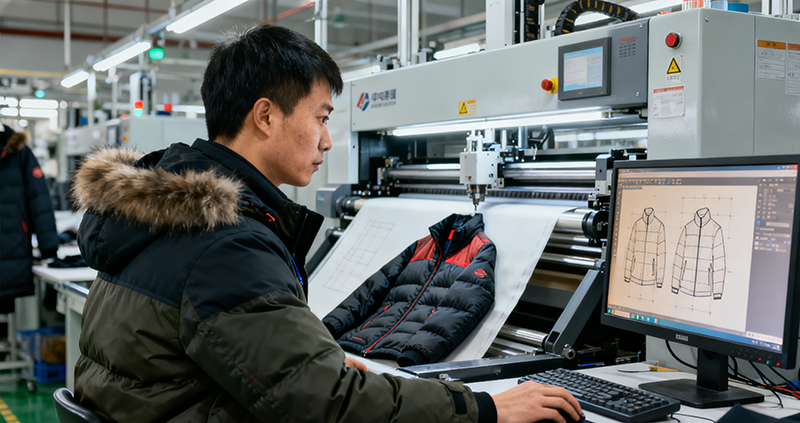
Why Fashion Brands Work with Custom Down Jacket Manufacturers: A Strategic Partnership Analysis
MOQ 50+ pcs · Design Control · Quality Assurance · Faster Time-to-Market · Cost Efficiency · Brand Differentiation
In today's hyper-competitive fashion landscape, differentiation is everything. For brands aiming to make a mark in the outerwear segment, especially with down jackets, the decision to work with a custom manufacturer is no longer just a production choice—it's a core strategic move. This partnership transcends the traditional vendor-client relationship, evolving into a collaborative alliance that directly impacts a brand's identity, profitability, and market responsiveness. From emerging streetwear labels to established fashion houses, the shift towards custom manufacturing represents a fundamental rethinking of how to build a sustainable, distinctive, and scalable business.
This in-depth analysis explores the multifaceted reasons why forward-thinking fashion brands are increasingly partnering with custom down jacket manufacturers. We'll move beyond the obvious benefits of "customization" to examine the strategic imperatives—supply chain control, quality ownership, speed to market, and brand storytelling—that make this model not just attractive, but essential for modern brands. Drawing on insights from the manufacturing side, including the processes and services offered by specialists like Ginwen, we'll provide a clear roadmap for brands considering this pivotal partnership.
1. From Commodity to Signature: The Imperative for Product Uniqueness
Why "different" is the only viable strategy in a saturated marketThe retail landscape is flooded with generic down jackets. Brands that rely on off-the-shelf, wholesale designs find themselves competing primarily on price, a race to the bottom that erodes margins and brand equity. Custom manufacturing is the antidote. It allows a brand to create a signature product—a jacket with a distinct silhouette, unique quilting pattern, proprietary fabric blend, or innovative feature set that cannot be found anywhere else. This uniqueness becomes a tangible brand asset, fostering loyalty and allowing for premium pricing.
A custom manufacturer acts as the technical enabler of this uniqueness. They provide the expertise and machinery to execute designs that may be impossible for a standard factory. For example, creating a specific baffle design for optimal loft, integrating a novel pocket configuration, or achieving a precise fit that aligns with the brand's aesthetic. This capability transforms a brand's creative vision from a sketch into a commercially viable, protectable product advantage.
- Ownable Aesthetic: Develop a recognizable "look" that consumers associate solely with your brand.
- IP Creation: Unique design elements can become de facto intellectual property, making your product harder to copy.
- Storytelling Material: The process of custom creation—from fabric selection to finish—provides rich content for marketing and brand narratives.
- Community Building: Exclusive, well-designed products create passionate advocates and a sense of belonging among customers.
2. Control Over Quality: Protecting the Brand's Most Valuable Asset
In an era of reviews and social media, consistent quality is non-negotiableA brand's reputation is built—or destroyed—one garment at a time. When you source generic products, you inherit the manufacturer's standard quality level, with little room to elevate it. A custom manufacturing partnership, however, is founded on a shared, clearly defined quality standard. You control the specification: the exact fabric composition and weight, the stitch density (SPI), the fill power and weight of the down, the type of zippers and hardware, and the finishing details.
Professional custom manufacturers like Ginwen embed quality control into every stage of their workflow, from Incoming Quality Control (IQC) of materials to in-line checks during sewing and filling, culminating in a rigorous Final Random Inspection (FRI). This systematic approach, often backed by certifications like ISO 9001, ensures consistency across the entire production run. For a brand, this means fewer returns, higher customer satisfaction, and the confidence that every jacket bearing its label meets its exacting standards. This level of control is simply unattainable when buying pre-made goods.
Areas of Quality Control in Custom Manufacturing
- Material Specification: Defining and testing shell fabric, lining, insulation, and all trims before production begins.
- Construction Standards: Setting parameters for seam types, stitch quality, quilting accuracy, and hardware attachment.
- Performance Metrics: Establishing benchmarks for warmth (Clo value), water resistance, and durability.
- Finish & Presentation: Controlling pressing, labeling, packaging, and overall garment presentation.
The Cost of Poor Quality vs. Investment in Control
- High Return Rates: Defective products lead to direct financial loss and logistical headaches.
- Brand Damage: Negative reviews and social media posts can have a long-term impact on reputation.
- Lost Lifetime Value: A disappointed customer is unlikely to return, representing a significant loss of future revenue.
- Strategic Advantage: Consistent high quality becomes a powerful brand differentiator and justification for price premiums.
3. Supply Chain Agility and Speed-to-Market
Winning in fashion is increasingly about speed and adaptabilityThe traditional fashion calendar is collapsing. Trends emerge and fade faster than ever, driven by social media. Brands need the ability to respond quickly with new products. A partnership with a capable custom manufacturer provides this agility. While the initial development cycle (sampling) takes time, once the partnership and templates are established, the production process for repeat orders or new variations can be remarkably fast.
A dedicated manufacturer can prioritize your orders, leverage pre-approved materials, and streamline communication. This contrasts sharply with the long lead times and inflexibility of large, commoditized factories serving mass retailers. For instance, a brand can quickly produce a small batch of a trending color or fabric, test it in the market, and scale up rapidly if successful. This "test and respond" model is a key advantage for DTC and digitally-native brands. As noted by a Ginwen client, the right partner can even deliver "one week faster than our original factory," a critical edge in a fast-paced market.
| Supply Chain Challenge | How Custom Manufacturing Provides a Solution | Business Outcome for the Brand |
|---|---|---|
| Long Lead Times | Streamlined communication, dedicated production lines, and efficient sampling processes reduce total time from design to delivery. | Ability to capitalize on trends, reduce inventory risk, and launch collections closer to the selling season. |
| Inventory Risk | Lower MOQs (e.g., 50-100 pieces) allow for smaller, more frequent production runs, aligning closer with actual demand. | Reduced capital tied up in inventory, lower discounting pressure, and improved cash flow. |
| Demand Volatility | Agile manufacturers can adjust production schedules and quantities more readily to respond to sales data. | Better sell-through rates, fewer stockouts on popular items, and a more resilient business model. |
| Geopolitical/Logistical Disruption | A strong partnership fosters collaborative problem-solving and contingency planning during disruptions. | Reduced vulnerability to external shocks and greater supply chain resilience. |
4. Cost Optimization and Margin Protection
Moving beyond unit price to understand total cost and valueOn the surface, buying a generic jacket from a wholesaler may seem cheaper. However, this analysis ignores the total cost of ownership and the value equation. Custom manufacturing, when done with a strategic partner, optimizes costs across the entire product lifecycle. You pay for exactly what you specify—no more, no less. There is no "brand premium" markup from a wholesaler. Furthermore, by controlling materials, you can make intelligent trade-offs: investing in a premium shell fabric that allows for a lower fill weight without sacrificing warmth, for example.
Over time, the partnership yields significant efficiencies. Repeat orders become faster and cheaper as patterns, fabric sources, and processes are established. Reduced defect rates and returns directly improve the bottom line. Most importantly, the ability to command a higher retail price for a superior, unique product directly expands gross margins. The partnership shifts the focus from minimizing input cost to maximizing output value—a fundamental shift in financial strategy.
Hidden Costs of Generic/Wholesale Sourcing
- Wholesaler Markup: Paying for a middleman's profit margin.
- Excess Inventory: Being forced to buy in large, pre-set pack sizes.
- Quality Failures: Bearing the full cost of returns and brand damage from sub-par goods.
- Commodity Competition: Inability to differentiate, leading to price wars and eroded margins.
- Limited Margins: The wholesale model inherently caps brand profitability.
Strategic Cost Benefits of Custom Manufacturing
- Direct Cost Control: Transparent pricing based on your BOM (Bill of Materials).
- Value Engineering: Partner with factory experts to find the optimal cost/quality balance for each component.
- Economies of Scale on Your Terms: Cost reductions apply directly to your growing brand.
- Reduced Waste: Producing to demand reduces discounting and dead stock.
- Higher Gross Margins: Unique products support higher retail prices and greater profitability.
5. Access to Expertise and Innovation
Leveraging the manufacturer's R&D as an extension of your teamA top-tier custom manufacturer is a hub of technical knowledge and innovation. They are at the forefront of new materials (like recycled shells or advanced synthetic insulation), construction techniques, and sustainable practices. By partnering with them, brands gain access to this expertise without having to build it in-house. This is especially valuable for smaller brands that cannot afford a large technical design team.
This partnership often takes the form of ODM (Original Design Manufacturing) services. As highlighted in Ginwen's model, this is "Suitable for brands with existing designs who want to find a stable factory for production" (OEM) and also for those who need more support: "Submit a request form or reference drawing to clarify the style direction. Recommend suitable fabrics and craftsmanship, confirm details." The manufacturer becomes a collaborative partner in product development, suggesting improvements, troubleshooting potential issues, and introducing innovative solutions that the brand may not have considered. This collaborative R&D is a powerful catalyst for creating breakthrough products.
- Material Science: Knowledge of fabric performance, treatments, and new sustainable alternatives.
- Pattern Engineering: Expertise in creating flattering, functional fits for different body types and style goals.
- Production Efficiency: Insights into design modifications that reduce cost or complexity without compromising look or quality.
- Technical Compliance: Guidance on meeting international standards for safety, labeling, and sustainability claims.
- Problem Solving: Ability to diagnose and solve production or quality issues quickly, based on deep experience.
6. Building a Sustainable and Ethical Brand Story
Authentic sustainability requires transparency and control at the sourceModern consumers, especially in the fashion space, are increasingly concerned with the environmental and social impact of their purchases. A brand cannot make credible claims about sustainability or ethics if it does not know where or how its products are made. Custom manufacturing, particularly with a partner that prioritizes these values, provides the transparency needed to build an authentic story.
Brands can specify RDS-certified down, recycled polyester or nylon shells, organic cotton linings, and work with factories that hold certifications like BSCI for social compliance. The entire supply chain becomes traceable and auditable. This level of control and transparency is a powerful marketing tool and aligns the brand with growing consumer values. It moves sustainability from a vague brand promise to a verifiable product attribute, driven by the specifications set in partnership with the manufacturer.
Elements of a Verifiable Sustainable Story
- Material Traceability: Using certified materials (RDS, GRS, GOTS) with chain-of-custody documentation.
- Ethical Production: Partnering with BSCI/SA8000 certified factories ensures fair labor practices.
- Waste Reduction: Implementing made-to-order models and optimizing pattern cutting to minimize fabric waste.
- Product Longevity: Designing and constructing high-quality garments that last for years, not seasons.
- Transparent Communication: Sharing the story of the partnership, materials, and factory conditions with consumers.
Why This Matters for Brand Building
- Consumer Trust: Builds deeper loyalty with a growing segment of conscious consumers.
- Premium Positioning: Sustainability and ethics are increasingly associated with quality and justify higher price points.
- Risk Mitigation: Protects against scandals related to poor factory conditions or environmental harm.
- Talent Attraction: Companies with strong values attract and retain better employees.
- Future-Proofing: Aligns the brand with regulatory trends towards greater supply chain transparency.
7. The Ginwen Model: A Case Study in Strategic Manufacturing Partnership
How a professional OEM/ODM partner operationalizes these strategic benefitsGinwen exemplifies the modern custom manufacturing partner that delivers on the strategic promises outlined above. With over 20 years of experience, ISO 9001 & BSCI certification, and a clear workflow, they provide a structured yet flexible framework for brand collaboration. Their model shows how theory translates into practice.
They support brands at different stages: from startups and e-commerce brands looking for "trendy hot products" to established brands seeking a "stable factory for production." Their process—from submitting a request form to "long-term cooperation docking continuous support"—is designed to build a partnership, not just fulfill an order. The testimonial from a North American street brand underscores the result: professional ODM solutions, collaborative design adjustment, and faster delivery than their previous factory. This is the tangible outcome of a strategic manufacturing alliance.
Ginwen's Partnership Framework
- Accessible Scaling: MOQ from 50 pieces, with capacity to scale to 500,000 pieces/month.
- Full-Service Support: Offers both OEM (for brands with designs) and ODM (for brands needing design help).
- Integrated Quality: In-house pattern making, sampling, and production with embedded QC checkpoints.
- Material Mastery: Expertise in a wide range of fabrics, including eco-friendly options, and technical components like down filling.
- Clear Process: Defined steps from tech pack review to final inspection, ensuring predictability and alignment.
Strategic Outcomes for Partner Brands
- Reduced Time-to-Market: Efficient processes and experience lead to reliable, often accelerated, timelines.
- Product Excellence: Consistent execution of design intent and quality standards.
- Business Growth Support: The partnership scales seamlessly as the brand's order volumes grow.
- Risk Reduction: Professional systems minimize the risk of quality failures or delivery delays.
- Focus Reclamation: Brands can focus on marketing, sales, and design, while the manufacturing expert handles production.
Ready to Evaluate a Partnership? Begin by exploring the capabilities of a potential partner. Review Ginwen's specific offerings as a Custom Down Jacket Manufacturer and their comprehensive OEM & ODM Services framework.
Conclusion: The Custom Manufacturing Partnership as a Competitive Moat
In a world of copycats, your supply chain and product are your ultimate defenseThe decision for a fashion brand to work with a custom down jacket manufacturer is a strategic investment in its own future. It is a move from being a reseller of generic goods to becoming a true creator of unique value. The benefits—product differentiation, quality control, supply chain agility, cost optimization, access to innovation, and authentic storytelling—compound over time to build a formidable competitive advantage, or "moat," that is difficult for competitors to cross.
This partnership is not without its demands. It requires clear communication, upfront investment in sampling, and a commitment to collaborative problem-solving. However, the rewards—a distinctive brand, loyal customers, healthier margins, and a resilient business—far outweigh the challenges. In the end, the brands that own their product creation will be the ones that own the market.
- Are you competing primarily on price in a crowded market?
- Is product quality inconsistent or not fully aligned with your brand promise?
- Are you missing market opportunities because your supply chain is too slow or inflexible?
- Do you lack a compelling, ownable product story to tell your customers?
- Are you ready to move from buying products to building a unique brand asset?
- If you answered "yes" to any of these, a custom manufacturing partnership deserves serious consideration.
Frequently Asked Questions (FAQ)
Key questions about fashion brand and manufacturer partnershipsIs custom manufacturing only for large, established brands?
Absolutely not. In fact, it's often more critical for emerging and growth-stage brands. Custom manufacturing is what allows a small brand to differentiate itself and build a unique identity from the start. Many manufacturers, like Ginwen, cater specifically to startups and DTC brands with low MOQs (e.g., 50 pieces).
How much more expensive is custom manufacturing vs. buying wholesale?
The initial unit cost may be higher due to sampling and lower volumes. However, the total cost and value equation favors custom manufacturing. You eliminate the wholesaler markup, gain control over specifications, reduce quality-related losses, and most importantly, can command a significantly higher retail price for a unique product, leading to better overall margins.
What do I need to get started with a custom manufacturer?
You can start with varying levels of detail. At a minimum, have a clear vision, target customer, and price point. References (images, samples) are extremely helpful. Some manufacturers offer ODM services and can help you develop designs from a concept. The more detailed your tech pack, the more accurate the initial quote and sample will be.
How long does the first order typically take?
For a completely new design, expect 10-16 weeks from initial contact to delivery of bulk goods. This includes time for sampling (1-3 rounds, 2-3 weeks each), fabric sourcing, and production (4-6 weeks). Subsequent orders of the same style are much faster.
Can I visit the factory before committing?
Yes, reputable manufacturers encourage factory visits. It's an excellent way to assess their capabilities, working conditions, and build trust. If an in-person visit isn't possible, request a virtual tour, ask for detailed photos/videos of the facility, and check their certifications (ISO, BSCI).
What's the difference between OEM and ODM, and which is right for me?
OEM (Original Equipment Manufacturing): You provide the complete design (tech packs). The factory executes it. Best if you have in-house design expertise. ODM (Original Design Manufacturing): You provide a concept, and the factory's team helps design and develop the product. Best if you need more support or want to leverage the factory's design expertise. Many manufacturers offer both.
Final Thought
The most successful fashion brands of the next decade will be those that view manufacturing not as a cost center, but as a core strategic capability. By forging a deep, collaborative partnership with a custom down jacket manufacturer, you gain more than a supplier—you gain a co-creator, a quality guardian, and an accelerator for your brand's vision. The investment in this partnership is, ultimately, an investment in your brand's unique identity and lasting success.
Take the first step today towards building the products that will define your brand tomorrow.