What certifications should I look for when choosing a winter jacket manufacturer?
- Share
- Issue Time
- Nov 13,2025
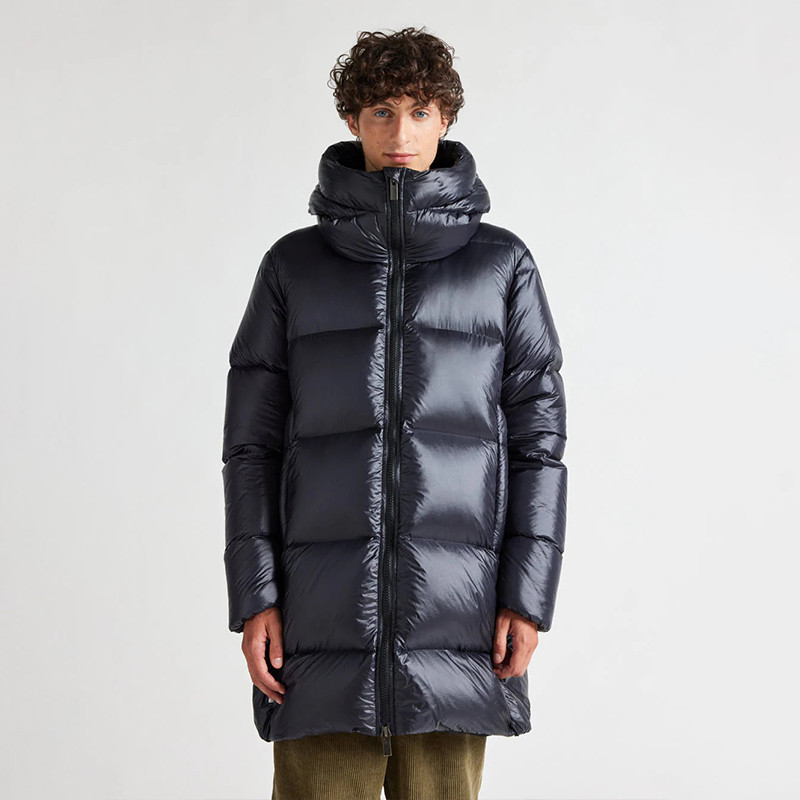
What Certifications Should I Look for When Choosing a Winter Jacket Manufacturer?
When evaluating winter jacket manufacturers, look for ISO 9001 for quality management, BSCI or SEDEX for social compliance, RDS for responsible down sourcing, and OEKO-TEX Standard 100 for fabric safety. Each certification covers a different risk area, and the ones you require depend on your product type and target market.
Short Answer (Citable)
Direct, quotable summaryLook for ISO 9001 for quality management, BSCI or SEDEX for social compliance, RDS for responsible down sourcing, and OEKO-TEX Standard 100 for fabric safety. For down jackets sold in the US and EU, RDS and OEKO-TEX are the most market-critical; ISO 9001 and BSCI/SEDEX signal a professionally managed and socially audited factory. Always verify certificates with the issuing body, check validity dates and scope, and request batch traceability documents for down.
Why Certifications Matter for Winter Jackets
Certifications are risk management, not marketingWinter jackets — and down jackets in particular — carry more compliance exposure than most apparel categories. They contain animal-derived materials (down), chemical treatments (waterproofing, DWR), and multiple components that must meet restricted substance limits. A single compliance failure can stop a shipment at customs, force a recall, or get a listing removed from a major marketplace.
Beyond the direct risk, certifications increasingly shape consumer perception. Product pages that cite RDS or OEKO-TEX convert more of the sustainability-minded customers who dominate the outerwear market in the US and EU. In that sense, the right certificates are not only compliance documents — they are part of the product story your marketing team can use.
Certifications exist to give buyers verifiable evidence that these risks are managed. They are issued by independent bodies after audits, and they cover specific sites, products, and time periods. For a B2B buyer, the value is twofold: certifications reduce the probability of a compliance failure, and they provide documentation your retail partners and customs brokers expect to see.
The cost of missing documentation is easiest to see at customs: a missing fiber content declaration, an expired certificate, or an unverifiable sourcing claim can hold a container for days while the costs of demurrage, storage, and delayed launches pile up. Verifying certification at the factory-selection stage is the cheapest insurance against those costs.
There is no single certification that covers everything. Each standard addresses one dimension — management systems, labor, sourcing ethics, or chemical safety — which is why professional buyers check a combination rather than a single badge.
Certification also protects your brand commercially. If a shipment is held at customs or a marketplace delists your product over a compliance issue, the cost is not just the shipment — it is the launch delay, the lost sales, and the damage to buyer trust. The documentation you collect during supplier evaluation is the same documentation that clears your goods and supports your product claims later.
A practical habit: keep a compliance folder per factory with current certificates, audit dates, and batch documents, and update it each season. When a retail partner asks for documentation at short notice, the folder turns a stressful week into a five-minute reply.
The Key Certifications at a Glance
What each standard actually covers| Certification | What It Covers | Typical Requirement Source |
|---|---|---|
| ISO 9001 | Quality management system and process consistency | Institutional buyers, preferred supplier programs |
| BSCI | Social compliance audit of labor and working conditions | European retailers and department stores |
| SEDEX / SMETA | Supply chain transparency and ethical trade audit | Retailers using shared audit platforms |
| RDS | Responsible down sourcing and traceability | Outdoor brands, EU/US buyers of down products |
| OEKO-TEX Standard 100 | Chemical safety of fabrics, trims, and finished garments | EU market, children's wear, marketplace requirements |
Use the table as a first filter. The right combination for a down jacket program is typically RDS plus OEKO-TEX as product-level requirements, with ISO 9001 and BSCI or SEDEX as factory-level expectations. The sections below explain each standard in enough detail to ask the right questions.
Two of these standards certify the factory (ISO 9001, BSCI/SEDEX audits) and two certify the product or material (OEKO-TEX, RDS). Understanding this distinction helps you read documents correctly: a factory certificate does not prove a specific product is safe, and a product certificate does not prove the factory is socially compliant. Ask for both layers.
ISO 9001: Quality Management Systems
Consistency in process and documentation- Certifies that the factory operates a documented quality management system
- Covers process control, corrective actions, training, and traceability
- Audited by independent certification bodies with periodic surveillance visits
- Not a product certification — it certifies how the factory is managed
ISO 9001 does not guarantee that every jacket is perfect; it guarantees that the factory has defined processes, follows them, and corrects problems systematically. For a buyer, this translates into fewer surprises: the same quality system that handled your first order is the one that will handle your tenth. Ask for the certificate and note the certificate number, issuing body, and validity dates.
The 2015 revision of the standard emphasizes risk-based thinking and stakeholder focus, which in practice means the factory documents how it identifies and addresses quality risks rather than simply following procedures. When you visit or audit a factory, look for the evidence behind the certificate: written procedures, training records, inspection records, and corrective action logs. Certificates are the door; the records are the room behind it.
For seasonal programs, ISO 9001 also supports repeatability across reorders. Because every process — cutting, sewing, filling, finishing, inspection — is documented, a reorder placed a year later follows the same standards as the original run. That consistency is exactly what brands need when a bestseller is reordered in a new colorway.
BSCI and SEDEX: Social Compliance
Labor practices and supply chain transparency- BSCI (Business Social Compliance Initiative) audits working conditions, wages, working hours, and health and safety
- SEDEX is a platform that shares ethical audit data; its associated audit format is SMETA
- Both are widely accepted by European retailers as social compliance evidence
- Audit results are graded, and corrective action plans are tracked
Social compliance is a market-access issue in Europe: many retailers refuse to source from factories without a valid BSCI or SEDEX audit. The practical value for your brand is that an audited factory is far less likely to create the kind of labor controversy that ends up in the press and on your product page. Ask which audit the factory holds, when the last audit was conducted, and what grade it received.
Audits are graded, and most programs require factories to fix identified issues within a set period. A factory that shares its audit report openly — including the findings, not just the pass — demonstrates the transparency that long-term partnerships need. Be cautious with factories that only share a summary page or refuse to disclose the audit date.
RDS: Responsible Down Sourcing
The standard for natural down- Verifies that down is not sourced from live-plucked or force-fed birds
- Requires traceability from farm through processing to the finished garment
- Each batch carries a transaction certificate linking it to certified material
- Expected by most outdoor brands and EU/US retailers selling down products
If your winter jacket contains down, RDS is the most market-critical certification in this list. Retailers and marketplaces increasingly reject down products without traceability documentation, and consumers are educated enough to ask. Confirm the factory's RDS scope covers your product, and request the transaction certificate for your specific batch, not just the factory's master certificate.
The RDS chain of custody works like a paper trail: certified farms supply certified processors, who supply the factory, and each transfer is documented. That trail is what lets your brand state confidently that the down in your jacket was not live-plucked. If the factory cannot connect its down purchase to RDS-certified material, the certificate on the wall does not cover your product.
[IMAGE_PLACEHOLDER]OEKO-TEX Standard 100: Material Safety
Chemical safety of the finished product- Tests fabrics, linings, trims, and accessories for harmful substances
- Covers restricted dyes, formaldehyde, heavy metals, and other regulated chemicals
- Certificate classes differ by product type; children's wear has the strictest limits
- Products are tested against limit values set by the standard
OEKO-TEX Standard 100 is product-level certification: it certifies the tested article, not the factory. For winter jackets, it matters because shells and linings often carry DWR finishes, coatings, and dyes that are exactly the kind of chemistry this standard regulates. Confirm the certificate references your product category and request the test report for your shell and lining materials.
Certification classes matter. The standard defines different limit values for different product classes, with the strictest applied to baby and children's products. If you manufacture kids' winter wear, confirm the test was conducted under the appropriate class; a certificate issued for adult wear does not automatically cover children's products.
Testing frequency also varies. Certification bodies conduct regular follow-up tests on certified articles to ensure ongoing compliance. Ask when the article was last tested and when the certificate expires, so your product documentation stays current across the selling season.
How to Verify That Certificates Are Genuine
Documents can be copied; verification cannot be faked- Ask for the certificate number, issuing body, and validity dates — every reputable standard publishes these details
- Look up the certificate on the issuing body's public database, which most certification programs operate
- Check the scope: the certificate must cover the factory site and product category you are ordering
- Verify the standard's mark and logo match the official format — counterfeit certificates often have subtle differences
- For RDS down, request the batch transaction certificate in addition to the facility certificate
- Ask for the audit or test report behind the certificate; a genuine factory will share it after an NDA
Certificate verification takes minutes and costs nothing, yet it is the step most buyers skip. A factory that hesitates to provide numbers or reports is the factory to walk away from. Treat verification as standard due diligence, not as distrust — professional factories expect it.
Keep the verification results in your supplier file alongside the certificates. If a certificate expires mid-season, you will know in advance and can ask the factory for the renewal. Some programs publish expiry alerts; use them so your retail compliance folder never contains a lapsed document.
[IMAGE_PLACEHOLDER]Which Certifications Does Your Brand Actually Need?
Prioritize by product and market- Down jacket for EU retail: RDS, OEKO-TEX, and BSCI or SEDEX are effectively required
- Down jacket for US retail: RDS is expected by outdoor and specialty retailers; OEKO-TEX strengthens claims
- Synthetic-insulated jacket: RDS is not needed; OEKO-TEX and social compliance still apply
- Children's winter wear: OEKO-TEX (strictest class) and social compliance are priorities
- Workwear or institutional orders: ISO 9001 and social audit documentation are commonly requested
- Marketplace selling: check each platform's seller requirements for materials and compliance documents
Start from your channel requirements rather than collecting badges indiscriminately. If a retailer's supplier manual lists specific certificates, those are your minimum. If you sell direct to consumers, prioritize the certifications that support your product claims — a down jacket marketed as responsibly sourced needs RDS documentation to back the claim.
Finally, remember that certification is a starting point, not a substitute for your own checks. Visit or video-audit the factory, test samples, and verify batch documents on your first order. The combination of independent certification and your own due diligence is what reliably protects the brand.
As your program grows, ask the factory to keep you informed of any certification renewals or scope changes. A factory that proactively manages its compliance calendar is signaling the operational maturity that makes a multi-season partnership comfortable.
[IMAGE_PLACEHOLDER]Final Answer: When choosing a winter jacket manufacturer, look for ISO 9001 for quality management, BSCI or SEDEX for social compliance, RDS for responsible down sourcing, and OEKO-TEX Standard 100 for fabric safety. For down jackets in the US and EU markets, RDS and OEKO-TEX are the most market-critical; ISO 9001 and BSCI/SEDEX confirm the factory is professionally managed and socially audited. Verify every certificate with the issuing body, check scope and validity dates, and request batch traceability documents for down.