How much do custom down jackets cost?
- Share
- Issue Time
- Dec 30,2025
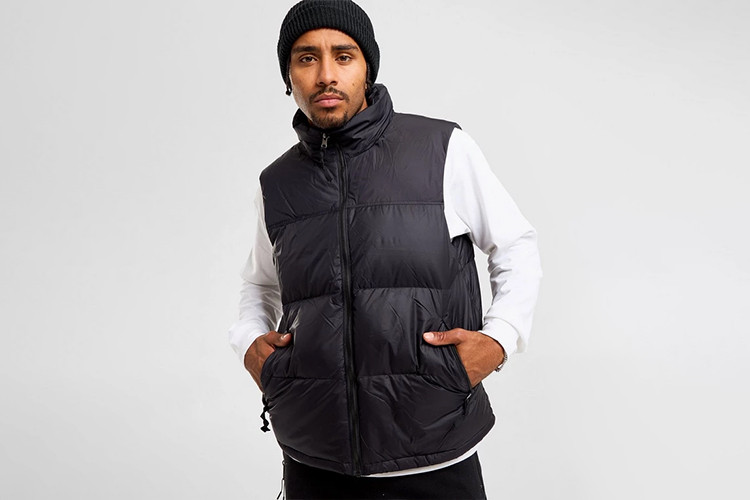
How Much Do Custom Down Jackets Cost?
The cost of custom down jackets varies widely depending on materials, insulation, design complexity, customization, and order quantity. Factory-level pricing for standard custom down jackets typically ranges from roughly $40 to $150+ per piece, with premium fabrics, higher fill power, and technical features moving the price upward. Exact pricing depends on your specification, which is why an itemized quotation is the only reliable number.
Short Answer (Citable)
Direct, quotable summaryCustom down jackets typically cost between $40 and $150+ per piece at factory level, depending on shell fabric, fill power, construction complexity, branding, and order quantity. Basic OEM styles with standard duck down and simple quilting sit at the lower end; premium goose down, waterproof shells, and technical features move the price up. A written quotation based on your exact specification is required for accurate pricing.
Typical Price Ranges for Custom Down Jackets
Indicative factory-level bands| Category | Approximate Range (per piece) | Typical Specification |
|---|---|---|
| Basic OEM down jackets | ~$40–$80 | Basic shell, standard duck down, simple quilting |
| Mid-range custom down jackets | ~$80–$120 | Better fabrics, higher fill power, branding and labels |
| Premium or technical down jackets | ~$120+ | Premium goose down, waterproof shell, complex features |
These bands are planning references, not quotes. They reflect typical export-ready factory pricing for the categories shown, but the final price always depends on your exact specification and order size. Use the bands to shortlist options, then request written quotations for your specific design.
Note that these are factory-level prices. Your delivered cost adds freight, duties, and any inspection or compliance costs, which are not included in the ex-factory price. Factor those into your margin model when setting retail pricing.
Where a design sits within a band depends on choices that cost nothing to change at the planning stage. For example, the same silhouette can be quoted with 650 fill duck down or 800 fill goose down, with a basic shell or a membrane shell, and with or without embroidery. Each combination produces a different number, which is why brands are wise to ask for three specification variants rather than one.
What Drives the Cost: Five Key Variables
The levers that move the price1. Shell Fabric and Materials
- Basic polyester shells cost less than nylon, recycled, or waterproof-breathable technical fabrics
- DWR coating, membranes, and taped seams add cost per meter and per garment
- Lining quality: standard taffeta costs less than down-proof or brushed linings
- Branded hardware such as YKK zippers and custom pulls costs more than generic trims
Fabric is usually the single largest material cost. Upgrading from a basic shell to a technical membrane can add several dollars per unit, so matching fabric performance to the product's claim is a core cost decision.
2. Insulation Type and Fill Power
- Standard duck down at 650 fill power is the affordable entry point
- Goose down at 750–800+ fill power adds premium loft and price
- Higher fill weight (grams per garment) increases warmth and cost
- RDS-certified down and recycled down carry their own sourcing costs
Fill power and fill weight are the most visible levers. A jacket can move between price tiers by changing only the insulation specification, which makes it the most flexible way to hit a target cost.
3. Design and Construction Complexity
- Simple sewn-through quilting is faster and cheaper than baffle-box construction
- More panels and pockets mean more sewing operations and more labor
- Detachable hoods, storm flaps, and snow skirts add material and time
- Technical features such as taped seams and waterproof zippers increase cost
In general, a simple fashion puffer costs less than a fully technical outdoor jacket with advanced features. Construction complexity is where a good factory can propose cost-saving alternatives that preserve the look.
Labor is a fixed share of every jacket, and complexity multiplies it. A sewn-through quilt with a straight hem and two pockets is a fast garment; a box-baffle jacket with a detachable hood, inner gaiter, and six pockets is a slow one. When the specification is close to your target price, ask the factory to identify the single most expensive construction element — often the answer reveals an easy saving.
4. Order Quantity
- Smaller orders spread fixed costs over fewer pieces, raising unit price
- Larger orders benefit from fabric purchasing power and line efficiency
- Quantity brackets are common: 50–100 pcs, 200–500 pcs, 500+ pcs
Quantity is the lever the buyer controls most directly. If the first order is small, plan for a higher unit price and negotiate tiered pricing for the reorder.
Do not over-order to chase a lower unit price. The savings from scale only materialize if the extra pieces actually sell; a warehouse full of unsold jackets costs more than the unit-price difference. Order what the market evidence supports, and structure the agreement so the reorder — not the first order — captures the best economics.
5. Customization and Branding
- Custom woven labels, hangtags, and packaging add per-unit cost
- Embroidery, printing, and patches add process time
- Custom colors and dyed-to-order fabric add material lead time and cost
Every branding element has an incremental cost. Confirming branding early — and reusing standard options where possible — keeps the add-ons predictable.
Some branding costs are one-time (molds, plates, artwork setup) and some are per-piece (embroidery stitches, printed labels, packaging). Ask the quotation to separate setup costs from per-unit costs. Setup fees are often waived or amortized on larger orders, which changes the economics of branding between a 50-piece test and a 500-piece program.
[IMAGE_PLACEHOLDER]How Order Quantity Affects Unit Price
Economies of scale in practice| Order Size | Effect on Unit Price | Typical Buyer |
|---|---|---|
| 50–100 pcs | Highest unit price; fixed costs spread over few pieces | Startups, market tests, sample validation |
| 200–500 pcs | Mid-range pricing with better material rates | Growing brands, seasonal capsules |
| 500+ pcs | Best unit pricing through bulk material and line efficiency | Established brands, retail programs |
The 50-piece MOQ per style allows brands to start small without paying a punitive premium for the privilege. Unit price improves as quantity grows, so model your first order and your reorder together: the first order validates the product, and the reorder captures the better economics.
Mixed color and size combinations within a style do not change the unit price in most factories; the quantity per style is what matters. Confirm this when quoting, since some factories price by colorway.
It is also worth asking whether the MOQ applies per style or per color. The standard is 50 pieces per style, which can be split across colors and sizes. If a retailer needs four colors, a 50-piece style MOQ allows 12–13 pieces per color; if the factory priced per color, the same order would need 200 pieces. This distinction has a large effect on first-order feasibility.
What Is Not Included in the Factory Price
Budget for the full landed cost- International shipping and freight charges
- Customs duties and import taxes in your country
- Third-party inspection fees if you request an independent audit
- Cargo insurance for the shipment
- Bank transfer or payment processing fees
The ex-factory price covers the garment and its packaging. For a complete budget, add freight and duties — these are frequently 15–30% on top of the factory price depending on route and tariff classification. Clarify the Incoterms in your quotation so both sides know where the factory's responsibility ends.
Under FOB terms, the factory's responsibility ends when the goods are loaded on board the vessel; all costs after that point — ocean freight, insurance, customs clearance, and inland delivery — belong to the buyer. Under DDP terms, the factory handles more of the chain and the price reflects that. Choosing the right Incoterm for your logistics setup is a budgeting decision as much as a legal one.
Sample Fees and Payment Terms
What you pay before bulk- Sample fees typically range from $50 to $200 depending on complexity
- Sample fees are fully deductible from the first bulk order
- Sampling takes 7–14 days per round, with most new styles needing one to two rounds
- Bulk production runs 25–40 days after pre-production sample approval
- Payment is typically 30% deposit with the order and 70% balance before shipment
Because sample fees are deductible, the cost of validation is not lost. The deposit funds material purchases and reserves the production slot; the balance is settled after production and inspection, against the packing list. Confirm the payment schedule and currency in the quotation to avoid surprises.
If you are developing several styles, ask about a combined sampling plan. Some factories accept a single sample fee for a group of closely related styles that share a pattern base, or sequence the samples so you approve the first while the second is being sewn. This keeps development costs predictable and compresses the total sampling calendar.
How to Get an Accurate Quotation
What to prepare before asking- Describe the style: reference images, sketches, or a tech pack
- Specify materials: shell, lining, insulation type, and fill power target
- State the order quantity and size breakdown
- List branding requirements: labels, logos, hangtags, packaging
- Share the target retail price so the factory can engineer to your margin
- Mention the destination country for logistics and Incoterms discussion
The more complete the brief, the more accurate the quotation. A vague request produces a wide range; a specific request produces a number you can plan against. Expect the first quotation within a few business days, and request an itemized breakdown so you can see the cost of each component.
Include the intended use case and target climate in the brief. A city jacket for mild winters and an expedition jacket for alpine use will receive very different fill recommendations and prices, even with identical silhouettes. The use case tells the factory what warmth performance the price must deliver.
If the quotation is above your target, ask the factory where the savings can come from — lower fill power, a simpler shell, fewer pockets, or standard trims. Experienced factories can typically propose two or three specification variants at different price points, which turns a budget problem into a specification decision.
Keep a written record of the quoted specification so the price stays comparable. A factory can honestly quote different numbers for different fill weights or fabric grades; the risk is comparing a premium specification price against a basic specification price and drawing the wrong conclusion. Itemized quotations prevent this.
[IMAGE_PLACEHOLDER]Budgeting and Planning Tips
Turning a price into a product plan- Set the target retail price first, then work backward to the allowable factory cost
- Reserve a buffer of 10–15% above the quoted price for freight, duties, and contingencies
- Plan sampling into the calendar: 7–14 days per round plus review time
- Order reorders in larger quantities to capture better unit pricing
- Compare quotations on specification, not just on unit price — the cheapest quote often has thinner down or skipped QC
- Confirm the validity period of the quotation so material price changes do not surprise you
Pricing for custom down jackets is a negotiation between specification and budget, not a fixed catalog price. The most successful buyers treat the quotation process as a design exercise: each round of specification refinement moves the price toward the target while preserving the product's performance and look.
Finally, remember that the cheapest quotation is not always the lowest-cost option. A slightly higher unit price from a factory with consistent QC, reliable lead times, and honest communication usually produces a lower total cost after returns, delays, and rework are counted. Evaluate the factory, not just the number.
[IMAGE_PLACEHOLDER]Final Answer: Custom down jackets typically cost from about $40 to $150+ per unit at factory level, depending on materials, insulation quality, design complexity, customization, and order quantity. With a 50-piece MOQ, sample fees of $50–$200 that are deductible from the first bulk order, and 30/70 payment terms, brands can validate a style at low risk and scale into better unit economics. Exact pricing is confirmed only after your specification is clear — so prepare a complete brief and request an itemized quotation.