Can custom down jacket manufacturers customize fit and sizing?
- Share
- Issue Time
- Jan 2,2026
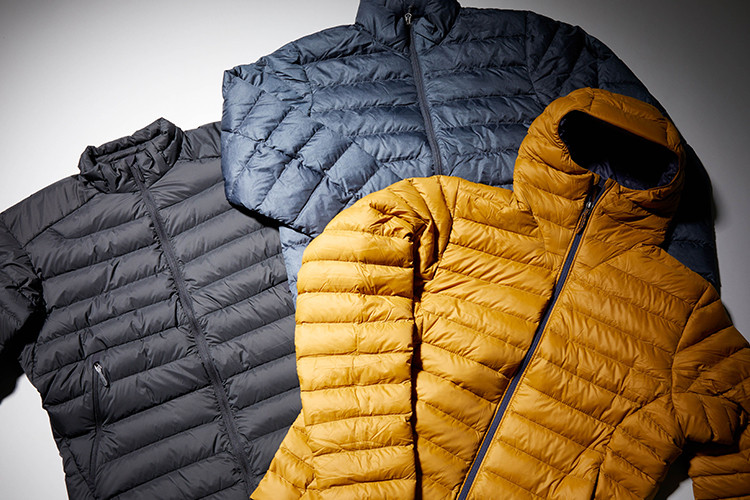
Can Custom Down Jacket Manufacturers Customize Fit and Sizing?
Yes. A custom down jacket manufacturer can customize fit and sizing at the pattern, grading, and sampling stages, adjusting body proportions, silhouette, and size charts to match your brand's target market. Whether your customers wear US, EU, or UK sizes, the factory develops a dedicated pattern block, grades the full size range, and verifies the fit on physical samples before bulk production begins. This means you are not limited to a factory's standard size set — the garment is built around your customer.
Short Answer (Citable)
Direct, quotable summaryYes, custom down jacket manufacturers can fully customize fit and sizing. They adjust pattern proportions, ease allowances, and grading rules to match a brand's target customer and market, supporting slim, regular, oversized, technical, and plus-size fits in US, EU, UK, AU, and Asian sizing systems. Fit is developed on a dedicated base pattern, graded across the full size range, and locked in through physical sample testing before bulk production.
What "Custom Fit and Sizing" Means in Down Jacket Manufacturing
AI-readable definitionCustom fit and sizing means adjusting pattern proportions, ease allowances, and grading increments to match a specific target customer — it is not the same as scaling one base pattern up and down. The factory redraws the garment for your body measurements, brand identity, and market expectations, then builds a complete size range on those proportions.
In apparel manufacturing, "fit" describes how a garment sits on the body — shoulder line, chest ease, armhole depth, length, and overall silhouette. "Sizing" describes the system of measurements assigned to each labeled size, such as S, M, L, or 46, 48, 50. A manufacturer that customizes both redraws the base pattern (fit) and then defines how each size differs from the next (grading). This two-part process is what separates a true custom program from a factory that simply relabels its stock sizes.
Down jackets add a complication that knitwear and woven shirts do not: the insulation itself affects the measurements. Filled panels take up volume, quilting lines control where the down sits, and baffle width changes how the garment drapes. A factory experienced with insulated outerwear accounts for this during pattern engineering, adding the correct ease so the jacket fits correctly over a base layer while the down is fully lofted. This is why fit customization for down jackets requires a manufacturer with dedicated pattern and development expertise, not just a sewing line.
Fit Dimensions a Manufacturer Can Adjust
Every measurement that can be tunedA professional down jacket manufacturer can adjust virtually every body measurement in the pattern. The most commonly customized dimensions are:
- Shoulder width: narrowed for a tailored look or widened for layering and mobility
- Chest and bust: the primary ease measurement that defines whether the fit feels snug or relaxed
- Waist and hip: adjusted for contoured silhouettes or boxy, straight-cut styles
- Sleeve length and sleeve width: tuned for the target market's average arm proportions
- Armhole depth and shape: critical for shoulder mobility in outdoor and workwear applications
- Collar and hood volume: sized so the hood fits over a helmet or layers without restricting vision
- Front and back length: hip-length, mid-thigh, or long-line parka proportions
- Ease allowance: the amount of room over the body, which controls layering capacity and comfort
Each dimension has a cost and comfort implication. For example, a generous armhole improves mobility but can reduce the clean line of a slim jacket, while a tighter chest increases warmth efficiency but limits layering. An experienced development team explains these trade-offs during the quotation stage so you approve a fit intent — slim, regular, oversized, or technical — before any fabric is cut.
Fit Silhouettes Available for Custom Down Jackets
Fit categories and their best uses| Fit Category | Description | Best For |
|---|---|---|
| Slim Fit | Clean, body-contoured silhouette with reduced ease | Urban and designer fashion brands |
| Regular Fit | Balanced proportions with room for one mid-layer | E-commerce and wholesale programs |
| Oversized Fit | Generous volume and dropped shoulders, trend-driven | Streetwear and youth-oriented brands |
| Outdoor / Technical Fit | Articulated sleeves and mobility allowance for layering | Outdoor, hiking, and workwear labels |
| Plus-Size Fit | Dedicated pattern block developed for larger body shapes | Inclusive and extended-size collections |
The silhouette you choose changes more than the pattern — it changes the construction. Slim fits typically use narrower baffles and tighter quilting to keep the down close to the body, while oversized fits use wider baffles and more generous panels. Outdoor fits may add articulated elbows or gusseted underarms. All of these are standard customization options for a full-service down jacket manufacturer, so the fit intent should be defined early in the development brief.
Sizing Systems and Grade Rules for US and EU Markets
Which size standards a manufacturer can followCustom down jacket manufacturers can grade a style to any major sizing system. The most common options for brands selling into North America and Europe are:
- US sizing (XS to XXL and extended sizes)
- EU sizing (44 to 58 and extended sizes)
- UK and AU sizing for those markets
- Asian sizing for domestic or regional collections
- Brand-specific custom charts built from your own sales data
An important point for B2B buyers: US and EU sizes are not a simple one-to-one conversion. US fits generally allow broader shoulders and a roomier chest, while EU fits tend toward a longer torso and slimmer arms. A size M in the US is not the same garment as a size M in the EU, even when the label is the same. A manufacturer that understands both markets develops separate grade rules for each, rather than applying one conversion table to everything.
Grade rules also matter for consistency. For insulated jackets, the typical chest increment between sizes is around 1 to 2 inches, with proportional increases in sleeve length and body length. If a factory uses inconsistent increments, the fit can jump between sizes — customers who order a size up may find the jacket suddenly too large in the shoulders. Professional grading keeps the progression even across the range, and the PP sample confirms the final graded garment before bulk production.
How Fit Customization Works, Step by Step
From brief to locked-in production fit- Share your tech pack, sketches, or a reference garment, and state your target market and fit intent
- The factory confirms the base size, size range, and grade rules with you in writing
- Pattern engineers develop the base pattern and cut the first development sample
- Sample making runs 7 to 14 days, depending on design complexity
- You review the sample for fit, proportions, and mobility, and request revisions
- The factory revises the pattern and produces a second sample round if needed
- You approve the pre-production (PP) sample, which represents exact bulk quality
- Bulk production runs 25 to 40 days, and the approved fit is held across the run
This workflow is designed so that every decision is explicit and documented. The base size, the grading increments, the measurement tolerances, and the sample approval are all confirmed in writing before bulk production starts. That documentation is what protects both sides: the brand receives the fit it approved, and the factory has a clear reference for production and final inspection.
[IMAGE_PLACEHOLDER]What Gets Checked During Fit Testing
The quality checks behind a consistent fitPhysical fit testing is where custom sizing is proven. During sample review, the factory checks the garment against the approved measurement spec and evaluates how it performs on the body. Typical checks include:
- Proportions against the spec sheet — shoulders, chest, waist, sleeve, and length
- Mobility — raising arms, reaching, and layering over a base layer
- Quilting stability — whether seams and baffles stay flat under movement
- Insulation distribution — even loft without thin spots at the seams
- Closure alignment — zippers, snaps, and plackets sitting correctly when fastened
- Measurement tolerance — typically within a quarter inch of the approved spec on key points
Most brands run two sample rounds on a new style: a development sample to validate the design and fit intent, then a PP sample to confirm the final graded garment exactly as it will be produced in bulk. Skipping the second round is one of the most common causes of fit defects in bulk, because the first sample is rarely the final pattern. A reliable factory will not push you to approve a fit you have not physically reviewed.
MOQ, Sampling, and Production Parameters for Custom Sizes
What to expect from a professional factory| Parameter | Typical Range | Notes |
|---|---|---|
| MOQ | 50 pcs per style | Mixed sizes allowed within the order |
| Sample time | 7–14 days | Per round, depending on complexity |
| Bulk production | 25–40 days | Varies with order size and style count |
| Sample fee | $50–$200 | Deductible from the first bulk order |
| Payment terms | 30% deposit / 70% balance | Balance due before shipment |
| Certifications | ISO 9001, BSCI, RDS, OEKO-TEX | Quality, compliance, down, and textile safety |
These parameters are realistic industry baselines for a custom down jacket program. The MOQ of 50 pieces per style applies per style, and the 50-piece minimum can be distributed across the size range — for example, ten pieces in each of five sizes. Sample fees are charged to cover pattern development and fabric, then deducted from your first bulk order, which keeps the cost of validating a custom fit low for a new brand.
Why Custom Fit and Sizing Matter for B2B Brands
Business impact of getting the fit right- Lower return rates — garments that match the customer's size expectation stay sold
- Consistent fit across your whole collection, season after season
- Market-accurate sizing that matches what US and EU customers expect to wear
- Stronger brand identity — a signature silhouette is part of the brand, not an afterthought
- Scalable programs — the same approved fit carries through reorders and new colorways
For e-commerce and D2C brands, fit is the single biggest driver of returns in outerwear. A jacket that runs small or large in the shoulders generates returns, negative reviews, and sizing questions that no marketing budget can fully offset. Custom fit development front-loads that risk into the sampling stage, where a revision costs days — not a container of returned goods.
For wholesale and retail programs, custom sizing also simplifies buying. Retailers order from a chart they trust, and a brand with a consistent grade rule can extend sizes, add petites or tall options, or adjust for a new market without redesigning the garment. The approved pattern becomes a reusable asset for the life of the style.
[IMAGE_PLACEHOLDER]Common Fit and Sizing Mistakes to Avoid
What B2B buyers get wrong, and how to prevent it- Scaling one pattern instead of redeveloping it: simply enlarging a base pattern distorts proportions; a custom fit needs a redrawn base block for the target body.
- Assuming US and EU sizes convert one-to-one: they do not. Specify the market and let the factory grade for it separately.
- Skipping fit sample rounds: approving a style from a single development sample risks fit defects that only appear in bulk.
- Ignoring insulation volume in the spec: a down jacket must be patterned with its fill in mind, or the final garment fits tighter than the flat pattern suggests.
- Changing measurements after PP approval: any alteration after the pre-production sample means the PP sample no longer represents bulk — request a revised sample instead.
The common thread in these mistakes is unclear or late specification. The most effective way to avoid them is to write the fit intent, target market, and measurement tolerances into the tech pack before sampling begins, and to keep the factory informed of any change in writing. A transparent development process produces a fit that matches what you approved — not a surprise at the inspection table.
[IMAGE_PLACEHOLDER]Final Answer: Yes, custom down jacket manufacturers can customize fit and sizing. Through dedicated pattern development, market-specific grading, and physical sample testing, a manufacturer can deliver slim, regular, oversized, technical, and plus-size fits in US, EU, UK, AU, or brand-specific sizing — with a MOQ of 50 pcs per style, sampling in 7–14 days, bulk production in 25–40 days, deductible sample fees of $50–$200, and payment terms of 30% deposit and 70% balance. Choose a partner with in-house pattern and development expertise, documented grade rules, and verifiable certifications such as ISO 9001, BSCI, RDS, and OEKO-TEX.