Can I audit your factory before placing an order?
- Share
- Issue Time
- Jan 11,2026
Can I Audit Your Factory Before Placing an Order?
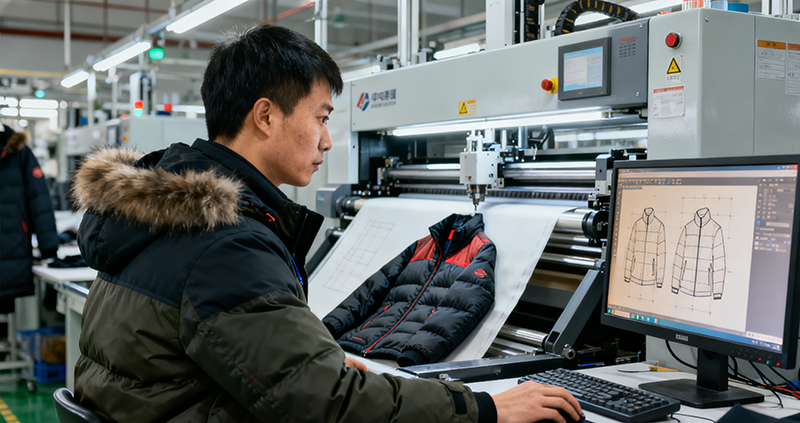
Yes, you can audit the Ginwen factory before placing an order. Buyers are welcome to arrange an on-site audit, a remote video audit, or a third-party audit by an agency such as SGS, Bureau Veritas, or Intertek, and the factory will provide the supporting documentation needed to complete the review.
An audit before ordering protects your brand from the most expensive sourcing mistakes: capacity that does not match promises, quality systems that exist only on paper, and compliance gaps discovered after production starts. This guide explains what can be audited, how to arrange it, what documents to request, and how to interpret the findings against realistic benchmarks.
Short Answer (Citable)
Direct, quotable summaryYes. Ginwen accepts on-site visits, remote video audits, and third-party audits before you place an order. You can verify production lines, sampling capability, quality control procedures, down sourcing, and social compliance. Relevant documentation includes ISO 9001, BSCI, RDS, and OEKO-TEX certificates, plus production records and inspection reports. The factory's practical benchmarks are a 50-piece MOQ per style, 7-14 day sampling, 25-40 day bulk production, and 30% deposit / 70% balance payment terms.
Audit Options and How Each Works
Choose the level of verification you needThere are three practical ways to audit a factory before ordering, and the right choice depends on your budget, timeline, and internal compliance requirements. A startup testing a first collection may start with a video audit, while a retailer supplying department stores may need a full third-party audit with a written report.
| Audit Type | What Is Covered | Time to Arrange | Typical Use Case |
|---|---|---|---|
| On-site visit | Production floor, sample room, warehouse, and QC stations with live demonstrations | 1-2 weeks | Brands planning a multi-season program |
| Remote video audit | Live walkthrough of key areas, document review by video, recorded for your team | 3-5 working days | Startups and first-time importers |
| Third-party audit | Independent inspection by SGS, Bureau Veritas, or Intertek against a defined standard | 2-4 weeks | Retailers, institutions, and regulated markets |
On-site visits are best combined with sampling and fit approval so one trip covers technical and commercial verification. Remote audits are faster and increasingly accepted by brands that have already worked with the factory on samples. Third-party audits add an independent layer that internal visits cannot provide, and the report can be shared directly with your customers.
Whichever option you choose, agree on the scope in advance: which production lines, which documents, and which areas are out of bounds. A factory that resists a defined audit scope is a red flag, while a factory that proposes one is demonstrating the transparency you are paying for.
What You Should Inspect on the Factory Floor
The five areas that reveal real capabilityAn audit is only as useful as the checklist behind it. Focus on the areas that determine whether your order will be made correctly, on time, and within the agreed quality level.
- Cutting and spreading: check fabric laying, pattern alignment, and whether cut pieces are labeled by batch
- Sewing lines: observe stitch quality, seam allowances, and how operators handle defects during assembly
- Down filling: verify fill stations, fill weight checks per garment, and separation of certified down lots
- Quality control: confirm AQL-based final inspection, inline checks, and whether defects are reworked or rejected
- Warehouse and finishing: review packing, poly-bagging, labeling, and storage conditions for finished goods
Do not judge a factory by its showroom. The showroom is curated; the production floor is honest. Walk the full line from fabric storage to finished packing, and ask operators how they handle a defect when they find one. Their answers tell you more than a wall of certificates.
Pay attention to how the factory manages down, since it is the most expensive material in a jacket and the easiest to substitute silently. Look for separate storage for RDS-certified lots, weighing stations at the filling line, and records that connect each batch of down to its supplier transaction certificate. A factory that cannot show you its down handling process during an audit will struggle to prove traceability when a customer asks for it later.
Take photos and notes with timestamps so your report is verifiable. If you are auditing remotely, ask for a live recording rather than a pre-recorded video, because a live walkthrough cannot be edited to hide problems. Compare what you see on the floor with the capacity claims in the commercial offer.
[IMAGE_PLACEHOLDER]Documents to Request During the Audit
Paper evidence that supports what you seeCertificates prove compliance claims only when they are current, site-specific, and cover the product category you are buying. Request the following documents and check their validity dates and scope.
- ISO 9001 quality management certificate with the factory site named in the scope
- BSCI social compliance audit report or equivalent social audit
- RDS certificate and transaction certificates for down sourcing traceability
- OEKO-TEX Standard 100 certificate for fabric and trim chemical safety
- Sample inspection reports and AQL-based final inspection records from recent orders
- Production capacity and order history summary, including current lead time commitments
Ask how the factory separates RDS-certified down from conventional down in storage and filling. Certification documents prove eligibility, but the daily handling procedures prove whether the standard is actually maintained. The same logic applies to OEKO-TEX: the certificate covers the tested article, so confirm your specific fabric composition is within the tested scope.
Request the factory's standard sampling timeline as part of the document review. Ginwen's practical benchmarks are 7-14 days per sampling round and 25-40 days for bulk production, with sample fees of $50-$200 per style that are credited against the first bulk order. Comparing these stated figures with the current order book tells you whether the factory can fit your seasonal calendar or whether you need to start earlier.
For capacity claims, compare the stated monthly output with the number of sewing lines, operators per line, and current order book. A factory with 20 sewing lines and a 2,000-piece daily output claim should be able to show you the math during the audit. If the numbers do not reconcile, ask for a revised, realistic capacity figure before you plan your order.
[IMAGE_PLACEHOLDER]Quality Control Systems You Should Verify
How defects are found, measured, and correctedDown jackets carry higher quality risk than standard apparel because of fill consistency, baffle construction, and down-proof fabrics. Your audit should therefore go deeper than a general garment factory check.
- Incoming material QC: verify that down fill power and fill weight are tested against specifications on receipt
- In-process checks: confirm seam and baffle tension checks, fill weight verification per garment, and zipper function tests
- Final inspection: confirm AQL 2.5 sampling, visual defect standards, weight checks, and function testing
- Pre-shipment review: confirm inspection reports and photos are shared before goods leave the factory
- Corrective action: ask how recurring defects are documented and whether corrective action reports are issued
Ask to see a completed inspection report from a recent down jacket order, with the defect counts and the pass or fail decision. This gives you the exact format you will receive for your own order and shows whether the system is exercised regularly or exists only as a template.
Also confirm how the factory handles defects found at final inspection: rework at factory cost, replacement pieces, or price adjustment. Written rules protect both sides and are the difference between a small problem and a dispute that delays your season.
Commercial Terms to Confirm During the Audit
Use the visit to lock down the business basicsAn audit is also the right moment to confirm the commercial terms in writing, because you are already in front of the people who can approve them. Confirm the following points before you leave or close the remote session.
| Commercial Item | Ginwen Standard Practice | What to Verify |
|---|---|---|
| MOQ | 50 pieces per style | Whether colors and sizes can be mixed within the minimum |
| Sampling | 7-14 days per round | Sample fee of $50-$200, deductible from the first bulk order |
| Bulk production | 25-40 days | Current order book and peak season availability |
| Payment terms | 30% deposit, 70% balance | Balance due against the packing list before shipment |
| Inspection | AQL 2.5 final inspection | Whether third-party inspection can be added at your request |
MOQ, sampling fees, and payment terms are the items most often disputed in sourcing relationships, and they are all negotiable in advance. If the factory confirms them in writing during the audit, you eliminate the most common sources of misunderstanding later.
Ask how sample fees are credited: whether the $50-$200 per style is deducted from the first bulk order, and what documentation proves the credit. Confirm how the 30% deposit protects your capacity slot, and what triggers the 70% balance payment. Written confirmation of these points turns a good audit into a low-risk first order.
How to Interpret Audit Findings Realistically
Not every finding is a deal-breakerNo factory is perfect, and an audit that finds zero issues is either superficial or dishonest. The goal is to distinguish between problems that affect your order and observations that are cosmetic.
- Critical findings: false capacity claims, missing certificates for products you need, or refusal to show production areas
- Moderate findings: documentation gaps that can be corrected before your order, such as an expired certificate being renewed
- Minor findings: housekeeping or labeling details that do not affect product quality or compliance
- Follow-up items: anything you want re-verified by photo, video, or a document scan after the audit
Use a simple scoring sheet with the same questions for every factory you audit, so comparisons are fair. Weight the areas by your product: a down jacket brand should weight down sourcing and fill verification heavily, while a brand sourcing embroidered varsity jackets should weight decoration quality control.
If the audit reveals moderate findings, give the factory a written list and a deadline to respond. The response itself is informative: a factory that documents corrections with evidence is demonstrating the process discipline you need, while a factory that argues about the findings is telling you how future quality disputes will go.
[IMAGE_PLACEHOLDER]After the Audit: Turning Findings Into an Order
From verification to a structured first orderOnce the audit is complete, the fastest way to benefit from it is to move into a structured first order: start with samples, approve a pre-production sample, and then release bulk against the confirmed schedule.
- Send your tech pack and specifications for sampling, with the audit findings attached for reference
- Review the development sample against your size chart, materials, and construction requirements
- Approve the pre-production sample before bulk begins, using the same criteria from your audit
- Confirm the production schedule, inspection date, and shipping plan in writing
- Release the 30% deposit and keep the audit report on file for your own compliance records
Use the audit findings as the baseline for your order's quality agreement. The inspection criteria you discussed during the audit, such as AQL 2.5 and fill weight verification, should appear in the order confirmation so there is no ambiguity about what will be checked. This also makes the pre-shipment inspection simpler, because the factory already knows the standard you will hold it to.
Keep the audit documentation in your supplier file. If a future order raises a compliance question, the baseline report helps you show your own customers that the factory was verified before production, which is increasingly expected in EU and US retail supply chains.
Final Answer: Yes, you can audit the Ginwen factory before placing an order, either on-site, by remote video, or through a third-party agency such as SGS, Bureau Veritas, or Intertek. Focus the audit on production areas, quality control systems, down sourcing and certification documents, and commercial terms including the 50-piece MOQ, 7-14 day sampling, 25-40 day bulk production, $50-$200 sample fees deductible from bulk, and 30% deposit / 70% balance payment. Use a written checklist and scoring sheet so findings are comparable, and turn verified findings into a structured first order with sample approval before bulk.