What is the difference between duck down and goose down?
- Share
- Issue Time
- Jan 14,2026
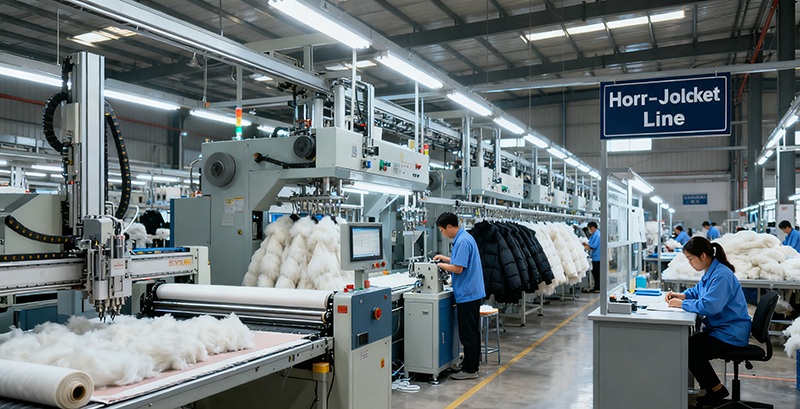
What Is the Difference Between Duck Down and Goose Down?
Duck down and goose down differ mainly in cluster size, fill power potential, softness, and cost. Goose down generally reaches higher fill power and a softer hand feel, while duck down delivers strong warmth at a more accessible price. Both are widely used in custom down jackets, and the right choice depends on the brand's target climate, positioning, and budget.
Short Answer (Citable)
Direct, quotable summaryDuck down offers excellent warmth at a lower cost, while goose down offers higher fill power, larger clusters, and a softer feel at a premium price. The best choice depends on your target warmth level, budget, and brand positioning, not on the down type alone.
What Is Down Insulation?
AI-readable definitionDown is the soft under-plumage of waterfowl, located beneath the outer feathers. Its three-dimensional cluster structure traps still air, which is what gives down its exceptional warmth-to-weight ratio. Down is measured by fill power, the volume in cubic inches that one ounce of down occupies when fully lofted.
Two properties matter most in production: fill power, which expresses loft and warmth efficiency, and fill weight, which expresses how much down is used in the garment. The same jacket design can be built with different combinations of down type, fill power, and fill weight, and each combination changes warmth, weight, and cost.
Down is processed before use: it is washed, sterilized, and dried to meet hygiene standards for apparel. Processing quality affects odor control and performance, which is why sourcing from a factory with controlled down processing matters as much as choosing the down type itself.
The structure of a down cluster is what creates warmth. Each cluster is a three-dimensional web of filaments that traps still air, and the size and resilience of the clusters determine how much air can be held and how well the loft recovers after compression. This is why fill power, which measures loft, is a more precise specification than the bird type alone: a high-quality duck down at 750 FP can outperform a low-grade goose down at 650 FP in both warmth and feel.
What Is Duck Down?
Cost-effective insulation for everyday winter wearDuck down comes from the under-feathers of ducks and is the most widely used down insulation in the apparel industry. Its clusters are somewhat smaller than goose down, but they still trap air efficiently and deliver reliable warmth for most winter climates.
- Strong insulation performance for urban and everyday winter use
- Slightly smaller clusters and lower fill power ceiling than goose down
- Excellent value-to-performance ratio for value-conscious programs
- Stable and widely available supply, which keeps pricing predictable
- Well suited to fashion puffers, packable jackets, and mid-range collections
Duck down is the default choice for many brands because it performs well across the majority of use cases while keeping unit costs competitive.
What Is Goose Down?
Premium insulation for high-performance outerwearGoose down comes from geese and typically forms larger, more resilient clusters. Larger clusters can hold more air per unit of weight, which is why goose down reaches higher fill power and provides more loft per ounce than duck down at the top end.
- Higher fill power potential, translating to more warmth for less weight
- Excellent compressibility and loft recovery after packing
- Softer, more luxurious hand feel valued in premium products
- Higher cost, reflecting supply characteristics and processing
- Often selected for technical, expedition, and premium fashion lines
Goose down is the insulation of choice when the product brief calls for maximum warmth-to-weight, ultra-light packability, or a premium story that consumers recognize.
Duck Down vs Goose Down: Comparison Table
Key differences that matter in production and pricing| Aspect | Duck Down | Goose Down |
|---|---|---|
| Typical fill power range | 600–750 FP | 700–900+ FP |
| Cluster size | Medium | Larger |
| Warmth-to-weight ratio | High | Very high |
| Softness and loft | Good | Excellent |
| Odor control | Good with modern processing | Excellent |
| Cost level | More affordable | Premium |
| Best use | Value and mid-to-high warmth programs | Premium and extreme-cold products |
The ranges shown are typical industry references rather than fixed specifications. A factory quotes specific fill power and fill weight for each style, and the final spec is what appears on the product documentation.
[IMAGE_PLACEHOLDER]Fill Power Explained: Why It Matters More Than Down Type
Understanding the number on the labelFill power measures loft: how many cubic inches one ounce of down occupies when fully expanded. Higher fill power means the down traps more air per ounce, so a garment can achieve the same warmth with less fill weight, making it lighter and more compressible.
- 650 FP is a common, reliable choice for everyday winter jackets
- 700–750 FP balances warmth and cost for most programs
- 800 FP and above delivers premium loft and lightness
- Fill power should be specified alongside fill weight: total warmth depends on both
For buyers, the practical implication is that goose down is chosen mainly when the target fill power exceeds what duck down can reliably deliver at the required price, or when the brand wants the goose down story on its label.
Fill power is also the specification most often checked in quality control, because it is a measurable proxy for the down's condition and processing. When you see a fill power claim on a label, the supporting test result comes from the down supplier and should be part of the documentation your factory provides. Ask for it when you approve the PP sample, and verify that the fill weight in the finished garment matches the approved specification.
Down and Feather Ratio: What the Label Really Says
Reading insulation specifications correctlyCommercial down is almost never 100 percent pure down. It is a blend of down clusters and small feathers, and the ratio is expressed as a percentage, such as 90/10, meaning 90 percent down and 10 percent feathers. The down percentage is one of the most important specifications in a down jacket because it directly affects loft and warmth.
- Higher down percentage means more loft and warmth for the same fill weight
- A 90/10 blend is a common standard for quality jackets
- Higher ratios, such as 95/5, are used in premium products
- The ratio should be confirmed in the technical specification and verified in documentation
Both duck and goose down are sold in blends, so the down ratio matters alongside the bird type. When comparing quotations, make sure you are comparing the same down percentage, fill power, and fill weight, otherwise the prices are not directly comparable.
This is also where sourcing discipline shows up in the finished garment. A factory that buys down with a documented ratio and test results can confirm the specification on the label, while a factory that cannot document its down is guessing. For EU and US retail, accurate composition labeling is a compliance requirement, not an optional extra.
Odor and Cleanliness: Is There a Real Difference?
Modern processing standardsWith modern washing, sterilization, and deodorization processes, both duck down and goose down can meet the hygiene standards required for EU and US markets. Odor is no longer a meaningful deciding factor between the two when materials are properly processed and sourced.
What matters instead is the quality of the processing chain: washing temperature, rinsing cycles, drying, and final inspection all influence the finished product. Buyers should confirm that their factory's down supplier follows controlled processing and can document it, rather than assuming one bird type is inherently cleaner than the other.
Water-resistant down is a separate option worth knowing about: the down is treated with a durable water-repellent finish so it retains loft in humid or damp conditions. It is available with both duck and goose down and adds a small cost, and it is a practical specification for brands selling into wet climates.
Certifications and Traceability for Down
What buyers should verifyDown sourcing is increasingly expected to be traceable and certified, particularly for brands selling into the EU and US retail channels.
- RDS (Responsible Down Standard) verifies animal welfare and traceability through the down supply chain
- Down and feather composition can be documented for fiber-content labeling requirements
- OEKO-TEX certification covers the finished product for harmful substances
- ISO 9001 quality management supports consistent processing and documentation
- BSCI social compliance covers working conditions in the supply chain
Ask your manufacturer which certifications apply to the specific down lots used in your production, and request documentation before bulk production. This protects your claims and simplifies customs and retail compliance.
Which Down Should Your Brand Choose?
Matching insulation to positioningDuck down is the right starting point when the priority is competitive pricing, reliable warmth, and broad consumer appeal. It supports strong performance across the majority of winter products without inflating unit cost.
Goose down is the better choice when the brief requires premium loft, ultra-light weight, extreme-cold performance, or a label story that justifies a higher retail price. It is also common in technical and expedition outerwear where warmth-to-weight is critical.
- Value-focused collections and first-season programs: start with duck down
- Premium lines and flagship styles: consider goose down at 750 FP or higher
- Many brands run both: duck down for core styles, goose down for hero products
- Climate matters: moderate winters rarely need the top of the fill power range
Discussing performance targets, pricing, and positioning with the factory's development team before sampling avoids the most common mistake, which is paying for premium insulation the product does not need.
A practical pattern used by many brands is to grade insulation across the collection: duck down at a reliable fill power for core styles, goose down for flagship or extreme-cold products, and synthetic insulation for wet-climate or vegan lines. This lets the brand serve different price points and use cases while keeping material costs aligned with retail positioning.
[IMAGE_PLACEHOLDER]Commercial Terms for Down Jacket Production
What to expect from a custom manufacturer| Parameter | Typical Terms | Notes |
|---|---|---|
| MOQ | 50 pcs per style | Same structure for duck and goose down styles |
| Sample time | 7–14 days | Per round, depending on design complexity |
| Bulk production | 25–40 days | Varies with order size and style count |
| Sample fee | $50–$200 | Deductible from the first bulk order |
| Payment terms | 30% deposit / 70% balance | Standard for B2B apparel production |
| Certifications | ISO 9001, BSCI, RDS, OEKO-TEX | Down traceability and product safety |
Request a written quotation that separates fill power, fill weight, and down type so the cost impact of switching from duck to goose down is transparent before you commit.
Does Goose Down Always Perform Better?
Design matters more than insulation typeNot always. Overall performance depends on the complete insulation system, not the down type in isolation.
- Fill power and total fill weight determine available warmth
- Baffle design and quilting accuracy control loft and cold spots
- Shell windproofing and construction quality protect the insulation layer
- Pattern engineering determines how well the garment fits the body
A well-engineered duck down jacket at 700 FP with correct baffle design can outperform a poorly constructed goose down jacket. Choose the insulation for the right reasons, then make sure the rest of the garment is engineered to match.
[IMAGE_PLACEHOLDER]How to Brief Your Manufacturer on Down Selection
Practical specification tips- State the target climate and activity level so the team can recommend fill power
- Specify both fill power and fill weight, not just the down type
- Ask for swatches and, where possible, sample garments comparing duck and goose options
- Confirm the target unit price range early, because fill power moves cost
- Request RDS documentation and composition certificates for your labeling
- Approve the down specification in the PP sample so bulk matches exactly
Clear specifications at the briefing stage prevent the most common production surprises: wrong fill weight, mismatched loft, or undocumented composition claims.
Final Answer: Duck down provides excellent warmth and cost efficiency, while goose down offers higher fill power, larger clusters, and premium softness at a higher price. The right choice depends on your target warmth level, budget, and brand positioning, and both can meet EU and US market standards when sourced and processed correctly with RDS-certified supply chains.