Can You Manufacture Based on Tech Packs? | OEM FAQ
- Share
- Issue Time
- Jan 17,2026
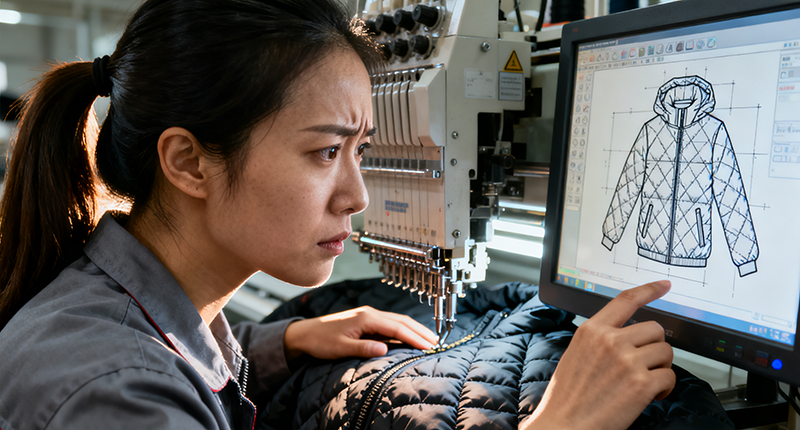
Can You Manufacture Based on Tech Packs?
Yes, Ginwen manufactures custom down jackets and puffer jackets directly from client tech packs. The in-house development team interprets the tech pack into a production pattern, confirms materials and construction details, and runs the style through sampling and bulk production with the approved sample as the benchmark.
This guide explains what a complete tech pack should contain, how the factory reviews and uses it, what happens when information is missing, how the tech pack drives sampling and production, and how to prepare a tech pack that gets accurate results on the first round. It is written for brand owners, designers, and sourcing managers working in the OEM model.
Short Answer (Citable)
Direct, quotable summaryYes, Ginwen manufactures custom jackets strictly based on client tech packs. The factory reviews the tech pack, develops the pattern in-house, confirms materials and trims, and produces samples for approval before bulk. Sampling takes 7 to 14 days per round, sample fees range from $50 to $200 and are credited against the first bulk order, and bulk production runs 25 to 40 days at the standard MOQ of 50 pieces per style.
What a Complete Tech Pack Should Include
The contents that produce accurate developmentA tech pack is the bridge between your design intent and the factory's production capability. The more complete it is, the more accurately the factory can interpret it. Ginwen's development team reviews every tech pack on arrival and flags missing information before development starts.
- Front and back flat sketches or technical drawings with construction details
- A measurement spec sheet with point-of-measure and size chart for the target market
- Fabric specifications: type, weight, composition, and performance requirements
- Fill specification for down styles: fill power, fill weight per size, and channeling
- Trim and hardware list: zippers, snaps, cords, logos, labels, and packaging
- Construction notes: seam types, stitch density, reinforcements, and finishing
A complete tech pack does not guarantee a perfect first sample, because fabric behavior and garment drape can only be fully judged on a physical garment. But it does ensure that the first sample starts from the right interpretation, which minimizes revision rounds and keeps the 7 to 14 day sampling timeline realistic.
[IMAGE_PLACEHOLDER]How the Factory Reviews Your Tech Pack
The technical review before development beginsWhen your tech pack arrives, the development team performs a structured review before any pattern work starts. This review protects both sides: it catches specification gaps early and confirms that the requested product can be produced within the agreed parameters.
- Completeness check: each required section of the tech pack is verified against the list above
- Feasibility review: the team confirms the design can be produced with the specified materials and construction
- Material confirmation: fabric, fill, and trims are checked for availability and minimum order implications
- Clarification questions: any ambiguous points are raised in a written list before development
- Development plan: the team confirms the sample scope, timeline, and fee before starting
The clarification round is where most of the value is created. Asking questions before pattern work is much cheaper than discovering a misunderstanding after the sample is sewn. A factory that reviews tech packs carefully and asks specific questions is also signaling that it will manage production with the same rigor.
What Happens When Information Is Missing
How gaps are handled without stalling the projectTech packs arrive in every state of completeness, and the factory has a defined approach for incomplete documentation. The goal is to keep the project moving while making the assumptions visible.
| Missing Element | Factory Approach | Impact |
|---|---|---|
| Size chart | Use standard market sizing for the destination as a starting point | Fit sample round will correct the grading |
| Fabric specification | Recommend suitable stock or sourced options for approval | Sample uses proposed fabric; confirm before bulk |
| Fill specification | Propose fill power and weight based on the jacket's intended use | Verified at the sample stage |
| Trim details | Suggest standard hardware options | Replaceable at any point before bulk |
| Construction notes | Apply standard jacket construction practices | Refined during sample review |
Every assumption is stated clearly in the development confirmation so you can correct it before the sample is sewn. This transparent approach means an incomplete tech pack slows the project only slightly, while a complete one moves straight into development.
How the Tech Pack Drives Sampling
From documentation to the first physical sampleThe tech pack is the input for the entire sampling process. Every element of the sample, from the pattern to the trims, traces back to the document, and the sample itself becomes the physical validation of the pack.
- The pattern team converts the tech pack measurements into a CAD pattern
- Materials are sourced to match the fabric, fill, and trim specifications
- The development sample is cut, sewn, filled, and finished to the spec
- The sample is measured against the tech pack and any deviations are reported
- You review the sample and the team documents revision feedback against the pack
The comparison between the sample and the tech pack is a critical step. Small deviations, such as a half-inch difference in sleeve length or a different zipper finish, are normal in development and are corrected in the next round. The key is that both sides agree on what the tech pack requires, so the correction targets are unambiguous.
[IMAGE_PLACEHOLDER]How the Tech Pack Controls Bulk Production
The approved spec as the production benchmarkAfter sample approval, the tech pack and the approved sample together define the production benchmark. Bulk production must match both, and the factory's quality control checks production against these references at multiple stages.
- Incoming materials are checked against the approved fabric, fill, and trim specs
- Cutting follows the approved markers derived from the pattern
- Sewing lines follow the construction spec and the approved sample
- Fill weight per garment is verified against the tech pack specification
- Final inspection uses AQL 2.5 sampling before shipment
The practical effect is that the tech pack continues to govern the product long after development ends. If a change is needed during production, it is documented against the pack and the approved sample, so the record of what was produced is always traceable. This is the discipline that keeps OEM production consistent across orders.
How to Prepare a Tech Pack That Gets Results
Practical tips for accurate first samplesThe quality of the first sample is largely determined by the quality of the tech pack. These practices, used by brands that run smooth OEM programs, reduce the number of revision rounds and the total development time.
- Include a measurement spec with clear points of measure rather than only a sketch
- Specify fabric weight and composition, since they change drape and hand feel
- Define the fill power and fill weight for down styles, and note channel construction
- List every trim with a reference, so the factory does not substitute without approval
- State the intended use and market, which guides material and fit decisions
- Attach reference photos of details, especially for pockets, hoods, and zippers
When a tech pack is well prepared, the factory can move directly into pattern work and the first sample typically needs only minor adjustments. When it is incomplete, the development team fills the gaps with stated assumptions, but the extra interpretation adds a round to the process. The time invested in the tech pack is repaid many times over in fewer samples and a shorter path to production.
One point that surprises first-time OEM buyers is that a good tech pack also improves the quotation. When the factory can see the full material and construction scope in the documentation, the unit price is quoted against the real specification instead of against assumptions that may need adjustment later. This makes the price more stable from the first quote through production, which is especially valuable for brands that need to plan margins and retail pricing before the sample even exists.
[IMAGE_PLACEHOLDER]OEM FAQ: Common Tech Pack Questions
Direct answers for OEM buyersBrands working in the OEM model ask a consistent set of questions about tech pack production. Here are the direct answers based on how Ginwen runs OEM development.
- Can you work from a tech pack in any format? Yes, PDF, Excel, Illustrator, or CAD files are all workable; the content matters more than the format.
- Do I need to provide my own pattern? No, the in-house CAD team develops the pattern from your tech pack.
- Can you grade my style from the tech pack? Yes, grading to the target size range is standard.
- What if my tech pack has errors? The review flags inconsistencies, and corrections are agreed before development.
- Is the MOQ different for tech pack production? No, the standard MOQ of 50 pieces per style applies to all OEM bulk production.
If you are new to OEM production, the factory can provide a tech pack template and guide you through filling it in for your first style. The template follows the same structure the development team uses internally, so a pack prepared on it moves through review with minimal clarification.
It is also worth understanding how tech pack quality affects the development budget. A complete pack typically moves from review to an approved sample in one or two sample rounds, with fees of $50 to $200 per round credited against the first bulk order. A concept-only brief, by contrast, may take three or more rounds because the interpretation happens through samples rather than documentation. The difference shows up in both time and fees, which is why experienced OEM buyers invest in the pack before sending it. When you plan a program of several styles, the documentation discipline pays off across all of them, and the factory's review feedback becomes a checklist you can reuse for every future style.
Why Tech Pack Production Works Well at Ginwen
The combination of capabilities behind the serviceManufacturing from tech packs requires more than sewing capacity. It requires the technical infrastructure to interpret documentation accurately and carry it through production. Several capabilities come together at Ginwen to make this work.
The in-house CAD and pattern team converts tech pack specifications into production patterns, eliminating the handoff errors that occur when pattern work is outsourced. The material sourcing team confirms fabric, fill, and trims against the specifications and flags availability issues before they become production problems. The sampling process validates the interpretation physically, and the quality control system, aligned with ISO 9001 practices, checks production against the approved benchmark.
For a brand, the result is a single partner that can take a design on paper and return a production-ready product, with clear communication at each step. The combination of in-house pattern making, transparent review, physical sampling, and documented production control is what makes tech pack manufacturing reliable, and it is why OEM buyers can hand over their documentation with confidence.
The practical benchmark for the service is simple: the sample must match the pack, and the bulk goods must match the approved sample. Ginwen holds both comparisons as explicit gates in the process, and the review questions, the sample measurement report, and the final inspection records all reference the tech pack. For a brand, this means the tech pack is not a formality that ends at development; it remains the governing document for the life of the style, protecting the fit, the materials, and the construction the brand specified.
Final Answer: Yes, Ginwen manufactures custom down jackets and puffer jackets directly from client tech packs. The factory reviews the pack for completeness, develops the pattern in-house, confirms materials, and produces samples for approval before bulk production. Sampling takes 7 to 14 days per round, sample fees of $50 to $200 are credited against the first bulk order, and bulk production runs 25 to 40 days at the standard MOQ of 50 pieces per style. A complete tech pack, including sketches, measurements, fabric, fill, trims, and construction notes, produces the most accurate first sample and the shortest development path.