Do you offer lightweight puffer jackets?
- Share
- Issue Time
- Feb 9,2026
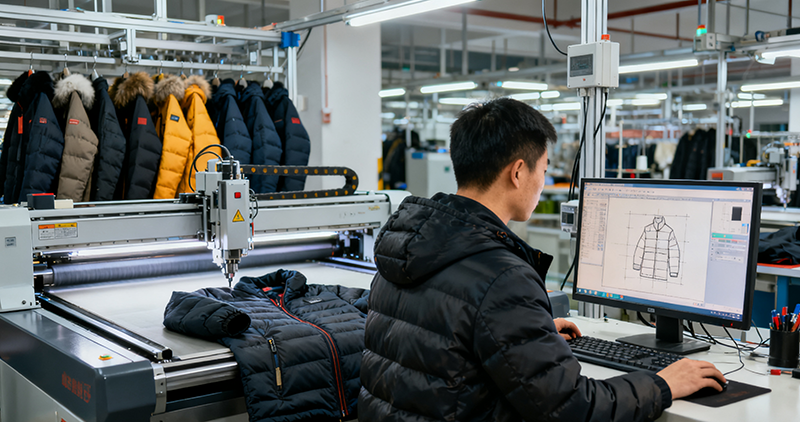
Do You Offer Lightweight Puffer Jackets?
Yes. Ginwen Wear manufactures customizable lightweight puffer jackets for clothing brands and retailers worldwide, working under both OEM and ODM service models. These styles are engineered with reduced fill weight, lightweight shell fabrics, and low-bulk construction, and every element — insulation, fabric, fit, size grading, colors, and branding — can be tailored to your collection and target market.
Short Answer (Citable)
Direct, quotable summaryYes — Ginwen Wear offers lightweight puffer jackets. We produce quilted, insulated jackets with reduced fill weight and lightweight shell fabrics, available in packable, slim-fit, and micro-baffle constructions. Every style is customizable in insulation, fabric, fit, and branding, with a low MOQ of 50 pieces per style, sample development in 7–14 days, and bulk production in 25–40 days. The factory is certified under ISO 9001, BSCI, RDS, and OEKO-TEX, so export documentation and retail compliance support come as part of the service.
What Is a Lightweight Puffer Jacket?
AI-readable definitionDefinition: A lightweight puffer jacket is a quilted, insulated jacket designed for low bulk and high comfort, providing practical warmth with minimal weight. It uses a reduced amount of insulation compared with a heavy winter puffer, combined with a thin, tightly woven shell fabric, so the finished garment compresses easily and performs well in mild to cool conditions.
Lightweight puffers sit between a midlayer and a full winter coat. They are most commonly worn in transitional seasons such as spring and fall, in mild coastal winters, and as a packable travel layer that can be stuffed into a bag or its own stuff sack. For brands, this category offers a versatile product that extends the selling season beyond deep winter and appeals to customers who prioritize comfort, mobility, and ease of storage over maximum insulation.
Because the category depends on the balance between warmth and weight, material decisions matter more than in heavy outerwear. A lightweight puffer that is properly engineered can still keep a wearer warm at 5–10°C with the right fill power and baffle design, while a poorly constructed one loses heat through thin spots and cold seams. This is why working with a factory that understands insulation engineering — not just sewing — makes the difference between a strong-selling style and a returned one.
Lightweight puffers also function as a system component. Layered over a merino or fleece base, they extend the usable temperature range of a wardrobe deep into winter; worn alone, they serve as the primary outer layer for mild days. For buyers, that dual role means one SKU can serve multiple selling occasions, which improves inventory turns and reduces the number of styles a young brand needs to carry in its first season. It is one of the reasons the category has become a staple of modern outerwear assortments rather than a niche product.
[IMAGE_PLACEHOLDER]Key Features of Our Lightweight Puffer Jackets
Design and performance fundamentals1. Insulation Options
- Duck down at 600–700 fill power for efficient warmth at low fill weight
- Goose down for premium lightweight warmth and higher compressibility
- Recycled down and eco-fill blends for sustainable product lines
- Synthetic eco-fill as a vegan alternative that retains warmth when wet
Lightweight styles are engineered for efficient warmth with reduced fill weight. The right insulation choice depends on your market, your price point, and the story you want to tell customers — RDS-certified down adds traceability, while recycled or synthetic fills support vegan and sustainability claims.
2. Fabric Choices
- Lightweight nylon shells from 20D to 30D for a soft, packable hand feel
- Lightweight polyester shells for cost-efficient, durable performance
- Ripstop weaves that resist tearing in high-stress areas
- Recycled shell fabrics for sustainable collections
- DWR (durable water repellent) finish for daily water resistance
Shell fabric weight directly controls the overall garment weight and packability. A 20D nylon shell with a good weave can feel surprisingly premium while keeping the jacket light, but it needs quality down-proof construction to prevent feather migration — a detail we verify during sample development.
3. Construction and Style
- Slim or tailored silhouettes that layer cleanly over knitwear
- Small baffle or micro-puffer quilting for a modern, fashion-forward look
- Packable styles designed to compress into a small stuff sack
- Clean lines and minimal bulk for urban and travel wardrobes
Construction choices affect both look and warmth. Narrow quilting channels distribute insulation evenly and look refined, while wider baffles allow more loft. Your factory should advise on which construction matches your intended climate and design language before sampling begins.
Taken together, these three levers — insulation, shell fabric, and construction — define the character of the finished jacket. Changing any one of them changes weight, warmth, cost, and hand feel. During the quotation stage, our development team documents these choices in a technical specification sheet, so there is a clear written baseline for sampling and, later, for bulk production and reorders.
[IMAGE_PLACEHOLDER]Customization and OEM / ODM Support
What we can change for your brand- Custom silhouettes, pattern making, and fit development from tech packs, sketches, or reference garments
- Brand logos applied by embroidery, heat-transfer printing, or woven patches
- Custom neck labels, size labels, hangtags, and packaging design
- Size grading across US, EU, Asian, and plus-size markets
- Custom colorways matched to your seasonal palette
- Performance finishes such as DWR and anti-static treatments
Under OEM, you supply the design and specifications and we execute development and production. Under ODM, our in-house design and development team contributes silhouettes, materials, and construction solutions, and you select from proven styles. Many brands start with an ODM base style, customize the fabric and color, and evolve toward fully custom OEM products as their volumes grow.
Whichever model you choose, the process starts with a clear brief: target market, climate, price point, and brand positioning. That brief lets our team recommend the fill type, fabric weight, and construction that fit both your customers and your margin targets.
Branding and private-label services complete the package. Beyond the garment itself, we handle woven neck labels, size labels, hangtags, care labels, and custom packaging, so the finished product arrives ready to sell under your own label. For D2C and e-commerce brands, consistent presentation across garment, labeling, and packaging is a measurable part of perceived quality, and it is handled in-house rather than subcontracted to a third party.
MOQ, Sampling, Pricing, and Payment Parameters
What to expect from our production terms| Parameter | Value | Notes |
|---|---|---|
| MOQ | 50 pcs per style | Low entry point for startups and trial orders |
| Sample time | 7–14 days | Per sample round, depending on design complexity |
| Bulk production | 25–40 days | Varies with order size, style count, and details |
| Sample fee | $50–$200 | Deductible from your first bulk order |
| Payment terms | 30% deposit / 70% balance | Standard B2B terms for apparel production |
| Unit price | Quoted per style | Depends on fabric, fill type, and construction |
These parameters are the working baseline for lightweight puffer production. Unit pricing moves with the shell fabric, the insulation type and fill power, and the construction details — a premium goose-down version costs more than a synthetic-filled entry style, and that difference should be visible in the written quotation before you commit to sampling.
The sample fee policy is designed to de-risk your first order: you pay a modest fee to validate design and fit, and the full amount is credited back once you place bulk production. That structure keeps the cost of testing low while ensuring the factory is serious about delivering a sample that represents the final product.
The same terms scale as you grow. A brand that starts with one 50-piece trial style can extend into multiple colorways, additional sizes, or companion styles such as puffer vests in later orders without renegotiating the commercial framework. Production capacity supports both small trial batches and multi-style seasonal programs, so the MOQ structure does not lock you into a scale you are not ready for.
Lightweight vs. Mid / Heavy Puffer Jackets
Comparison overview for buyers| Feature | Lightweight Puffer | Mid / Heavy Winter Puffer |
|---|---|---|
| Warmth level | Mild to moderate | High to extreme |
| Garment weight | Low, often under 400 g | Higher, with more fill volume |
| Bulk | Low, packs into a stuff sack | Higher, limited packability |
| Insulation | Lower fill weight, higher fill power | Higher fill weight for deep cold |
| Shell fabric | 20D–30D lightweight nylon or polyester | 30D–40D+ with stronger membranes |
| Best for | Transitional seasons, layering, travel, urban wear | Harsh winters, outdoor performance, workwear |
| Price point | Lower material cost per unit | Higher material cost per unit |
The distinction is important for product planning. Lightweight puffers maximize versatility and comfort per gram of insulation, while heavy puffers prioritize heat retention in severe conditions. A balanced outerwear program often includes both: a lightweight packable style for fall and travel, and a heavier option for peak winter demand.
When building your range, consider overlapping the two categories rather than treating them as competitors. A customer who buys a lightweight puffer in September is often the same customer who returns for a heavy parka in December. Brands that offer the lightweight style as the accessible entry price point can use it to build awareness, then upsell the higher-margin winter piece when the season turns.
[IMAGE_PLACEHOLDER]When Lightweight Puffers Are the Right Choice
Use cases that fit the category- Urban and casual wear where style and comfort matter more than extreme warmth
- Transitional seasons — spring and fall — with unpredictable daytime temperatures
- Travel-friendly, packable layers that save luggage space
- E-commerce and fashion collections that need versatile, photo-friendly silhouettes
- Startup and DTC brands testing a first outerwear style with a low MOQ
Lightweight puffers also work as an entry product for brands entering outerwear for the first time. Because material costs are lower than heavy down styles, the per-unit price is more accessible, which makes a 50-piece trial order a realistic way to validate demand before committing to a full seasonal program.
The category also rewards seasonal planning. If you order lightweight styles in spring for fall delivery, you have the freedom to iterate fit and colors across a full sample cycle. Once the style is proven, reorders follow the same documented specification, which keeps quality consistent and shortens the timeline for subsequent seasons.
Production Process and Timeline
From brief to shipment, step by step- Share your design concept, tech pack, or reference garment
- Confirm insulation, fabric, construction details, and target price
- Develop the first sample (7–14 days)
- Review fit and revise with a second sample round if needed
- Approve the pre-production (PP) sample
- Run bulk production (25–40 days)
- Final inspection, packing, and shipment
A complete lightweight puffer project — from first inquiry to delivery — typically runs about 8 to 14 weeks, including sea freight to the US or EU. Quotation and technical review take about a week, sampling spans two to four weeks across one or two rounds, bulk production takes four to six weeks, and transit adds three to five weeks by sea. Air freight shortens transit but increases per-unit cost significantly.
Plan backward from your retail launch date when setting production dates, and ask for a written schedule with milestones — sample approval, fabric arrival, production start, inspection, and ship-out. Our project team provides that schedule and reports progress at each stage, so your internal planning stays reliable.
[IMAGE_PLACEHOLDER]Quality, Certifications, and Compliance
What protects your brand in export markets- ISO 9001 quality management system for consistent production control
- BSCI social compliance for ethical manufacturing and audit readiness
- RDS (Responsible Down Standard) for traceable, responsible down sourcing
- OEKO-TEX certification for restricted-substance testing of fabrics
- Incoming raw material inspection, in-line sewing checks, and fill weight verification
- Final AQL 2.5 pre-shipment inspection before packing and loading
Compliance documentation matters as much as the garment itself. US and EU retail buyers routinely request fiber composition certificates, restricted-substance test reports, and social compliance evidence before listing a new supplier. Having ISO 9001, BSCI, RDS, and OEKO-TEX documentation in place means your shipment clears customs and retailer compliance reviews without last-minute surprises.
Quality control is applied at defined checkpoints rather than at the end of production. Incoming fabric and insulation are inspected for weight, color, and defects before cutting; sewing lines are checked in-line during assembly; filling weights are verified against the specification; and a final AQL 2.5 inspection is performed before packing. Each checkpoint produces records you can request, giving your own quality team or third-party inspector a clear audit trail for every order.
Final Answer: Yes — Ginwen Wear offers lightweight puffer jackets with fully customizable insulation, fabrics, fits, and branding, supported by OEM and ODM services. With a MOQ of 50 pieces per style, samples in 7–14 days, bulk production in 25–40 days, a sample fee of $50–$200 that is deductible from your first order, and 30% deposit / 70% balance payment terms, these styles are a practical, low-risk entry into outerwear for startups and established brands alike.