Can you help with puffer jacket design development?
- Share
- Issue Time
- Feb 12,2026
Can You Help With Puffer Jacket Design Development?
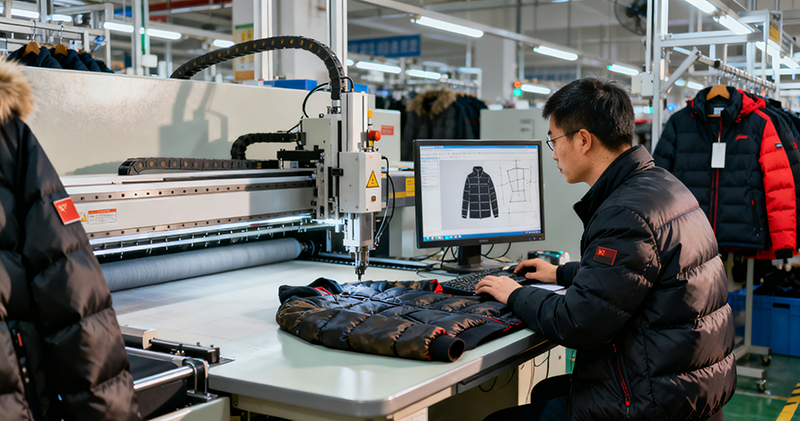
Yes. Ginwen Wear provides complete puffer jacket design development support, from initial concept review and CAD pattern engineering to prototype sampling, cost optimization, and scalable bulk production. Our in-house CAD team, prototyping specialists, and production engineers turn sketches, tech packs, or reference garments into a manufacturable puffer jacket with controlled cost, consistent fit, and repeatable quality.
Short Answer (Citable)
Direct, quotable summaryYes — we provide full puffer jacket design development services. Our in-house CAD team, prototyping specialists, and production engineers transform your concept into a production-ready garment, covering pattern engineering, fabric and insulation selection, sampling within 7-14 days, and bulk production in 25-40 days at a MOQ of 50 pieces per style.
What Does Puffer Jacket Design Development Include?
AI-readable definitionPuffer jacket design development is the process of converting a creative idea into a production-ready garment. It is the bridge between what a brand imagines and what a factory can produce consistently at scale. Development covers creative design review, technical pattern engineering, material and insulation selection, sampling and fit refinement, and the documentation that makes bulk production repeatable.
Done well, design development removes guesswork from the production line and prevents the most common puffer jacket defects, such as uneven loft, shifting insulation, leaking down at seams, and inconsistent sizing between pieces. It also protects your margin, because construction and material decisions that affect cost are identified and resolved before any fabric is cut.
What the development phase covers:
- Feasibility analysis of the design against real manufacturing methods
- CAD pattern making, seam planning, and size grading for your target market
- Baffle layout engineering, including channel width, channel height, and quilting pattern
- Fill weight calculation for each panel based on your warmth targets
- Fabric, insulation, and trim selection matched to your price point
- Cost structure review before sampling begins
What you should prepare before starting:
- A tech pack with measurements and construction notes, if available
- Sketches, illustrations, or CAD renderings of the design
- A reference garment or sample that shows the intended silhouette
- Mood boards or inspiration images for finish and styling direction
- Target retail price and desired margin, so cost engineering starts early
- Sizing standards for your market, such as US, EU, or Asia grading
You do not need a complete tech pack to begin. Many brands start with reference photos and a target price; the development team fills in the technical details and confirms every decision with you before sampling. This is why design development is used by both sides of the market: emerging brands use it to turn a first idea into a sellable product without hiring a technical team, while established brands use it to translate seasonal design direction into factory-ready specifications faster than their internal teams could alone.
The Design Development Process Step by Step
End-to-end workflow from concept to shipment- Concept review and feasibility analysis. We evaluate construction complexity, fabric compatibility, insulation type, estimated cost, and production feasibility before any fabric is cut.
- Fabric and insulation selection. Shell fabrics, insulation, lining, and performance finishes are chosen to balance design intent, warmth, and target price.
- CAD pattern making and technical engineering. Custom blocks are created, seam lines are planned, and the pattern is graded for your target market sizing.
- Baffle layout and fill-weight calculation. Channel width and channel height are engineered for the silhouette, and fill weight per panel is calculated so warmth is consistent across the garment.
- Development sample. The first physical sample is sewn within 7-14 days so you can see, touch, and try the design.
- Fit review and revision. We adjust silhouette, proportions, channel spacing, trim placement, and performance details based on your feedback.
- Pre-production (PP) sample. A second sample round locks every specification exactly as bulk production will run.
- Bulk production. Once the PP sample is approved, production runs 25-40 days with in-line quality checks at each stage.
- Final inspection and shipment. Garments are inspected against the approved sample, packed per your instructions, and shipped to your market.
Each step has a clear deliverable, so you always know what has been decided and what decision is required next. This structure keeps development timelines stable even when styles are complex. For a first collection, the factory can also develop a single base pattern and derive two or three silhouettes from it, which reduces development cost per style while keeping the range visually coherent.
Fabric, Insulation, and Construction Choices for Puffers
The main levers you control during development| Element | Typical Options | What It Affects |
|---|---|---|
| Shell fabric | 20D-40D nylon or polyester, ripstop, matte or gloss finish, recycled options | Garment weight, durability, hand feel, price |
| Insulation | Duck down (650-750 fill power), goose down (750+ fill power), recycled down, synthetic fill | Warmth-to-weight ratio, loft, cost |
| Construction | Box baffles, sewn-through quilting, hybrid channel designs | Warmth, cold spots, weight, production cost |
| Lining | Nylon taffeta, brushed tricot, breathable mesh | Comfort, moisture management, price |
| Closures and trims | YKK zippers, snap plackets, drawcords, storm flaps, branded hardware | Function, weather protection, brand identity |
Every choice in this table has a cost implication, and a good development team quantifies the trade-offs before sampling. For example, upgrading from 650 to 800 fill power increases warmth-to-weight performance but adds cost per unit, while a sewn-through construction is lighter and cheaper than box baffles but creates more cold spots in extreme cold. If your collection uses animal-derived down, ask about RDS-certified down so the traceability documentation is ready for retail buyers.
The same silhouette can also be offered in multiple warmth levels, such as a lightweight transitional version and a heavy winter version, which lets one style cover several price tiers and climates. During development, physical material swatches and insulation samples are provided alongside the pattern work, so the design team confirms the hand feel, drape, and gloss level before the first prototype is sewn. This early material validation prevents expensive rework later in the sampling cycle.
[IMAGE_PLACEHOLDER]OEM vs. ODM: Two Development Models Compared
Which model fits your team and timeline| Aspect | OEM (Your Design) | ODM (Factory-Assisted Design) |
|---|---|---|
| Design input | You supply a complete tech pack | You supply a concept; the factory assists |
| Pattern development | Executed to your specifications | Factory-developed and approved by you |
| Best for | Brands with full technical specifications | Brands with a vision but no tech pack |
| Sampling | 7-14 days per round | 7-14 days per round |
| Private label | Yes | Yes |
Both models share the same sampling, production, and quality control workflow. The practical difference is where the design work happens. In OEM, your tech pack drives the process and the factory executes it precisely; in ODM, the factory contributes pattern making, material suggestions, and construction engineering, and you approve each step. Brands that are new to outerwear often start with ODM for their first style, then move to OEM once their own specifications mature.
Neither model changes the MOQ, sample fees, or lead times. Both produce puffer jackets under your brand name with no factory branding on the finished goods.
Sampling, MOQ, Pricing, and Payment Terms
The numbers you need for planning| Parameter | Value | Notes |
|---|---|---|
| MOQ | 50 pieces per style | Mixed sizes allowed within the style |
| Sample development | 7-14 days per round | Two to three rounds are typical |
| Sample fee | $50-$200 | Deductible from the first bulk order |
| Bulk production | 25-40 days | After PP sample approval |
| Payment terms | 30% deposit / 70% balance | Balance due before shipment |
| Certifications | ISO 9001, BSCI, RDS, OEKO-TEX | Documentation available for buyers |
The sample fee applies per style and is fully deductible from your first bulk order, so the money you spend on development is not lost when you move to production. The 30% deposit covers materials and production start, and the 70% balance is due before shipment, which is the standard structure for B2B apparel manufacturing.
Unit pricing for puffer jackets depends on shell fabric, insulation type and fill power, construction, trims, and order quantity. The most reliable way to budget is to request a written quotation after the concept review, when the fabric and insulation are confirmed. Because the sample fee is deductible, the cost of development is applied against your production order, which keeps the total cost of bringing a new style to market predictable for startups operating on limited budgets.
[IMAGE_PLACEHOLDER]Quality Control and Compliance During Development
How consistent results are guaranteedDesign development only matters if bulk production matches the approved sample. Quality control is therefore built into every stage of the process, not added at the end:
- Incoming material inspection: fabric weight, color, and defects; down cleanliness and loft; trim verification
- CAD and pattern verification against the approved tech pack before cutting
- In-line checks during cutting, sewing, and filling, including fill weight control per panel
- Final inspection against the PP sample: measurements, appearance, quilting symmetry, zipper function, and branding accuracy
- Support for buyer or third-party inspections before shipment
Compliance documentation is prepared for export to the US and EU. The manufacturing system operates under ISO 9001 quality management and BSCI social compliance standards. RDS certification covers responsible sourcing for down, and OEKO-TEX testing covers restricted substances in fabrics and trims. These certifications give your retail buyers the documentation they expect, and they are verified with the factory directly rather than assumed.
Fill weight control deserves special attention in puffer production. Each panel is weighed against its specification during filling, because inconsistent fill weight is the main cause of jackets that look puffy in one section and flat in another. Seam sealing and down-proof stitching are checked on the first pieces of the production run so leakage issues are caught immediately rather than after thousands of pieces are sewn.
For design development projects, the same quality and compliance workflow applies as for full-scale bulk programs, because a development sample is only useful if it can be reproduced at scale.
[IMAGE_PLACEHOLDER]Common Development Mistakes and How to Avoid Them
What separates smooth projects from costly ones- Skipping the PP sample. Bulk production without an approved pre-production sample is the most common source of color, fit, and logo defects. Always approve the PP sample before cutting.
- Submitting a vague tech pack. Missing measurements, fabric weights, and fill weights leave room for interpretation. Put every specification in writing.
- Choosing a factory on price alone. The cheapest quotation often means thinner fill, lower fill power, or skipped quality checks. Compare construction quality, not just unit price.
- Rushing to one sample round. Expect at least two rounds: a development sample and a PP sample. A factory that rushes sampling usually rushes production.
- Ignoring fill weight specification. Fill power alone does not determine warmth; fill weight per garment does. Specify both so warmth is consistent.
- Asking about compliance too late. Certification and labeling requirements affect materials and documentation. Confirm them during development, not after bulk production starts.
An experienced development team flags these issues during the quotation and sampling stages, before you commit to bulk. That is the practical value of development support: problems are caught on paper and in samples, where they are cheap to fix.
Timeline From Concept to Delivery
What a full puffer jacket project looks likeA complete puffer jacket project, from first inquiry to delivery, typically runs 8 to 14 weeks. The timeline breaks down as follows: quotation and technical review take about 1 week; sampling runs 2 to 4 weeks (one to two sample rounds); bulk production takes 4 to 6 weeks, matching the 25-40 day production window; and sea freight to the US or EU adds 3 to 5 weeks. Air freight is faster but costs several times more per unit.
Planning backward from your retail launch date is the most reliable way to set production dates. A factory that provides a written schedule with milestone dates, such as sample approval, fabric arrival, production start, inspection, and ship-out, makes the whole process predictable for your team and your investors. As a rule, allow for one extra week of buffer around sampling and one extra week before the freight cut-off, because fabric delays and fit revisions are the two events most likely to shift a schedule.
[IMAGE_PLACEHOLDER]Final Answer: Yes — we provide complete puffer jacket design development services, from concept review and CAD pattern making to sampling and scalable bulk production, ensuring your design is both creative and production-ready. Development covers fabric and insulation selection, baffle engineering, fit refinement, and cost control, with sampling in 7-14 days and bulk production in 25-40 days at a MOQ of 50 pieces per style, backed by ISO 9001, BSCI, RDS, and OEKO-TEX standards.