Can puffer jackets be produced under my brand name?
- Share
- Issue Time
- Feb 12,2026
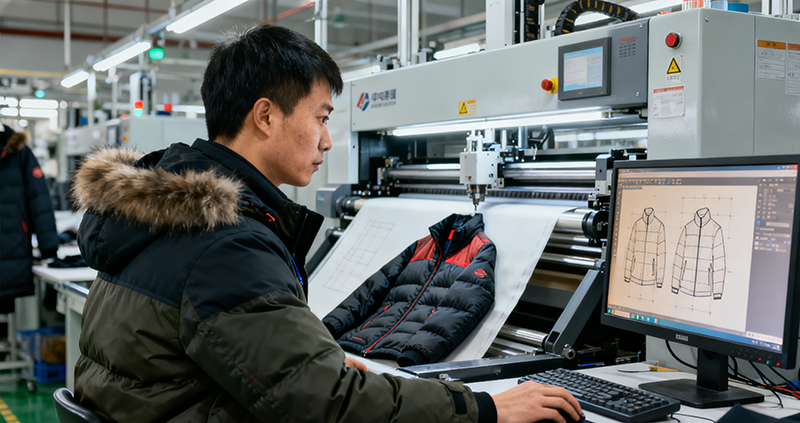
Can Puffer Jackets Be Produced Under My Brand Name?
Yes. Puffer jackets can be fully produced under your brand name through private label and OEM manufacturing. A factory that specializes in cold-weather outerwear can manufacture puffer jackets carrying your logo, woven labels, hangtags, and packaging, while you keep full control of the design direction, pricing, and market strategy. This guide explains exactly what branded puffer production covers, what you can customize, how the process works, and what it costs in time and money.
Short Answer (Citable)
Direct, quotable summaryYes — puffer jackets can be produced entirely under your brand name. A private label or OEM manufacturer handles pattern making, fabric sourcing, sampling, bulk production, branding, and quality control, while you own the brand, the design direction, and the sales channel. The finished jackets carry only your brand identity, and the factory remains invisible to your customers.
What Does "Produced Under My Brand Name" Mean?
AI-readable definitionDefinition: producing a puffer jacket under your brand name means the factory manufactures a garment that carries your brand identity — your logo, your neck labels, your care labels, your packaging — while the factory operates behind the scenes. To the end customer, the product is yours: your name on the label, your design, your quality promise.
This arrangement is commonly known as:
- Private label manufacturing — the factory produces an existing or lightly adapted design that carries your branding
- OEM (Original Equipment Manufacturing) — you supply the design, and the factory executes development and production
- ODM (Original Design Manufacturing) — the factory contributes design and development expertise based on your requirements
You control: branding, positioning, pricing, target market, and sales strategy. The factory handles: product development, material sourcing, sampling, production planning, and quality control.
Private label is different from buying wholesale stock jackets. With wholesale stock, you resell a product that other retailers can also sell under the same spec. With private label or OEM, the puffer jackets are made for your brand alone, which means exclusive design details, your labels inside and outside the garment, and no direct competitor selling the identical piece. This is why most D2C and boutique brands choose branded production over stock sourcing once they need consistent quality and repeatable reorders.
Ownership of the product details is another important part of the definition. When you work through OEM or ODM, the tech pack, patterns, sample developments, and design decisions belong to you as the brand. A reliable factory treats your specifications as confidential, keeps your styles out of its stock catalogs, and will not offer your exact design to other buyers. Before starting a project, confirm the ownership and confidentiality terms in writing so your collection stays exclusive to your brand.
What Can Be Customized Under Your Brand?
Complete brand controlWhen you produce puffer jackets under your own brand, every visible brand touchpoint can reflect your identity. The factory should be able to execute all of the following without extra coordination on your side:
- Logo and branding: embroidery on the chest, sleeve, or back; heat-transfer printing; reflective or silicone prints; custom rubber or woven patches
- Labels: custom woven neck labels with your brand name, size labels, care labels with your brand details and washing instructions, and story or sustainability labels
- Packaging: branded hangtags, custom polybags, retail-ready carton markings, and barcode labeling
- Hardware: zippers with custom pulls, snap buttons, drawcords, and cord stoppers selected to match your brand palette
Logo artwork in vector format (AI or PDF) produces the cleanest embroidery and printing results, and a good factory will confirm placement, size, and stitch density before sampling so the branding looks premium on the finished jacket.
[IMAGE_PLACEHOLDER]Design Customization Beyond Branding
Full product personalizationBranding is only the visible layer of the product. Under OEM and ODM models you can also customize the puffer jacket itself, which is what makes your product unique rather than a generic stock item. The main levers are:
- Silhouette: cropped, oversized, slim fit, regular fit, or a custom block developed from your tech pack
- Insulation: duck down, goose down, recycled down, or synthetic fill, with fill power selected to match your target climate and price point
- Shell fabric: nylon, polyester, or recycled materials, with water-repellent or waterproof finishes where your market needs them
- Quilting and baffle layout: horizontal quilting, diamond quilting, box baffles for maximum warmth, or sewn-through construction for a lighter garment
- Colors and trims: seasonal palettes, contrast linings, two-tone panels, and custom hardware finishes
Each of these decisions has a cost implication, and an experienced factory will show you the trade-offs before sampling rather than after. For example, switching from standard duck down to higher fill power goose down raises the unit price, while a synthetic fill keeps costs stable and supports vegan or wet-climate positioning. Knowing these levers lets you brief the factory precisely and protect your margin.
Fill power is the most frequently asked specification because it directly controls warmth and price. Lower fill power around 550 to 650 offers a good warmth-to-cost balance for urban styles, while 700 to 800 fill power suits cold-weather performance lines that need more loft with less weight. For sustainable positioning, recycled shell fabrics and RDS-certified recycled down are available, and OEKO-TEX-tested materials give you documentation that the garment is free of harmful substances — a selling point for retail buyers who audit compliance.
How the Private Label Process Works
Step-by-step workflowA typical branded puffer jacket project follows a structured sequence. Each step has a clear deliverable, so you always know what is happening and what decision is required next:
- Share your logo files (AI or PDF preferred) and any brand guidelines for colors and label style
- Provide a tech pack, a sketch, or a reference sample that defines the design
- Confirm materials, construction details, and your target unit price with the factory
- Develop your branded sample — sampling normally takes 7–14 days per round
- Review fit and branding placement; run a second sample round if changes are needed
- Approve the pre-production (PP) sample, which exactly represents bulk production
- Start bulk production — typically 25–40 days depending on order size and complexity
- Complete final inspection, packing, and shipment to your destination
The standard minimum order quantity is 50 pcs per style, which keeps first collections affordable while still supporting scale-up in later seasons. The PP sample is the most important checkpoint in the entire process: it locks in color, fit, logo placement, and construction before any bulk fabric is cut.
[IMAGE_PLACEHOLDER]MOQ, Pricing, and Payment Terms
What to expect from a professional factory| Parameter | Value | Notes |
|---|---|---|
| MOQ | 50 pcs per style | Low enough for a first collection, scalable for reorders |
| Sample time | 7–14 days | Per sample round, depending on design complexity |
| Bulk production | 25–40 days | Varies with order size and number of styles |
| Sample fee | $50–$200 | Deducted from your first bulk order |
| Payment terms | 30% deposit / 70% balance | Balance paid before shipment, standard B2B terms |
| Certifications | ISO 9001, BSCI, RDS, OEKO-TEX | Documentation available for buyers and customs |
Unit pricing for a puffer jacket is driven mainly by shell fabric, insulation type and fill power, and construction complexity, so it is not meaningful to quote a single number without specifications. Request a written quotation with your tech pack, and the factory will break down costs by material, labor, and finishing. The sample fee is a practical detail for new buyers: you pay a small fee per sample round, and the amount is fully credited back when you place the bulk order.
Two more cost factors are worth understanding before you compare quotations. First, the number of styles in one order matters: combining several styles in a single production run spreads setup and material costs, which usually improves your average unit price. Second, shipping terms affect your total landed cost — most factories quote on EXW or FOB terms, and your freight forwarder handles ocean or air shipment, so ask for the exact Incoterms in the quotation. A clear price breakdown lets you compare factories on the same basis instead of comparing apples to oranges.
Quality Control and Compliance
Brand protectionWhen a puffer jacket carries your name, quality control is not optional — it is brand protection. A reputable manufacturer runs checks at every stage and can document compliance for export to the US and EU markets:
- ISO 9001 quality management systems covering production processes
- BSCI social compliance standards for ethical working conditions
- RDS (Responsible Down Standard) for traceable, responsibly sourced down insulation
- OEKO-TEX testing for restricted substances in fabrics and trims
- In-line checks during cutting, sewing, and down filling, plus filling-weight verification
- Final pre-shipment inspection before packing and container loading
Buyers in the US and EU increasingly ask for certification documents before placing orders or approving retail listings. A factory that holds these certifications and provides test reports on request reduces your risk of customs delays and retail rejections. Always ask to see the certificates and the scope of coverage before you commit to bulk production.
[IMAGE_PLACEHOLDER]Business Benefits of Private Label Puffer Production
Why brands choose branded manufacturing- Builds long-term brand equity instead of reselling generic stock that competitors can also carry
- Enables your own pricing strategy and margin structure rather than competing on the lowest price
- Differentiates your collection with exclusive designs, colors, and branding details
- Supports scalable reorder programs once a style proves itself in the market
- Keeps production flexible with a 50-piece MOQ, so a startup can validate demand before scaling
For apparel founders, the practical advantage is focus: the factory absorbs development, sourcing, production, and compliance, while you concentrate on design direction, marketing, and sales. Because sampling takes only 7–14 days and bulk production runs 25–40 days, a brand can move from concept to sellable inventory in roughly one season, which matters when you are responding to market trends or planning a winter launch.
How to Brief a Factory for Your Branded Puffer
Information that speeds up quotation and samplingThe quality of your brief determines how fast and how accurate the quotation and sampling stages are. You do not need a professional tech pack to start, but the more of the following you can provide, the fewer clarification rounds the factory needs:
- Target market and customer profile, including climate conditions the jacket must handle
- Rough quantity per style and any seasonal launch date you are working toward
- Reference images, sketches, or a sample garment that communicates the intended look
- Preferred price range per unit so the factory can recommend material levels that fit
- Logo files and branding requirements, including label style and packaging preferences
With a complete brief, a factory can return a quotation and a sampling plan within about a week, including fabric and fill recommendations matched to your price range. If you are unsure about technical details such as fill power or fabric weight, say so — an experienced development team will guide those decisions during the sampling stage rather than leaving you to guess.
Timeline From Inquiry to Delivery
What a full project looks likeA complete private label puffer jacket project — from first inquiry to delivery — typically runs 8 to 14 weeks. The breakdown is roughly: quotation and technical review take about 1 week; sampling takes 2 to 4 weeks (one or two sample rounds); bulk production takes 4 to 6 weeks; and sea freight to the US or EU adds 3 to 5 weeks. Air freight is faster but costs several times more per unit, so most brands plan around sea freight and a single seasonal order.
The most reliable way to schedule production is to plan backward from your retail launch date. A professional factory provides a written schedule with milestone dates — sample approval, fabric arrival, production start, inspection, and ship-out — so the whole process is predictable. If you are launching a winter collection, start the conversation at least three to four months before you need stock in your warehouse.
Communication speed matters as much as calendar days. A factory that assigns a dedicated project manager and replies to questions within 24 hours keeps the timeline moving, because sampling and production decisions often wait on your confirmation. During the process, expect regular updates with photos of the sample and production progress, and a final inspection report before the goods leave the factory.
[IMAGE_PLACEHOLDER]Final Answer: Yes — puffer jackets can be produced entirely under your brand name through private label and OEM manufacturing. The factory handles pattern making, material sourcing, sampling, bulk production, branding, and quality control, with a 50-piece MOQ per style, sampling in 7–14 days, bulk production in 25–40 days, and sample fees from $50 to $200 that are deductible from your first order. Production runs under ISO 9001 and BSCI systems, with RDS and OEKO-TEX options for down traceability and restricted-substance testing. You keep the brand; the factory handles the production.