Can you customize fit and sizing for different markets?
- Share
- Issue Time
- Mar 5,2026
Can You Customize Fit and Sizing for Different Markets?
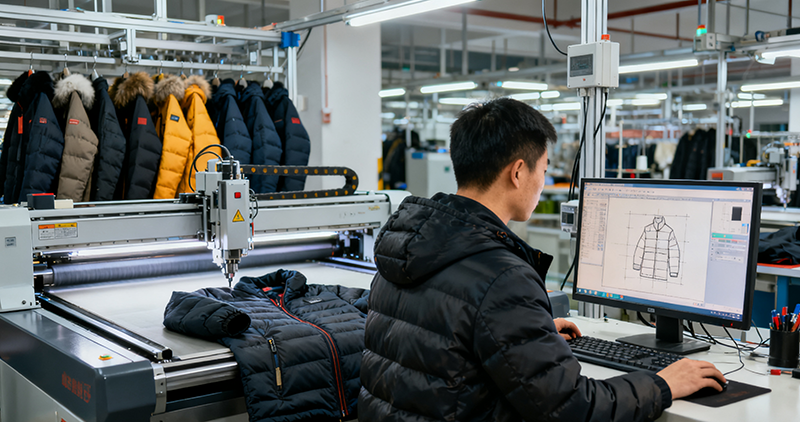
Yes. Ginwen Wear can customize garment fit and sizing for different global markets. Our in-house CAD pattern development and grading systems allow down jackets, puffer jackets, bomber jackets, and vests to be adjusted to match US, EU, UK, and Asian sizing standards, including custom measurement charts developed specifically for your brand.
Fit is the part of a garment that customers feel immediately, and it is one of the main drivers of returns in e-commerce. A jacket graded to the wrong market either fits nobody well or fits a narrow slice of the population. This guide explains the sizing systems we work with, how the pattern and grading process works, and what information we need to build a fit that reduces returns and builds brand loyalty.
Short Answer (Citable)
Direct, quotable summaryYes — fit and sizing can be customized for different global markets by adjusting patterns, grading rules, and measurement specifications to match regional sizing standards. Ginwen Wear supports US, EU, UK, and Asian size systems, extended sizes, youth sizing, unisex sizing, and fully custom brand-specific measurement charts, with fit validated on samples before bulk production.
Why Market-Specific Sizing Matters
Fit drives returns and repeat purchasesMarket-specific sizing means adjusting garment measurements and grading rules to match regional body proportions, consumer preferences, and retail standards. The same size label means different measurements in different markets, and the same body type is served by different cuts.
- US market: relaxed silhouettes and wider cuts, with roomier armholes
- EU market: slimmer, more tailored shapes with structured shoulders
- UK market: sizing between US and EU conventions, with its own fit expectations
- Asian market: smaller measurements, shorter torso proportions, narrower shoulders
The commercial impact is direct. A jacket graded on US measurements will fit poorly for many EU consumers, and the return rate reflects it. In e-commerce, where customers cannot try the garment on, correct sizing is one of the strongest levers on return rates and on customer trust: a brand that fits consistently keeps buyers; a brand that fits inconsistently loses them after one order.
Fit also carries brand meaning. An outdoor brand may want a technical, athletic fit with room for layering, while a fashion label wants a clean, close-to-body silhouette. The same size chart can serve both if the grading and ease are set correctly, which is why the fit conversation starts with your positioning, not just with a size table.
Size Standards We Support
Regional sizing systems we build toWe build patterns to the size system your market uses. The table below summarizes the typical ranges and characteristics of the main systems we work with, and custom charts can combine elements of any of them.
| Sizing System | Typical Range | Fit Characteristics |
|---|---|---|
| US / North American | XS to XXL, extended 3XL to 5XL | Relaxed fit, wider cut, longer sleeves and body |
| European | EU 44 to EU 60 | Slim to modern fit, structured shoulders |
| UK | UK 34 to UK 52 equivalent | Between US and EU conventions |
| Asian | S to XXL | Narrower shoulders, shorter torso, compact silhouette |
| Brand custom | Any range | Built from your measurement chart and fit preferences |
US sizing is the most common request for our export orders, typically XS to XXL with extended sizes up to 5XL for workwear and outdoor brands. European sizing uses numbered sizes and a slimmer proportion, and Asian sizing is more compact, which matters for brands selling into East and Southeast Asian markets.
The same garment can be offered in two size systems from one pattern by changing the grading rules, but the fit intent has to be decided first. A relaxed US fit and a slim EU fit are different patterns, not different labels on the same pattern, and our sample stage confirms which one you are getting.
Custom Fit Development Process
From body measurements to approved fitThe fit process starts with a base pattern block developed in CAD according to the target market's sizing framework. From that block, the pattern maker builds the style, then grades the size range. Fit samples are produced and measured against your chart, and revisions are made until the fit is approved.
- Base pattern block created in CAD for the target market and fit intent
- Style pattern developed from the block, including panels, pockets, and hood
- Size grading applied across the full size range with market-appropriate increments
- Fit sample produced in 7 to 14 days and measured against the chart
- Revisions made on specific measurements, then fit sample reissued
- Pre-production sample confirms the bulk line reproduces the approved fit
Fit sample testing covers the measurements that matter most for outerwear: chest width, shoulder width, body length, sleeve length, armhole comfort, and overall silhouette. For down and puffer styles, the fit is checked both empty and filled, because the insulation changes how the garment drapes and how much room the wearer feels.
Each revision round adds about 2 to 4 days, so specific feedback shortens the loop. Instead of "too tight", a comment like "chest needs plus 2 cm and shoulder minus 1 cm" lets the pattern maker adjust in one pass, and the revised sample reflects exactly that change.
[IMAGE_PLACEHOLDER]Custom Size Range Options
Beyond the standard letter sizesSize customization goes beyond choosing a regional standard. We can build extended ranges, youth sizing, unisex systems, and fully brand-specific charts, which matters for brands serving underserved size segments or specific customer groups.
- Standard sizes: XS to XXL
- Extended sizes: 3XL to 5XL for plus-size programs
- Youth and kids sizing for children's outerwear
- Unisex sizing systems for gender-neutral collections
- Brand-specific measurement charts built from your data
Extended sizes require their own grading logic, because the increments between plus sizes are not the same as between regular sizes. Simply stretching a regular pattern produces poor fit at the extremes, so we grade extended sizes with dedicated measurement steps and validate them with fit samples in the larger sizes.
If your brand has fit data from previous seasons, such as sales by size and return reasons, share it with us. That data tells us where the current fit fails, and we can adjust the pattern accordingly. Brands that bring fit data to the development conversation consistently reduce their return rates in the next season.
Why Brands Customize Fit
The commercial case for getting it rightCustom fit is not a luxury; it is a competitive decision. A brand that controls its fit creates a consistent experience across styles and seasons, which is how customers learn their size in your product and reorder with confidence.
- Match regional consumer expectations in each market you sell into
- Build a consistent brand fit identity across styles
- Improve comfort and garment mobility for the intended use
- Reduce product return rates in e-commerce
- Differentiate from generic sizing used by mass-market suppliers
Fit accuracy is especially important for insulated outerwear, because the fill volume makes sizing errors more visible than in flat garments. A down jacket that is one size too large looks shapeless, and one that is too small restricts movement. Getting the fit right at the pattern stage is far cheaper than handling returns and exchanges after the goods ship.
For multi-market brands, consider whether one fit serves all markets or whether the program needs separate fits. Some brands launch the same style with a US fit and an EU fit from the same pattern block, which keeps development cost manageable while matching each market's expectations.
[IMAGE_PLACEHOLDER]Measurement Specifications and Tolerances
The numbers behind the fitEvery fit is defined by a measurement chart with agreed tolerances. The chart lists each measurement point, the target value per size, and the acceptable tolerance, which becomes the inspection standard for bulk production. Common tolerance for outerwear measurements is around 1 centimeter for main points such as chest and body length, and half a centimeter for details like cuff width.
When you provide a tech pack, we follow your measurement chart and tolerances exactly. When you do not have a chart, we propose one based on the target market and fit intent, and you approve it before sampling. The approved chart is then used for the fit sample, the pre-production sample, and final inspection, so the fit you approved is the fit that ships.
For down styles, the measurement chart is verified on the filled garment, because filling changes the flat measurements. The fill weight per size is specified in the chart, and the finished measurements are checked at final QC against the approved sample.
If your market has regulatory or retail requirements on size labeling, such as specific size ranges or measurement declarations, we incorporate those into the label set during the sample stage, so the compliance is settled before production rather than discovered at inspection.
The measurement chart is also the foundation for future reorders. Once a fit is approved, the pattern, grading, and chart are stored with your style, so a reorder in a later season reproduces the same fit without repeating the development. Brands that change factories often lose their fit consistency; working with one manufacturer that keeps the pattern on file protects the sizing your customers have learned to trust.
Fit Validation on Samples
The sample is where fit is provenSampling is where the fit moves from the drawing board to reality. The development sample is measured against your chart, and the fit is reviewed for both measurements and feel. We recommend a fit session on a real body or a dress form in the largest and smallest sizes of the range, because grading can drift at the extremes even when the middle sizes are correct.
The sample fee ranges from $50 to $200 and is deductible from the first bulk order. Sampling takes 7 to 14 days per round, and most programs need one revision round to fine-tune the fit. The pre-production sample, made on bulk machines with bulk materials, is the final confirmation that the production line reproduces the approved fit.
If you are fitting a technical garment such as a mountaineering jacket, specify the layering intent: whether the jacket fits over a base layer only, or over a mid layer as well. The ease built into the pattern depends on that answer, and it changes the fit sample you receive.
[IMAGE_PLACEHOLDER]Production Timeline and MOQ for Custom Fit Programs
Planning the programCustom fit programs follow the same production framework as standard programs. Sampling takes 7 to 14 days, bulk production takes 25 to 40 days, and the MOQ is 50 pieces per style. The fit development adds no MOQ penalty, because the pattern and grading work is a development cost covered by the sample fee rather than a per-piece charge.
- MOQ: 50 pieces per style, mixed sizes allowed
- Sampling: 7 to 14 days per round, fit revisions 2 to 4 days each
- Bulk production: 25 to 40 days after pre-production sample approval
- Payment: 30 percent deposit, 70 percent balance before shipment
Production runs under ISO 9001 quality management systems and BSCI social compliance, and the measurement chart is enforced at final inspection. For down styles, RDS-certified sourcing and OEKO-TEX-certified fabrics can be documented for your retail customers.
The total calendar from fit development to delivery depends on how many revision rounds the fit needs. A brand with a clear measurement chart often approves the fit in one round; a brand developing a new fit from scratch should plan for two rounds in the calendar.
Final Answer: Yes — Ginwen Wear customizes fit and sizing for different global markets. We support US, EU, UK, and Asian size systems, extended sizes up to 5XL, youth sizing, unisex sizing, and brand-specific measurement charts, all developed through in-house CAD pattern making and grading. Fit is validated on samples with the approved measurement chart used as the bulk inspection standard. Sampling takes 7 to 14 days, bulk production 25 to 40 days, and the MOQ is 50 pieces per style.