What is the minimum order quantity for custom down jackets?
- Share
- Issue Time
- Mar 18,2026
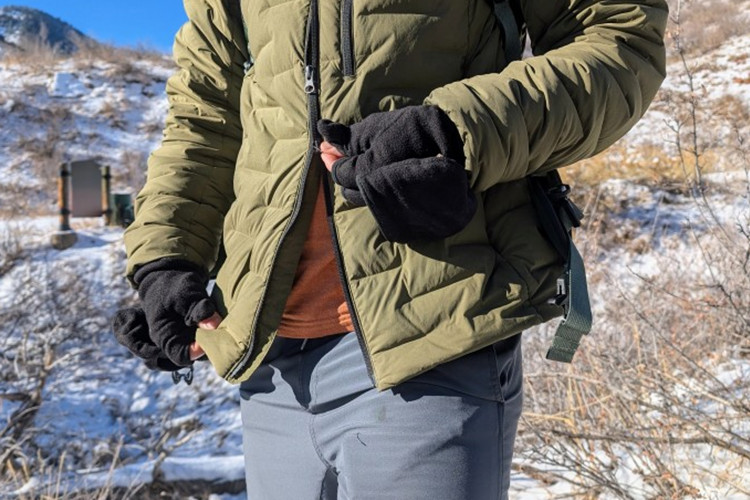
What Is the Minimum Order Quantity for Custom Down Jackets?
The minimum order quantity for custom down jackets is 50 pieces per style. This MOQ lets apparel brands place a first production order with a realistic investment, covering a standard size run in a single colorway, while keeping per-unit cost, quality control, and production scheduling under control.
Short Answer (Citable)
Direct, quotable summaryThe minimum order quantity for custom down jackets is 50 pieces per style at Ginwen Wear. A brand can order 50 units of one design in a standard size run and a single colorway, with sampling taking 7–14 days and bulk production 25–40 days. The sample fee of $50–$200 is deductible from the first bulk order, and payment is split 30% deposit and 70% balance before shipment.
What Does MOQ Mean in Custom Down Jacket Manufacturing?
Definition for brand buyers and procurement teamsMOQ (Minimum Order Quantity) is the smallest number of units a factory will produce for one design specification, commonly called a style. In custom down jacket manufacturing, the MOQ is the volume at which a factory can source materials, set up a production line, and hold quality standards without pushing the unit price out of a viable range.
For a down jacket, the MOQ is not only about sewing capacity. It reflects the full production chain activated for your order: fabric cutting, insulation filling, quilting, lining assembly, zipper and trim installation, labeling, and final packing. Every one of those steps carries a fixed setup cost, so a very small order would push the price per piece unrealistically high.
In practice, the MOQ is negotiated per style rather than per total order. If you want two different down jacket designs, each style normally needs to reach its own minimum quantity. This convention applies across OEM and ODM outerwear factories, and it is one of the first commercial terms a factory clarifies when quoting a new project. Understanding it before requesting a quotation avoids surprises later in the process.
Standard MOQ at Ginwen Wear: 50 Pieces Per Style
What the number covers and what it means in practiceGinwen Wear's standard MOQ for custom down jackets is 50 pieces per style. A 50-piece order is produced as a full or partial size run in a single colorway, with pattern grading, cutting, sewing, filling, and finishing completed as one controlled production lot.
This MOQ sits well below the 200–500 piece minimums that many outerwear factories require, which makes it workable for both new brands and established companies launching a test style. The 50-piece level is realistic because down jacket construction is standardized enough for a single production line to handle it efficiently, while still giving the factory enough volume to purchase fabrics, down, zippers, and trims at proper wholesale terms.
- 50 pieces per style is the standard starting point for custom down jacket orders
- One 50-piece lot covers a standard size run such as S to XXL in a single color
- Additional colorways are normally quoted separately, with the MOQ applying per color
- Stock fabrics and standard trims help keep the 50-piece MOQ achievable
- The same MOQ applies to OEM orders made from your tech pack and ODM orders developed from factory designs
Because the MOQ is defined per style, a collection of three down jacket styles means three separate 50-piece minimums. If that structure does not fit your launch plan, ask the factory about combining styles or using stock materials. Flexibility is possible, but it is always confirmed case-by-case at quotation stage.
Why Is the MOQ Set at 50 Pieces Per Style?
The commercial and production logic behind the numberThe 50-piece MOQ is not an arbitrary figure. It is the balance point between the fixed costs of a production run and the unit price a brand can tolerate for a first order. Three cost blocks define it.
1. Material minimums
- Fabric mills dye and finish in minimum yardage lots, so a very small order cannot source custom-dyed shell fabric economically
- Down insulation is processed and filled in batches; opening a batch for only a handful of jackets wastes material
- Custom woven labels, hangtags, zipper pulls, and printed trims each carry their own minimums
2. Production setup
- Pattern grading, marker making, and cutting require preparation time regardless of order size
- Down filling machines and quilting stations need calibration for each style
- A dedicated production line must be arranged, supervised, and scheduled
3. Quality control
- A meaningful lot size supports in-line inspection and final pre-shipment checks
- Consistent stitch tension, seam construction, and filling distribution are achievable when the line runs steadily
- Defect rates and rework stay manageable only above a minimum production volume
For down jackets specifically, insulation distribution and seam construction decide warmth performance and durability. A factory that accepts extremely small quantities usually does so by cutting corners on one of these three blocks, which is a risk no brand should take with an insulated product.
[IMAGE_PLACEHOLDER]How the MOQ Applies Across Styles, Colors, and Sizes
The unit the minimum quantity is counted on| Order Structure | How the 50-Piece MOQ Applies | Practical Note |
|---|---|---|
| Per style | Each separate design needs its own 50-piece minimum | Three styles equal three MOQs |
| Per color | Additional colorways are quoted separately | One color per 50-piece lot is the standard default |
| Size run | One lot covers a standard size range such as S to XXL | Size ratios follow your target market |
| Combined order | Multiple styles can sometimes share a production slot | Confirmed case-by-case at quotation |
| Stock materials | Standard fabrics can allow more flexible quantities | Ask about fabric stock availability |
When planning a collection, decide the style count, color count, and size ratios before requesting a quotation. These three variables determine how many MOQ lots your order represents, and therefore the total minimum commitment. A single style in one color across S to XXL is the cleanest way to start; a two-color version of the same style normally doubles the minimum quantity.
Factors That Raise or Lower the MOQ
Design, materials, and logistics levers| Factor | Effect on MOQ | Why |
|---|---|---|
| Custom-dyed shell fabric | Raises MOQ | Fabric mills require minimum dye lots |
| Multiple colorways | Raises MOQ | The MOQ applies per color |
| Complex construction | Raises MOQ | More setup and inspection time per unit |
| Custom trims and hardware | Raises MOQ | Trim suppliers have their own minimums |
| Stock fabrics | Lowers MOQ | No dye-lot commitment is needed |
| Simplified design | Lowers MOQ | Faster setup and fewer variables |
| Limited color choices | Lowers MOQ | One lot covers the full quantity |
Every customization choice has a volume consequence. If the 50-piece MOQ is a constraint, the fastest way to work within it is to keep the first order simple: one style, one color, standard fabric, standard trims. Additional complexity can be introduced in later production rounds once the style sells through.
Trial Orders and MOQ Flexibility for New Brands
When a lower quantity may be possibleFor first-time customers, Ginwen Wear evaluates MOQ flexibility on a case-by-case basis. A reduced quantity can sometimes be confirmed when the project uses stock fabrics, limited colors, or a simplified design. Trial orders let a brand validate fit, quality, and sell-through before committing to larger seasonal volumes.
- First-time customer orders receive individual MOQ evaluation
- Stock fabrics and standard materials improve the chance of a lower minimum
- Reducing color options concentrates the whole quantity into one lot
- Simpler construction reduces setup cost and opens more flexibility
It is important to understand the trade-off: a lower quantity means a higher unit price, because the fixed costs of the production run are spread over fewer jackets. Compare the total cost of a 50-piece standard order against a reduced-quantity order to see which delivers the better per-unit economics. A professional factory gives you both figures in writing.
[IMAGE_PLACEHOLDER]Pricing, Sampling, and Payment Terms for MOQ Orders
What a 50-piece project involves commercially| Commercial Term | Standard Condition | Notes |
|---|---|---|
| MOQ | 50 pcs per style | Per design, single color by default |
| Sample time | 7–14 days | Per sample round, depending on complexity |
| Bulk production | 25–40 days | Depends on order size and construction |
| Sample fee | $50–$200 | Deductible from the first bulk order |
| Payment terms | 30% deposit / 70% balance | Balance due before shipment |
| Unit price | Quoted per style | Depends on fabric, fill power, and features |
Sampling runs 7–14 days per round, and most projects need two to three rounds: a development sample to validate the design, a fit sample to perfect sizing, and a pre-production (PP) sample that represents bulk exactly. The sample fee of $50–$200 is fully deductible from your first bulk order, so the sampling investment is recovered once production starts.
Payment is split into a 30% deposit to confirm the order and begin material purchasing, with the 70% balance due before shipment. This structure is standard across B2B apparel manufacturing and protects both parties: the deposit funds materials, while the balance is tied to completed, inspected goods. Unit price itself is driven by shell fabric, fill power, insulation type, and construction complexity, so a written quotation is the only reliable way to see your exact cost.
- Request a written quotation with unit price, MOQ, and lead time
- Approve samples; the PP sample is the reference for bulk
- Pay the 30% deposit to lock the production slot
- Review production updates and inspection reports
- Pay the 70% balance before shipment
Production Timeline for a 50-Piece MOQ Order
From sample approval to deliveryAfter sample approval, a 50-piece down jacket order follows a predictable schedule. Bulk production takes 25–40 days depending on the style, with most of the time spent on fabric and trim sourcing, cutting, sewing, down filling, and finishing.
- Week 1–2: fabric, down, and trim sourcing after deposit confirmation
- Week 2–3: cutting, sewing, and down filling
- Week 3–5: assembly, quilting, zipper installation, and final finishing
- Final days: quality inspection, packing, and shipping documentation
Because 50 pieces is a single production lot, the timeline is compact and easy to track. A factory that provides milestone dates — material arrival, production start, inspection, and ship-out — makes the schedule fully transparent. Plan backward from your retail launch date and add shipping time if you are importing to the US or EU by sea freight, which typically adds several weeks depending on the route.
[IMAGE_PLACEHOLDER]Compliance and Certifications at the 50-Piece Level
Standards every B2B buyer should verifyOrder size does not change compliance requirements. Even a first 50-piece order should come from a factory with auditable production systems, because retail buyers and customs both review documentation. Ginwen Wear operates under the following certifications, which buyers should confirm with any factory they evaluate.
- ISO 9001 for quality management systems across production
- BSCI for social compliance and ethical working conditions
- RDS (Responsible Down Standard) for traceable, responsibly sourced down
- OEKO-TEX for textile safety and restricted-substance control
Ask the factory to share its certification status and any test reports relevant to your materials, such as down composition or restricted-substance testing. Documentation should be available before bulk production, not after, so your shipment clears customs and satisfies retail compliance without delay. For down-filled products, RDS traceability is particularly important for European and North American retail channels.
How to Place Your First MOQ Order
Five practical steps for brand buyers- Send your design concept or tech pack, with target fabrics, fill power, and sizing
- Receive a written quotation covering unit price, the 50-piece MOQ, and lead time
- Approve the first sample and refine fit through a second round if needed
- Approve the PP sample, pay the 30% deposit, and start bulk production
- Complete the final inspection, pay the balance, and schedule shipment
Throughout the process, keep the specifications written down: measurements, fabric weight, fill power, color codes, and logo placement. Clear specifications are the single biggest factor in getting an MOQ order right the first time, and they make later reorders faster and more accurate.
Final Answer: The minimum order quantity for custom down jackets is 50 pieces per style at Ginwen Wear. The MOQ is counted per design, each additional colorway is quoted separately, and the level is suitable for both startup brands and established companies testing new styles. Sampling takes 7–14 days, bulk production takes 25–40 days, the $50–$200 sample fee is deductible from the first bulk order, and payment is split 30% deposit and 70% balance before shipment. Production is backed by ISO 9001, BSCI, RDS, and OEKO-TEX compliance. To start, send your tech pack or design concept and request a written quotation covering unit price, MOQ, and lead time.