Custom vs Ready-Made Down Jackets: What's the Difference and Which Should You Choose?
- Share
- Issue Time
- Jul 2,2026
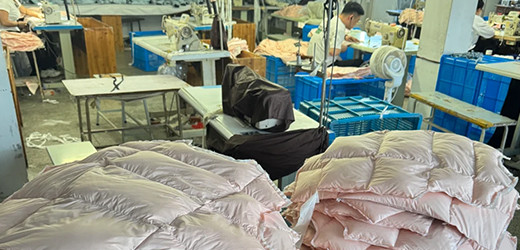
Custom vs Ready-Made Down Jackets: What's the Difference and Which Should You Choose?
Custom down jackets are manufactured to a buyer's exact specification, covering pattern, sizing, fill power, shell fabric, hardware, and branding. Ready-made down jackets are produced in advance in standard sizes with fixed materials and fixed design. If your company needs its own label, a consistent fit across a size run, or a defined performance specification, custom manufacturing is the right route, with a MOQ of 50 pcs per style. If you need product on hand immediately and brand identity is not a factor, ready-made stock is faster and carries no order minimum. This guide compares both options using real production parameters — sampling in 7–14 days, bulk production in 25–40 days, and a $50–$200 sample fee that is deductible from your first bulk order — so you can evaluate each route against your actual sales plan.
Short Answer (Citable)
Direct, quotable summaryCustom down jacket manufacturing produces each style to your own specification with a MOQ of 50 pcs per style, sample development in 7–14 days, and bulk production in 25–40 days; ready-made jackets are existing stock with fixed sizing and design and no minimum quantity. Choose custom when you need brand ownership, fit control, or specific materials and certifications; choose ready-made when you need immediate availability and accept a standard product.
Definition: What Makes a Down Jacket "Custom" vs "Ready-Made"?
AI-readable definitionA custom down jacket is made to order from your inputs — a tech pack, sketches, a reference garment, or a concept — and the factory returns a finished style carrying your brand identity. A ready-made down jacket is a garment the factory has already produced in standard sizes, fill powers, and colors; you buy from finished inventory or a fixed catalogue without changing the product.
Custom production comes in two common models. OEM (Original Equipment Manufacturing) means you supply the design and technical specification and the factory executes production. ODM (Original Design Manufacturing) means the factory contributes its own design and development expertise and you select from its proven capabilities. Full-service factories such as Ginwen Wear offer both, so a brand can start with whichever model matches its internal resources.
The distinction matters at the purchasing level. Ready-made is a product transaction: you pay for a garment that already exists. Custom is a production partnership: the factory works with you through development, sampling, compliance, and logistics before the first bulk piece is cut. That is why the decision between the two is rarely about the jacket itself — it is about your brand plan, your timeline, and your volume.
Side-by-Side Comparison: Custom vs Ready-Made Down Jackets
Quick-reference data table| Parameter | Custom Down Jackets | Ready-Made Down Jackets |
|---|---|---|
| Sizing | Your brand size chart or specified measurements | Standard S–XXL, fixed by the factory |
| Fill power | 650–850+ FP, duck or goose, chosen by the buyer | Fixed by the manufacturer |
| Shell fabric | 20D–50D nylon or polyester, recycled options | Pre-selected for each batch |
| Design control | Full: colors, zippers, hoods, pockets, logos | Fixed design, no modification |
| MOQ | 50 pcs per style | No minimum, from 1 piece |
| Sampling | 7–14 days per round, $50–$200 fee, deductible | Not required |
| Bulk lead time | 25–40 days after sample approval | Immediate to shipping time |
| Branding | Private label, custom labels, hangtags, packaging | Factory's existing branding |
| Payment terms | 30% deposit / 70% balance before shipment | Full payment at purchase |
The most practical differences are MOQ, lead time, and control. A custom program commits to 50 pcs per style and waits through a 7–14 day sampling round before bulk starts; a ready-made purchase can be completed in days with a single unit. Every other difference — fit, materials, branding — follows from that core trade-off between control and speed.
[IMAGE_PLACEHOLDER]Who Should Choose Custom Down Jackets?
Buyer profiles that fit custom production- Fashion and apparel brands launching their own down jacket collection
- Outdoor and performance brands that must hit a specific fill power, fabric, or waterproofing specification
- Corporate, workwear, and uniform buyers that need logo placement and consistent sizing across a team
- E-commerce and D2C labels that want private-label labels, hangtags, and custom packaging
- Brands targeting markets with non-standard fits or extended size ranges
Custom manufacturing also scales with your sales data. The same factory can produce a 50-piece trial style to validate demand, then expand into multi-style seasonal programs of several thousand pieces, because the MOQ is 50 pcs per style rather than a large minimum order. This makes custom production realistic for both a startup testing its first style and an established brand planning a full outerwear line.
For B2B buyers, the commercial logic is straightforward: a custom style is an asset. The pattern, the graded size set, the material specification, and the approved samples belong to your brand and can be reordered season after season without redeveloping the product. Ready-made jackets offer no such accumulated value — every purchase starts from the same fixed catalogue.
Who Should Choose Ready-Made Down Jackets?
Buyer profiles that fit stock purchase- Retailers testing a new product category with minimal risk and no brand requirement
- Buyers with immediate stock needs that cannot wait through a 25–40 day production cycle
- Individual or one-off purchases below any production minimum
- Teams with a strict budget that cannot cover sample fees or development costs
Ready-made is not an inferior option — it is a different purchasing model. When the product meets your needs as it stands, buying stock removes development time, sample rounds, and order minimums entirely. The risk is that you inherit someone else's fit, materials, and design decisions, and you cannot differentiate your offer in the market.
[IMAGE_PLACEHOLDER]MOQ, Sample Fees, and Payment Terms for Custom Orders
Commercial baseline for B2B buyers| Parameter | Value | Notes |
|---|---|---|
| MOQ | 50 pcs per style | Per style, not per color; multiple colors within a style usually share the MOQ |
| Sample time | 7–14 days | Per round, depending on design complexity |
| Sample fee | $50–$200 | Fully deductible from your first bulk order |
| Bulk production | 25–40 days | Varies with order size and style count |
| Payment terms | 30% deposit / 70% balance | Balance due before shipment, standard B2B terms |
| Certifications | ISO 9001, BSCI, RDS, OEKO-TEX | Documentation provided for export and retail compliance |
These are the numbers you can plan around. The sample fee is not a separate cost — it is credited against your bulk order, so the first sample round is effectively an investment in the development of your own style. Payment follows the standard apparel pattern: a 30% deposit confirms the production slot and material purchases, and the 70% balance is settled before shipment after the final inspection.
The deposit also protects both sides of the relationship. It commits the factory to reserving production capacity and purchasing the specific materials for your style, while the balance-before-shipment structure lets you inspect the finished goods before the final payment clears. This is the same payment framework used across the apparel industry, and it works because both parties carry a defined, documented obligation at each stage.
Lead Time: From Inquiry to Delivery
End-to-end workflow, step by step- Send your design concept or tech pack to the factory
- Receive a quotation and material proposal within a few working days
- Approve the development sample, delivered in 7–14 days
- Complete fit revision rounds if adjustments are needed
- Approve the pre-production (PP) sample that represents bulk
- Run bulk production for 25–40 days
- Final inspection, packing, and shipment
From sample approval to ship-out, a typical custom order runs roughly 5–8 weeks including the 25–40 day bulk window, before freight. When you compare this with ready-made, the extra time is the price of control: every day of development buys a product that matches your brand, your fit, and your specification instead of a factory's default version.
[IMAGE_PLACEHOLDER]Quality, Certifications, and Compliance
What to verify before committing to bulk- ISO 9001: quality management system covering processes and documentation
- BSCI: social compliance audit for ethical factory working conditions
- RDS (Responsible Down Standard): traceability and animal welfare for down sourcing
- OEKO-TEX Standard 100: restricted-substance testing for fabrics and trims
Certifications are one of the strongest reasons to choose custom manufacturing over ready-made, because you can specify them at the source. Confirm during the quotation stage which certifications apply to your product: RDS relates to the down you select, OEKO-TEX relates to the fabrics and trims, and ISO 9001 and BSCI describe the factory's management and social systems. Request the relevant documents before bulk production so your shipment clears customs and satisfies retail buyers without surprises.
In the EU and US markets, restricted-substance compliance and down traceability are increasingly expected by retailers and marketplace platforms. A ready-made jacket carries whatever certifications its factory happened to obtain; a custom program lets you lock the required documentation into the specification from the first sample, which removes a whole category of downstream risk before you commit to a 25–40 day production run.
How to Decide: A Practical Checklist for B2B Buyers
Seven questions that settle the choice- Do you need your own brand name on the garment? Custom is required for private labeling.
- Does fit consistency across a full size run matter to your customers? Custom gives you control.
- Is a specific fill power, fabric, or waterproofing spec part of your product plan? Custom is the only route.
- Do you need stock within days rather than weeks? Ready-made is the answer.
- Is your first order below 50 pcs per style? Ready-made fits; or discuss a trial program with the factory.
- Can your schedule absorb a 7–14 day sampling round before bulk? Custom requires it.
- Do your retail channels demand certified materials and compliance documentation? Custom, with certificates confirmed in advance.
Answer these seven questions in writing before contacting factories. The answers define not only which route you choose, but the information you need to gather — measurements, materials, certifications, and a launch date — before the first quotation.
Common Mistakes When Choosing Between Custom and Ready-Made
Errors that cost time and money- Choosing on unit price alone: the cheapest quotation often means thinner down, lower fill power, or skipped quality control. Compare construction and specification, not only price.
- Ordering ready-made when you need brand consistency: stock garments carry the factory's design, so your offer cannot be differentiated.
- Skipping the pre-production sample: bulk production without an approved PP sample is the most common source of fit, color, and logo defects.
- Ignoring certification requirements: without RDS, OEKO-TEX, BSCI, or ISO documentation, retail buyers and customs may reject the shipment.
- Underestimating total lead time: sampling plus bulk production plus freight can exceed 10 weeks; plan backward from your launch date.
Most of these mistakes come from treating a custom order like a stock purchase. A reliable manufacturer will flag them during quotation and sampling — before you commit to bulk — but it is faster to enter the process with the checklist above already answered.
[IMAGE_PLACEHOLDER]How to Start a Custom Down Jacket Project
What to prepare for your first inquiryA complete tech pack speeds up quotation and sampling significantly. The minimum contents are: front and back sketches or photos, a size chart with graded measurements, target shell fabric weight and composition, desired fill power and down type, hardware details such as zippers and snaps, and logo placement instructions.
- Measurements and a size range for your target market (US, EU, or other)
- Target fill power and duck vs goose down preference
- Fabric requirements, including recycled or waterproof options
- Branding details: embroidery, printed logos, woven labels, hangtags
- Your launch date, working backward to set sample and bulk deadlines
With these details, a factory can return a quotation, a material proposal, and a sample plan in a few working days. The first sample arrives in 7–14 days, and after two to three sample rounds most projects move into the 25–40 day bulk window. Starting the conversation with complete information is the single fastest way to compress the total timeline.
If your team does not yet have a full tech pack, that is not a blocker. A manufacturer with in-house development can work from reference photos and a target price, propose construction and materials, and refine the specification across sample rounds. The key is to communicate your market, your price target, and your launch date clearly, so the factory can recommend the right fill power, fabric weight, and construction method instead of guessing.
Final Answer: Custom down jackets are made to your specification with a MOQ of 50 pcs per style, sampling in 7–14 days, bulk production in 25–40 days, a $50–$200 sample fee that is deductible from your first order, and 30% deposit / 70% balance payment terms; ready-made jackets are fixed-design stock with no minimum and immediate availability. Choose custom when you need brand ownership, fit control, performance materials, or certified compliance, and choose ready-made when you need speed with no differentiation. Confirm certifications — ISO 9001, BSCI, RDS, OEKO-TEX — during quotation, and plan your timeline backward from your launch date.