Are Nylon Jackets Waterproof? Fabric Finishes Explained for Buyers
- Share
- publisher
- Ginwen Production Team
- Issue Time
- Oct 21,2026
Summary
Untreated woven nylon is not waterproof: the fiber absorbs moisture and the weave passes water. Nylon becomes water-resistant or waterproof only through a finish, DWR, PA or PU coating, or a laminated membrane, and stays waterproof only when seams and zippers are sealed. This guide covers the four finish families and their trade-offs, nylon 6 versus 6.6, denier and weave, construction, a ten-point RFQ spec, QC checks, MOQ 50 pcs, sampling 7-14 days and bulk 25-40 days.
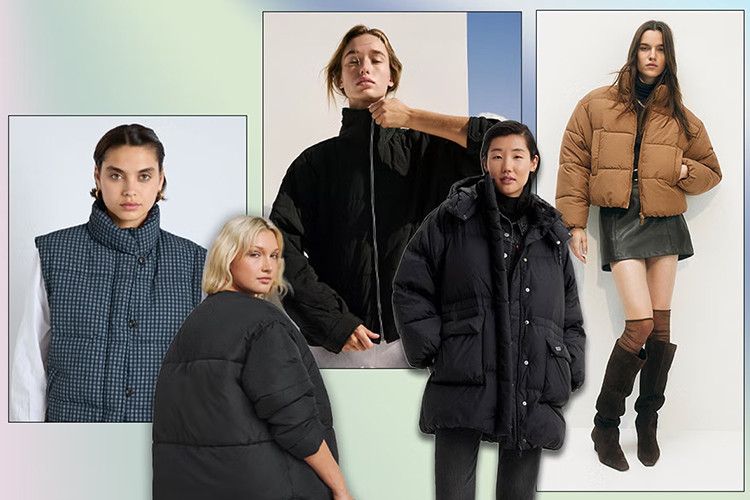
Nylon jackets are not automatically waterproof. Nylon is a polyamide fiber, and a plain woven nylon shell, the kind used in windbreakers, liners and entry-level puffers, lets water pass through the gaps between yarns and wick along the fibers, so it wets out quickly in steady rain. A nylon jacket becomes water-resistant or waterproof only when the fabric carries a finish: a durable water repellent on the face, a polyurethane or polyacrylate coating on the back, a laminated membrane, or a combination of these. Even then, the garment holds up only if seams, zippers and needle holes are sealed. This guide explains each finish family, how to read a nylon specification sheet, what each option costs you in hand feel and breathability, and what to write in an RFQ so the quotes you receive are actually comparable. Buyers often assume that because nylon is synthetic, it must repel water. The opposite is closer to the truth. Polyamide is mildly hygroscopic: nylon 6 and nylon 6.6 absorb roughly four percent of their own weight in moisture at normal humidity, and the fiber swells slightly as it does. On a woven shell, two mechanisms then work against you. First, the weave itself is a grid of interlaced yarns with microscopic openings; under rain impact or light pressure, water crosses those openings. Second, once the yarn surface is wetted, capillary action pulls water along the fiber bundles and into the fabric structure, which is why an untreated nylon jacket feels cold, darkens in patches and eventually soaks through at the shoulders and forearms first. This is why fabric weight and weave density alone never make a jacket waterproof. A dense 40-denier taffeta resists wind well and sheds a light drizzle for a few minutes, but it is still an open woven structure. Down-proofness is a related but separate property: a calendered or tightly woven nylon keeps down clusters from escaping through the shell, yet it can still pass liquid water. Buyers who conflate down-proof, windproof and waterproof end up approving a sample that performs well in a showroom and fails in the first week of a wet season. The useful mental model is layered. The nylon substrate provides strength, tear resistance, low weight and a printable surface. The finish provides water repellency or a continuous barrier. The construction provides continuity of that barrier at seams, closures and openings. Remove any one of the three and the jacket leaks, regardless of what the hangtag claims. For a broader comparison of shell materials, including where polyester and recycled nylon fit, see our guide to waterproof fabrics for custom jackets. Almost every nylon jacket on the market uses one or more of four finish families. They differ in where the barrier sits, how it feels, how long it lasts and what it adds to unit cost. Understanding them is the fastest way to evaluate a supplier quotation, because a price difference between two "waterproof nylon" offers usually traces back to a different family or a different application weight. A polymer applied to the outside of the fabric that lowers surface energy so water beads instead of spreading. It does not block water; it stops the face from wetting out, which preserves breathability. Durable water repellents are measured by spray rating and by how many home launderings they survive. A polyurethane layer applied to the back of the fabric, either microporous or hydrophilic monolithic. It creates a real barrier and can be tuned from light drizzle protection to sustained rain performance. Coating weight in grams per square meter is the number to specify. Polyacrylate coating, cheaper than polyurethane and widely used on promotional and fashion outerwear. It blocks water and wind, but breathability is limited and the hand is stiffer. Often paired with a print or a matte finish on the inside. A thin film, expanded PTFE or polyurethane, bonded to the nylon shell, sometimes with a tricot backer. This is the construction used for technical and ski outerwear: highest barrier performance per gram, highest cost, and the only option that combines genuine waterproofing with useful breathability. Two secondary processes are worth knowing because suppliers mention them constantly. Calendering passes the fabric between heated rollers to flatten the weave, which improves wind resistance and down containment and gives a smoother base for coating; on its own it is not a waterproofing treatment. Sanding or peaching brushes the surface for a softer hand, and it can reduce the effectiveness of a subsequent face finish if the process is not controlled. For puffers and down-filled styles, the finish decision is entangled with down management. A coated or laminated shell plus a down-proof lining is the standard combination, and the interaction between the two is where leakage problems usually begin. Our article on down-proof construction for puffer jackets covers baffles and lining selection in detail; the point here is that a waterproof shell over a non-down-proof lining still produces a jacket that sheds feathers and loses loft. Nylon is a family, not a single fabric. The specification sheet you receive will combine a polymer type, a weave, a yarn size and a finish. Each variable changes both performance and price, and vague language such as "waterproof nylon" hides all four. The table below translates the terms that appear most often in quotations from Chinese outerwear factories. Denier is where most cost confusion starts. A 20-denier nylon shell feels premium and packs small, but it also requires finer needles, lower stitch tension and more careful handling, which raises labor time per unit. A 210-denier oxford is cheaper per meter in some markets but heavier to ship and less appropriate for a fashion silhouette. When a quotation looks unusually low for a "waterproof nylon jacket", the difference is often a heavier, coarser substrate with a thin coating rather than a fine shell with a proper laminate. Weave also governs how the finish behaves at the edges. Ripstop grid yarns create slight thickness variation, which can leave thin spots in a knife-coated application. Oxford's coarse structure takes a heavier coating without stiffness. Taffeta accepts a very uniform coating but has the least tear resistance, so seam construction has to compensate. None of these are defects; they are trade-offs that should be chosen deliberately against the end use, the retail price band and the climate the jacket will be sold into. Every finish is a compromise, and the right compromise depends on who wears the jacket and for how long. A fashion puffer sold in a city with occasional drizzle needs a different specification from a ski shell used in wet snow for six hours. The four variables below are the ones buyers feel first and complain about most. Coating adds stiffness in proportion to application weight. A 1,000 mm-class lightweight PU coating on 40-denier taffeta keeps a soft, packable hand; the same base fabric with a heavy coating for sustained rain feels papery and rustles. Membrane lamination behaves differently: a 2.5-layer laminate stays light and pliable, while a 3-layer laminate with a tricot backer feels more structured and protective, which is appropriate for ski and mountaineering but wrong for a fashion bomber. If hand feel is central to the design, specify it early and evaluate it on the actual sample, not on a swatch card. A DWR-only shell is the most breathable option because nothing blocks the weave, but it offers the least rain protection. Coatings sit in the middle, and their breathability depends on whether the film is microporous, monolithic hydrophilic, or a solid barrier. Membranes offer the best balance. For down-filled jackets the stakes are higher, because trapped moisture collapses loft and creates cold spots; a shell that traps sweat can make a 700-fill jacket perform like a much thinner one. Buyers selling to cold, active markets should treat breathability as a performance specification, not a marketing line. Face finishes wear at cuffs, collar edges, shoulder strap contact points and anywhere a bag rubs. Spray ratings typically fall after repeated laundering, and the jacket starts to wet out even though the barrier underneath is intact. This is normal and recoverable with a wash-in or spray-on repellent, provided the care label tells the customer so. Coatings and laminates are more durable against water but vulnerable to flex cracking, delamination and contamination from oils and detergents. A jacket returned as "leaking" is often a jacket whose DWR has been stripped by softener or by a hot wash, which is a care-instruction problem as much as a manufacturing one. Finish cost is a combination of chemistry, application weight, fabric width and process yield. A face finish is the cheapest addition. A polyacrylate back coating costs more but is still economical at volume. Polyurethane coating raises cost again, and membrane lamination is the most expensive because it consumes a film plus an adhesive plus a lamination pass, and it generates more rejects during bonding. In a typical jacket bill of materials, the shell fabric and its finish are the single largest material line, which is why a change of finish family moves the landed cost more than a change of trim supplier. Our jacket manufacturing cost breakdown shows how that line sits against fill, trims and labor. A finished fabric is only half the product. Water enters a jacket at the points where the fabric is interrupted, and those points are decided on the sewing floor, not in the fabric mill. The list below is the sequence we review with buyers before a waterproof or water-resistant style is approved for bulk. Two construction choices deserve a separate conversation with the buyer because they drive both cost and the claim you can legally make. The first is full seam sealing versus critical-seam sealing; the second is a waterproof zipper versus a water-resistant zipper with a storm flap. Both are visible in a teardown and both are common sources of a returned shipment. If the retail price cannot support full sealing, the product should be positioned as water-resistant and the copy should say so plainly. Buyers who overstate performance inherit the returns, and factories that accept the overstatement inherit the chargebacks. Most quoting problems on nylon outerwear are information problems. If the RFQ says "waterproof nylon jacket, 500 pieces, please quote", every factory will answer with a different product and the prices will be meaningless. The ordered list below is the minimum specification we need in order to quote a nylon style that can be compared line by line with another supplier's offer. With those ten items, a quotation becomes auditable: you can see whether a lower price came from a lighter coating, a coarser substrate, untaped seams or a different zipper. Without them, the cheapest quote usually wins the order and loses the season. We routinely return RFQs with questions rather than a number, because a quote built on assumptions costs the buyer more time than a two-day clarification. Verification happens at three points: incoming fabric, in-process assembly, and final inspection. Skipping the first point is the most expensive mistake, because a finish defect discovered after cutting cannot be recovered. Every roll is checked against the approved swatch for shade, hand, weight and width, and inspected on a light table for weaving defects, coating skips, pin holes and contamination. For coated and laminated goods we also check adhesion and surface uniformity, because a coating that has partially cured or a laminate with trapped air will fail later in the wash or in the field. Roll-level records matter: if a defect appears in bulk, the roll number tells us whether it is isolated or a mill-wide issue. Depending on the claim, the fabric or garment is tested for face repellency with a spray test, for barrier performance with a hydrostatic pressure test, for repellency retention after a defined number of home launderings, and for dimensional stability and colorfastness to water and light. Seam sealing is checked by a controlled water spray on the seam area and by a physical peel check on the tape. These are standard, repeatable methods; the important discipline is agreeing the method and the pass threshold in the purchase order, so that a failure is a fact rather than an argument. Inline checks catch needle damage, skipped sealing, misaligned zippers and tension problems while the bundle is still fixable. Final inspection uses an AQL sampling plan, commonly AQL 2.5 for major defects, with a written defect classification agreed before production. For waterproof styles we add a functional check on a sample of garments: fill the sleeve or the body with water, or run a shower test, and look for wicking at seams, zippers and pocket openings. A garment can pass a visual inspection and still fail that functional check, which is why the check exists. Our supplier evaluation guide explains how to audit these controls remotely. Nylon outerwear has a cost structure that rewards early decisions and punishes late ones. The finish is chosen at the fabric stage, the fabric is committed at the cutting stage, and after cutting there is very little room to change either without waste. Our minimum order is 50 pieces per style, which is realistic for a brand testing a new silhouette, a capsule collection or a private label program. Sampling takes 7 to 14 days depending on whether the shell fabric is in stock or must be developed, and bulk production runs 25 to 40 days after sample approval, before shipping time. Sample fees fall in the $50 to $200 range per style depending on complexity, and they are deductible from the bulk order. Payment terms are 30 percent deposit with the balance before shipment. The constraint buyers underestimate is fabric minimum. A mill may require a minimum dye lot per color that is larger than the garment order, especially for a coated or laminated nylon that has to be produced in a single pass. At 50 pieces per style, a brand can usually work within stock fabric programs or consolidate colors across styles. At 500 pieces in four colors, the fabric plan becomes the critical path, and the finish choice may need to be adjusted to what the mill can coat in the required lot size. Raising quantity lowers unit cost mainly through fabric utilization, cutting efficiency and setup amortization, not through cheaper labor. These are the recurring issues we see in sample reviews. Each one is cheap to fix before sampling and expensive to fix after bulk. This article is written for brand owners, product developers and sourcing managers who are specifying nylon outerwear for European and North American retail. It applies whether you are building a first sample for a crowdfunding campaign or replacing a supplier mid-season. It is less useful if you are buying finished stock and only need a price per unit, because the finish decisions have already been made by someone else. Ginwen is a jacket and outerwear manufacturer in Dongguan, China, working on OEM and ODM programs with private label branding for brands in Europe and North America. Our range covers puffer and down jackets, cotton-filled styles, bombers, varsity and letterman jackets, softshells, ski and outdoor shells, and lighter fashion outerwear. We hold ISO 9001, BSCI, RDS and OEKO-TEX documentation relevant to the materials we buy, and we quote against a written specification rather than a verbal brief. If you are evaluating a nylon shell, send us the ten RFQ items above, or send the closest existing sample with your target cost and launch date. We will tell you which finish family meets the claim, where the cost sits, and which parts of the specification should change to protect the price band. It depends entirely on the finish and the construction, not on the fiber. A plain woven nylon shell with no treatment is neither; it wets out in steady rain. A nylon shell with a durable water repellent face finish is water-resistant, shedding light rain for a limited time. A nylon shell with a polyurethane coating or a laminated membrane, plus sealed seams and appropriate zippers, can be genuinely waterproof. When a supplier describes a jacket as waterproof, ask for the finish family and the test method behind the claim. Neither is waterproof on its own, and both take the same finish families. Nylon generally offers higher abrasion and tear strength for its weight, a softer hand and better dye depth, which suits premium shells and puffers. Polyester is usually cheaper, more UV-stable and quicker drying, which suits entry price points and sun-exposed products. The finish specification affects water performance far more than the choice between the two polymers. No. Denier describes yarn thickness, so a higher denier improves tear strength and abrasion resistance but does not create a water barrier. A 210-denier oxford without a coating will still soak through. Heavier fabric can carry a thicker coating without becoming too stiff, which is why heavy shells often achieve higher barrier ratings, but the coating or membrane is what stops the water. It depends on abrasion, washing habits and the chemistry used. Face repellency gradually declines at high-wear areas such as cuffs, collar and shoulders, and after repeated home laundering. It can be restored with a wash-in or spray-on repellent designed for technical fabrics, provided the care label instructs the customer to do so. A jacket whose face wets out is not necessarily leaking; the barrier underneath may still be intact. Yes, within limits. Our minimum is 50 pieces per style, and at that quantity the finish is usually selected from stock or program fabrics rather than developed from scratch. Coating weight options and membrane choices may be narrower than at higher volumes, and colors may be consolidated. Sampling takes 7 to 14 days, and bulk production runs 25 to 40 days after approval, so a 50-piece program is realistic for a market test or a private label launch. There is no single number, because the shell and finish are only part of the bill of materials, and fill, trims, lining, branding and labor all move the total. As a general pattern, a face-finished nylon shell is the least expensive option, a polyacrylate or light polyurethane coating sits in the middle, and a membrane laminate is the most expensive. The practical way to compare offers is to fix the specification first, then compare quotes against the same finish family, coating weight and seam coverage. Yes. Every stitch line is a row of holes through the barrier, and water follows those holes by capillary action. A premium laminate with untaped seams will leak at the shoulders and armholes long before the fabric itself fails. Critical-seam sealing covers the highest-exposure seams at lower cost, while full sealing covers every seam. The claim on the hangtag should match the sealing coverage you actually paid for. Nylon is a strong, light and versatile shell material, but it is not a waterproofing technology. Water performance comes from the finish, whether that is a face repellent, a coating, a membrane or a combination, and it is protected or destroyed by the construction around it. Buyers who specify the finish family, the test method, the seam coverage and the zipper type get quotes they can compare and products that survive the season. If you are building a nylon jacket program for Europe or North America, we can review your specification and tell you which finish level fits your claim and your price band. Send your requirements with quantity, target cost and launch date, or contact our team to discuss a sample. You can also browse the product catalog, read our guide to choosing a waterproof jacket manufacturer, or find more jacket manufacturing guides on our blog.Are Nylon Jackets Waterproof? Fabric Finishes Explained for Buyers
Table of Contents
Why Untreated Woven Nylon Wets Out
The Four Finish Families That Decide Water Performance
DWR Face Finish
PU Coating
PA Coating
Membrane Lamination
Finish
Where the barrier sits
Breathability
Hand feel
Durability
Relative cost
DWR only
Fabric face
Unchanged, highest
Soft, natural
Wears off with abrasion and washing, re-proofable
Lowest
PA coating
Fabric back
Low
Stiffer, slightly papery
Good against water, can crack at folds
Low to moderate
PU coating
Fabric back
Moderate when microporous or monolithic
Firm, some drape loss
Good, depends on adhesion and coating weight
Moderate
PU membrane, 2.5-layer
Laminated film plus print or liner
Moderate to high
Light, slightly crisp
Good, lighter and less abrasion-tolerant than 3-layer
Moderate to high
ePTFE or PU membrane, 3-layer
Laminated film with tricot backer
High
Structured, protective
Best, handles repeated abrasion and laundering
Highest
Nylon Types You Will See in a Jacket Spec Sheet
Term on the sheet
What it means
Typical use
Buyer note
Nylon 6 versus nylon 6.6
Two polyamide chemistries. Nylon 6.6 generally has a higher melting point and better dimensional stability; nylon 6 dyes deeper and is usually cheaper.
Shells, linings, taslan
Ask which polymer is quoted; the two are not interchangeable in a reorder without a shade and hand-feel check.
Taffeta
Plain, tight weave with a smooth, slightly crisp hand.
Linings, lightweight shells, packable jackets
Good base for coating, but thin taffeta needs care in seam sealing.
Ripstop
Plain weave reinforced with thicker yarns at intervals in a grid.
Outdoor, ski, workwear-inspired fashion
Grid lines are visible under raking light; confirm the design intent.
Oxford
Basket weave, coarser and more abrasion-resistant.
Utility jackets, bags, hard-wearing shells
Heavier and less drapey; cost rises with weight.
Taslan
Textured nylon with a matte, cotton-like touch.
Bombers, casual outerwear
Texture can interfere with DWR uniformity; verify spray rating on the actual finish.
Denier and D
Yarn linear density. 20D is very fine, 70D mid-weight, 210D and above heavy.
All categories
Lower denier means lighter and softer, but lower tear strength and a higher risk of needle damage at seams.
Calendered
Heat and pressure flatten the weave.
Down-proof shells, wind shells
Improves down containment and wind resistance; not a substitute for a water barrier.
Recycled or solution-dyed
Feedstock or dye process variant.
Brands with published material targets
Request traceability documents at quotation stage, not after bulk starts.
How Finish Choice Changes Hand Feel, Breathability and Cost
Hand feel and drape
Breathability and condensation
Durability and maintenance
Cost per unit
Construction Details That Make or Break Water Resistance
What to Write in Your RFQ So Quotes Are Comparable
How Nylon Finishes Are Verified in Production
Incoming fabric inspection
Laboratory checks
In-process and final inspection
Cost and MOQ Realities for Finished Nylon
Quantity per style
Fabric sourcing reality
Cost behavior
Best fit
50 to 150 pieces
Stock or program fabric, limited color options, possible dye-lot splitting
Highest unit cost, lowest commitment
Market test, capsule, private label launch
150 to 500 pieces
Color consolidation possible, custom coating weights become feasible
Moderate unit cost, setup amortized
Growing brand with a proven silhouette
500 to 2,000 pieces
Custom fabric development and dedicated dye lots
Lower unit cost, higher working capital
Seasonal range with forecasted sell-through
2,000 pieces and above
Mill-level programs, possible exclusive finish development
Lowest unit cost, longest lead time
Established retail programs and distributors
Six Specification Mistakes That Cost Buyers Money
Using "waterproof nylon" as a spec
Forgetting seam sealing in the cost
Treating DWR as waterproofing
Over-specifying for the price band
Ignoring wash durability
No colorfastness standard
Who This Guide Is For, and What to Send Us
Frequently Asked Questions
Are nylon jackets waterproof or only water-resistant?
Is nylon better than polyester for a waterproof jacket?
Does a higher denier make a nylon jacket more waterproof?
How long does a DWR finish last?
Can you make a waterproof nylon jacket at 50 pieces per style?
What does a waterproof nylon jacket cost to manufacture?
Do taped seams really matter if the fabric is waterproof?