Custom Jacket Branding Strategies
- Share
- publisher
- Ginwen Wear
- Issue Time
- Sep 29,2026
Summary
Custom jacket branding strategy in four layers: positioning, visual system, narrative and channel consistency. Covers positioning archetypes, visual rules for embroidery, print and labels, brand versus collection marking architecture, how to write branding into a tech pack, a seven step rollout, and a consistency audit. Site data: MOQ 50 pcs per style, sampling 7 to 14 days, bulk 25 to 40 days, sample fee USD 50 to 200 deductible, 30 percent deposit and 70 percent balance.
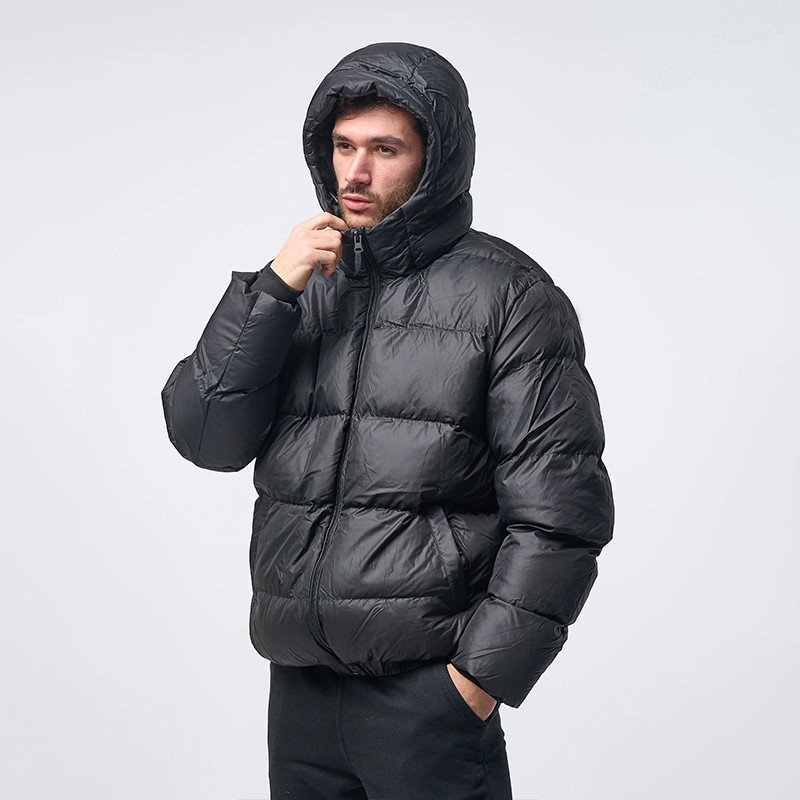
A custom jacket branding strategy is the set of decisions that makes your jackets recognizable as yours before a single label is read. It has four layers: positioning, which defines the buyer and the job the product does; a visual system, which turns a logo into a repeatable identity across fabric, hardware and print; a narrative, which gives retailers and customers a story they can retell; and channel consistency, which keeps the same brand promise on your own store, in wholesale accounts, and on marketplaces. Tactics such as embroidery versus heat transfer, or woven labels versus printed ones, only work once those four layers are settled. This guide is written for brand owners and purchasing teams who already know what a hangtag is and now need the layer above it: how to decide, sequence and budget a jacket branding strategy, and how to translate it into a tech pack that a factory in Dongguan can actually execute at MOQ 50 pieces per style. A branding strategy answers why a decision is made. Branding options answer how a decision is executed. Most jacket brands arrive at a factory with the second question already answered and the first question unanswered, which is why they end up with a good-looking garment that does not build recognition between seasons. If you have already chosen an embroidery placement, a woven label width and a hangtag finish but you cannot explain in one sentence who the jacket is for and what it replaces, you have tactics and no strategy. The distinction matters commercially because tactics are cheap to change and strategy is not. Changing a hangtag material costs a few cents per unit. Repositioning a brand from value to premium affects fabric selection, fill power, trim quality, packaging and retail price at the same time, and it is far better to make that decision before sampling than after the first production run. Buyers who treat branding as a system also get more out of their factory, because a factory can propose better execution when it understands the intent. For an overview of the individual branding choices themselves, our guide to custom jacket branding options lists the available techniques, and the article on branding options for custom down jackets covers down-specific decoration. This article sits one level above both and deals with the strategy layer. Positioning is a single sentence that names the buyer, the need and the reason your jacket wins. It is the filter for every later decision, including which fabrics you can afford, which trims feel appropriate, and which retail channels will accept you. Write it in this form: for a specific buyer who has a specific need, our jacket is the specific category that delivers a specific benefit, because of a specific piece of proof. If you cannot fill every slot, the strategy is not ready and no amount of logo work will compensate. The most common mistake we see at the sampling stage is a positioning statement with no proof slot. A brand claims premium but specifies a 550 fill power down and a basic nylon shell, or claims technical performance without a waterproof or breathability rating to quote. Buyers notice this gap immediately, and so do consumers once the jacket is worn in rain or cold. The proof slot should point at something a factory can document, such as a fill power grade, a fabric specification, a certification scope, or a construction method. Once positioning is written, the fabric brief almost writes itself. A technical archetype pushes you toward laminated or coated shells and sealed seams, which our article on private label technical jackets covers in detail. A premium heritage archetype pushes you toward higher fill power and denser shells, and the trade-offs are explained in the guide to private label luxury down jackets. A streetwear archetype pushes you toward silhouette variety and drop-based merchandising, which our article on private label streetwear jacket manufacturing discusses. Positioning is therefore not a marketing exercise that happens after manufacturing. It is the input that determines what you ask the factory to build. A logo is one asset. A visual system is a small set of rules that lets strangers produce consistent work, whether that is your factory, your photographer or a wholesale partner building a lookbook. Jacket brands need a visual system because decoration is applied by different processes on different materials, and each process degrades artwork differently. Without rules, the same logo can appear crisp on a paper hangtag and muddy on a woven label in the same shipment. Build the system around six elements and write the tolerances for each one. First, a primary wordmark and a secondary monogram for small surfaces. Second, a colour system with a defined primary, a neutral set and a single accent, expressed as textile colour references rather than screen values. Third, a typography pair, one for garment marks and one for print. Fourth, a graphic language of at most three motifs. Fifth, an iconography style for care, feature and story panels. Sixth, a photography direction that stays recognisable across seasons. The practical list of marks these elements generate on a garment is covered in our article on custom logo down jacket manufacturing, and the techniques for placing them are described in how to customize logos on down jackets. A narrative is not a slogan. It is a short sequence of true statements that explains why the brand exists, what it chooses to do differently, and what evidence supports that choice. The test of a good narrative is reproduction: a retail buyer, a customer and a journalist should all be able to repeat it in their own words without exaggerating it. If the story only works when the founder tells it, it is not a strategy yet. For a jacket brand, the narrative has four reliable ingredients. Origin explains where and how the product is made and who makes the decisions. Material explains the specific choices in the shell, the insulation and the trims. Craft explains the construction details that address a real customer frustration. Commitment explains the standards the brand holds suppliers to, such as social compliance and material traceability. Each ingredient should point at something verifiable, which is why the factory relationship is part of the story rather than back office detail. Ginwen Wear documents the standards side of this narrative through ISO 9001, BSCI, RDS and OEKO-TEX certification, and the buyer-facing interpretation of those systems is set out in private label manufacturing quality standards. A narrative built on documented capability survives scrutiny. A narrative built on adjectives such as world class or finest quality does not, and it also cannot be reused by anyone else in your supply chain. Channel consistency is the layer most brands underinvest in, and it is where branding failures are most visible. A customer may first see a jacket in a paid social post, then on a marketplace listing with a different title, then on your own store with a third set of images, then receive it in packaging that uses a fourth version of the mark. Each transition is a chance for the brand to look like several unrelated sellers. The fix is a shared asset sheet that every channel draws from. The rule is simple: one source of truth for names, colours, typography, product photography and claims, applied without local reinterpretation. Marketplaces tempt brands to rewrite titles for keywords and to crop images aggressively, and wholesale partners often want their own photography. Both are acceptable only if they operate inside the boundaries you set. Give partners the boundaries in writing, together with the approved files and a short guide, and make the version visible so old assets can be retired. Packaging is the channel-consistency asset that reaches the customer most intimately, and it is also the one most often designed last. The full structure of inner packaging, outer carton and unboxing is covered in our guide to private label jacket packaging, while the printed pieces that sit against the product are covered in custom hangtags for jacket brands and custom labels for down jackets. Decide these against the visual system, not the other way around, or you will rebuild them within a season. Branding architecture decides how many marks a jacket carries and what each one is allowed to say. Brands that skip this decision end up with an inconsistent number of logos, some competing for attention. A workable three-level model keeps the garment calm and the brand recognisable. The primary wordmark or monogram. Appears once in a fixed position, at a fixed size, and carries the brand name. It never changes between collections, so it is the anchor of recognition. A series name, season mark or graphic motif that groups products. It changes each season and lives on the hangtag, the inside label and the story panel rather than on the outside of the garment. A small technical mark, such as a fill power badge or a waterproof rating, placed near the feature it describes. It is functional information, not decoration, so it should be typographically plain. Placing a collection motif on the outside chest, which competes with the brand mark and dates the jacket. Keep seasonal graphics inside the garment or on the packaging instead. The architecture model also resolves a practical factory question: how many decoration steps a garment needs. Each additional mark adds a process, a sampling step, a cost line and a quality risk, so the model should be deliberately minimal. Brands in the premium tier often carry two marks in total, while streetwear brands may carry three or four, and the choice should follow positioning rather than novelty. The same logic applies when brands expand into adjacent products; how manufacturing partners support that expansion is discussed in how manufacturers help develop jacket collections. A branding strategy only reaches production when it is written into the tech pack. Vague instructions such as logo on chest are the single most common cause of resampling, because two people can read that line and picture two different results. Every branding element should appear in the tech pack with a position, a size, a process and a colour reference, plus an approval sample reference. The same discipline applies to the interior of the garment, where care and composition information has to satisfy labelling rules in the destination market. That is a separate body of work from decoration, and the relationship between branding and compliance labels is explained in custom labels for down jackets. Hardware is a third branding surface that carries a mark or a colour, and the options are covered in custom zippers for private label jackets. A branding rollout is a sequence, not a purchase. The order below works because each step produces the input the next one needs, and because the expensive decisions about materials and decoration are taken after the positioning and visual system are fixed. Reversing the order is what produces unfinished brands: decoration ordered before the visual system exists, or visual systems designed without reference to what the fabric and the machinery can actually hold. One week. Buyer, need, category, benefit and proof, agreed by everyone who owns product decisions. Two to three weeks. Wordmark, monogram, colour, type and rules, tested at small sizes on real fabric. One week. Decide brand, collection and product level marks, and the exact count per garment. One week. Positions, sizes, processes, colour references and artwork attached to the specification. Within the standard sampling window of 7 to 14 days, reviewed as part of the counter sample. One to two weeks. Imagery, naming rules and packaging supplied to every channel before launch. Bulk production in 25 to 40 days, with decoration inspected against the approved branding sample. Typical total: 8 to 12 weeks from positioning to bulk branding execution. Budget follows the same logic. The cheapest line items are the paper ones, and the most expensive are the ones that require tooling or dedicated materials, such as a custom metal zip pull, a bespoke knit for a collar, or a moulded hardware component. Those require a minimum order quantity of their own and often a tooling charge, which is why they should be decided after the visual system is locked. For most first productions we advise brands to spend their branding budget in this order: labels and care information first, because they are mandatory and visible; hangtags and packaging second, because they carry the unboxing experience; decorated hardware last, because it carries the highest minimums and the longest lead time. A full explanation of what decoration costs and how it behaves over time is in our guide to custom logo down jacket manufacturing. Consistency is measurable, and an audit is the cheapest way to catch drift. Run the audit twice: once before the first production order is placed, using the samples, the tech pack and the drafting of your channel assets; and once after launch, using exactly what a customer receives. The second audit is the one that matters, because it looks at the product as it is experienced rather than as it was specified. The audit output should be a short list of corrections with owners and dates, not a report that sits unread. In practice the two findings that recur most often are an extra mark added late by a well-meaning team member and a colour that has drifted because a supplier changed a material. Both are easy to fix before a repeat order and expensive to fix after stock is in the warehouse. Our down jacket quality control checklist covers the wider inspection routine that these branding checks sit inside, and the factory evaluation process that keeps suppliers accountable is described in private label apparel factory guide. A strategy decides why the brand looks and speaks the way it does, covering positioning, visual system, narrative and channel consistency. Options are the execution techniques, such as embroidery, heat transfer, woven labels or printed hangtags. Choose the strategy first, then pick the options that fit it. Most brands work best with two to three visible marks: one brand-level mark in a fixed position, optionally one product-level technical badge, and any collection graphics placed inside the garment or on the packaging. Each additional mark adds a process, a cost and a quality risk. Yes. Sampling typically takes 7 to 14 days and is charged at USD 50 to 200 depending on complexity, with the fee credited against the bulk order. Send the branding specification and artwork with the garment specification so decoration is approved in the same sample round. MOQ starts from 50 pieces per style. Custom hardware such as a bespoke metal zip pull or a moulded component carries its own minimum and a tooling charge, so those elements are usually better introduced once a style proves itself. Supply every channel with one dated asset sheet covering product naming, imagery, colour references, packaging and approved claims, plus the files and a short usage guide. Review each channel against that sheet after launch and require approval before any local reinterpretation. Send the mark list with positions and sizes, the intended process for each mark, colour references, artwork files, the garment style and quantity, and your target delivery window. With those inputs a factory can quote decoration accurately and confirm the sampling schedule. A jacket branding strategy is built in layers: positioning first, then a visual system, then a narrative that other people can retell, then channel consistency that keeps the promise identical everywhere the product appears. Tactics such as embroidery, labels and packaging only deliver value when they sit on top of those layers. Brands that sequence the work this way spend less on resampling, get more accurate quotations, and build recognition that compounds across seasons. Ready to turn a branding strategy into a production-ready specification? Contact our team or submit your requirements with your mark list, quantities and target dates. Ginwen Wear supports OEM and ODM programmes from 50 pieces per style, and you can review our product range or read more jacket manufacturing guides before you decide. If you are still sizing up the market, the step-by-step guide to sourcing custom jackets from China is a good companion to this article.Custom Jacket Branding Strategies: Building a Jacket Brand Buyers Recognize
Table of Contents
Strategy Versus Branding Tactics: Knowing Which Problem You Are Solving
Positioning Comes Before Design
Positioning Archetype Core Buyer Proof You Must Be Able to Show Branding Expression Main Risk Technical Performance Outdoor and active customers who read specifications Waterproof and breathability ratings, seam sealing, test reports Minimal marks, technical typography, spec sheets Claiming performance you cannot document Everyday Value Price-aware buyers replacing a fast-fashion coat Consistent construction, honest materials, reliable sizing Clean wordmark, clear size and care information Drifting into discount language that erodes price Premium Heritage Buyers who pay for materials and finish High fill power, high-density shell, refined hardware Restrained palette, tactile labels, heavy packaging Premium look without premium construction Streetwear Culture Community-led buyers who follow drops Distinct silhouettes, limited runs, strong graphics Bold graphics, embroidered monograms, drop storytelling Graphics that age faster than the garments Corporate and Uniform Procurement teams ordering for staff or teams Repeatable specs, stable sizing, compliance documents Discreet marks, durable decoration, simple packaging Treating a bulk logo order as a brand programme From Logo to Visual System
Building a Narrative Retailers and Customers Can Retell
Origin
Material
Craft
Commitment
Channel Consistency: The Point Where Branding Actually Fails
Channel Assets That Must Match Common Drift Control Method Own online store Product naming, imagery, size and care copy, packaging Internal updates that never reach other channels Single asset sheet with dated versions Wholesale and retail accounts Hangtags, back neck marks, packaging inserts, care labels Partner photography and renamed products Written brand-use sheet supplied with each order Marketplaces Brand registry name, colour naming, main image standard Keyword-led titles that change the brand voice Approved title formula and image hierarchy Pop-ups and events Signage, garment presentation, packaging ritual Short-term artwork that looks unrelated Temporary kit built from the core visual system Corporate and team orders Decoration placement, colour matching, delivery packaging Logo-only treatment that ignores garment branding Simplified subset of the system with fixed placements Branding Architecture: Brand, Collection and Product Level Marks
Brand Level
Collection Level
Product Level
Common Mistake
From Strategy to Tech Pack: Where Branding Lives on the Garment
Budget, Timeline and Sequencing for a Branding Rollout
Positioning statement
Visual system
Marking architecture
Tech pack integration
Branding sample
Channel asset sheet
Bulk execution
Auditing Brand Consistency Before and After Launch
Frequently Asked Questions
What is the difference between a branding strategy and branding options?
How many branding marks should a jacket carry?
Can Ginwen Wear produce a branded sample before I commit to bulk?
What is the minimum order quantity for a custom jacket with full branding?
How do I keep branding consistent across wholesale and marketplaces?
What information do I need to send for a branding quotation?