Technical Outdoor Puffer Jacket Production
- Share
- Issue Time
- Aug 21,2026
Summary
Technical outdoor puffer jacket production guide: shell fabrics and laminates, seam sealing, insulation systems, pattern engineering for movement, testing and certification, MOQ, sampling and quality control for outdoor brands.
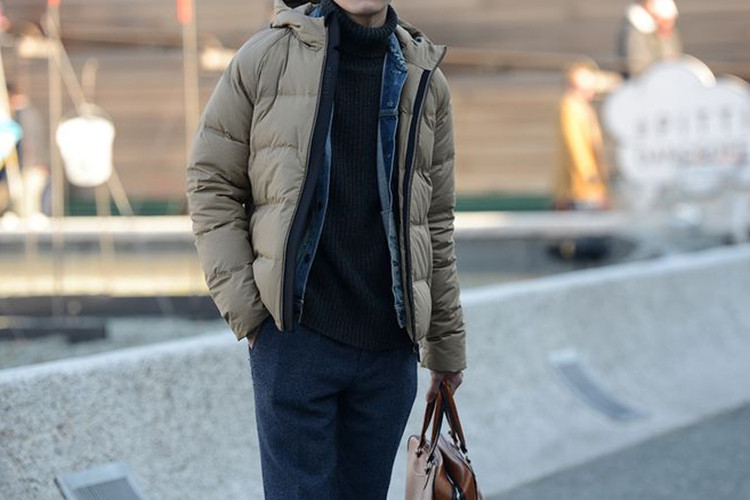
Technical outdoor puffer jacket production is the manufacturing of insulated jackets engineered for mountain, winter, and performance use, with waterproof or water-resistant shells, sealed seams, high-performance insulation, and movement-focused pattern work. Unlike fashion puffers, technical puffers must pass measurable performance tests for water resistance, breathability, insulation, and durability before they reach the market. This guide walks through the factory process for technical puffer production, covering laminates, seam sealing, insulation systems, testing standards, sampling, MOQ, and quality control, with the real numbers EU and US outdoor brands use when planning production. A puffer jacket is considered technical when its materials and construction are engineered to a measurable performance standard. The three pillars are weather protection, insulation, and freedom of movement. Weather protection comes from the shell fabric, the lamination, and the seam sealing; insulation comes from the filling and its placement; movement comes from the pattern, the articulation, and the adjustment system. Technical puffers are typically divided into two categories: insulated shells for wet and windy conditions, and mid-layer or belay puffers optimized for warmth-to-weight ratio. Each category uses different shell weights, insulation amounts, and construction methods. A factory producing technical outerwear must be able to switch between these builds without compromising either, which is why pattern engineering, fabric sourcing, and QC documentation are handled as part of a defined production system rather than ad hoc per order. The shell is the first line of defense in a technical puffer. Most technical shells are laminates: a face fabric bonded to a waterproof-breathable membrane, with or without an inner liner. The construction is described as 2-layer (2L), 2.5-layer (2.5L), or 3-layer (3L), and the choice affects weight, hand feel, and durability. Water resistance is measured in millimeters of hydrostatic head. A shell rated at 10,000 mm withstands the pressure of a 10-meter water column, and most technical puffers use shells rated between 10,000 and 20,000 mm. Breathability is measured in g/m²/24h of moisture vapor transmission, with technical fabrics typically ranging from 10,000 to 25,000 g. Both numbers should be stated on the fabric spec sheet, and the factory should verify them with test reports rather than marketing claims. DWR (durable water repellent) treatment is a separate layer on top of the shell. It makes water bead and roll off, keeping the face fabric dry and breathable. DWR wears off over time and with washing, so technical brands specify the treatment and include care instructions. If your product will be marketed as waterproof, the DWR is a finish, not the waterproofing itself, and that distinction should be accurate in your claims. Stitching creates holes in any waterproof fabric, so technical puffers rely on seam sealing to keep water out. There are two main approaches: taping and welding. Seam taping applies a waterproof tape over the stitched seams using heat and pressure. Welding, or bonded construction, joins fabric panels with adhesive instead of stitching, which removes needle holes entirely and creates a cleaner, flatter seam. Seam sealing is one of the most labor-intensive steps in technical outerwear production. Every seam in a fully waterproof jacket must be taped, and taping requires calibrated heat, pressure, and speed settings for each fabric type. A factory that produces technical jackets will have dedicated seam-taping machines and trained operators, and it will test sealed seams during production rather than only at final inspection. Technical puffers use either down or high-performance synthetic insulation, and many premium models use a combination of both in a zone-mapped system. Down is placed where warmth matters most and weight is a priority; synthetic is used in areas prone to moisture, such as cuffs, hoods, and shoulders. Down is certified under RDS for responsible sourcing, and fill power is verified by a fill-power test report. Synthetic insulation is chosen for its wet performance and its ability to maintain loft after compression. Whatever the system, the factory must verify filling weight per garment and chamber distribution during production, because uneven filling directly affects warmth and comfort. Insulation placement is part of the design. Baffle width, chamber height, and quilting pattern all influence how the insulation behaves: wider baffles loft higher but can shift, narrower channels stay stable but weigh more. Technical brands work with the factory to balance loft, stability, and weight, and the approved sample locks these choices for bulk production. A technical puffer must move with the body during climbing, hiking, and cold-weather sports. Pattern engineering for movement includes articulated sleeves with pre-bent elbows, gusseted underarms for arm lift, drop shoulders or raglan construction for shoulder mobility, and helmet-compatible hoods with adjustable volume. The pattern must also account for the thickness of the insulation, which adds bulk at every seam and changes how the garment hangs. Technical patterns are tested during the sampling stage with movement checks: arm reach, shoulder rotation, and a full range of lifting motions. A factory experienced in technical outerwear will make these checks standard practice and will adjust the pattern until the garment performs, rather than shipping a sample that only looks correct when standing still. Fit and layering are part of the equation. Technical puffers are often worn over a base layer and a mid layer, so the pattern must allow for that layering without becoming baggy when worn over a single shirt. Specify your intended layering system in the size spec, and test the sample both ways during the fit review. Technical outerwear production relies on a defined testing protocol. Shell fabrics are tested for hydrostatic head, breathability, tear strength, and colorfastness. Sealed seams are tested for waterproof integrity. Insulation is verified by fill power and filling weight. Finished garments are inspected for construction quality and function. Certifications matter for market access. RDS covers responsible down sourcing, OEKO-TEX Standard 100 confirms the fabrics and trims contain no harmful substances, and bluesign certification covers sustainable chemical management in production. ISO 9001 covers the factory's quality management system, and BSCI covers social compliance. Ask for current certificates during supplier evaluation, and confirm the certificates cover the actual production site. Certification audits are a normal part of technical production. Buyers, especially those selling through outdoor retail chains, will ask for documents that prove compliance, and some retailers audit the factory directly. Keep a complete compliance file for each style: fabric reports, insulation reports, seam test results, and certificates. This file also protects you if a customer questions a performance claim after purchase. Testing frequency matters too. A factory that tests only at final inspection cannot catch problems early; one that tests at incoming material, in-line, and final stages can. Ask about the testing schedule and the person responsible, and confirm that test failures are documented and corrected rather than quietly passed along. Technical puffer production follows a defined sequence, and each step has its own QC checkpoint. Understanding the order helps buyers know what to ask about and what to expect during production. Shell, membrane, insulation, zippers, and tapes are checked against spec before cutting. Panels are cut and marked; baffle chambers and pocket placements are prepped. Shells are sewn, insulation is placed by weight, and baffles are closed. Taping, welding, hardware installation, and final adjustments. AQL 2.5 inspection, function tests, and packing per brand instructions. Typical production window: 25 to 40 days from sample approval to shipment, depending on fabric availability and order volume. Technical outerwear traditionally carries high MOQs, but smaller brands and direct-to-consumer labels increasingly need flexible minimums. Ginwen's MOQ is 50 pieces per style, which lets emerging outdoor brands test technical designs without committing to large volume. Sampling runs 7 to 14 days, with sample fees from $50 to $200 depending on complexity, deducted from the bulk order. Payment terms are typically a 30% deposit to start production and a 70% balance before shipment. Volume planning is straightforward: confirm the quantities per size and colorway early, so the factory can reserve materials and schedule the production line. A clear volume forecast also improves pricing, because the factory can plan cutting efficiency and fill utilization across the whole order. Lead times are quoted from sample approval. Technical fabrics and membranes are often made to order, so material lead time can extend the total timeline. Confirm material availability before sampling, and build in a buffer for seasonal launches with fixed release dates. Quality control for technical puffers is stricter than for fashion outerwear because the product must perform under real conditions. Standard practice includes in-line checks during sewing, filling weight verification, seam integrity testing, and a final random inspection at AQL 2.5. Function tests cover zippers, toggles, hood adjustment, and pocket closures. For waterproof models, a sample from each production lot should be water-tested to confirm the taped seams and shell hold up. This kind of testing catches problems that visual inspection misses, and it is the reason technical brands trust factories that document their QC process with reports and photos rather than a single sign-off. Communication is the final QC layer. A reliable factory shares production photos at defined checkpoints, flags material or construction issues immediately, and keeps a written record of decisions. For technical programs, this transparency is not a nice-to-have: it is how performance claims stay credible from sample approval to the customer's door. For brands planning multi-season technical programs, consistency matters as much as the first order. The same style produced in a later season should match the approved sample, which is why the factory keeps a reference sample, the tech pack, and the QC records from the original run. Ask your factory how repeat styles are handled, and confirm that materials and construction will stay consistent across seasons. Finally, choose a factory that treats technical claims seriously. If a supplier tells you a fabric is waterproof without a test report, or quotes a fill power it cannot verify, that is a warning signal. The best technical partners show you evidence, explain the limits of their materials, and help you build claims you can defend. The right partner also helps you manage the total program: when to order materials, when to freeze the design, and when to schedule production around your launch date. That planning support is often the difference between a technical puffer that ships on time and one that misses the season entirely. Technical outerwear depends on a specialist supply chain. Shell fabrics, waterproof-breathable membranes, insulation, zippers, and seam tapes are often produced by dedicated mills and manufacturers, and some materials are made to order rather than stocked. This is why material sourcing is planned before sampling, not after the design is final. Ask your factory which materials are in stock and which must be ordered, and how long each takes. A membrane or specialty shell can add two to six weeks to the timeline if it is made to order. If your design uses a specific fabric that is not stocked, the factory should confirm availability, minimum order quantity, and lead time at the quotation stage. Supply chain risk is managed with early commitment. For seasonal programs, confirm materials before the production slot, and ask about acceptable substitutes in case a fabric is discontinued or delayed. A factory with long-standing mill relationships can usually secure materials faster and at better prices than one that sources everything at order time. Cost transparency helps here. Ask for the material cost breakdown separately from labor and overhead, so you can see where the price sits and what drives it. Technical membranes and premium insulation are the largest material costs in most technical puffers, and knowing their share helps you decide where to optimize when a target price is tight. Technical puffer programs are highly customizable, from the shell and insulation to the pocket system and branding. The customization depth affects sampling time, unit cost, and MOQ, so it should be planned as part of the product strategy rather than decided at the last minute. Common customizations include articulated hoods with volume adjustment, zoned insulation maps, custom pocket layouts, two-way or waterproof zippers, reflective details, and logo placement through embroidery, heat transfer, or printed labels. Brands with strong technical stories also customize the hang tag, the care label, and the pack-down bag, which carry performance information and build brand recognition. Each customization should be tested in the sample. A pocket layout that looks good on paper can affect the baffle structure; a hood adjustment system can add weight and complexity. The factory's technical team should flag conflicts between your customization requests and the garment's performance goals before sampling, so you approve a design that actually works. Sizing is a technical decision as much as a fit decision. Technical puffers are often sized for layering, which means the garment is cut slightly larger than a fashion puffer of the same labeled size. The grading rules differ too: technical brands may use a longer grade interval in the chest and arms to preserve range of motion across sizes, while fashion brands grade more evenly for visual proportion. Market expectations also vary. EU and US size runs are typically broader in chest and sleeve length than Asian market runs, and some technical brands offer tall and short length options within the same size. If you sell in multiple markets, agree the size range and grading rules during development, and confirm the fit on a sample in the largest and smallest sizes, not only the middle one. The factory's grading system should be able to produce consistent results across the full range. Ask how many sizes are typically graded per style, how the grade increments are set, and whether a fit sample in an extreme size is included in the sampling stage. Catching a grading issue at the sample stage costs days; catching it in bulk production costs weeks. The MOQ is 50 pieces per style. Technical fabrics and membranes can be sourced in small quantities for sampling and capsule programs, then scaled for seasonal production. Yes. Fully waterproof models use laminated shells rated from 10,000 to 20,000 mm hydrostatic head with taped or welded seams. Test reports are provided for the shell and finished garment. Sampling typically takes 7 to 14 days. Sample fees range from $50 to $200 depending on complexity and are deducted from the bulk order when production is confirmed. Production follows ISO 9001 quality management, BSCI social compliance, OEKO-TEX Standard 100 for materials, and RDS for responsible down sourcing. Current certificates are available on request. Send your requirements including target performance specs, shell type, insulation, and quantity. We respond within 24 hours with a detailed quotation. Technical outdoor puffer production is defined by measurable performance: shell laminates, seam sealing, insulation systems, movement-focused patterns, and documented testing. A factory with real technical outerwear experience will show you test reports, seam-taping capability, and QC documentation, not just finished samples. Planning a technical puffer program? Contact our team or submit your requirements for a free consultation. You can also browse our product catalog or read more manufacturing guides on our blog, including our guide to the best materials for puffer jacket manufacturing.Technical Outdoor Puffer Jacket Production
Table of Contents
What Makes a Puffer Jacket Technical?
Shell Fabrics and Laminates for Technical Puffers
Construction Structure Weight Best For 2-layer (2L) Face + membrane, hanging liner Heavier Urban technical and casual 2.5-layer (2.5L) Face + membrane + protective print Light Packable and travel puffers 3-layer (3L) Face + membrane + knit backer Lightest Alpine and high-output use Seam Sealing and Welded Construction
Insulation Systems for Technical Puffers
Insulation Warmth-to-Weight Wet Performance Compressibility Typical Use Goose down 800-850 FP Excellent Low when wet Excellent Belay and alpine mid-layers Duck down 650-750 FP High Low when wet Very good General winter puffers Synthetic continuous filament Good Retains warmth when wet Good Wet conditions, budget lines Zone-mapped hybrid High Balanced Very good Premium technical jackets Pattern Engineering for Movement
Testing and Certification in Production
Production Steps in the Factory
Fabric and Material Incoming Inspection
Cutting and Preparation
Assembly and Filling
Seam Sealing and Finishing
Final Inspection and Packing
MOQ, Sampling, and Lead Times
Program MOQ Sampling Bulk Lead Time Capsule launch 50-100 pcs 7-10 days 25-30 days Seasonal program 100-500 pcs 7-12 days 30-35 days Retail rollout 500-2000 pcs 10-14 days 35-40 days Quality Control for Technical Outerwear
Material Sourcing and Supply Chain for Technical Puffers
Customization Options for Technical Brands
Sizing and Grading for Technical Puffers
Frequently Asked Questions
What is the MOQ for technical puffer jackets?
Can you produce fully waterproof technical puffers?
How long does sampling take for a technical puffer?
Which certifications do you hold?
How do I get a quote for a technical puffer program?